





The much-publicized July 1 ordination by the SSPX of four new bishops without papal permission has created a schism, with the Vatican immediately declaring all the canonical consequences. This is a fait accompli.
But there is a situation still unfolding, and it concerns the overlap between the SSPX and the traditionalist voices in the Catholic Church in communion with Rome.
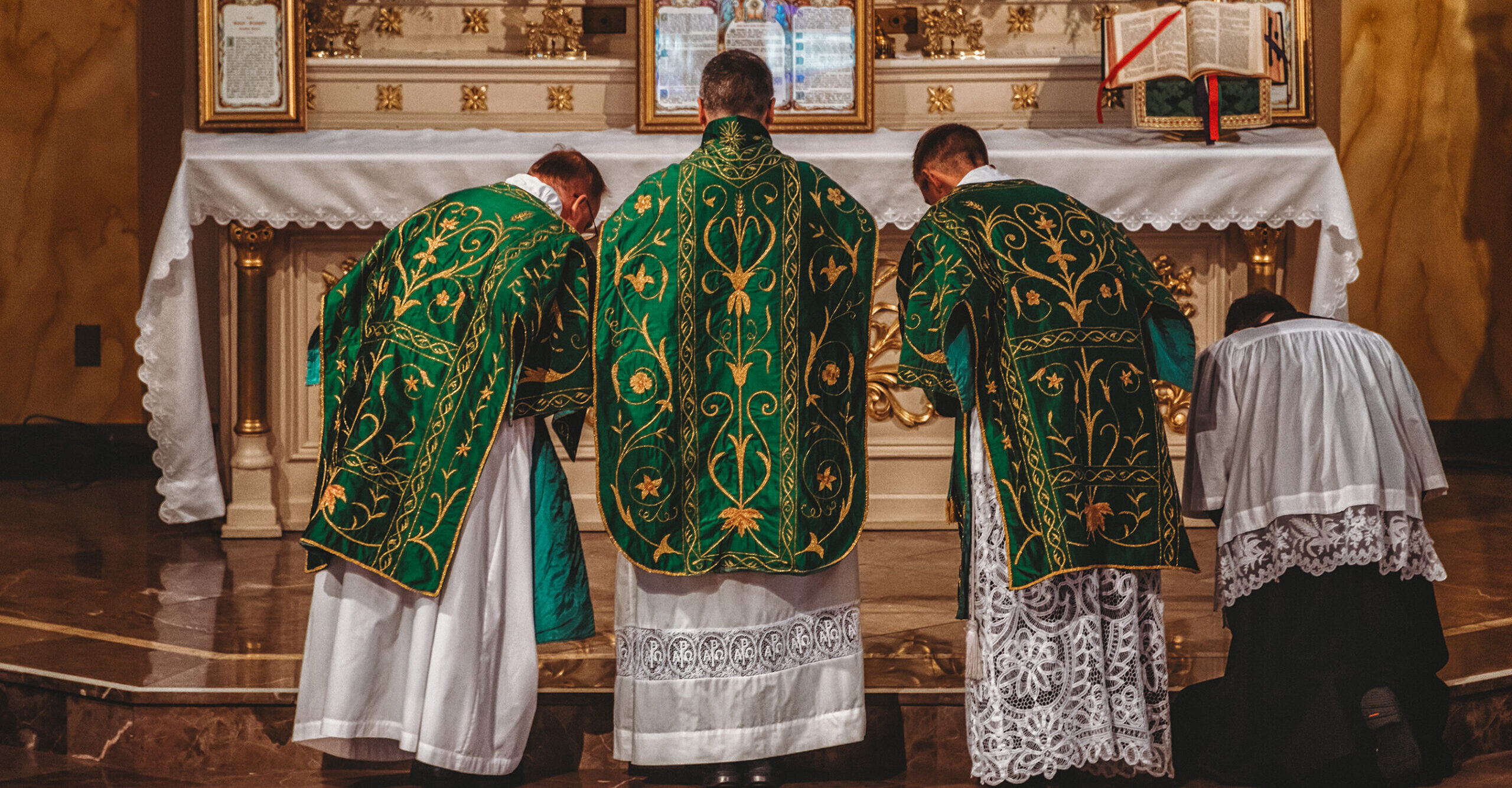
On July 30, the London-based Catholic magazine The Tablet published an interview with Cardinal Arthur Roche, prefect of the Vatican Dicastery for Divine Worship and the Discipline of the Sacraments since 2021, who stated that Pope Leo XIV is not going to reverse Traditionis Custodes, Pope Francis’ motu proprio of July 2021 on the use of the Roman rite liturgical form that existed prior to the Second Vatican Council.


Article 1 of Traditionis Custodes states: “The liturgical books promulgated by Saint Paul VI and Saint John Paul II, in conformity with the decrees of Vatican Council II, are the unique expression of the lex orandi of the Roman Rite.”
The liturgical question is the focal point of tensions and the most important front – for this “liturgical war” as much as for other wars – is in the USA.
In those same days at the end of July, prominent US Catholic bishops took to the media and social media to defend liturgical traditionalism and to pressure the Vatican to abrogate certain aspects of Traditionis Custodes and allow greater access to the pre-Vatican II “Latin Mass.”
Archbishop Salvatore Cordileone of San Francisco (recently appointed by Leo XIV to the supreme tribunal of the Segnatura Apostolica) and Archbishop Alexander Sample of Portland (Oregon) criticized the SSPX for its schismatic action but offered a defense of liturgical traditionalism and of Benedict XIV’s actions to expand access to the “Traditional Latin Mass.”
They share Pope Benedict’s conviction that the “Latin Mass” remains an important point of reference for the Church’s future liturgical development.
In light of recent events, from interviews like these one might draw the impression that if only those somewhat impatient leaders of the SSPX had obeyed the Vatican and the pope, Rome and the Lefebvrians would agree on almost everything: as if their well-known opposition against Vatican II (and not just on the liturgical reform) did not matter.
But maybe this – the value of Vatican II in today’s Church – is exactly the point in using the SSPX as an asset to deal with the Holy See from the inside. These interviews are indeed a symptom of the ongoing tensions between Rome and American Catholic traditionalism and exemplary of at least three different features of contemporary global Catholicism.
The first: behind the slogans typical of a law-abiding retro-Catholicism, liturgical traditionalism is a movement challenging the institution led by the papacy and the Vatican. Cordileone and Sample do not represent the entire US episcopate, but they also represent more than voices like Auxiliary bishop Athanasius Schneider of Astana in Kazakhstan, one of the champions of Catholic traditionalism but without a significant ecclesiastical constituency behind him.
These US bishops speak on behalf of a movement that is small but no longer marginal, and like the most strategic of post-Vatican II Catholic movements, can magnify their influence way beyond their sociological significance.
❝
The recovery of the idea of tradition must begin with a rediscovery of the Council of Trent.
A 2025 Pew Research Center survey found that two percent of U.S. Catholics attend the liturgy, sometimes known as the traditional Latin Mass, weekly. “How many are they?” – it is not the real question here.
In a Church suffering the consequences of secularization, the promise of the movements to bring new energy and young people to the Church is an offer too tempting to refuse. In a smaller Church, even small but highly mobilized groups can have great effect in changing the direction of a local or national Catholic community.
The second concerns the dynamic between different actors in the Church when it is about governing change. During Vatican II and the early post-conciliar period, the dynamic was between the pope, the Roman Curia, the bishops (and bishops’ conferences), and the press and public opinion.
The liturgical reform became a top-down process guided by Rome, but it had been initiated by the bishops at Vatican II. For all the anti-modern traditionalism claimed by the advocates of the pre-Vatican II “Latin Mass,” they have capitalized on the new role of the (new) media in the Church, as a way of putting pressure on the pope, the Curia, and the bishops’ conferences.
They challenged Pope Francis directly, and we will see what they do with Pope Leo XIV. They have also interpreted to their own advantage, and without acknowledging it, the Vatican II principle of local inculturation and adaptation.
The parallelism between the disappearance of the legacy media environment that dominated before the internet and the rise of Catholic traditionalism is a specific sign of the times in contemporary USA. There is more than just a chronological overlap between the political-religious messianism of Trumpism and the revival of the “Latin Mass” in the Catholic Church (which is not to say that all Latin Mass goers are Trumpian).
The third has to do with the state of the tradition, or the way in which the bishops who support the “Traditional Latin Mass” talk about the tradition. It has become a totem, a fetish, a rhetorical expedient to offer the psychological comfort of something supposedly frozen in time and never subject to change.
This has to do with the particular syndrome affecting those who see in Vatican II a catastrophe (liturgical and otherwise) but also reflects a truncated idea of Church history. It reflects a Catholic culture and theology divided between the defining period between Augustine and Aquinas on one side, and the runaway child of Catholic modernity which was Vatican II and the post-Vatican II period.
There is an astonishing historical and hermeneutical illiteracy (even among some bishops) about the contributions of early modern Catholicism to the development of the tradition: the post-Reformation “Catholic reform”, the Catholic Aufklärung, the movements of theological reform (biblical, patristic, liturgical, ecumenical) in the 19th and early 20th century (I am not talking about the dreaded “modernism” here).
In the theological imagination of self-appointed defenders of the tradition, Saint John Henry Newman is the outlier in the terra incognita of early modern Catholicism – the Council of Trent included.
Once I believed that the rediscovery of the tradition in American Catholicism started with the history and theology of Vatican II, to overcome simplistic characterizations of the council and its aftermath.
I still believe that, but with a qualifier. The recovery of the idea of tradition must begin with a rediscovery of the Council of Trent. Tridentine Catholics – the Jesuits, the Inquisition, warts and all – were not afraid to create something new to address the theological and pastoral needs of their time.






12 Comments
Colm Holmes
August 5, 2026‘The Ambrosian Rite is a testament to the Church’s commitment to preserving liturgical traditions rooted in living communities. It is celebrated every Sunday according to the ancient missal at a local church, with Mass goers of every age and background. The community is based in Milan, where Mass is offered at a designated location, preserving the Ambrosian tradition.’
Benedict Cox
August 5, 2026Something kept going wrong with the mechanics when I was trying to post my comment. I do not know why my comment appears twice, once under the name of Colm Holmes.
Guido
August 6, 2026“‘The Ambrosian Rite is a testament to the Church’s commitment to preserving liturgical traditions rooted in living communities. It is celebrated every Sunday” in all the churches of the Archidiocesis of Milan. Full stop.
Dawn Elaine Bowie
August 5, 2026To quote the late, great Jerry Lee Lewis, there’s a whole lotta shakin’ going on. The problem of so-called “Christian” Nationalism in the U.S. are affecting the institutional church of every denomination, including this one. I try to see it as the fulfillment of many prophecies, including the one by Pope Benedict about the future of the Church – that it will get smaller and deeper.
Louis Bohte ofm
August 5, 2026I have seen the film about the life of Archbishop Marcel Levebrve.
On the surface, his life was inspiring. But what struck me was his opposition to the joint prayer for peace in Assisi in 1986.
He opposed religions being placed on an equal footing with the Catholic Church. His problem was evidently one of power. Only through the Catholic Church can a person enter heaven.
The Eternal One must abide by that.
Louis Bohte ofm
Sociologist of Religion.
Amos
August 5, 2026Protestant theme hymn. . .”There is only one foundation and it’s not the Pope in Rome.”
Vibin Antony
August 5, 2026The definitive documentary on the life of the traditionalist French prelate is Archbishop Lefebvre: A Documentary (also released as Marcel Lefebvre – Archbishop in Stormy Times), directed by French filmmaker Jacques-Régis du Cray.
Fr Mick Mac Andrew
August 5, 2026I appreciate the angst of Massimo Faggioli, I too, as a Catholic priest have concerns about the present way in which some very concerned and committed Catholics are endeavouring to use traditionalism to work against the acceptance and implementation of Vat II. Traditionalism can be found in the Church of the Novus Ordo just go and see the numbers of committed Catholics who pray using centuries old customs but commit themselves to NM. Massimo rightly links some Catholics to the present rise of right wing politics. Pope Leo is right to hold the Church to the centre and not to entertain any sort of a smorgasbord Church.
Amos
August 5, 2026The liturgy proved to be the unguarded door through which the heresy of modernism made its way in to the Church.
David Timbs
August 6, 2026In a 2010 article on the diaries of Joseph Ratzinger German theological adviser at Vatican II, the late John Wilkins. Wilkins highlights some of the key insightful comments of Ratzinger as Vatican II’s 1963 Constitution on the Divine Liturgy was being debated. I believe that Ratzinger’s thoughts back then might supply a valuable perspective on the claims of the current proponents of ‘the Latin Mass.’
‘(The Council of) Trent, he writes, centralized all liturgical authority in the “purely bureaucratic” Congregation of Rites The Sacred Congregation of Rites was a congregation of the Roman Curia, erected on January 22, 1588 by Pope Sixtus V … The congregation “viewed the liturgy solely in terms of ceremonial rubrics.” A sort of “court etiquette for sacred matters” prevailed, reducing the liturgy to “a rigid, fixed, and firmly encrusted system.” No wonder Ratzinger thinks that none of the saints of the Counter-Reformation–Ignatius, Teresa of Avila, John of the Cross–drew their spirituality from the liturgy.
In the Baroque era, High Mass “became a kind of sacred opera,” during which the people in church would be busy with their own devotions, reciting the rosary. “They were united with the priest only by being in the same church with him.” In endeavouring “to preserve old forms,” the Vatican Congregation of Rites had brought about “the total impoverishment of the liturgy.” Yet Ratzinger insists that “for the church, divine worship is a matter of life and death. “Thus, if the liturgy’s proper function was to be recovered, “the wall of Latinity had to be breached.” But even more than that was necessary. “It was now clear, for example, that the selection of biblical texts had frozen at a certain point.” So “a new theology of divine worship” had to be worked out. ‘
“Ratzinger at Vatican II: a Pope who can and cannot change,” Commonweal, June 4, 2010.
Louis Bohte ofm
August 6, 2026When I studied theology, I learned that religion needs to use a language that has something mysterious about it. Rational language does not meet this requirement.
I think the Tridentine Mass does.
But how does this balance with proclamation? It calls for an appeal to meaning in a world filled with hatred and aversion towards people who are ‘different’? How can it serve believers without power playing a role?
Louis Bohte ofm