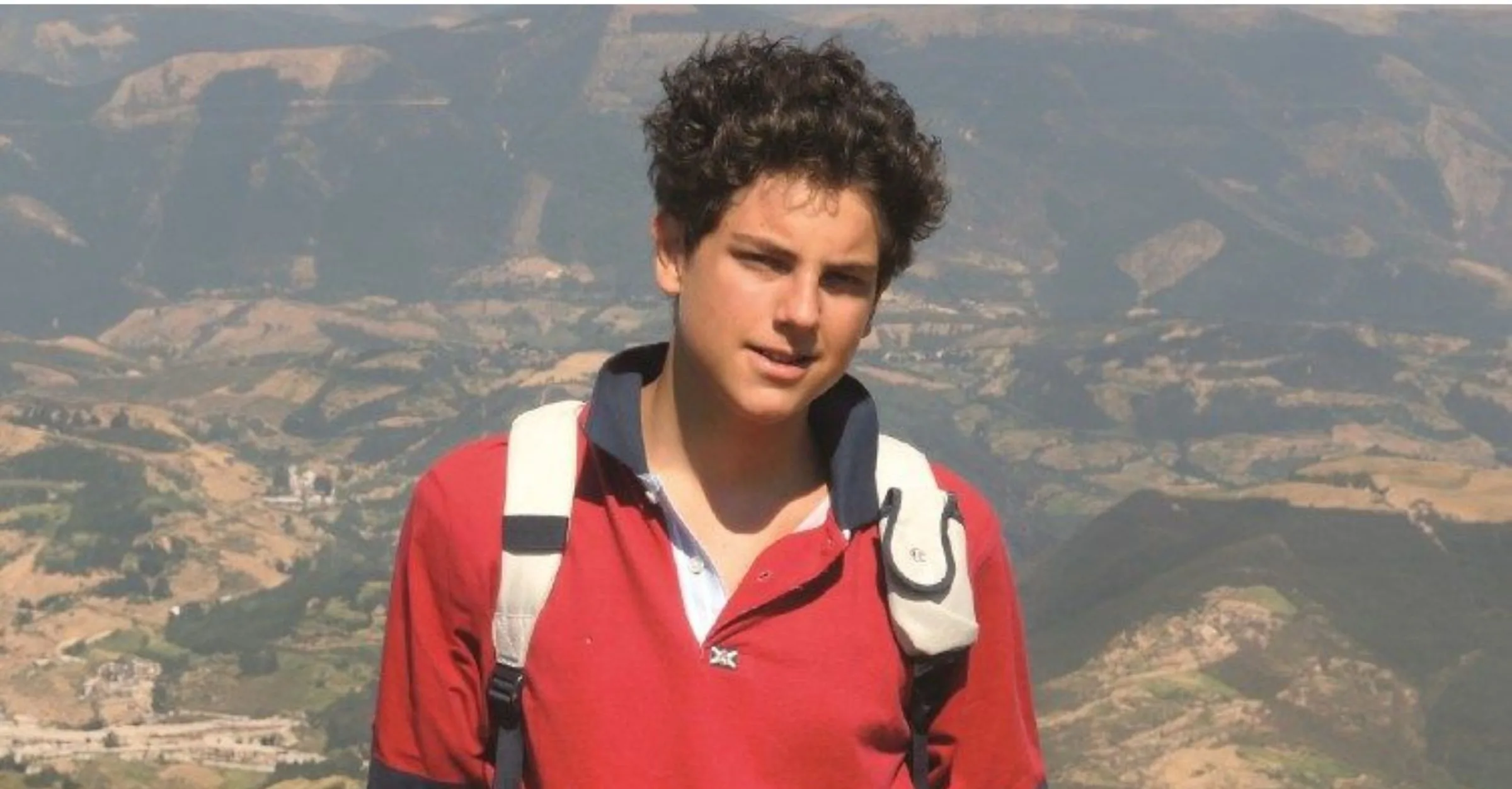
Carlo Acutis, an Italian teenager who died of leukemia in 2006 at age 15, has become known as an “influencer of God” for his use of technology to evangelize before his death.
Pope Leo XIV canonized him on Sept. 7, 2025, alongside Pier Giorgio Frassati, making Acutis the Catholic Church’s first millennial-era saint.
A new documentary about the teenager is now being released. Carlo Acutis: The Young Saint, premiered at the Vatican Film Library on Sept. 29, 2026, ahead of an Italian theatrical run in mid-October and a planned North American premiere in February 2027.


It is a separate production from the earlier 2025 documentary Carlo Acutis: Roadmap to Reality, which was released around the time of his canonization.
In this interview with Roland Müller, Carlo’s mother, Antonia Salzano, talks about the film and about her son, the saint.
The new film about your son, Saint Carlo Acutis, shows many personal images from his life. Was there a scene that made you think: “Yes, that is exactly how my Carlo was”?
With this new documentary, we wanted to show Carlo’s life as it really was. That is why many people who knew him personally also speak in the film.
It includes many photos and videos of my son that had not previously been made public. The film introduces viewers to Carlo’s spirituality, but also to his everyday life.
Is there a difference between the teenager Carlo Acutis and Saint Carlo Acutis?
Carlo was simply a boy who always placed God at the center of his life. From the time of his First Communion at the age of seven, his life’s program was to remain connected to God at all times.
From then on, he went to Mass every day, followed by Eucharistic adoration, and prayed the Rosary daily. He also read the Bible every day, even calling it a “compass” that points directly to heaven.
But Carlo’s deep spirituality did not take anything away from his everyday life as a child and teenager. He had many friends, went to school like any other child, and played sports.
Carlo lived a normal life, but he opened the door of his heart to God. As a result, his ordinary life became extraordinary.
He simply knew that God was present in his life, just as the air we breathe surrounds us. He lived in the constant presence of God.
Anyone who spent time with Carlo immediately sensed that God was present, too. Because of his deep connection to the faith, Carlo was so committed to helping others. He was involved in a wide range of charitable activities and also served as a catechist in his parish.
Some critics see a religious idealization of Carlo Acutis and complain that he is not portrayed enough as an ordinary teenager. What is your response to this criticism?
Being a saint means, first and foremost, loving God. This does not require visions or miraculous healings. In everyday life, it means, for example, thinking of others and of God first, or practicing the Christian virtues.
Carlo was neither an extraterrestrial nor a superhero. He was an entirely normal child who opened himself completely to Jesus and placed him first.
For example, when he was eight, his aunt gave him a PlayStation. But he had read that playing too much could be harmful for children. So he promised me that he would spend no more than one hour a week playing video games. He loved Super Mario and racing games.
Through his self-imposed limits, Carlo practiced the virtue of temperance and thus combined his everyday life with the Christian faith in a very balanced way.
Holiness consists in everyday life and in recognizing that we can accomplish nothing without God. Carlo understood this. That is why he also did not drink alcohol, take drugs, or consume pornography.
He always said that our bodies are temples of the Holy Spirit. He was a normal child because he led a normal life. At the same time, unlike many other people, he chose to remain faithful to the Gospel and live his faith.
All of this sounds more than perfect. But did Carlo also face problems in his life, or did he have to overcome challenges?
Yes, of course. Carlo also struggled with certain things. For example, he was always a very cheerful child and talked a great deal. His teachers were therefore not very happy that, during his first years at school, Carlo talked too much and made jokes.
He first had to learn to be quiet — that was very difficult for him.
We also once had a problem because Carlo had gained weight after spending some time in southern Italy. He had gone out for pizza every evening while he was there.
When he returned home to Milan, he therefore decided to eat only half portions for a while. That helped him get his weight back under control.
Carlo was an entirely normal boy — but he lived his life through faith. He drew his strength from God and was therefore also able to fight for the things he had set his mind to. He was also very reflective: Carlo went to confession once a week, reviewed each day every evening through the prayer of the loving gaze, and wrote down how he had behaved.
He was certainly strict with himself and always wanted to improve — precisely because he had a particular outlook on life.
You are Carlo’s mother and probably know him better than anyone. When did you know that he was a saint?
Even as a baby, Carlo was very sweet and generous. For example, he wanted to give away his toys whenever another child wanted them. We immediately realized that he was a special child. My husband and I jokingly called him “our little Buddha” because of this.
Of course, we did not think that his mission would be to have such an early impact from heaven. Particularly during the summer before his death, Carlo wondered whether he should become a priest or a religious brother. But God had other plans for him.
On the day of his funeral, I first thought that Carlo might one day become a saint. The church was overflowing with people who knew Carlo, and the first people were already praying for miracles.
More and more people came to learn that Carlo was so special — and that it was Jesus who made him special. Carlo’s holiness comes from God.
You are the mother of a saint. Your two children, who were born after Carlo’s death, are the siblings of a saint. Alongside all the positive aspects, is that not also a great deal of pressure on your family?
Every person is unique and is not a photocopy of someone else. That applies to my children, too. They are now almost 17 years old, live their own individual lives, are good children, and go to school.
Like Carlo, they are very religious, pray the Rosary, and attend Mass. Sometimes they also ask Carlo for help. But, once again, they are independent personalities and live their own lives.
Certainly, it is not always easy to be part of Carlo’s family, because when people recognize us on the street, they approach us and ask us to pray for them. But that happens more often to me, because I am the spokesperson for our family and am therefore somewhat better known.
We actually made a conscious decision as a family to do this in order to protect our children. After all, we also want to have a normal family life. But for me, it has become my mission — sometimes I even call it my purgatory. (laughs)
I only turned to the Christian faith when Carlo was six years old, and I always said that I would probably end up in purgatory. I know what it means to be holy, because I lived with a saint for many years. Holiness is not an easy path.
This is a translated and edited version of the interview that first appeared on Domradio.de and has been republished with permission.