
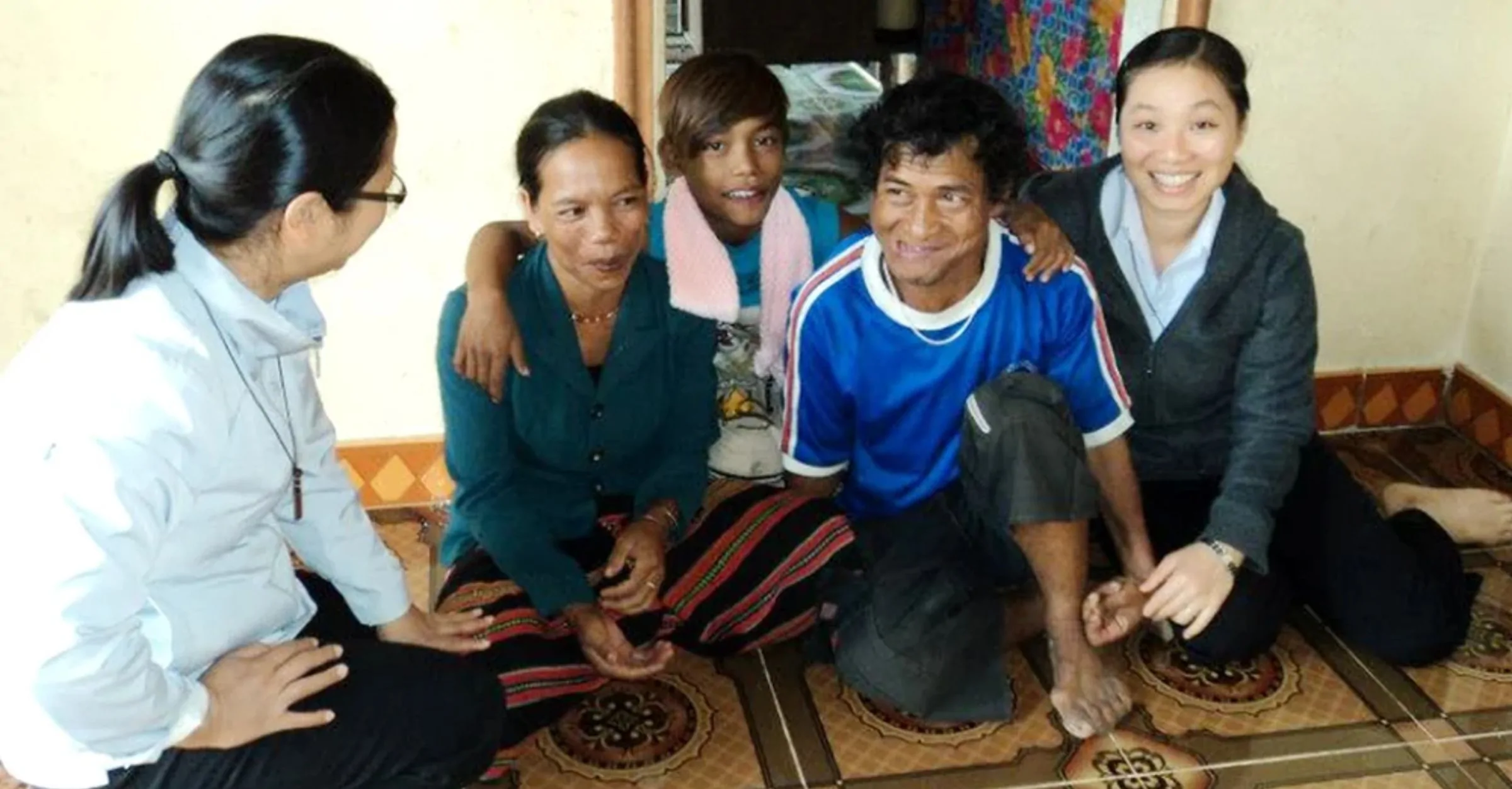
Lucy Tranh Ho, a member of the Van Kieu community, and her mother had an unexpected visitor on a cold December day in 2017.
The visitor, Sr. Mary Ter Lynh Ho, smiled and gave Tranh a purple sweater.
“Put it on to get warm,” Ter Lynh told the 5-year-old.


Ter Lynh then invited Tranh’s family to attend a Christmas celebration at the remote Khe Ngai Mission Station in Vietnam’s central province of Quang Tri.
Tranh, who accompanied her mother to work in the fields every day, developed a close relationship with Ter Lynh and moved to her convent, where she received free accommodation and Vietnamese lessons.
Now, she is one of 20 Van Kieu students in the nuns’ care and studies at a local public school.
“I am indebted to Sr. Ter Lynh for all her love and support,” Tranh, who is in eighth grade, told Global Sisters Report. “I love her as much as my mother.”
Ter Lynh of the Lovers of the Holy Cross of Hue leads a community of three nuns in Khe Ngai and has worked with local villagers for 13 years. She is also a member of the Van Kieu community.
“I am assigned to improve the material and spiritual lives of local ethnic villagers,” she told GSR.
Ter Lynh, 54, is one of a few sisters committing themselves to communities of ethnic groups in the mountainous areas in Quang Tri and Hue.
The Van Kieu people have a population of around 95,000, and mainly reside in the provinces of Quang Tri, Quang Binh and Thua Thien Hue, while the Pako (or Pacoh) ethnic group, numbering about 20,000, mostly live in Hue.
Marriage customs among both groups include child marriage, marriage between close relatives and the payment of a bride price.
They make a meager living from growing crops, raising cattle and poultry, and collecting food items from forests. Many have little access to education and health care and cannot speak Vietnamese.
Young people in the community often move for work, mainly on construction sites due to a lack of vocational skills.
The Khe Ngai Mission Station, established in 2012, serves about 100 Van Kieu Catholics who gather at a local family’s house, where visiting priests celebrate Mass. The station is 20 kilometers away from the nearest hospital.
“Our long-term presence aims to bring the love of God to them through education, health care, ministry, livelihood support and cultural preservation,” Ter Lynh said.
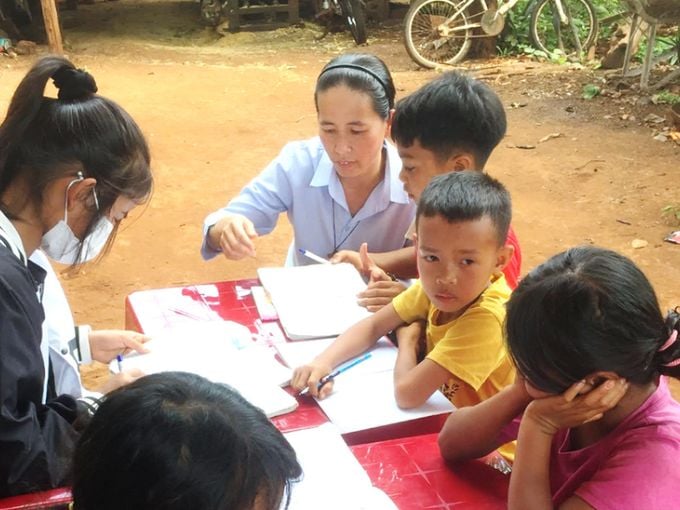
A trained preschool teacher, she works with kindergartners, teaches Vietnamese and life skills, and sings hymns in the local language.
Ter Lynh said she treats the villagers as “my real relatives.”
The nuns provide scholarships for students, give material and emotional support to people in need, and offer vocational training to make brooms and bamboo furniture. They also provide medicine and spiritual accompaniment to those who want to convert to Catholicism.
Ter Lynh told GSR that villagers often invite shamans to give offerings to ghosts and treat illnesses. In many cases, people die, and the shamans blame the ghosts.
Martha Ho Buoi, 42, told GSR that she suffered from digestive disorders and a shaman had failed to cure her. She said she only recovered after taking medicine provided by the nuns.
“I decided to embrace Catholicism in 2024 to believe in God and show my deep gratitude to the sisters,” she said.
Buoi now refers people to the nuns for medical treatment rather than to shamans. The nuns also give financial support to those treated in hospitals for their medical expenses.
Ter Lynh said the nuns win people’s hearts by being present and among them when they are in need.
“Local people love and trust us, allow their children to be in our care, and especially find divine love from our service,” she said, adding that more than 40 people have embraced Catholicism.
Many in the community express their gratitude to the nuns by sharing agricultural products such as young bamboo shoots, sugar cane, corn, honey and poultry.
“What keeps us here is the emotional bonds and the warmth of their daily lives we find among the people,” she said.
The nuns also encourage them to serve their own people.
Peter Ho Long, who was born with paralysis in both legs and orphaned as a child, was raised at the Cam Lo community by Sr. Anna Tran Thi Hien of the Lovers of the Holy Cross. Hien has worked there for 15 years.
“The nuns give me an opportunity to live with dignity, so I try my best to do something useful for my people,” said Long, who works for a local agricultural cooperative.
In 2022, Long and Ter Lynh launched a project to create sustainable livelihoods for local people. About 50 families in Huc Thuong village received food and fertilizers to cultivate tea and medicinal plants in their gardens and on hillsides.
“Many no longer suffer from lack of food,” Long said, adding that in the past they cut trees for a living and got involved in farmland disputes.
“Once their basic needs are met, they can be kind enough to one another,” he said.
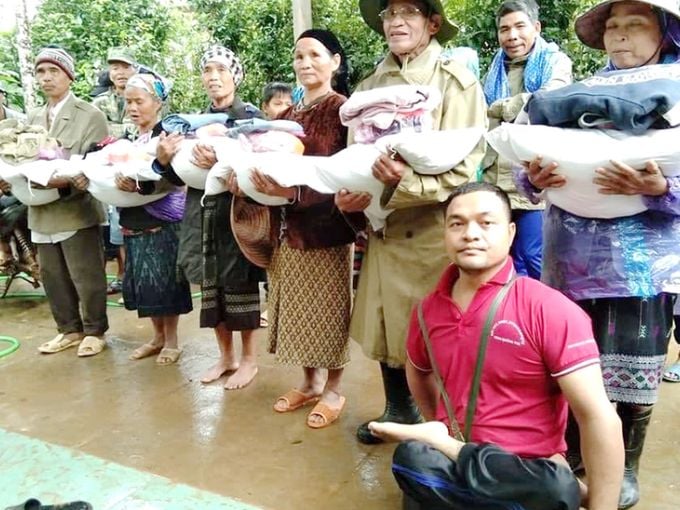
In Hue’s A Luoi commune, Sr. Marie Monique Dang Thi Sang of the Daughters of Mary of the Immaculate Conception has worked with the Pako people since 2014.
“We live among them, respect their culture, treat them as our relatives, come to their aid in hard times, and consequently we are received into their community,” said Sang, who heads a local five-member community.
She recalled, “When I came here for the first time, I was really nervous of my own shadow because I had never been in remote areas and worked with ethnic people.”
She feared walking along winding forest paths and wading across flooded streams, and reluctantly engaged with them as she didn’t yet understand their language.
“Now we are happy to be members of this community, from whom we learn community solidarity, humanity, loyalty, bonds, simplicity, honesty, hospitality,” she told GSR.
“We enjoy mutual belonging and share fun and sorrows with one another,” she added.
The nuns in Hue’s A Luoi commune provide the community with basic education, vocational training, livelihoods and health care. In return, the local community helps the nuns repair their houses, invite them to attend weddings, funerals, and other community festivals, and offer fish, poultry, and fruits.
Ter Lynh and Sang also help local people document and preserve their costumes, gong music, folk tales, long-standing traditions and the histories of festivals passed down for several generations.
However, the nuns face constant challenges. They experience burnout after regularly walking up to 10 kilometers through forests to visit villagers, and struggle to raise donations.
“But we have to overcome those obstacles for their better life,” Sang said. “Many young people choose to follow higher studies rather than enter child marriages, and many families ignore certain marriage customs. For example, women, after their husband’s death, were forced to remarry his brother.”
For Tranh, her life has been transformed since Ter Lynh’s first visit to her home.
“I embraced Catholicism in 2018. I am eager to become a nun to serve people in the future.”
This column first appeared on Global Sisters Report and has been republished with permission by Global Catholic.