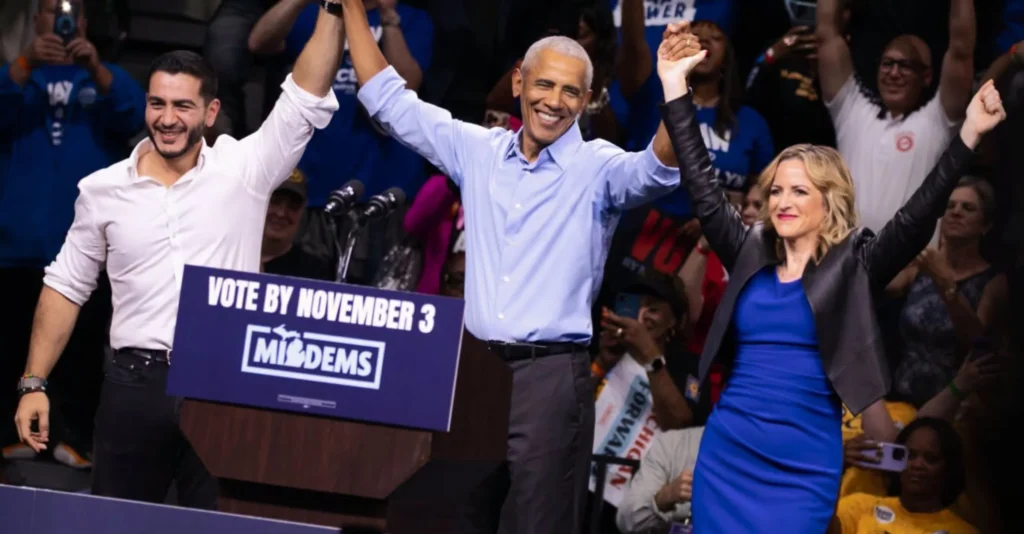
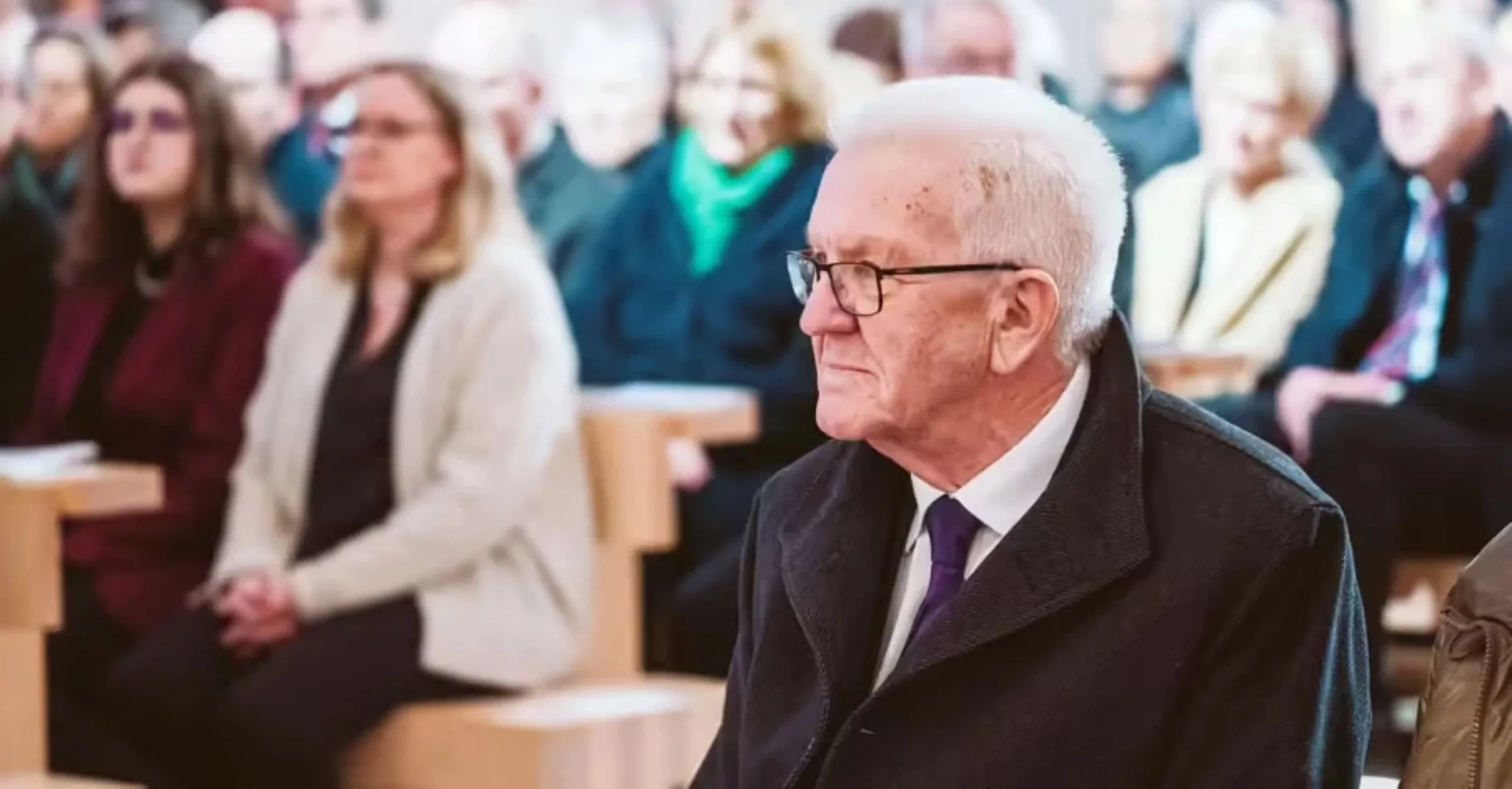
Winfried Kretschmann is one of German politics’ most prominent Catholic laypeople.
He served as Minister-President of Baden-Württemberg from May 2011 to May 2026 — making him Germany’s first-ever Green Party head of a state government and, by the end of his tenure, the longest-serving state premier in the country, as reported by multiple German outlets covering his departure.
He was succeeded by fellow Green politician Cem Özdemir. Kretschmann also served as a member of the Central Committee of German Catholics (ZdK) — the main lay organization representing German Catholics in dialogue with the church hierarchy — and as president of the Bundesrat, Germany’s upper house of parliament, from 2012 to 2013.


In this interview with Hilde Regeniter, the German Catholic broadcaster based in Cologne, Kretschmann speaks candidly about his own history with the church: a happy, liberal Catholic childhood, followed by what he describes as brutal beatings and sexual assaults he witnessed and experienced at a Catholic boarding school.
He discusses his departure from the church, his eventual return, Germany’s 2010 clergy abuse scandal — the year revelations of widespread abuse at Catholic institutions, including boarding schools, broke into German public life — and the long-stalled legacy of the 1971–1975 Würzburg Synod.
TheWürzburg Synod was a landmark gathering of German bishops, clergy and laypeople that produced 18 resolutions (from an original 49 proposed topics) aimed at implementing the Second Vatican Council in Germany, but whose unanswered proposals Kretschmann argues still haunt the church’s more recent reform effort, the Synodal Path (2019–2023). He closes with direct advice for Pope Leo XIV.
This is an edited version of the interview from the Nov. 18, 2026, episode DOMRADIO.DE’s Himmelklar podcast.
Your personal experiences in and with the Catholic Church have not always been positive. As a child, you attended a Catholic boarding school, where you had some terrible experiences. What exactly did you have to endure there?
Winfried Kretschmann (former Minister-President of Baden-Württemberg): First, I have to emphasize that I had a happy childhood. I grew up in a Catholic but very liberal household, where people always thought freely and engaged in arguments.
My family naturally participated in the rhythm of the liturgical year, which used to structure life very strongly. This was never questioned. In other words, I had a truly wonderful childhood.
That was no longer the case at the boarding school. There, I encountered a side of the Church that was extraordinarily negative. For example, I had to witness brutal beatings at the boarding school. That is unforgettable. There were also sexual assaults.
In my case, however, they were relatively mild. Others, by contrast, were affected for the rest of their lives. I experienced everything that is now known about these boarding schools.
Thankfully, I was not personally traumatized in any way. Nevertheless, following these authoritarian experiences at the boarding school, I was later strongly drawn to the rebellious students with their anarchic concept of freedom.
Eventually, I even ended up in a Maoist sect. In that sense, these were formative and important experiences.
Nevertheless, these experiences did not manage to destroy your faith or your affiliation with the Catholic Church. You left the Church for a time, but then returned. Why did you not lose your faith?
First of all, I think it was because of the influence of my family. That was evidently stronger. But also because of my great love for sacred art, music, and church architecture.
I always think: What would Christmas and Advent be like without the Church’s hymns? We are even inundated with them in department stores, places where people hardly even know what Christmas is anymore. So you cannot really escape them.
Of course, there were also obstacles. I would put it this way: If you look at the theory of evolution, you have to perform quite a few intellectual somersaults to reconcile it with belief in God. That requires a great deal of reflection.
I also received many impulses from outside. For example, from Hannah Arendt — the German-American political philosopher (1906–1975), who wrote extensively on totalitarianism and engaged seriously with Christian theological thought — who, as a Jew, engaged very deeply with the Christian faith. These impulses helped me find my way back.
Once you have rejoined an institution that you had left, it is a conscious decision. It has to be a well-considered step.
Leaving again would not be an option. Because then you would show that you do not even know what you yourself want. And since I already knew the Church’s shortcomings and had experienced them firsthand, my return was a very conscious decision.
In 2010, the abuse scandal shook the Church, and many cases, including those like what you experienced, came to light. What did that do to you?
I think that, precisely because I knew about it from my own experience, I was not as astonished as many others. Nevertheless, the extent of it surprised me. Above all, I was surprised by how much had been covered up.
Still, we can be grateful that the debate has begun about what aspects of Church structures facilitate abuse.
There have been many misconceptions regarding celibacy. Celibacy itself has nothing to do with abuse to begin with. But it raises the question of whether celibacy might attract precisely those people who have unresolved questions about their own sexuality.
The reform process in the Catholic Church emerged from these findings surrounding the abuse scandals. Although the reform initiatives in the Church no longer concern you as much in retirement, you were involved in them as an active member of the Central Committee of German Catholics (ZdK). What hopes did you have at the time?
I would say they were very muted.
Let me explain it this way: After the Second Vatican Council, there was the Würzburg Synod. To this day, the Vatican has not responded to it.
Looking at that, I thought: There is little reason for optimism about developing a synodal path when the Vatican refuses even to respond to the results of a synod.
The Apostle Paul said that we must always be ready to give an account of our faith. I think it is irresponsible for the Vatican to believe that it does not have to respond to a synod.
“Responsibility” has something to do with “responding.” In a hierarchy, those in positions of responsibility have many rights, but they do not have the right not to respond. I deny them that right.
I mean, if the Church had always behaved this way, the Apostle Paul would never have written letters to his communities. But he did, as we see, for example, in the case of Corinth.
That is why I say: Church leadership has no right not to answer questions. In that respect, this was scandalous behavior that was contrary to the faith.
This reminds me of the beautiful aria from Messiah — George Frideric Handel’s 1741 oratorio — that says, “And I shall purify the sons of Levi.”
I will purify the children of Levi. The children of Levi are the priests. In the Old Testament, the tribe of Levi provides the priests. The children of Levi must be purified again and again.
The hierarchy must purify itself. This point is absolutely clear to me, and you can hear it in my voice: a mild anger is rising in me.
Against this background, what would you like to advise the new Pope, Pope Leo XIV?
Respond. Respond to everyone. Argue with them — and do so publicly.
This is a translated and edited version of the column that first appeared on DOMRADIO.DE anf has been republished with permission.
https://www.domradio.de/artikel/warum-kretschmann-trotz-missbrauchserfahrung-glaeubig-ist