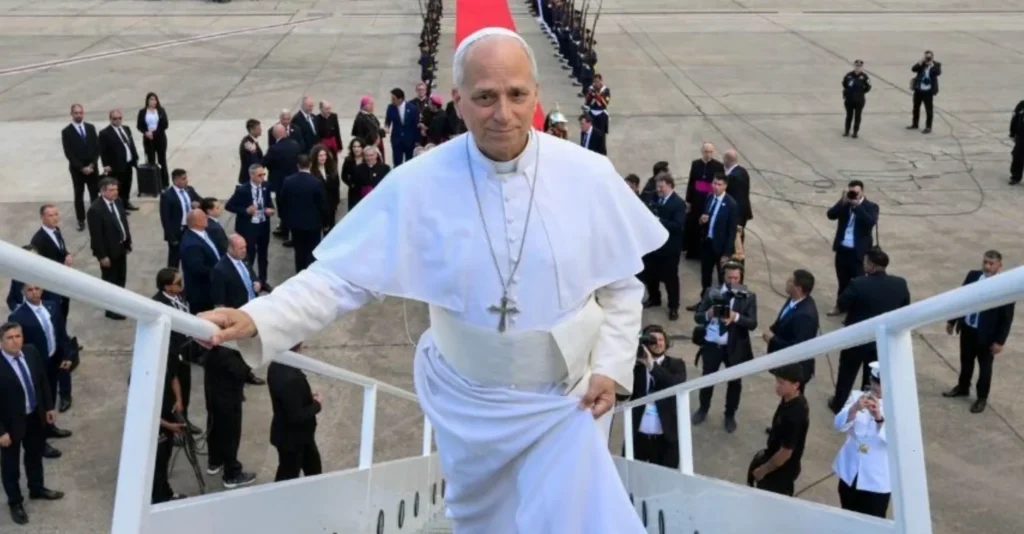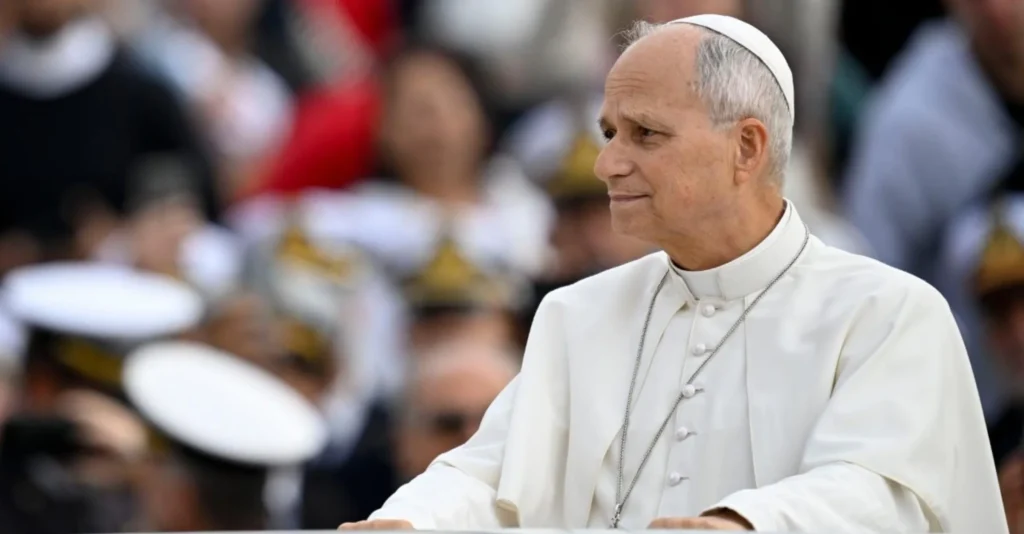

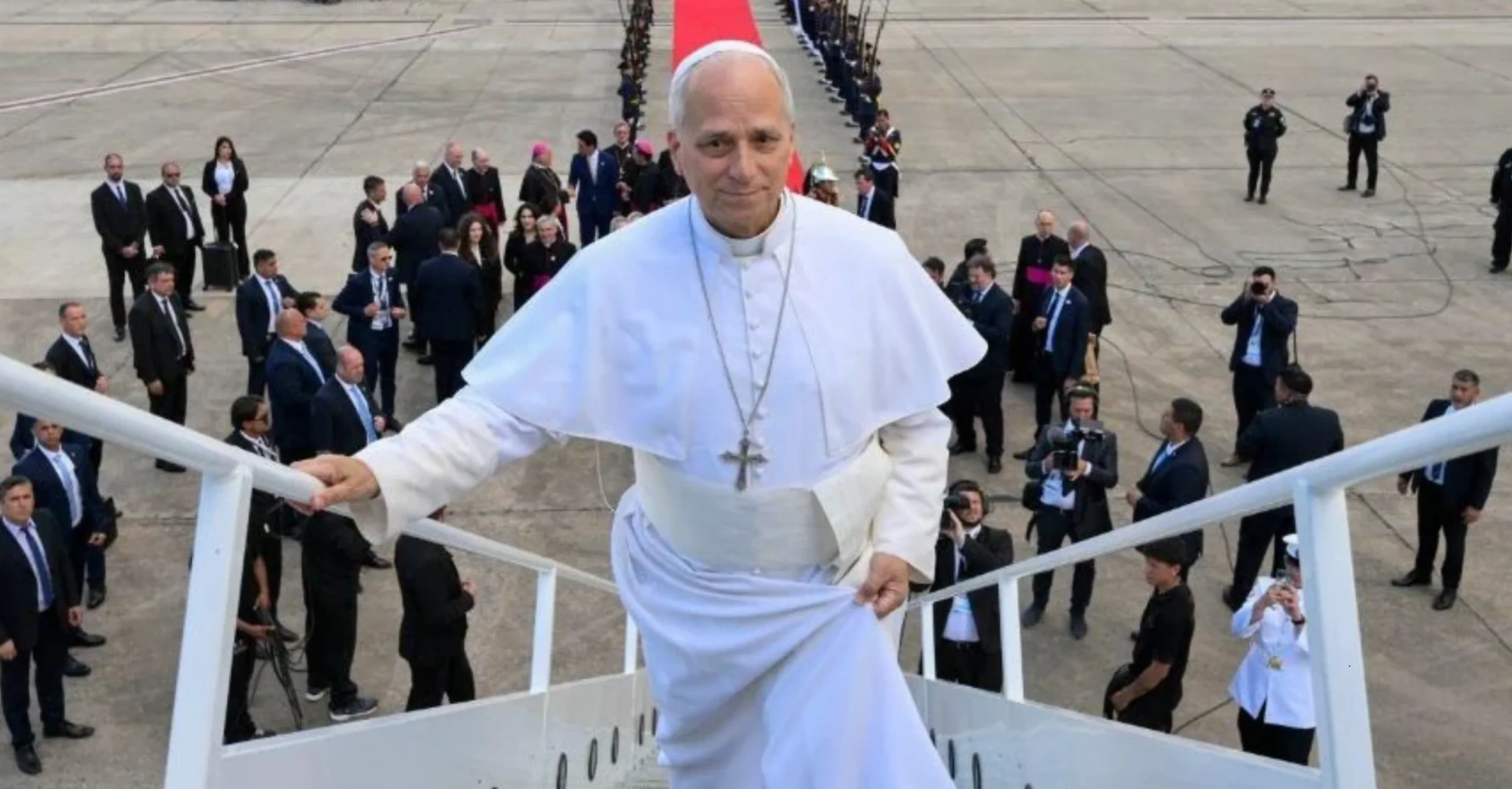
“For twelve years, the universal Church listened to the voice of an Argentine Pontiff,” Leo XIV said in Buenos Aires on Nov. 8, as President Javier Milei looked on.
“Today . . . I am, in a sense, traveling the road in reverse.” From Montevideo to Luján, he has handled the inheritance of Francis by retracing it to the place where it began.
In Uruguay, Francis was one voice of the magisterium among several, cited alongside the Second Vatican Council, John Paul II, and Benedict XVI.


The encyclical Laudato Si’ was brought in to make the point that the common good includes the generations to come; Fratelli Tutti, in the Montevideo neighborhood of Casavalle, was brought in to remind listeners that each day one chooses between being a Good Samaritan and being an indifferent passerby.
In Argentina, the register changed. At the Cathedral of Buenos Aires, Leo, accompanied by a few children, laid flowers at the plaque commemorating Jorge Mario Bergoglio and commended the Aparecida Document to the bishops as a “luminous trail.”
At the Mass beside the Monumento de los Españoles, he read a passage from Amoris Laetitia to families; to the leaders of other faiths, he offered the prayer that closes Fratelli Tutti.
Speaking with workers and employers, he discussed integral ecology, the throwaway culture, the peripheries, and social friendship; he defended the popular movements and the three “T”s (tierra, techo, trabajo: land, housing, and work).
All this arrived inside an orderly lecture on the principles of Catholic social teaching, running from Leo XIII to Pius XI, with a tribute to the businessman Enrique Shaw.
The most pointed citations came in Córdoba, before the clergy.
Leo recalled that an Argentine Jesuit had brought the Spiritual Exercises of St. Ignatius to the universal Church, and then chose two lines from his predecessor: “The worst discrimination which the poor suffer is the lack of spiritual care” (Evangelii Gaudium, 200) and “The Church is not an N.G.O.,” because a Church that failed to bring Jesus “would be a dead Church.”
He asked his listeners to dream of a Church that keeps making a mess, hacer lío, as “your countryman Francis” had urged.
That evening, at the vigil with young people, he took up Francis’s “Todos, todos, todos,” from Lisbon and declined it: everyone toward Christ, everyone with Christ, everyone like Christ.
The motto of the Argentine leg of the trip says as much: “All Are Welcome. Go and Proclaim!”
Leo’s Francis, then, is the Francis of proclamation. Closeness to the poor endures at the Cottolengo in Claypole and in the federal prison in Buenos Aires, and it raises the question of holiness: In Claypole, the pope quoted Gaudete et Exsultate and wished Argentina “a new generation of saints of charity.”
In Luján, on Nov. 11, the remembrance turned personal.
Francis carried the Patroncita Morena, the little dark patroness, in his heart; he chose to be buried near Mary; and he often bid farewell with the words, “May Jesus bless you and the Holy Virgin watch over you.”
Leo added a date of his own: his pontificate began on a May 8, the feast of Our Lady of Luján.