






During a conversation with David Hoyle, the Dean of Westminster Abbey, I was struck by his description of the Abbey as “a place of contradiction.” He pointed to the burial sites of Mary I and Elizabeth I, monarchs who were divided by bitter religious conflict and by profoundly different visions of England.
Yet there they rest, in the same sacred space. The Abbey does not erase disagreement, Hoyle explained; it simply refuses to let disagreement have the final word.
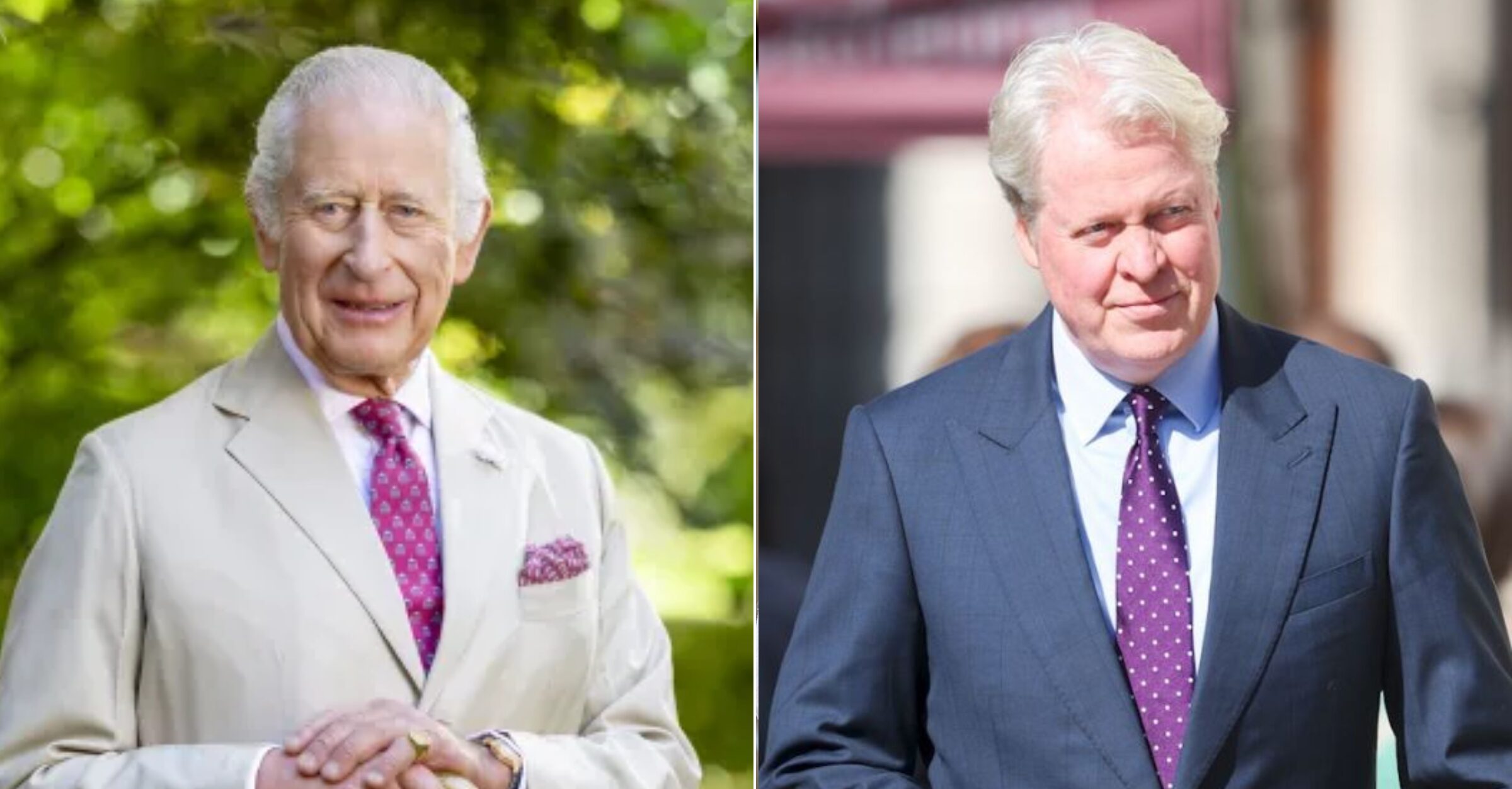
I was reminded of those words while following the public dispute between King Charles III and Earl Spencer, the brother of the late Diana, Princess of Wales.


Spencer’s forthcoming memoir has reopened one of the most painful chapters in the modern royal family’s history after the book reportedly accused Charles of insensitivity. Following Princess Diana’s death in 1997, Charles reportedly told Earl Spencer, “We’ll forget her soon enough.”
The allegation prompted an unusually direct intervention by Buckingham Palace in the form of a statement. “While we do not comment on books as a matter of principle, His Majesty is mindful that the pain of fraternal grief can cloud reason, affect judgment, and colour memory in ways others do not recognise, even many years after such a loss,” it said.
Predictably, attention has focused on credibility. Who remembers correctly? Has grief altered memory? Can the historical record establish what was said nearly thirty years ago? These are important questions, but they are insufficient.
The dispute’s fascination lies in the fact that it is about more than evidence; it is also about memory, identity, and meaning. We are seeing a struggle over what Diana’s death meant, what it revealed about those around her, and which account of that moment deserves to be believed. That is why the controversy extends beyond the royal family.
Most families, including my own, contain disputed memories, and institutions harbor old grievances. Human beings rarely argue only about facts; we also argue about the significance of facts and the stories by which we understand ourselves.
Intellectual life: Strengths and limitations
This is where modern intellectual life reveals both its strengths and its limitations. As a history graduate, I could help reconstruct events. As a writer, I could establish timelines and test competing claims. As a Samaritan counselor, I could explore grief, trauma, and memory.
All are essential disciplines; I am happy to be a historian, writer, and counselor, but each has its limitations. Explanation, sadly, is not the same as reconciliation. Only the Christian tradition can offer true reconciliation in the person of Jesus Christ.
Joanna Collicutt, a psychologist of religion, has argued that beliefs are often intertwined with identity. A challenge to a deeply held conviction can therefore feel like a challenge to the self. This insight is particularly relevant here.
Diana is not simply a historical figure; for Spencer, she was his sister. For Charles, she was his former wife and the mother of his sons. For millions of others in the UK and around the world, she became a symbol onto which ideas of duty, suffering, betrayal, and compassion have been projected. Therefore, arguments about Diana become arguments about ourselves.
Psychology can help explain why people remember differently and why old wounds persist. It can illuminate the relationship between grief and perception. But it cannot, on its own, tell us what ought to happen next.
❝
The language of forgiveness, repentance, grace, and reconciliation exists because human beings need more than explanation. They need healing.
Once we understand why reconciliation is difficult, why should we pursue it?
This is, at its core, a moral question, and it is here that the Christian tradition has something distinctive to contribute. Christianity’s commitment to truth is often misunderstood. It does not ask us to pretend that wrongdoing never occurred or that painful memories should simply be forgotten.
Indeed, forgiveness without truth becomes sentimentality. The Christian tradition insists that reality be faced honestly.
Yet Christianity also refuses to make vindication the ultimate goal. The New Testament repeatedly places truth, forgiveness, and reconciliation alongside one another. The purpose of truth is not merely to establish innocence or assign blame; it is ordered toward restored relationship. This is an uncomfortable idea in a culture that often treats victory as the endpoint of disagreement.
The Church’s emphasis on synodality points, at least in part, towards an answer. At its deepest level, synodality is not a promise that everyone will agree. It is a discipline of listening. Listening is not agreement; it is the recognition that another person is more than the position they hold.
That recognition is increasingly difficult in a culture organized around competing narratives. Every side has its evidence, and its experts. Often, every side possesses a story in which it occupies the moral high ground.
We have become highly skilled at analyzing one another and noticeably less skilled at encountering one another.
The danger is that explanation itself becomes a kind of distance. We can diagnose another person’s grief without entering into it and explain their motives without understanding their pain.
People can become so concerned with deciding whose account should prevail that we forget the deeper question of how human beings are to live with one another after the argument is over. Christianity proposes that memory need not become destiny.
Westminster Abbey is a place of contradictions
That does not mean pretending that disagreements are unimportant. Nor does it mean declaring all narratives equally true. Rather, it asks what kind of future remains possible after hurt.
The language of forgiveness, repentance, grace, and reconciliation exists because human beings need more than explanation. They need healing.
Westminster Abbey remains a place of contradiction. Its walls hold the graves of people who profoundly, sometimes violently, disagreed about the faith, government, and the future of their country. The Abbey does not resolve those contradictions; it places them within a larger story.
Perhaps that is what our own conflicts require. The deepest question raised by the dispute between Charles and Spencer is not simply who remembers the past more accurately, important though that may be.
Beneath it lies a more enduring question, one that historians and psychologists can illuminate but cannot answer alone: Can truth become the beginning of reconciliation rather than the final weapon in the argument?
That is a question for royal families, for nations and communities, and for our local church communities. It is also a question for which secular tools, valuable though they are, may never be sufficient.










2 Comments
Lionel Fernandes
September 24, 2026I was deeply moved by this article. Its tone, style and solid Christian substance inspired me and gave me many valuable insights. I hope its message is widely disseminated and takes root in people’s minds and hearts. Many thanks to the author.
James Gordon Reid Haveloch-Jones (Author)
September 25, 2026Dear Lionel, these are generous words and than you for your kind reflection. Please do share the article with your family and friends, and I hope you enjoy my piece next week as well for ‘Vox Pop’. Best Wishes, James