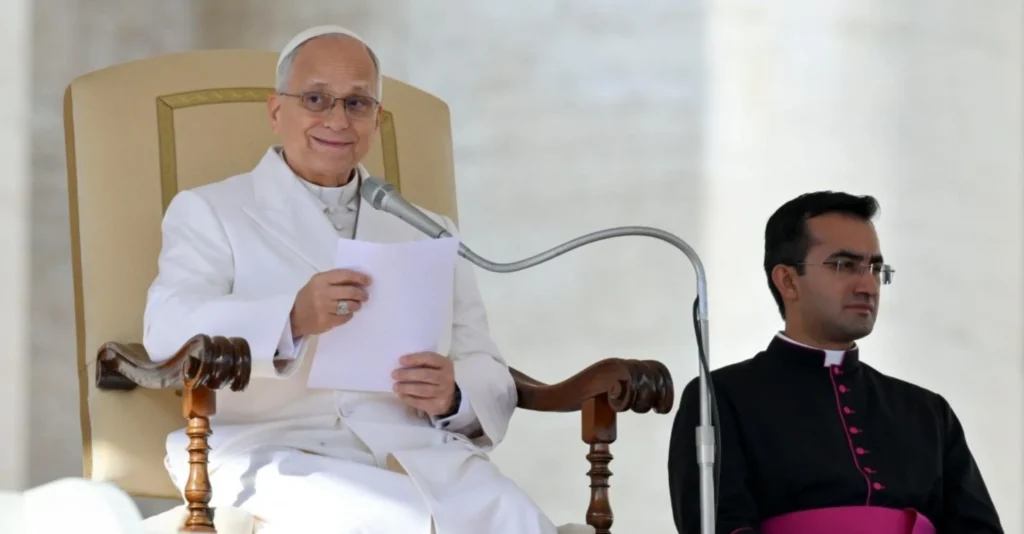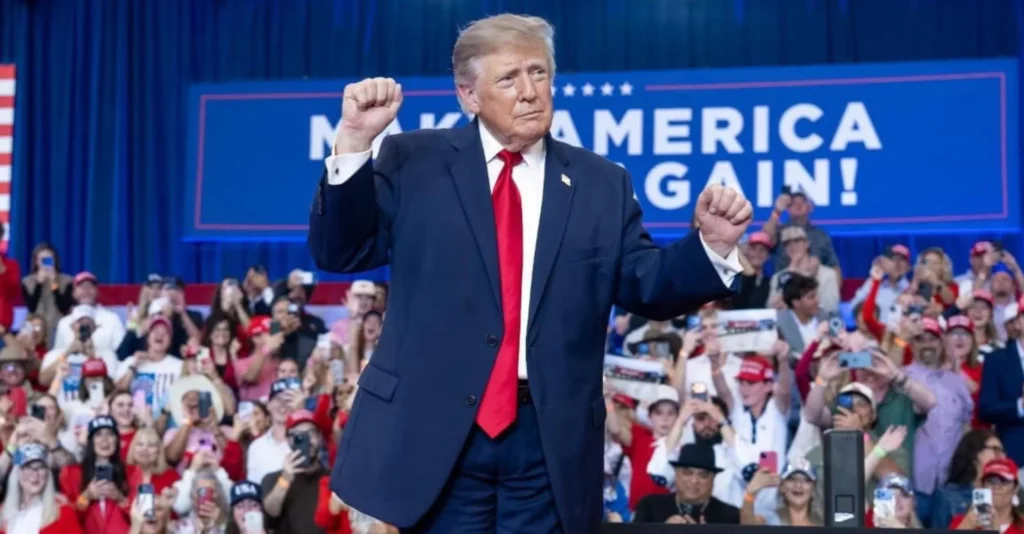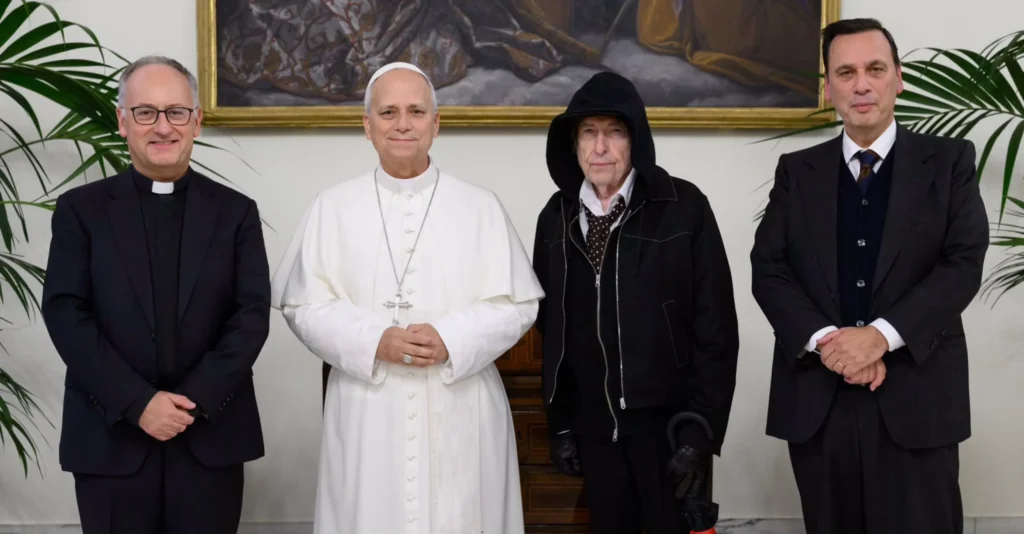
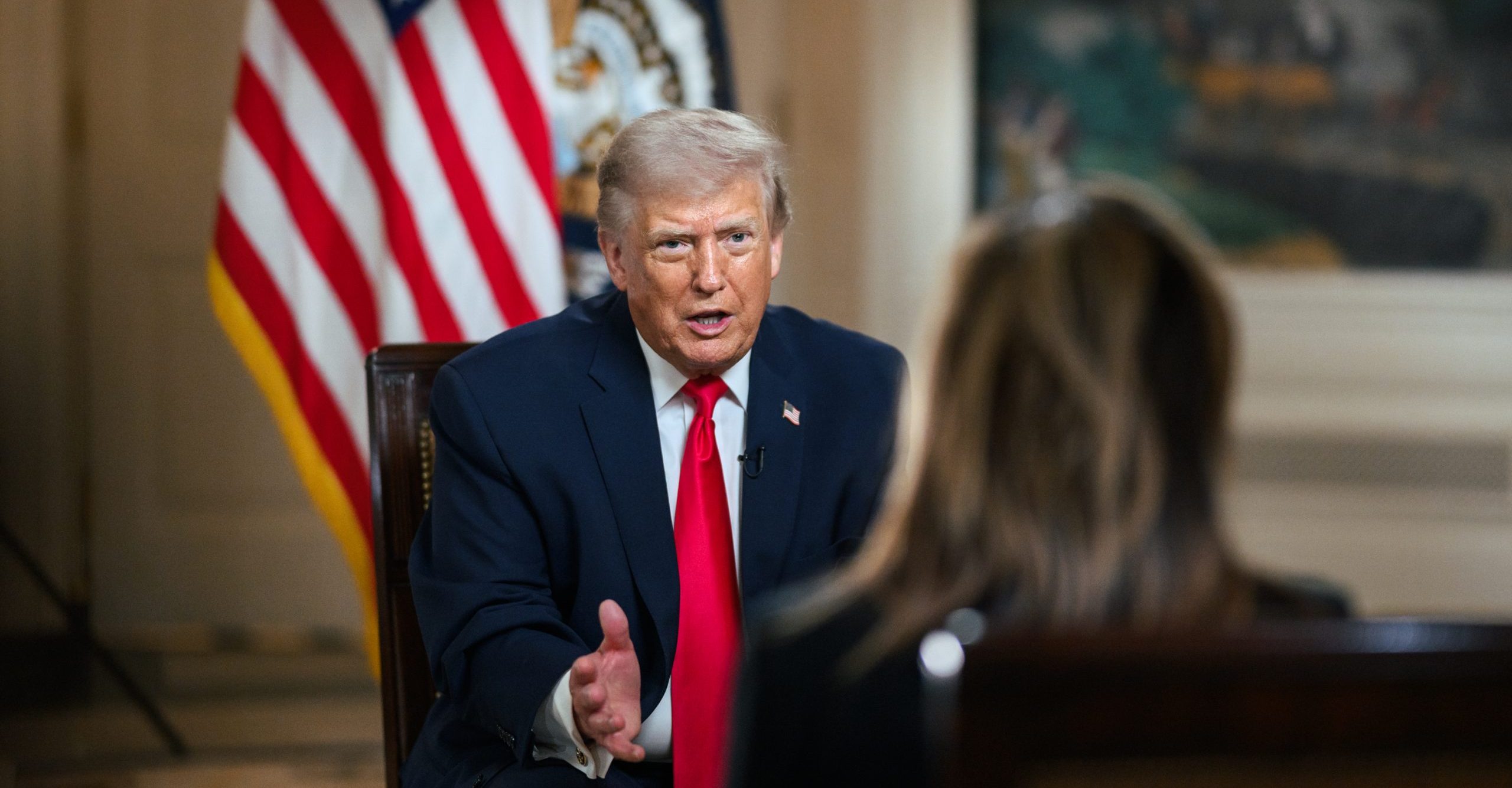
The growing tensions between US President Donald Trump and Pope Leo XIV have drawn global attention and raised questions about the widening gap between American politics and the Catholic Church.
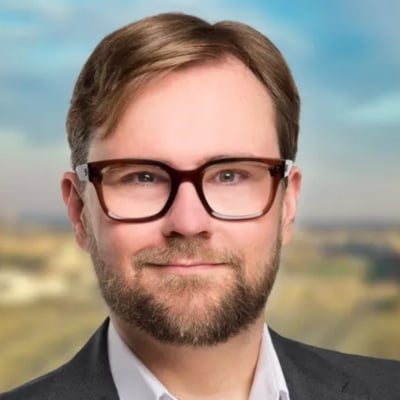
Benjamin Dahlke, a theologian and expert on the United States, is professor of dogmatics and the history of dogma at the Theological Faculty of the Catholic University of Eichstätt-Ingolstadt in Bavaria, Germany.
In an interview with Renardo Schlegelmilch, Dahlke argues that disagreements over migration and human dignity lie at the heart of the tensions, making a papal visit to the United States unlikely in the near future.


Religion has played a role in the United States since its founding. How does this relate to the current situation involving Pope Leo XIV and Donald Trump?
The pope and Trump have clashed repeatedly. This is primarily connected to the war involving Iran. The pope adopted a rather pacifist position, which greatly angered Trump.
We all remember the tweet Trump posted in which he portrayed himself as a kind of savior figure. That caused quite a stir, things escalated, and strong emotions were involved.
Why should this papal voice — which has always advocated human dignity, religious freedom, and peace — suddenly become contentious?
It is contentious because very few people in the world openly contradict Trump and do not immediately back down.
The pope is not a power constrained by economic or military interests. He stands for human dignity and value-based thinking.
That is why it is entirely right for him to maintain his position—the position of the Catholic Church and of human dignity.
Pope Francis did the same. Is it different now because Leo is an American pope?
Francis had major difficulties with Trump and made this quite clear. There was no good relationship at all.
Trump’s relationship with Pope Leo, on the other hand, was previously relatively undefined, essentially friendly and open. Through his actions, Trump has effectively slammed the door shut for no reason.
Instead of building a relationship with a pope — an American interested in sports and baseball — Trump has needlessly squandered goodwill.
Your new book, One Nation under God – which was coauthored with Herder Verlag and published on June 15 — examines the relationship between Church and politics. How has the relationship among Republicans, Democrats, and Catholics evolved over recent decades?
What is interesting about the United States is its two-party system. People vote either for the Democratic Party or the Republican Party.
Historically, Catholics largely sided with the Democrats. They were deliberately integrated into the party, and they helped deliver votes.
In the 1970s, this changed significantly, largely due to abortion-related court rulings. Over the past few decades, Catholics have generally supported the Republican Party. Whether this will continue remains to be seen.
It also depends on the direction the political parties themselves take. Catholics are not permanently tied to the Republican Party as Evangelicals have largely aligned themselves politically with it.
Catholics are often described as the most significant religious voting bloc. But they are not homogeneous with Irish Catholics in the Northeast and Hispanics in the Southwest. How are they politically positioned?
American Catholicism is extremely diverse. Regional, ethnic, and linguistic backgrounds matter, that is, whether someone speaks Spanish or English.
Broadly speaking, one might say that white Americans tend to vote Republican, while many Latinos, or Spanish-speaking Americans, tend to lean toward the Democrats. This is also connected to the immigration policy.
Nevertheless, Trump managed to win a surprisingly large number of votes from ethnic minorities. Many Spanish-speaking voters, as well as many African Americans, voted for Trump.
The US bishops’ conference is generally considered conservative, with most of its bishops appointed by Popes John Paul II and Benedict XVI. Yet it is also divided, with more liberal voices, such as Cardinal Blase J. Cupich of Chicago. How are the bishops responding to the Trump-Pope tension?
Traditionally, the bishops’ conference focused primarily on abortion. That was the priority in nearly all of its political statements. The bishops opposed abortion and supported policies intended to overturn or overcome such legislation.
Trump’s measures against migrants have changed that. Another issue has now become central: how to shape immigration and naturalization policies in a way that responds appropriately to reality.
On this point, the bishops’ conference is surprisingly united, with hardly any dissenting voices. The bishops say that what Trump and his administration have done so far—and what they intend to do—is excessive. It goes beyond legitimate concerns and is too far.
When can we witness the first meeting between Trump and the Pope?
Because of Trump’s actions, it seems very unlikely to me that the pope will visit the United States anytime soon.
I could imagine Vice President JD Vance, who is himself Catholic, traveling to the Vatican more frequently for discussions.
On July 3, the eve of Independence Day, the pope will deliver a speech digitally in Philadelphia, where he will receive an award.
I am very curious to hear what he will say about the history of the United States and about the present and future of the country that is also his homeland.
This is a translated and edited version of the interview that first appeared on DOMRADIO.DE and has been republished with permission by Global Catholic.