Conventional wisdom holds that it takes a century for an ecumenical council to flower and bear fruit. Altering customs and habits of thought, especially when they are linked to faith, takes a long time. Simply getting word out of a council’s teaching and its implications can take decades.
Then there are people and institutions for which new directions, practices, or emphases appear as threats to ideas and practices that have taken years to master. Some people have a vested interest in preventing or holding back change.
Habits of thought that have been nurtured over a lifetime of individuals and institutions do not change easily. And so, it is not surprising that it can take a century for a council to have its full impact on the life of the Church.


The generation of slaves who left Egypt under Moses’ leadership struggled half-heartedly or reluctantly or not at all and with little success to lose Egyptian religious habits and a slave mentality. Ultimately, they had to die out before the new people of God could enter the promised land in freedom. Likewise, the degree of change a council like Vatican II calls for takes generations to become second nature.
So, what of Vatican II? It is a half-century since that council. Are we halfway to a Vatican II Church?
Probably not.
When that council ended, many hoped that an era of change was ahead for the Catholic Church. There would be more participation by the entire People of God in setting directions and practices for the Church; Scripture would become the guide for thought and action; there would be empowerment and perhaps even ordination for women; there would be new strides toward Christian unity; there would be more engagement with a world that had changed drastically in the twentieth century; there would be more interest in and acceptance of non-European thought and experience; there would be a move beyond a medieval monarchical model of Church leadership.
They did not happen.
The forces of inertia, clericalism, and vested interests abetted by two papacies retarded and even reversed the tentative first steps toward a Vatican II Church.
Those who welcomed Vatican II and were ready to engage in the renewal it should have sparked are now elderly, and age and a half-century of frustration and disappointment have sapped their energy.
Now, after more than half a century when the impetus of Vatican II was impeded, we have the first pope who would have studied the council in his student days and who is restarting the process that had barely begun before being stymied when he was a young man.
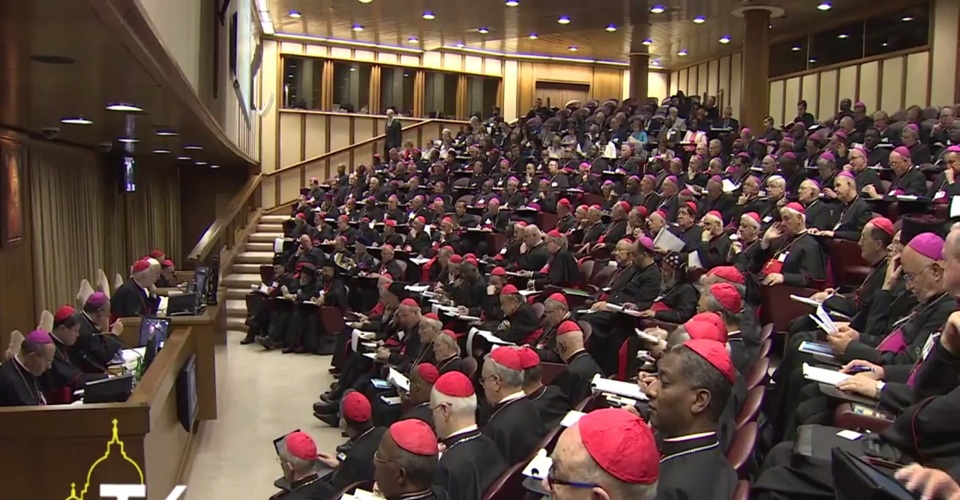
With the synod of bishops’ first session intended to put the Catholic Church back on the ancient path of synodality weeks away, we should let history temper expectations, hopes, or fears. Even with a second session planned for sometime next year, huge changes are unlikely.
This meeting of the synod will simply be restarting a delayed process that is likely to take a century. It is turning on the ignition for a journey that should have started in the 1960s and it is likely to take a few generations to reach whatever destination is ahead.
The extravagant hopes that some people have for this gathering must be tempered because they are otherwise guaranteed to be disappointed. This is the start, not of a sprint, but of a marathon. There will be disappointments along the way right from the start, but not likely so great as the big disappointment of the past half-century. There will be incremental progress. There may even be some unexpected big spurts of progress.
We must be prepared for the fact that this “marathon” is actually a relay and those of us alive today and hoping today will not see how it all ends.
However, we can have faith that the Holy Spirit who guided the ecumenical council will be part of the restarted life of Vatican II. And we can and must enter into the process, cooperating today for the sake of the future rejuvenated Church.