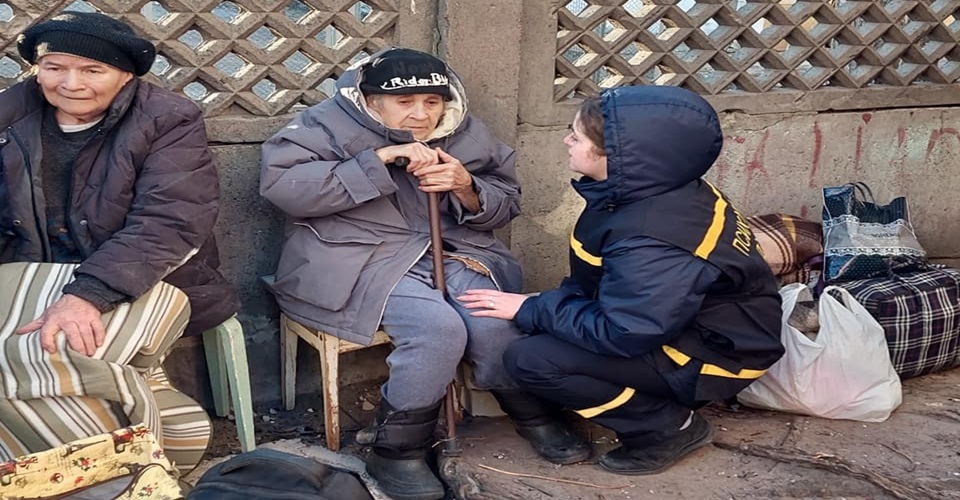
Russian President Vladimir Putin’s Feb. 24, 2022, attack by his military on Ukraine escalated a conflict that goes back to the Russian military occupation of the Crimean Peninsula and other parts of Ukraine bordering Russia in February 2014.
The recent attack has not gone according to Putin’s presumed wishes. It was natural to assume that Russian military might and the reluctance of nations dependent upon Russian gas and oil to be more than handwringing spectators would result in a quick redefinition of borders and geopolitics.
The tenacious Ukrainian response backed by the material and moral support of NATO and other nations is exceeding and overthrowing all expectations.


One of the declared aims of what Putin calls a “Special Military Operation” was to counter any expansion of NATO along Russia’s borders. Instead, two nations that previously had not joined NATO applied for membership in the alliance in response to Russia’s aggression, and one of them, Finland, shares a long border as well as a long history of conflict with Russia. NATO itself has abandoned what appeared to be a somnolent insouciance about its eastern neighbor.
With NATO gaining new members, Russia’s economy foundering under international sanctions, a lackluster performance by the once-feared Russian military, drone attacks upon even Moscow, and partisan sabotage in various parts of Russia, the backfire of Putin’s plans is beginning to scorch his own bailiwick. One needs no crystal ball to see that the future will bring yet more problems for Putin and his people regardless of how this military adventure ends.
The challenges presented by the Russo-Ukrainian War are not just military, economic, or political. Christians, too, whether in the belligerent countries or elsewhere struggle to respond to the situation.
“There is no indication how the Peace in Ukraine Coalition
or any other peace movement expects to bring about a joint
ceasefire”
One extreme is personified in Patriarch Kyrill of Moscow, primate of the Russian Orthodox Church and a strong supporter of Putin and his war. Kyrill mandated prayers for “victory” and priests who changed that one word to “peace” were removed. He has described Putin’s dictatorial control of Russia as “a miracle of God.”
A different stance is that of the Peace in Ukraine Coalition which organized an “International Summit for Peace in Ukraine” last June and plans a “Global Mobilization the week of Sept. 30 – Oct. 8 for an immediate ceasefire and negotiations.”
The organization’s website crows that “over 330 people from 32 countries on 6 continents,” took part in the June “summit,” a rather grandiose reading of a rather minuscule gathering. It is a sad and apparently eternal truth that violence draws a greater response than peace.
There is no indication how the Peace in Ukraine Coalition or any other peace movement expects to bring about a joint ceasefire (one-sided ceasefires are invariably one-sidedly fatal) or negotiations nor do they present any practical steps toward the “justice” that is one of the prerequisites of peace.
The Catholic bishops of the United States, a leading country among Ukraine’s supporters, have as a body said nothing about the war, being preoccupied it seems with gender issues. Of course, statements about the war would probably be as effective as statements about gender identity, so silence may be a good tactic to avoid the embarrassment of being ignored. Yet one wishes for at least some indication of an awareness of America’s heavy involvement in the present situation and the issues pro and con that it raises.
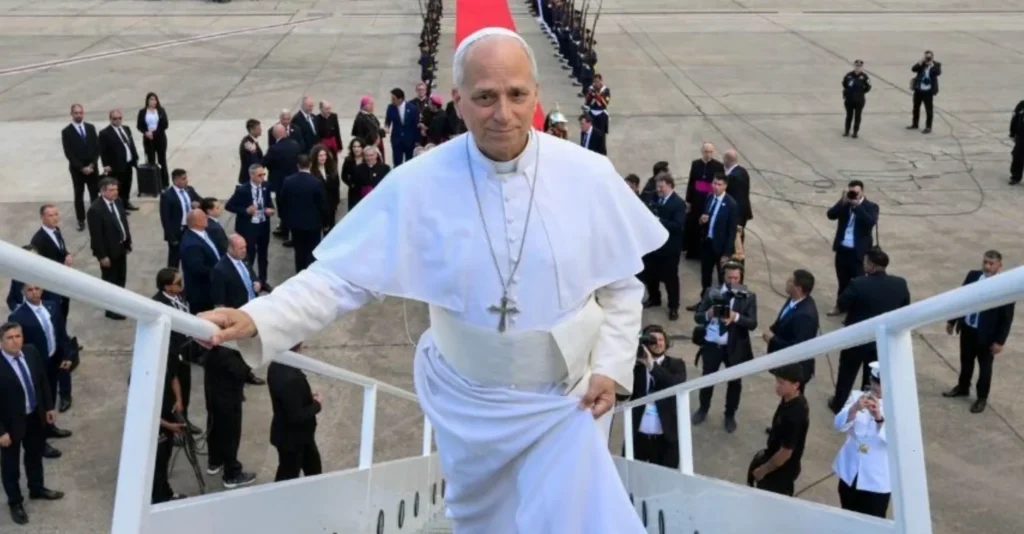
Pope Francis has appointed a special envoy in a quixotic quest to bring the two sides together, but the effort has had no visible result. Catholic meddling in the heart of the Orthodox world is unlikely to be welcomed.
“I am convinced that the world needs committed pacifists
to remind us that peace is a valid aspiration”
In the meantime, the peace movement struggles to find a response that builds peace without rewarding Russia’s unjust aggression.
So, does the Russo-Ukraine War show that it is time to write off the peace movement and its calls to end violence among nations and people? Is theirs an unrealistic dream suitable to idealists who have the luxury of viewing injustice and violence from afar?
Though I am convinced that non-violence and mutually respectful love are God’s will for the world, I have known people who survived genocide in Europe in the 1940s thanks to unprecedented violence against the Nazi regime. If prayer and devout wishes were a part of that defeat, they were not and are not an obvious one.
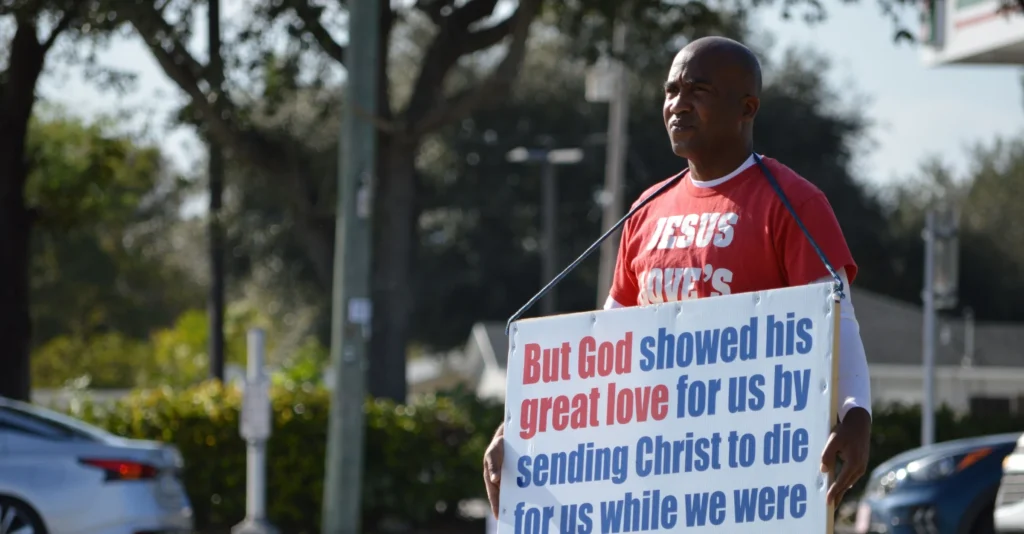
Therefore, I am not a pacifist though I am convinced that the world needs committed pacifists to remind us that peace is a valid aspiration. They challenge a too-ready resort to violence by offering an alternative vision and even practical steps to prevent, lessen, or even end conflict.
Active, committed pacifists make us think and rethink before we resort to violence. Might there be another, a better, way to resolve a situation? And if attempts to avoid violence fail, pacifism calls us to repentance and a timely movement beyond violence. And when conflict is ended, pacifism can help build a new peace beyond resentment that can eventually become the seed of future conflict.
Pacifism presents an ideal, and people need ideals toward which to make even slight progress.