





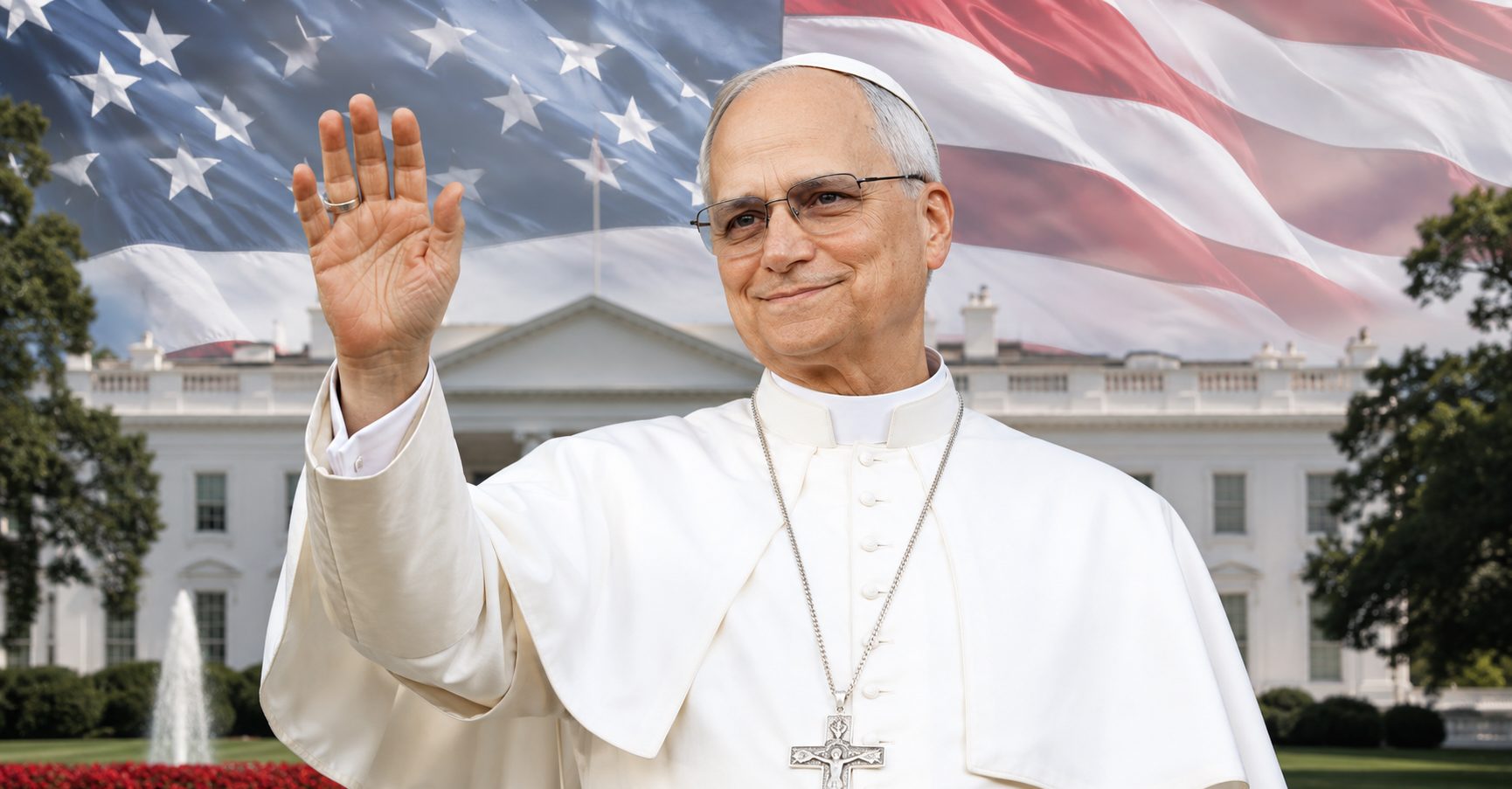
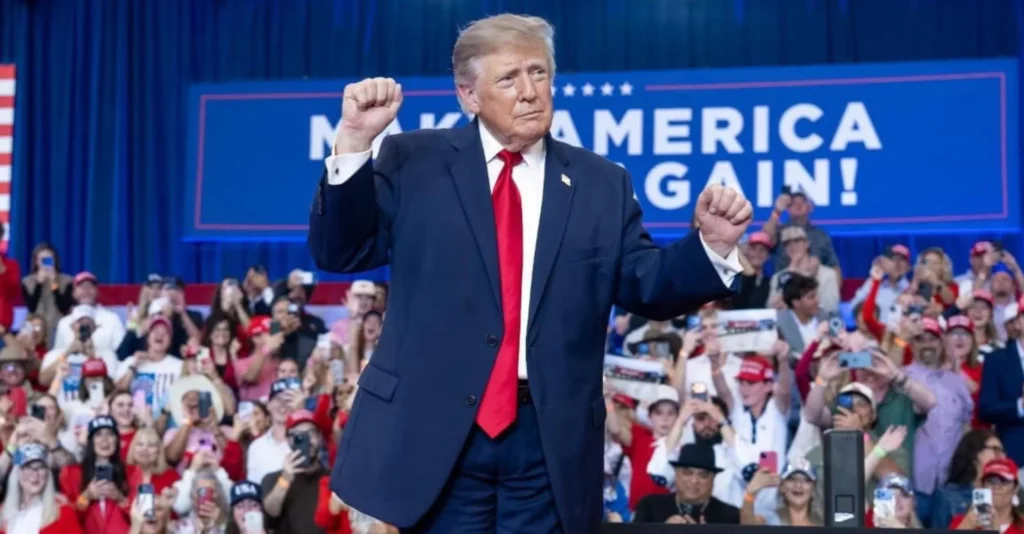
To understand what is happening in the Catholic Church in the USA at the time of Leo XIV, it is important to look at the institutional level: the steps of the US bishops’ conference one year after his election to the papacy, and the political and diplomatic handling by the Trump administration of the first pope born in the USA.
But in the case of the US Church, there is another level: the intellectual and journalistic circles that give rise to new trends, compared to which the institutional level is always one step behind.
A very revealing moment was the interview between Vice President JD Vance and Catholic conservative writer Ross Douthat published in the New York Times on June 18.


Douthat (born 1980) and Vance (1984) are both Catholics who entered full communion with the Catholic Church as adults, coming from the Protestant tradition. Their friendship goes back before Vance became vice president, and the interview was a friendly presentation of Vance’s just-published memoir, Communion.
That interview was also an opportunity for Douthat, the Catholic conservative columnist at the New York Times since 2009, to ask questions about the Christian character of the Trump administration, in which Vance serves as the second-in-command after the president.
One exchange was particularly striking:
Douthat: “Let’s be honest — the tone of the administration is not consistently a Christian tone. There is a tone of aggressive uncharity.”
JD Vance: “Tonal arguments are ways of, frankly, policing working-class ways of communication, and covering them in elite preferences.”
Now, in my academic and family life in the USA during the last two decades, I have learned never to question the sincerity and the motives of the “conversion” to Catholicism of my fellow Catholics.
But the extreme sensitivity within the Church of the question of converts must not become an alibi for ignoring the fact that certain conversions to Catholicism on the part of political figures sometimes bring with them a casual attitude towards factual truths, even before the truths of the faith.
For example, I wonder whether Vice President Vance was using “working-class ways of communication” and reacting against “elite preferences” when he falsely stated, during the 2024 presidential campaign, that immigrants from Haiti in Ohio were eating people’s pets or when, in January 2026, he referred to Renée Good, a 37-year-old American woman, fatally shot in Minneapolis by an immigration enforcement agent while she tried to drive away from the scene of an operation, as “brainwashed” and “a victim of left-wing ideology.”
This casual attitude about the truth is part and parcel of the ethnocentric populism of our times. It is the kind of populism with which the institutional Catholic Church must deal, in order to make sure that the ongoing backlash embraced by populist Catholic politicians against decades of neo-liberal elitism does not swallow the credibility of the Catholic tradition.
Whatever one thinks of Catholics like Douthat and Vance (and Rubio, for that matter), it is time to acknowledge that at the helm of the USA – whether in the Trump administration or at the New York Times – there is a new generation of American Catholics.
Not just much younger than Joe Biden and Nancy Pelosi, but also positioning themselves vis-à-vis the teaching of the Church in ways and on issues that are different from the ones that marked the generation of post-Vatican II Catholics in public life.
“Papal magisterium today is also a prime example of the Catholic Church’s new attempt to place the discussion of questions such as sexual ethics, abortion, and gender within the broader framework of “the recognition of the inviolable dignity of the human person” at this time.”
It is not just that they challenge papal teaching (Francis and now Leo), not on the left (as it used to be in the early post-Vatican II period) but from the right (especially on immigration).
The set of issues has changed: the late 20th-century and early 21st-century life issues (abortion, contraception, euthanasia) look very passé now, at least as talking points that these “US Catholics 2.0” use to confront the Vatican.
They look passé also because a focus on these life issues would not get them very far electorally with the MAGA movement.
The issues on the minds of the leaders of this new Catholic moment in America are civilizational, existential, and cosmological: AI and transhumanism; the greatness of America and the rivalry with China (and Europe); the nature of UFOs and falling birthrates that are condemning the West to dissolve. Immigration serves as the signal of a broad shift of mental horizon that will outlive Trump and the MAGA movement.
Anti-immigration politics, now in the mainstream, made the voice of the Catholic Church emerge against nativist populism, repositioning the Vatican’s political identity (not necessarily that of Catholicism everywhere) away from the position it had occupied after Paul VI’s encyclical Humanae Vitae (1968) and during John Paul II’s pontificate.
Now, after Benedict XVI and Francis, the Vatican is articulating a different kind of countercultural message. Leo has spoken of how populism “seeks only easy approval,” and how elitism “tends to act without consensus” as widespread political trends today, as he said to members of the European People’s Party in April 2026.
Papal teaching (on immigration, but not only) embodying a more global Catholic Church is a problem for this US Catholicism 2.0 because it expresses the Vatican’s opposition to the plans of the new masters of the universe – from the “strong men” of neo-imperial politics to the masters of an unbridled (but at the service of the military) AI in Silicon Valley.
Papal magisterium today is also a prime example of the Catholic Church’s new attempt to place the discussion of questions such as sexual ethics, abortion, and gender within the broader framework of “the recognition of the inviolable dignity of the human person” at this time. As Leo XIV said to the members of the Spanish Parliament in Madrid on June 8: “Today, the new worlds opening up before us are no longer marked on maps. They unfold in technology, the economy, biomedicine, and the digital realm, where human power reaches into increasingly sensitive areas of personal and social life.”
This broader framework can reach far-flung ideological horizons, especially today, when migration is redefining the 20th-century ideological boundaries between parties and political cultures in the West.
This broadening of the audience for Church teaching will be easier in Europe than in the USA. But the question for all Catholics in the West is what kind of populism they want: the one of JD Vance or the constitutional populism we saw on the streets of Minneapolis (for example) in the winter of 2025-2026.
The Vatican started learning about this new generation of US Catholics in politics during Pope Francis’ pontificate: historically speaking, it is still early days. But the conclave of 2025 decided, by electing Leo XIV, to accelerate this learning process.
Clearly, this new generation of US Catholics in politics no longer makes the old mistakes of calling the vicar of Christ “Mr. Pope” or asking, like Al Smith in his disastrous 1928 presidential campaign, “what the hell is an encyclical?”
It has become more familiar with the papacy, and they make other mistakes, like the Catholic Vice President of the USA saying during a public event that the pope should “be careful” when he talks about theology.
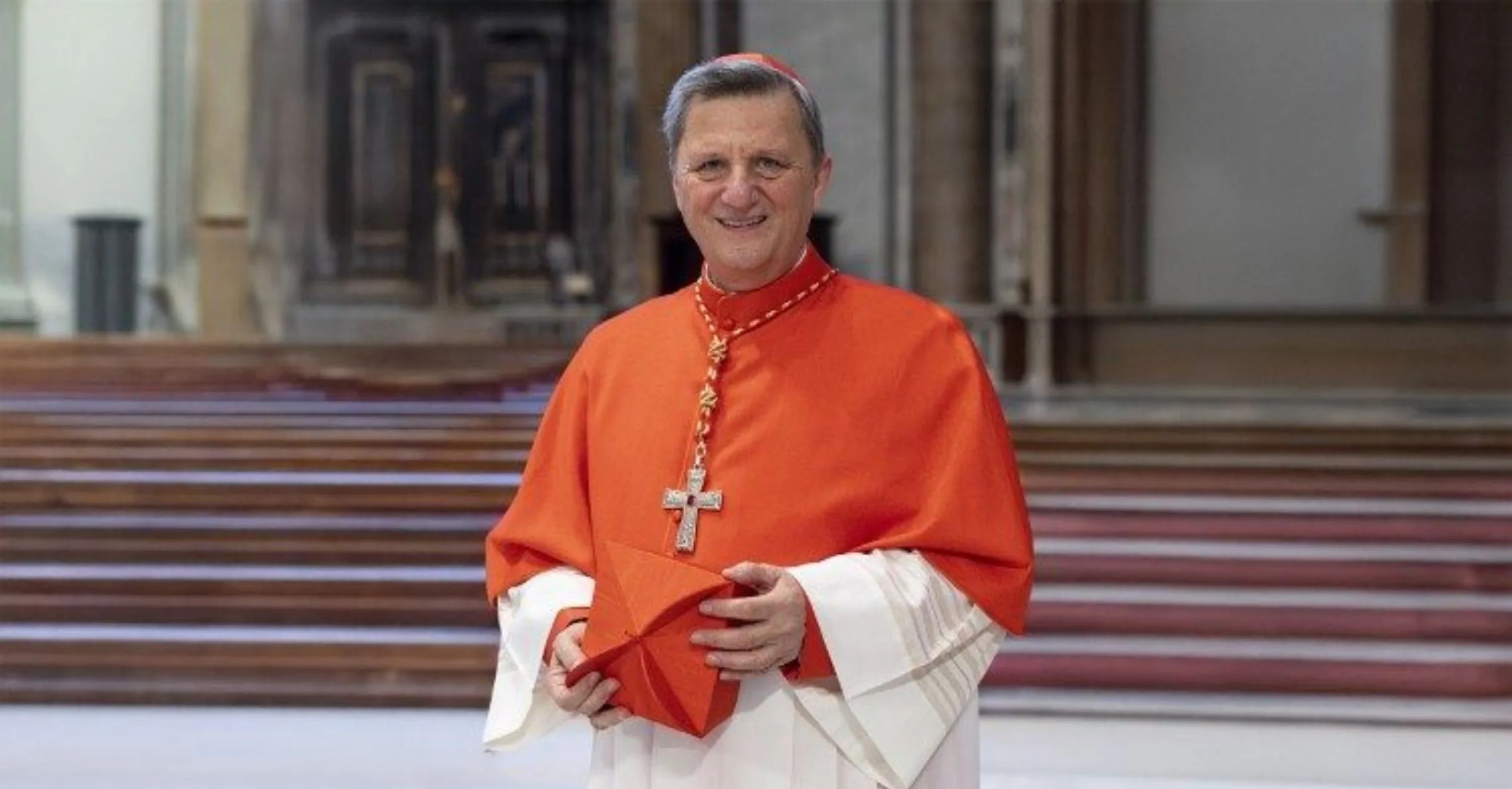
No wonder Pope Leo has officially brought the symbols of the pontificate to the forefront, beginning with the red velvet-and-satin mozzetta. As one old Italian saying goes, la troppa confidenza fa perdere la riverenza – “too much confidence makes one lose reverence.”










4 Comments
chhotebhai
June 24, 2026An other wise good article is destroyed by the conclusion about wearing a red cape. How does that assert papal authority?
Benedict Cox
June 24, 2026As a convert (received 1978) I find myself troubled by the Vatican. In the recent encyclical the Pope summarily dismissed the concept of a ‘just war.’ Perhaps the concept should be dismissed but it deserves rigorous theological argument.
The present Holy Father comes across as a political leader. Before his election he was active on X with Democrats criticising American policy. And yet on many other burning issues (the persecution of Christian worldwide for example) there is relative silence.
There is much that is wrong with America and its governance. But I find selective moral indignation worrying.
I am European by the way.
His Holiness is troubled about private individuals engaged in AI projects for profit. He appears to advocate government control. Government control does not inspire confidence in me.
I look back to JP II and Benedict XVI.
chhotebhai
June 25, 2026Unfortunately neo converts tend to be more Catholic than the Pope. They don’t understand the ecclesiology of Vatican II. BTW I’m from India
Benedict Cox
June 26, 2026Thank you for your post. JPII and Benedict XVI were both
post Vatican II.
God bless.