




Europe and North America are littered with repurposed or abandoned seminaries, novitiates, and other facilities for the formation of priests, brothers, and sisters.
The near disappearance of religious vocations is, so far, largely a Western phenomenon. Africa and Asia are providing clergy to the West, even to Ireland, which not long ago exported priests.
Those who speculate on the reasons for the collapse offer many explanations, most of which, even when contradictory, contain some elements of accuracy.


Sexual abuse and coverups have done a lot of damage. Mandatory celibacy doesn’t help. Lifetime commitments, in the age of “starter marriages” and gig work, do their part. A kid whose life was marked, perhaps marred, by divorce will think twice before making a lifetime commitment, even to marriage.
The end of the urban Catholic ethnic neighborhoods plays a part. When the parish was the focus of community life and schooling, priests and sisters were a key part of that community, so a kid had role models who presented religious life as an option.
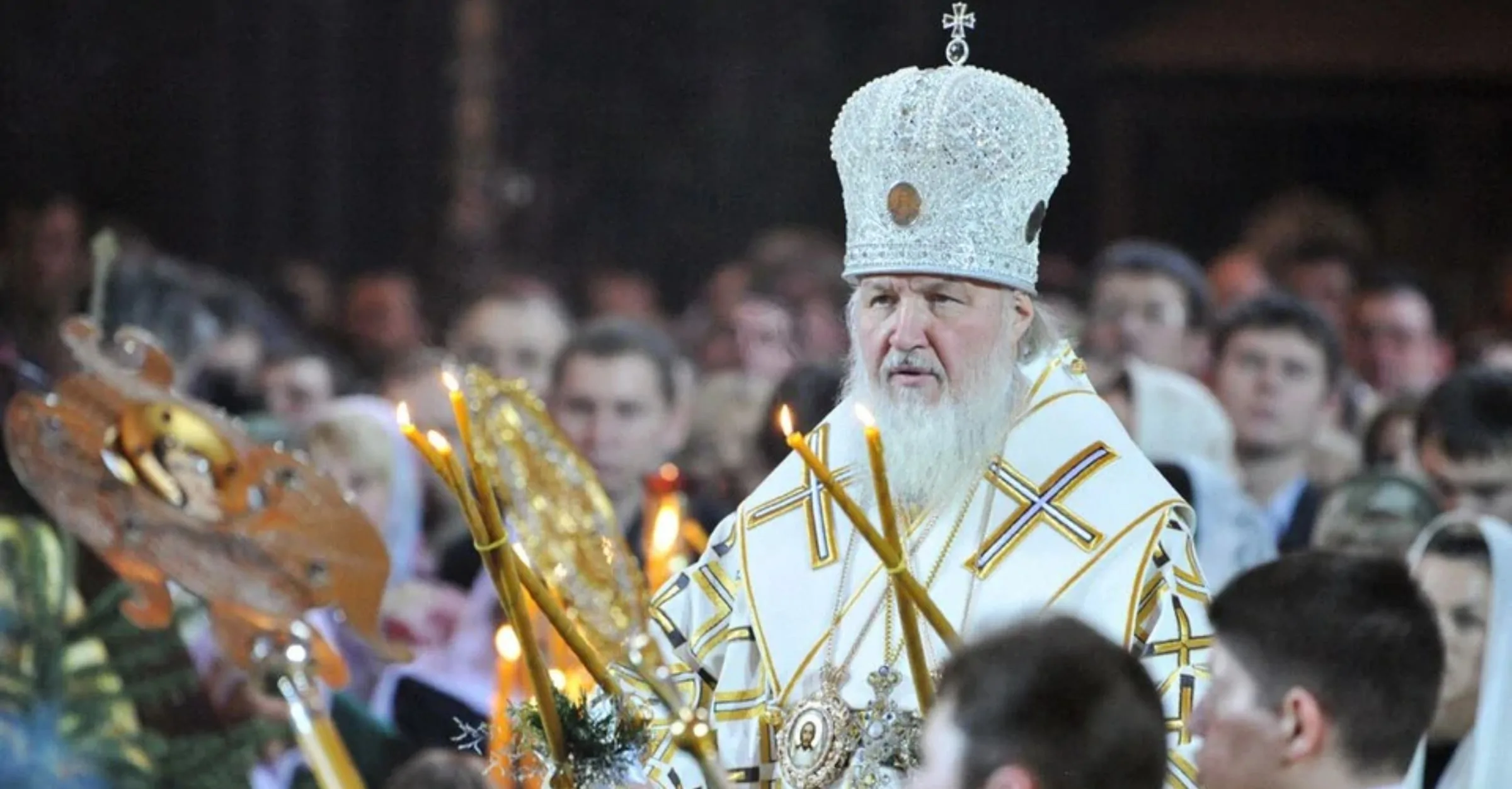
A boy today, whose experience is just a car ride to church on Sunday morning, where he sees an overworked, burned-out white-haired man or an imported cleric perform a ceremony, is unlikely to find much to attract him. And his sister won’t see any nuns at all.
Of course, the overriding reason is the disaffiliation of so many young people from the Catholic Church in the past four or five decades and their not passing to the next generation the faith from which they have drifted.
Some people look nostalgically to a not-distant past when many of those training institutions were being expanded to handle an overflowing flood of candidates. They call for a return to the forms and ways of thinking of that time to restore largely imagined lost glories.
However, in addition to looking at the many possible reasons that clerical and religious vocations are scarce today, we should look at the “good old days” when they were booming. Why were so many men and women entering religious life (priest, brother, sister)?
I have not conducted any social-scientific study to validate these impressions that arise from recollecting the situation in the northeastern United States prior to the vocational collapse. However, I believe that these observations might help in understanding not only why the collapse occurred, but also why it is probably irreversible.
❝
There was a time when wearing a Roman collar or a veil brought prestige. Now, the revelations of sexual abuse and coverup have almost made religious into pariahs.
There appear to be six factors that once influenced decisions to enter religious life but no longer do so. Of course, these factors do not preclude a divine call or a vocation, but that call usually arises from the circumstances of the life of one who is called.
Once upon a time, Catholic families were notable for the number of children. At the very least, that meant any Catholic community had a large pool of potential candidates for the priesthood or religious life. Nowadays, Catholic families are generally no different in size from their non-Catholic neighbors, so the number of those who might even consider entering a seminary or novitiate has shrunk significantly.
There was a time when wearing a Roman collar or a veil brought prestige. “Giving a son or daughter to God” was a gold star on a mother’s report card. The son or daughter also gained prestige (and even tipped hats and secured seats on buses). Now, the revelations of sexual abuse and coverup have almost made religious into pariahs.
War was a strong impetus that moved men to live as priests and brothers. Many men who experienced World War II and other conflicts came home with a commitment to serve peace and to deal with what they had seen and done. The Church was an organized and effective way to do that.
At least in the United States, societal restrictions on Catholics lasted into the 20th century. Young Catholics with talent and ambition had limited career opportunities. They could become cops, firemen, Catholic school teachers, nurses, sanitation workers, and similar roles, only a short step up from their fathers, who were longshoremen and similar.
Catholics who could pursue higher education were largely limited to law or medicine. Jobs in finance, business, and science were usually not available to Catholics. Catholic colleges were established to improve the employability of the children of Catholic immigrants and blue-collar workers.
Religious life offered a career that drew on one’s talents. Becoming a priest, brother, or sister opened doors. Today, a young Catholic’s employment opportunities are on a par with anyone else’s.
As with employment opportunities, so too with education. Higher education was financially unattainable for most Catholics, even when schools were willing to admit them. However, a boy with intellectual aspirations could, for example, become a Jesuit and pursue a doctorate in physics. A brother could become a professor. A girl could become a sister, then a physician, and run a hospital. Being a priest or religious offered opportunities that were closed to their siblings and friends.
One result of increased employment and educational opportunities for young Catholics is that though in the past go-getters were attracted to the priesthood and religious life, today it sometimes appears that some who enter are the left-behinders.
At a time when being gay was something one could not even admit to oneself, religious life was a respected way to live in the closet. Now, society is becoming more aware of and accepting of the spectrum of gender identity, so there is less need to hide one’s orientation from society or even from oneself in a rectory or convent. The intransigence of Church officials on the issues involved has turned many people across the spectrum away from the Church, let alone from vocation.
Changes in all these incentives to religious life in the past have nothing to do with the changes in the Church that began with the Second Vatican Council. As society changed, many of the reasons for entering seminaries and novitiates withered.
Some of this change coincided with Vatican II. Vatican II began the breakdown of the Catholic caste system, in which the laity’s role was to pray, pay, and obey. The Church’s mission is entrusted to all, so one who wishes to live one’s Christian vocation need not wear a clerical collar or a veil to do so. Men and women now find in “secular” life what others once found in religious life.
So, why bother becoming a priest or religious for any other motive than a sense of God’s call to that particular way of living the Christian vocation? And perhaps that unbolstered call was always rarer than we once thought.








5 Comments
Mila G Glodava
August 3, 2026Here’s my take on Mr. Williams’s article:
Stewardship of Vocations: A Hope-Filled Response to Shrinking Vocations
“The harvest is abundant but the laborers are few; so ask the master of the harvest to send out laborers for his harvest” (Luke 10:2). These words of Jesus speak directly to the concern over declining priestly and religious vocations in many parts of the world. Yet they are not words of discouragement. They are a call to prayer, invitation, and shared responsibility within the whole Church. [1]
Prayer for vocations is indispensable, but parishes and families must also become places where a young person can hear, name, and courageously explore God’s call. Vocations do not emerge in isolation. They are nurtured in homes where faith is lived, in parishes where priests and religious are known and loved, and in communities willing to encourage a young person who may be discerning a call to priesthood or consecrated life.
This is why I believe that Stewardship of Vocations should be a regular and visible part of parish life. The present shortage of priests and those in religious life is a serious concern, but it can also be an invitation to renew the Church’s culture of vocation. Families and parishes, from which vocations arise, can help create an environment where God’s call is heard and generously answered.
Archbishop Charles J. Chaput, O.F.M. Cap., was among the bishops who recognized the urgency of this pastoral need. When Father Andrew Kemberling came to St. Thomas More Parish in July 2000, Archbishop Chaput specifically asked him, in his letter of appointment, to promote vocations.
After much discussion, we decided to include vocations as part of the St. Thomas More stewardship program. We recognized that vocations are a stewardship issue because the people of God—their gifts, faith, generosity, and willingness to serve—are among the Church’s greatest spiritual resources.
Every baptized person has a vocation: a unique and irreplaceable role in carrying out God’s plan. The Lord calls people to marriage, single life, priesthood, the diaconate, consecrated life, parenthood, service, and holiness in the ordinary circumstances of daily life. At St. Thomas More, however, the Stewardship of Vocations phase gives particular attention to fostering vocations to the priesthood and religious life.
At St. Thomas More, Stewardship of Vocations is one of the six interrelated phases of our stewardship model: Stewardship of Prayer, Faith, Talent, Treasure, the Earth, and Vocations.These are not separate projects carried out in isolation. Together, they form stewardship as a way of life—rooted in gratitude, responsibility, generosity, and mission.
Stewardship of Prayer teaches parishioners to listen for God’s voice. Stewardship of Faith gives them the courage to respond to that voice. Stewardship of Talent and Treasure call each person to offer God-given gifts in service to others. Stewardship of the Earth forms reverence for God’s creation and responsibility for our common home. Stewardship of Vocations helps the community recognize, affirm, and nourish the particular call that God gives to every person.
In this integrated vision, promoting priestly and religious vocations is not merely the responsibility of a pastor, a diocesan vocations office, or a once-a-year campaign. It is the shared responsibility of families, parishioners, ministries, and the entire worshipping community. A parish that prays, lives its faith, shares its gifts, gives generously, cares for creation, and personally invites its young people to discern God’s call creates the spiritual soil in which vocations can grow.
Each year, usually during the first or second week of November, St. Thomas More holds its Stewardship of Vocations phase. Along with prayer for vocations, the parish speaks openly and positively about priesthood and religious life. This makes vocation discernment a normal and welcome part of parish conversation rather than a subject left unspoken.
We use the “Called by Name”process, inspired by the words of Isaiah: “Do not fear, for I have redeemed you; I have called you by name: you are mine” (Isaiah 43:1). [2] Parishioners are invited to nominate people whom they believe may have the faith, generosity, character, and openness to consider a vocation to the priesthood or religious life.
Those who are nominated are remembered in prayer in a special way and are gently encouraged to consider and nourish the possibility of God’s call. The purpose is never to pressure anyone. Rather, it is to ensure that a young person does not set aside a possible vocation simply because no one has ever said, “Have you considered that God may be calling you?”
The fruit of this culture of prayer, encouragement, and personal invitation has been remarkable. St. Thomas More Parish, though founded only in 1971, was blessed with at least twenty-five priests, twelve deacons, and five religious sisters by the time Father Andrew Kemberling was assigned to another parish in July 2014. The accompanying photograph and wall display bear witness to what can happen when a parish deliberately regards vocations as a shared responsibility. The concern about shrinking vocations cannot be answered by statistics alone. The answer begins with a renewed culture of vocation: families that pray, parishes that speak joyfully and regularly about priesthood and consecrated life, priests who invite, and parishioners who recognize spiritual potential in the young.
In time, and through the grace of the Holy Spirit, communities that faithfully ask the Lord of the harvest and actively encourage those whom He calls will see more laborers serving in God’s Kingdom. The experience of St. Thomas More offers a practical and hopeful lesson: vocations flourish when they are prayed for, named, supported, and entrusted to God.
John Calhoun
August 3, 2026Your observations resonate with me. “Vocations” like so much else are contextual – in origin and lived experience. The Lord in the NT recognizes that about Peter and Company who we presume were Jewish laypersons. So was His discovered in context – after the Death of John the Baptizer, Jesus begins his ministry. Have we not routinized charisma to such an extent that to augment the “clerical system” we train and ordain for all parochial assignments. “Vocations” imply “Clerical and Religious” for the sake of staffing institutions.- not to evangelize. What would training the baptized to evangelize look like? What might doing so imply about “vocations”.
Mila G Glodava
August 4, 2026Thank you, Mr. Calhoun. Your question about forming the baptized to evangelize goes to the heart of the St. Thomas More stewardship model, where I served for twenty-five years. Though now retired from parish staff ministry, I continue to promote stewardship through writing, seminars, and formation efforts in the United States and abroad, especially in the Philippines.
One of the six phases of the model is Stewardship of Faith. In this phase, we encourage parishioners to learn their faith, live it authentically, and share it with others. We see this as an essential means of forming the baptized for evangelization. Prayer, faith formation, service, generosity, care for creation, and vocational discernment are meant to support one another.
In my understanding, formation for evangelization begins with the universal call to holiness and a personal encounter with Jesus Christ. From that foundation, the baptized can grow as missionary disciples and participate in the Church’s mission according to their gifts and particular vocation. Stewardship of Vocations supports this wider mission while giving particular attention to the priesthood, permanent diaconate, and consecrated life. These vocations serve the Church not merely by maintaining institutions, but by proclaiming the Gospel, serving the sacramental life of the Church, forming disciples, and equipping the faithful for mission in the world.
Tim Mathern
August 4, 2026Right on! Those of our large family who went to the seminary or convent got special recognition and privileges. Unfortunately it has also given a haughty sense to some of our clergy.
Mila G Glodava
August 11, 2026I appreciate the continued discussion. My perspective comes from nearly forty years of teaching and implementing Catholic stewardship in the United States and internationally, especially in the Philippines. For twenty-five years, I served at St. Thomas More Parish in Centennial, Colorado, where stewardship was developed not as a fundraising program but as a way of life rooted in prayer, faith, service, generosity, care for creation, and vocation.
Stewardship of Vocations is one of the six interrelated phases of the St. Thomas More model. I have written about this approach with Father Andrew Kemberling in Making Stewardship a Way of Life: A Complete Guide for Catholic Parishes (Our Sunday Visitor, 2009), and more recently in Joy to Give: Buhay-Katiwala at Ang Simbahan ng mga Dukha / Stewardship as a Way of Life and The Church of the Poor (Claretian Publications Philippines, 2024).
I agree that the social conditions that once made priesthood and religious life more visible, prestigious, or accessible have changed dramatically. But their disappearance does not mean that a vocation culture is impossible or that the Church can only look backward with nostalgia. It means that parishes must become more intentional about helping people recognize and respond to God’s call.
At St. Thomas More, our annual Stewardship of Vocations observance included a “Called by Name” process. Parishioners were invited to nominate men and women whose faith, generosity, character, and openness suggested that they might have the qualities to discern priesthood, the permanent diaconate, or consecrated life. Those nominated received a respectful, personal letter assuring them of prayer and inviting them simply to consider whether God might be calling them.
The names were then shared with the diocesan Office of Vocations for appropriate follow-up. That follow-up could include information, personal contact, discernment opportunities, retreats, and gatherings such as Andrew Dinners with the bishop. The purpose was not recruitment pressure or the filling of institutional vacancies. It was a personal invitation: to make sure someone did not dismiss a possible call merely because no one had ever recognized it or asked the question.
This process belongs within the Church’s wider understanding of vocation. Every baptized person is called to holiness and mission—through marriage, single life, parenthood, professional life, ordained ministry, the diaconate, and consecrated life. Formation of the baptized for evangelization is therefore not opposed to fostering priestly and religious vocations. They strengthen one another. Evangelized and missionary-minded Catholic families and parishes are precisely the communities from which generous vocations arise.
The Archdiocese of Denver’s adoption of Stewardship of Vocations for the Priesthood offers an encouraging contemporary example. Its initial effort reportedly led approximately nine hundred young men to consider more intentionally whether God might be calling them to the priesthood, and the initiative has become an annual program. The number does not mean that all will enter seminary; nor should it. Its significance is that hundreds were personally invited to discern.
The Church does not need to recreate the social incentives of another era. It needs parishes in which faith is lived visibly, priests and consecrated persons are known as joyful witnesses, families pray for vocations, and the faithful have the confidence to say to a young person: “Have you ever considered whether God may be calling you?” That is not clericalism. It is shared responsibility for the Church’s mission and a hopeful response to the Lord’s command to ask for laborers for the harvest.