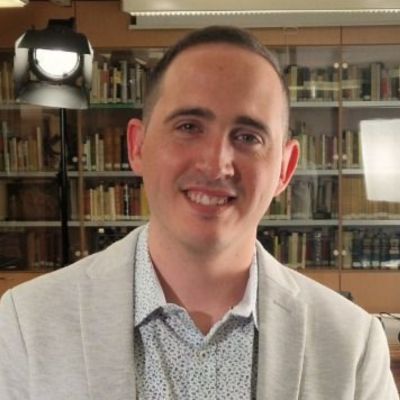
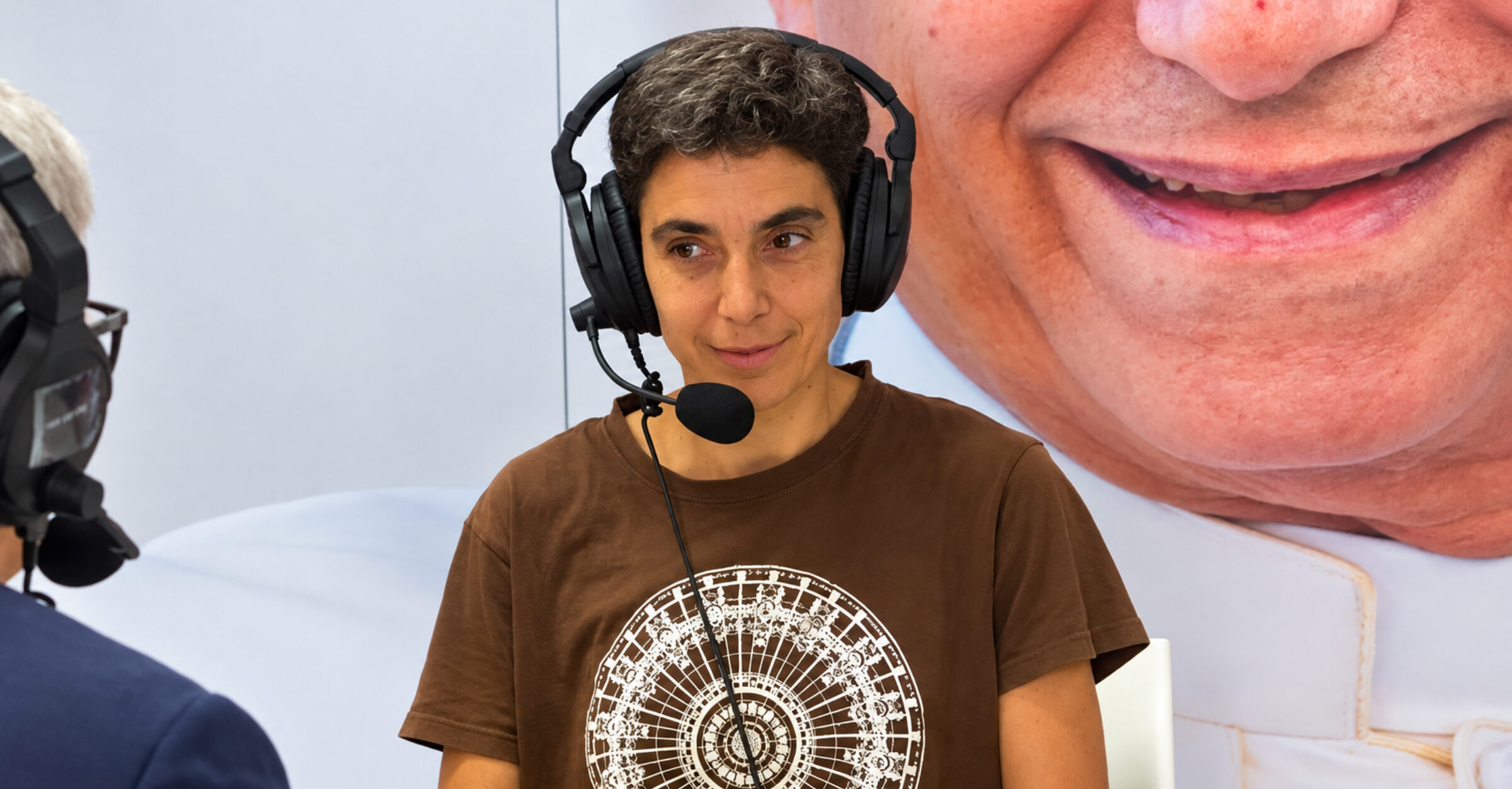
Anna Medeossi, an architect originally from Gorizia in northeastern Italy, is the first woman to serve as the rector of a shrine.
She heads Notre-Dame de Santa Cruz in Oran, Algeria, a Marian shrine located in a Muslim-majority country.
She arrived there in 2017 as an architect to collaborate on the shrine’s renovation, and today she also lives there as a consecrated woman of the Ordo Virginum of the Diocese of Oran.


The Ordo Virginum, or “Order of Virgins,” is an ancient form of consecrated life, revived after the Second Vatican Council, in which women make vows to a local bishop while remaining a layperson rather than joining a religious order or convent.
Her experience at Santa Cruz is defined by daily coexistence with Muslims, by listening, and by a way of bearing witness to the faith that relies more on gestures than on words.
You have become the first female rector of a shrine. How did you feel when this responsibility was proposed to you, and what does it mean to you?
When Monsignor Davide Carraro, Bishop of Oran, handed me the letter appointing me “rector” of the Notre-Dame de Santa Cruz shrine, neither I nor anyone else could fully grasp what this responsibility would entail.
Carraro, an Italian missionary priest who spent years working and studying Arabic across Algeria and Ivory Coast, was appointed Bishop of Oran by Pope Francis in October 2023 and consecrated in January 2024.
How did Father Jean-Louis explain to you what being a rector meant?
“Do you know what a rector is?” Father Jean-Louis, the dean of the diocese, asked me. “Everyone knows a rector is something like a parish priest. But a female rector?”
He continued: “In birds, the rectrices — the tail feathers — are the ones that give direction to the flight.”
That is a beautiful definition for an unprecedented role in a unique context, where the path is far from being mapped out in advance.
You arrived at Notre-Dame de Santa Cruz as an architect before becoming rector.
Indeed, the appointment did not come about by chance. When I came to Algeria for a year of international volunteering, I was fortunate enough to participate in renovating the chapel’s interior.
What did that experience mean to you?
It was such a beautiful human, professional, and spiritual adventure that I never left the country or the sanctuary; I chose to be consecrated in the Diocese of Oran within the Ordo Virginum.
How has this place transformed you?
I have been shaping this place — and continue to do so little by little — but this place has shaped me, too: through its history, its beauty, the relationships that have been woven here, and the daily learning about “the other.”
I enjoy the daily work here, with all its dreams and unexpected turns — much like Gaudí: “Tomorrow we will create beautiful things!” (A reference to Antoni Gaudí, the Catalan architect behind Barcelona’s Sagrada Família basilica, famous for a project built and reimagined across generations.)
Notre-Dame de Santa Cruz is a Christian site frequently visited by Muslims. What do they come looking for?
I believe that today, Notre-Dame de Santa Cruz is perceived primarily as an Algerian heritage site.
The sanctuary’s silhouette, at the foot of the Spanish fort on Mount Murdjadjo, is one of the symbols of the city of Oran.
People come for the beauty of the site and the landscape visible from its arches. They are very sensitive to the peace and serenity found there. They also appreciate how clean it is.
And how do they react when they discover it is a church?
Many discover with surprise and pride that it is a church — that there are “Christians” there: “You see? Algeria is a tolerant country!”
You place great emphasis on listening as a way to bear witness to the Gospel. What have you learned from the Muslims you have met in Oran?
For me, in Oran, it is not simply a matter of “encountering” Muslims, but of living alongside them day by day.
I have relearned everyday gestures, greetings, appointments made with a “tomorrow, inshallah” (Arabic for “God willing”), the daily schedule, and — why not? — the times for prayer.
What has this way of experiencing time taught you?
I have learned another way of being in the world — one built on great patience, shared time, and shared rhythms, rather than on efficiency and individual results.
Have you also discovered a different way of experiencing your relationship with God?
I have also learned a way of living in God’s presence — or making God present at every moment — not so much through ritual prayer as through the expressions that punctuate everyday speech.
For instance, everything begins with “bismillah” (“in the name of God”) and concludes with “hamdullah” (“glory to God”). It is a habit, certainly, but a meaningful one.
You say that “fraternity also begins” in daily interactions with local workers and businesses. Can you share an experience that illustrates this?
The renovation of the chapel was carried out with a contractor from Oran named Kada. I
t required working closely with him, explaining and re-explaining things — not using blueprints, but right there on site — and finding the right solution together through trial and error.
What stands out most in your memory about that relationship?
He was very proud to be working for “Saint Mary.” It was more than just a job.
How did this relationship evolve?
The Church became their family: along with other sisters and priests, we were often invited to their home for iftar — the breaking of the fast — in the evenings during Ramadan, or to share sweets on Eid, and even attended the circumcision of their son, for whom the bishop served as godfather.
And, naturally, there was always a family photo taken at the foot of the Christmas tree on Christmas Eve, as well as the parish meal on Easter Sunday.
The shrine is dedicated to Our Lady, and Mary is also venerated in the Muslim tradition. What makes Mary a point of encounter?
Mary, known in Arabic as Maryam, is the only woman named in the Quran and is venerated there as the mother of the prophet Isa, or Jesus; an entire chapter of the Quran bears her name.
Mary is a special path for encounter and dialogue; she always has been. Notre-Dame de Santa Cruz is just one of many Marian shrines across the Mediterranean where both Christians and Muslims venerate Mary.
She is a path of encounter, above all, for a very simple reason: because we meet together at her feet. “Who are the candles for? Just for Christians?” people sometimes ask me.
Of course not. Dialogue begins right there, because Mary speaks to all her children, regardless of their religion. We all need to feel we are under her protection; sooner or later, we all need to light a candle.
Is an explicitly religious dialogue necessary, then?
It is not a matter of discussing the figure of Mary as presented in the Gospels or the Quran.
At Santa Cruz, I do not engage in “interfaith dialogue” in the formal sense; rather, I enter into dialogue with many Muslim women and men under Mary’s gaze.
The shrine also carries a history linked to the colonial era. How can we ensure that, today, this place becomes a space not of painful memories, but of reconciliation, encounter, and hope?
(Algeria was a French colony from 1830 until its war of independence ended in 1962; Notre-Dame de Santa Cruz was built by French colonial authorities in the 19th century.)
In the memories of the people of Oran, even though it is a site built “by the French,” Notre-Dame de Santa Cruz has always been a space open to everyone.
Many cherish memories of the women who would first climb up to “Lalla Meriem” and then go higher still, to the caves and the mausoleum of Sidi Abdelkader El Djlani — a 15th-century marabout from Baghdad.
(A marabout is a Muslim religious teacher or holy figure venerated locally, often linked to a shrine or tomb, in North and West African Islamic tradition.)
In 2018, Cardinal Jean-Paul Vesco — then Bishop of Oran and now Archbishop of Algiers — wished to dedicate the renovated esplanade to “Living Together in Peace,” in reference to the International Day of Living Together in Peace promoted by Algeria at the UN.
That is quite a mission! Peace, reconciliation, and encounter form a path we must walk together — a path we must create together.
Vesco, a French Dominican friar, led the Diocese of Oran from 2012 to 2021 before becoming Archbishop of Algiers; Pope Francis made him a cardinal in December 2024. The UN’s International Day of Living Together in Peace, observed each May 16, was established in 2017 on a resolution proposed by Algeria.
How does this “creating together” take shape in practice and what activities have you organized?
To put it another way: while we must remain attentive to the spontaneous, grassroots way visitors make the space their own, the goal is to multiply shared opportunities and initiatives. These are not necessarily religious initiatives, but rather all kinds of cultural activities.
We have already hosted unforgettable events, such as a mass yoga session as part of “Pink October” and breast cancer awareness efforts, sports activities for vulnerable women, painting workshops in collaboration with the School of Fine Arts or the university, walking excursions, and musical evenings.
How, then, do you view the sanctuary?
The sanctuary is a space of hope because it is not “our” space — meaning not just for us Christians — but “our” space in the sense of belonging to everyone.
You have explained that, to bear witness to the faith, one must “live the Gospel fully with those right in front of us — not through words, but through deeds.” What does this mean concretely in your daily life in Oran?
It means I do not seek to display my faith to others, but rather to make my faith the inner driving force that moves me toward them. To approach them “disarmed” — stripped of my own knowledge, my vocabulary, and my habits.
How do you experience this closeness in your daily life?
For instance, I enjoy spending Fridays with the Algerians: it is a day for nature outings, long runs, trips to the beach in summer, or sharing a family couscous meal.
What do you discover when sharing this time?
The hours we spend together, moving at their pace, are my way of drawing closer to them. I constantly experience how they are the first to reach out and become “neighbors” to me — through a car ride, a shared picnic, buying me a drink, or an invitation…
In this sense, the Gospel is lived out just as much as it is received — even from Muslims. It is not a matter of “labels,” but of “substance” — of life and love.
In a world marked by wars, religious tensions, and fear of the “other,” what message can the experience of Notre-Dame de Santa Cruz offer to Christians and Muslims, as well as to Europe?
Pope Francis — in the message marking the beatification of the 19 martyrs of Algeria, held at Santa Cruz on December 8, 2018 — expressed the hope that “this event would be a sign of fraternity in the skies over Algeria, directed at the whole world.”
Today, the world needs this “sign of fraternity” even more.
The 19 beatified were Catholic clergy and religious, including Oran’s own Bishop Pierre Claverie, killed amid Algeria’s civil war between 1994 and 1996; their beatification, presided over on Pope Francis’s behalf by Cardinal Angelo Becciu, was the first ever held in a Muslim-majority nation. Seven of the 19 — the Trappist monks of Tibhirine — were the subject of the acclaimed 2010 film “Of Gods and Men.”
In this regard, what does the testimony of the 19 blesseds teach us?
The 19 blesseds gave their lives alongside their Muslim brothers and sisters, in solidarity with the Algerian people during a turbulent time.
Fraternity is not something we teach others, nor something we learn from others. It is built together, with one another, regardless of our national or religious background.
What does building this fraternity entail?
Fraternity is built through our differences — by taking them seriously and daring to walk new paths in response to the unprecedented questions posed by our times.
The experience of Santa Cruz tells Europe that it is “possible” and “worthwhile.”
Finally, after all these years in Oran, how have Algeria and the people you have met there changed you?
I try to explain this with an anecdote. I often make a great effort to welcome someone asking to visit the chapel, starting with a big smile and a “Welcome to Santa Cruz!” And, in the end, I hear the reply: “Marhaba! Welcome to our home!”
This reversal of roles is, for me, a lesson in truth and humility, as well as the most beautiful of compliments. In Algeria, I have learned — and continue to learn — that the gaze of the other is sometimes more accurate than my own and that, in any case, it must be taken into account.
Monsignor Pierre Claverie put it this way: “I need the truth of the other.”
Claverie, the Dominican bishop of Oran known for his decades of Christian-Muslim dialogue, was assassinated in a bombing in 1996 during Algeria’s civil war and was among the 19 beatified in 2018.
This is a translated, edited, and expanded version of the interview that first appeared Religion Digital, and has been republished with permission by Global Catholic.