Ask people on the street what comes to mind when they hear the word “Mormon,” and you’ll almost always get the same answer: polygamy — men with multiple wives, somewhere in the deserts of Utah, the U.S. state where the church has its headquarters.
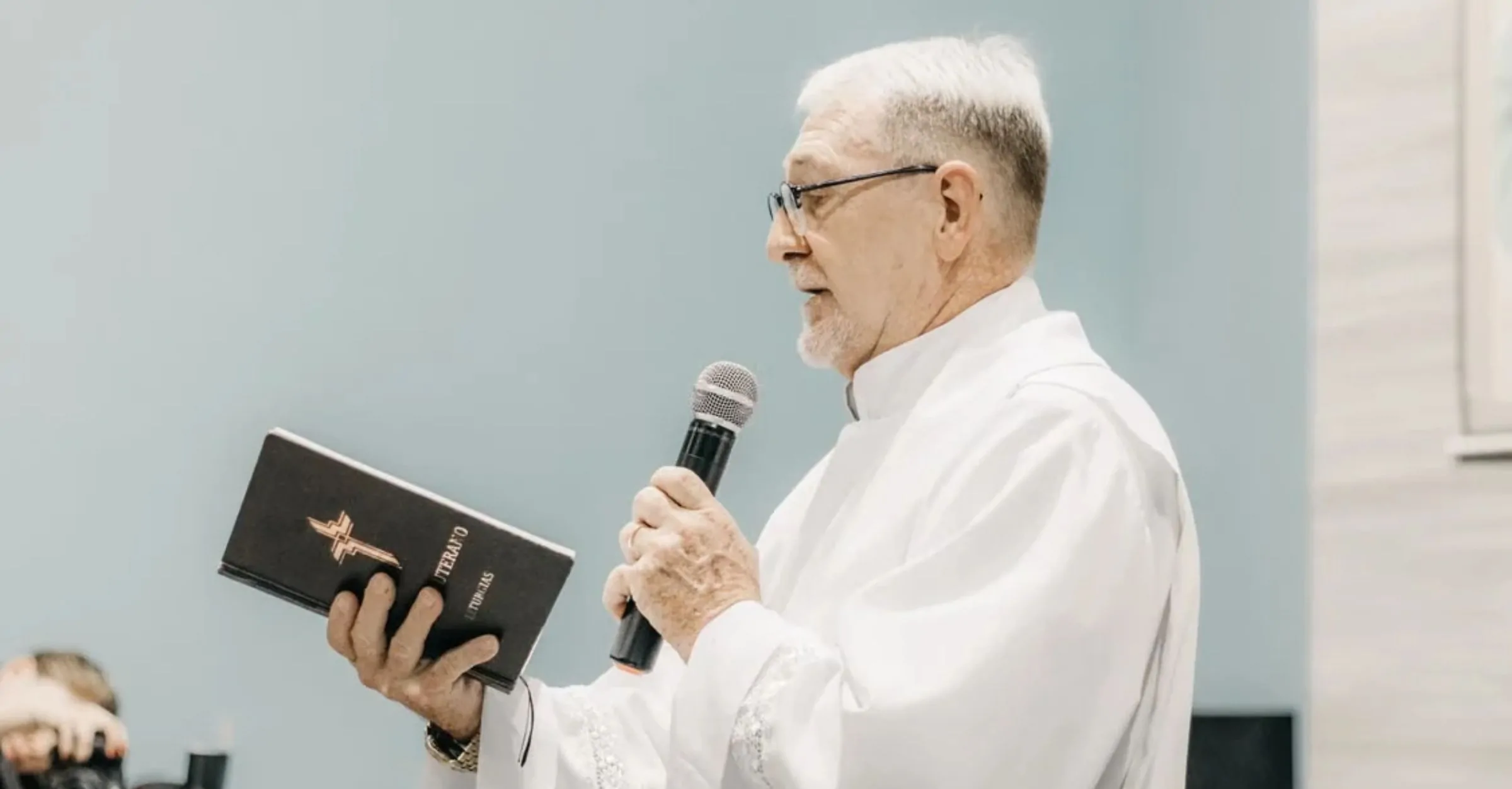
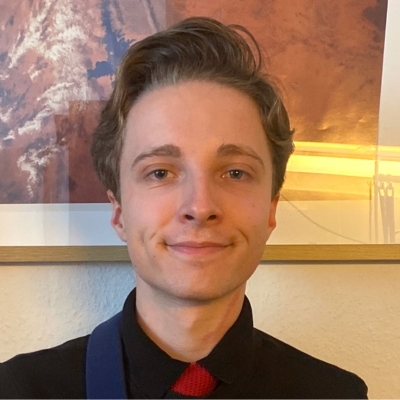
Oliver Koch has heard that answer countless times. The Lutheran pastor and commissioner for religious and ideological affairs at the Center for Ecumenism of the Protestant Church in Hesse and Nassau — a regional Protestant church body in Germany — often opens his lectures on new religious movements with that same question, because, he says, the responses are so reliably wrong.
“The main branch of The Church of Jesus Christ of Latter-day Saints no longer practices polygamy,” Koch explains. The church officially abandoned the practice in 1890. “The misconception persists, but it simply no longer reflects reality.”


So what remains once the best-known stereotype is set aside?
A faith community with nearly 18 million members worldwide, including about 40,000 in Germany, that considers itself Christian but is not recognized by the broader Christian world as part of the ecumenical movement — the effort among Christian churches, going back more than a century, to work toward unity and mutual recognition despite their differences.
That tension is where the real story begins.
A second witness of Christ
Theologically, Koch classifies Mormonism as a religion of continuing revelation.
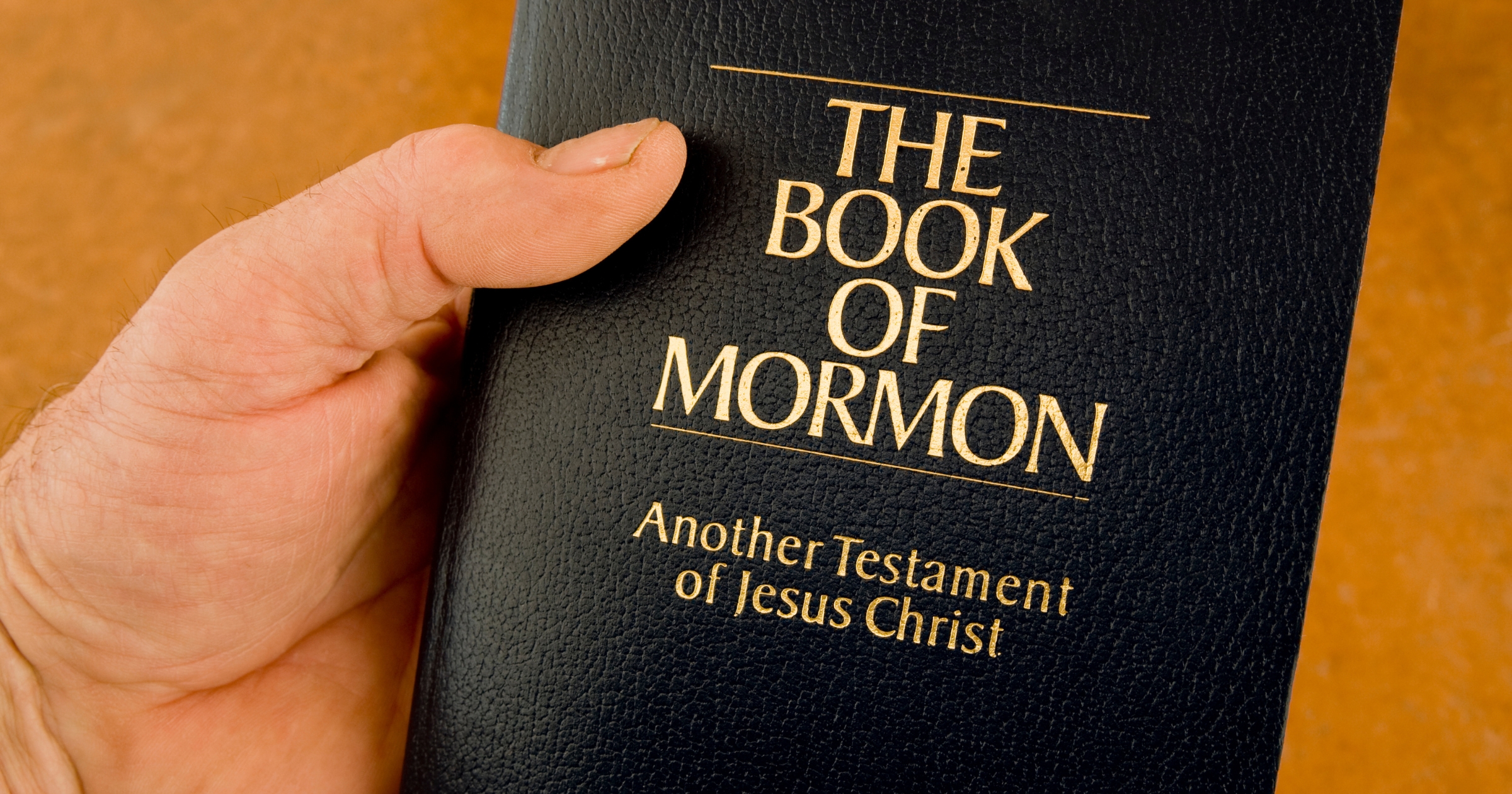
Its foundation includes the Bible — the Old and New Testaments — but also three additional scriptures: the Book of Mormon, Doctrine and Covenants, and the Pearl of Great Price.
These texts stem from Joseph Smith, who founded the movement in early 19th-century New York after, according to his own account, receiving revelations from an angel named Moroni.
Crucially, these writings are not intended to replace the Bible but to supplement it. “They believe they have added another witness of Jesus Christ that also testifies to him,” Koch explains.
Even the church’s name reflects this understanding: The Church of Jesus Christ of Latter-day Saints.
According to Mormon belief, Moroni delivered another witness of Christ through Joseph Smith “to prepare the world for Christ’s Second Coming.” From its beginnings, the movement has been strongly oriented toward the end times.
When God still speaks today
The most significant theological difference from Catholicism goes even deeper. For Catholics, divine revelation ended with the death of the last apostle; everything afterward belongs to interpretation rather than new revelation.
Mormons believe otherwise: They hold that God continues to speak today through the presidents of their church.
Since October 2025, that role has been held by Dallin H. Oaks, a former Utah Supreme Court justice who became the church’s 18th president and prophet at age 93.
Not every statement by the church president is considered revelation, but some directives are regarded as binding.
❝
The public face of the church is its young missionaries who travel in pairs and knock on doors around the world. Nearly all young Latter-day Saints spend time serving as missionaries.
Koch once asked a senior Mormon leader during a visit to the United States how church leaders recognize that God has revealed the choice of a new president.
The answer surprised him: The leader simply said that everyone sensed a profound unity in the decision. “On one hand, it’s an emotional experience,” Koch says, “but at the same time they genuinely believe revelation has not come to an end.”
Why Catholic Churches do not recognize Mormon baptism
One difference has especially practical consequences. In 2001, the Catholic Church declared Mormon baptism invalid, meaning anyone joining the Catholic or Protestant churches from the Latter-day Saints must be baptized again.
The issue goes beyond ritual.
Mormons reject the doctrine of the Trinity as defined by the early church councils — the teaching, foundational to most Christian denominations, that the Father, the Son and the Holy Spirit are three distinct persons who nonetheless share a single divine essence.
For Mormons, by contrast, the Father, the Son and the Holy Spirit are three separate beings.
“That is the main reason their baptism is not considered Trinitarian,” Koch explains. From the perspective of mainstream Christianity, it therefore cannot be recognized.
Temple rituals
The Latter-day Saints do not have a sacramental theology comparable to Catholicism’s. They do, however, practice rituals with sacramental significance, almost all of which take place in their temples.
Germany currently has two temples, with a third under construction in Hamburg. Unlike ordinary church buildings, they are generally closed to the public except briefly before the dedication of a new temple.
Some temple practices differ significantly from Catholic tradition.
One is baptism for the dead, through which deceased ancestors are symbolically included in God’s plan of salvation — a practice that explains why the church maintains the world’s largest genealogical archive, used by members to trace their family histories so ancestors can be identified for the ritual.
Another is the sealing of husbands and wives, believed to unite families not only during earthly life but throughout eternity.
Finally, Mormon teaching includes the belief that human beings can continue progressing spiritually in ways that extend well beyond traditional Christian anthropology (the branch of theology concerned with the nature of human beings).
According to Koch, a person can become “almost godlike.” The differences therefore extend beyond theology into both anthropology and the understanding of the Holy Spirit.
Interfaith rather than ecumenical
These distinctions lead Koch to a conclusion he describes as sensitive. “It is difficult to deny that others are Christian,” he says.
Nevertheless, continuing revelation and the prophetic authority of the church president are essential to Mormon belief, and these teachings are rejected by churches participating in the ecumenical movement.
His conclusion is straightforward: “Ultimately, Mormonism should be regarded as a separate religion with American roots and a distinctly American character.”
In practice, that means there is no ecumenical cooperation, although there is interfaith dialogue — that is, conversations between distinct religions rather than between denominations of the same faith.
Conversations with Mormons are both possible and valuable, Koch says, but they are conducted as dialogue between different religions rather than between Christian denominations.
The issue is not permissiveness
Anyone expecting Mormonism to be a particularly permissive religion because of its historical association with polygamy would again be mistaken.
Although scandals occasionally emerge in individual congregations, Koch says they are not representative of the mainstream church. “In fact,” he notes, “today they struggle more with an overemphasis on ethics.”
Members are expected to keep their bodies morally and physically pure. Alcohol and coffee are prohibited, and a strong purity culture teaches that sexual relationships belong only within marriage.
The traditional family remains the ideal: a husband, a wife and, ideally, many children. This emphasis is reflected in temple rituals and everyday church life.
Women play important roles within congregations and lead their own organizations dedicated to charitable and social work.
Anthropologically, Koch says, men and women are regarded as equal.
In church leadership, however, they are not: Women cannot serve as church president, nor do they hold offices comparable to bishops — the local clergy who lead individual congregations in many Christian traditions.
Changes in the priesthood
One major change has occurred regarding race. Until 1978, Black members were barred from the priesthood.
Koch does not attempt to explain how the church itself understands that history, but his own observation is clear: Today, he says, the church is “in no way racially exclusionary” and has become “a diverse community with many people of color.”
A lay church sustained by giving
How does a worldwide church function without paid clergy at the local level?
Koch answers with a smile: “I don’t think the Mormons suffer from a lack of money.”
The church strongly encourages education, especially among its often large families, and as a result many members work in well-paid professions and are known for generous financial giving. It is, in effect, a lay church sustained through donations.
Why missionary service matters
The public face of the church is its young missionaries, who travel in pairs and knock on doors around the world. Nearly all young Latter-day Saints spend time serving as missionaries.
While church statistics for 2025 report substantial numbers of converts worldwide, membership growth in Germany has largely leveled off.
Given the significant decline in membership among Germany’s major churches, Koch considers that noteworthy. He also believes that, in Germany, growth comes less through missionary work than through large families.
“When you compare the enormous effort invested in missionary work,” he says, “the results are relatively modest.”
So why continue? Koch believes missionary service has another purpose. Again and again, members tell him, “Our mission shaped the rest of our lives.” Missionary service, he says, is less about gaining converts than about forming the identity of those who serve.
That brings the discussion back to where it began. If Koch could correct just one misconception about Mormons, it would be the stereotype of polygamy — not because the truth is less controversial, but because the stereotype obscures what truly distinguishes the faith.
It’s a community that believes revelation continues, that seals families for eternity, and that understands itself as Christian while the broader Christian world regards it as a separate religion. That reality is far more complex than the cliché — and far more interesting.
This is a translated and edited version of the feature that first appeared on DOMRADIO.DE and has been republished with permission by Global Catholic.