



The 1969 Sacramentary of Paul VI will have a complicated legacy. Introducing the vernacular, and prayers rendered in dynamic equivalent rather than strict translation from the Latin will be notable.
But one might wonder whether the Sacramentary’s use of the phrase “in these or similar words” in notes to the presider will be the most remembered and most critiqued feature.
Catholics who express dismay over the celebration of the Novus Ordo, the new order of the Mass, might cite a wearying barrage of “similar words” that wears them down and pushes them out.


The time between the opening sign of the cross and the priest’s recitation of the Collect is reported by many as long and purgatorial.
“Good morning! I can’t hear you! I said, good morning!”
“How is everyone feeling this morning?”
“Wherever you are on your journey, that’s okay.”
“Today is the forty-seventh Sunday in Ordinary Time.”
Some worshipers use this overblown, monologic, mostly unnecessary introduction as a time to observe other worshipers, gauging levels of enthusiasm for what to many seems overwhelmingly insignificant as preparation for the rites about to commence.
Sometimes the “similar words” principle is applied even more egregiously, as self-described “creative” presiders feel the need to adapt the sign of the cross: “In the name of the Father, and of the Son and of THEIR Holy Spirit.”
One worshiper wondered whether he had heard mere sloppiness, an error in faith, or a slide down a slippery slope toward heresy. He made a note to ask Byzantine Catholics and the Orthodox whether this is a revision they would welcome.
However, the 1975 General Instructions to the Roman Missal said simply in paragraph 29. “After greeting the congregation, the priest or other qualified minister may very briefly introduce the faithful to the Mass of the day.”
These objections people raise are not actually problems with the Novus Ordo, because the ritual is simply what the Constitution on the Sacred Liturgy of the Second Vatican Council called for. Council document Sacrosanctum Concilium says in paragraph 34, “The rites should be distinguished by a noble simplicity; they should be short, clear, and unencumbered by useless repetitions; they should be within the people’s powers of comprehension, and normally should not require much explanation.”
I tried to explain the envisioned liturgical approach to an unhappy parishioner who had unkindly compared his “yammering pastor” to “a barking seal.”
Another impatient worshiper notes that announcements in his parish occur at Mass after communion, but before the post-communion prayer. This is not at all what the 1969 Instruction envisioned, as stated in paragraph 59j. “After communion, the priest and people may spend some time in silent prayer. If desired, a hymn, psalm, or other song of praise may be sung by the entire congregation.”
In the complaining worshiper’s view, most announcements are unnecessary because they are included in the weekly bulletin and on the parish website.
And yet another sighing worshiper wondered why his pastor, after dismissing the congregation to go in peace, always feels the need to advise the congregants to “Have a nice day!” Some of them feel the need to respond, “You, too, Father!” And Father might then reply, “Thank you for celebrating the Eucharist with me today,” initiating another round of “You’re welcome” and “Thanks, again.” Just go in peace already.
These and similar widespread practices cannot be blamed on the notation, “In these or similar words.” Neither are they the fault of the reform of the liturgy, or of the 1969 Sacramentary or the revised Roman Missal of 2011.
The issue is poorly prepared and irreverently celebrated liturgy. No doubt seminary rectors, bishops and continuing education directors have already been alerted.
There may be other issues at play for some other folks. For example, there are some people who believe the translation of the Novus Ordo was done poorly and that revisions and new translations, in their view, have not solved the problem.
❝
Perhaps it is time to make a place to welcome those who seek to use the older rite, either within current dioceses, as a group gathered under a regional superior or a bishop, as members of a personal ordinariate, or even as a new rite.
They assert that we all suffer because of the Missal’s inadequacies. Perhaps all can agree that no human translation, creation, or effort will do justice to the ineffable God, but nonetheless, the Holy Spirit quickens us, and Christ is indeed present through the church’s inspired prayer.
So, there may be some who discreetly express some disdain for the Missal in any of its English iterations, and there are those who point to unnecessary or wearying additions or substitutions made by some priests that are not really justified under the instructions. But both groups will concede that the Church has crafted the Missal and that they have received it with varying degrees of enthusiasm.
Those who cannot accept it are left to join the disapproving ranks of the unbending Society of St. Pius X, which rejects not just the Missal, but the Second Vatican Council that called for the reforms. That rejection is not a Catholic option.
There are two other groups reacting to annoyingly obtuse liturgical leadership in Roman Rite parishes:
Group One has identified several Eastern Catholic parishes operating across the United States. Together with the Latin or Roman Rite, they are all united under the Pope, the Bishop of Rome. Although Catholic, these parishes belong to 23 different Eastern Rite Churches and follow liturgies different from those prescribed in the Novus Ordo because their language, culture, and liturgical history – Alexandrian, Antiochian, Armenian, Byzantine, and Syrian – differ. Some Roman Catholics are surprised to learn that they are welcome at these parishes and can fulfill their Sunday obligation there.
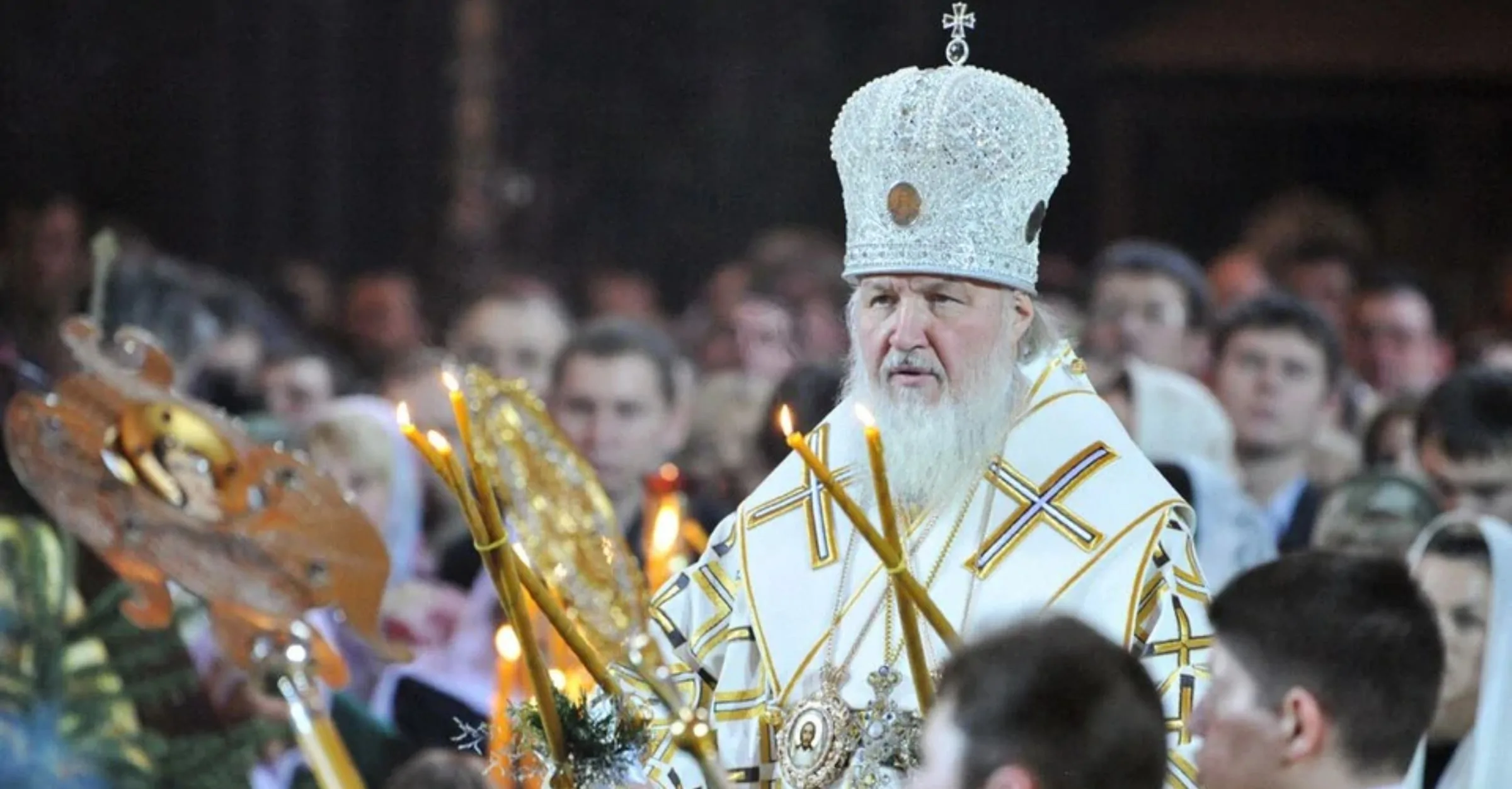
A number of Roman Catholics have found their way to Ruthenian Byzantine Catholic parishes, which celebrate the Eucharist with the Divine Liturgy of St. John Chrysostom, chanted by the priest, deacon, cantor, and congregation. The Ruthenians are considered very welcoming to newcomers, who are often surprised to see that the congregation is no longer composed mainly of immigrants with roots at the foot of the Carpathian Mountains.
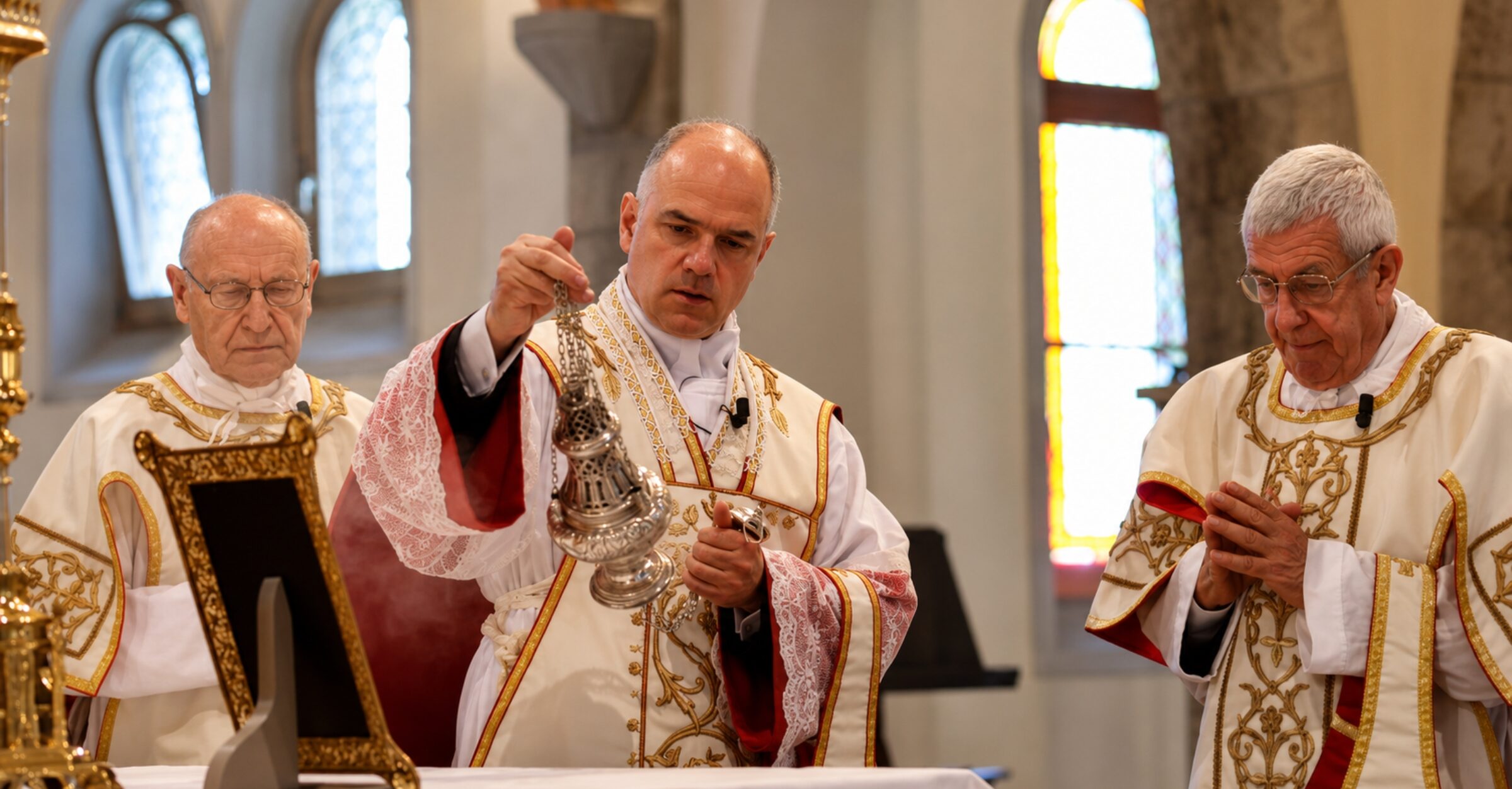
The liturgy is a bit longer than what Roman Catholics might be used to, but they’ll hear no extraneous commentary. It is sung without instrumentation, and worshipers are surrounded by sound and the rising clouds of incense.
I heard an older man call it “a no-nonsense liturgy.” It clearly fulfills what Vatican II envisioned: “In the restoration and promotion of the sacred liturgy, this full and active participation by all the people is the aim to be considered before all else” (Sacrosanctum Concilium: 14).
Many Romans seeking refuge from extraneous liturgical commotion find themselves at home and prayerful in Eastern Rite Churches.
Group Two is another collection of weary Catholics who have discovered or rediscovered the Old Mass, the Vetus ordo, or, as they call it, the Traditional Latin Mass.
Pope Leo XIV has reminded Catholics that the Novus Ordocan always be celebrated in Latin. No permission is needed. In my years as a pastor, I wanted to celebrate Mass in Latin on Pentecost. I found it a tough sell in modern parishes.
A rare few shared my enthusiasm, and one elderly daily communicant, who grew up with the Mass in Latin, told me, “It was a nice trip to the museum. But I don’t need to go there again.”
It has long seemed to me that the nostalgia for the Tridentine Rite that people claim is rarely genuine nostalgia. People under 75 have no memory of the old Mass. But they have endured much of what was referenced in the opening paragraphs of this essay, which has made them long for a previous era they think must have been less annoying.
They want reverence, solemnity, mystery, and awe. And maybe a little watered silk. And good for them. That they have not experienced reverence and awe in their parishes is not their personal failing, nor is it the failing of the renewed liturgy.
For better or for worse, Pope Benedict XVI allowed the celebration of the Vetus Ordo. Pope Francis restricted its use. Pope Leo seems to be thinking it over.
There are good reasons to ban its use for some, including those who reject what Vatican II taught not only about the new Mass but also about ecumenism, religious liberty, and episcopal collegiality.
Those who claim that conciliar teachings and reforms have damaged the Church and that the Church is in error are, in fact, dangerous people. If they choose to join the schismatic Lefebvreites in the Society of Pius X, we must pray earnestly for them, as they are among the most pitiable of people: they believe that there is no salvation outside the Church, yet by acts of defiant disobedience, they place themselves outside it.
Most of the people who seek the traditional Latin Mass are not deliberately discrediting the Church’s Magisterial Authority but are seeking worship that will nurture and challenge them.
Some object to the fact that the three-year cycle of Sunday readings is not used in the Traditional Latin Mass. Perhaps they need a reminder that the Byzantine Churches don’t use it either, but retain the one-year cycle that the Orthodox also use. They rightfully point out that theirs is an ecumenical concern.
We, pastors, wish that all Catholics could hear the same readings each Sunday so they could talk them over at the water cooler on Monday. But we wish for many things we do not realistically expect to experience. I, for example, would have liked it quite a lot if angels could be called on to tuckpoint older brick buildings.
Perhaps it is time to make a place to welcome those who seek to use the older rite, either within current dioceses, as a group gathered under a regional superior or a bishop, as members of a personal ordinariate, or even as a new rite.
The Church’s unity is both precious and fragile, and people of good will must want to see it develop and flourish, not as the grass of the field that springs up to flower and fade, but as an organic development in the Body of Christ, making our way faithfully from here to eternity.











4 Comments
Greg Nyssa
August 13, 2026The article states, “There are good reasons to ban its use for some, including those who reject what Vatican II taught not only about the new Mass but also about ecumenism, religious liberty, and episcopal collegiality.”
And THAT ^ is the real issue. The new doctrines taught by Vatican 2. That is what this crisis is about. Thank you for your honesty. Some new rite bishops have admitted the same, but none more clearly than Prevost who stated, “The Second Vatican Council introduced fundamental elements into the Church.” Really??? I thought we had been told for 60 years it was just “pastoral”. If so, how do doctrines on ecumenism, collegiality, and religious liberty equate to “pastoral”? They don’t, they equate to “FUNDAMENTAL” as Prevost said on camera. But those are DOCTRINES, not merely pastorals. So the real fight is over doctrine. The onus is on those who embrace these novel doctrines (already long and much condemned) to prove now how the are not being taken for a ride, more “hermenutic of continuity” please!
The new liturgy is just a spin-off the new theology, and accepting either is NOT 🚫 a “Catholic option” if one actually wants to save their soul.
David Timbs
August 14, 2026Greg Nyssa’s language reflects, almost verbatim, the reactive slogans of the schismatic leaders of the SSPX and any number of restorations websites.
It’s abysmal theology and lazy thinking.
Greg Nyssa
August 15, 2026Hi Dave,
Do you deny that Vatican 2 taught “fundamental elements in the life of the Church” as Prevost said? Do you deny that this very article admits, “Vatican II taught not only about the new Mass but also about ecumenism, religious liberty, and episcopal collegiality.”?
It would be a denial of reality if you denied either of these above FACTS. Which, if you did so – deny objective facts – would show you exhibit a characteristic of those who suffer from insanity or more properly, MODERNISM.
Dave, the putative popes from Vatican 2 onwards have all said these are doctrines (teachings), not “pastoral approaches” as many falsely claim.
And Dave, if they are “teachings” then what has the Church already taught about those doctrines? Has She not already condemned them as false in the past? What does Pius XI teach in Mortalium Animos, Pius IX teach in Quanta Cura? Gregory XVI in Mirari Vos, Pius X in Pacendi, Pius V in Quo Primum, Paul IV in Cum ex Apostolis Officio, etc? Do these popes not count to you? Only what came at Vatican II is your religion?
If these putative popes birthed from the Cabal of Vatican 2 tell you to worship your own belly button I suppose you would have to accept that as the “authentic interpretation of tradition” no?
I would say the lack of any depth to both your reply and your system of belief is the epitome of, “abysmal theology and lazy thinking.” But please go on and share your great wisdom and enlighten us all about what Vatican 2 really taught.
Remember too that the article above states people like me are, “dangerous” and “among the most pitiable”, but Vatican 2 and the synodal Church say you should “dialogue, listen, accompany, walk with, embrace, pray with, etc. people like me. In fact, these new synodal ways DEMAND that you do this. As Bergoglio once said the church is for, “all, all, all”!
May the Mother of God on the feast of Her glorious Assumption crush all heresies. Modernism is the sewer of all heresies and Modernism is the religion that has taken over the holy places of the Church, the prophesied “abomination of desolation standing in the holy place”.
Dan Schnittker
August 17, 2026I am 69 and I remember well the Latin Mass. Children understand far more than we give them credit for. The baby talk of priests today is far removed from the reverance I experienced as a small child. I don’t think Benedict “allowed” the TLM. Rather, he pronounced that it could not be abrogated. The damage to the Church I remember is obvious. SSPX and the like are indeed dangerous….to the scandals and heresies that have their origin in Vatican 2.