



The mother-in-law was returning from church when she met a beggar walking down her driveway.
“What happened?” she asked.
“The woman of the house sent me away,” the beggar replied. “She said there was nothing in the house to give me.”


“Come with me,” the old woman said.
The beggar eagerly followed her, convinced he would finally receive some alms.
She opened the front door, stepped inside, then turned to face him.
“Now listen,” she said. “My daughter-in-law had no authority to turn you away.”
She paused for a moment and said: “I am the woman of the house. And I tell you, there is nothing to give you. You may go.”
It is amusing that the mother-in-law adds nothing to the original answer but merely places her authority behind it. Sometimes I wonder whether she still walks among us, wearing clerical dress.
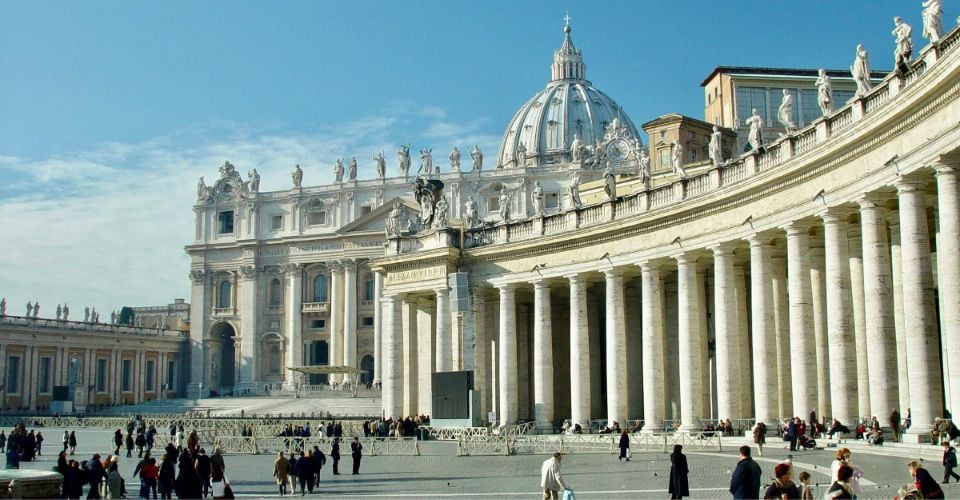
She appears in our parishes, in bishops’ houses, and, from time to time, even within the walls of the Vatican. She appears wherever authority is valued more than sincerity.
Her message rarely changes: “We, by the authority entrusted to us, have nothing new to offer.”
The declaration is carefully grounded in Scripture, apostolic tradition and the writings of the Church Fathers. It is reinforced with quotations from previous popes and earlier documents, as though repetition itself were proof.
No issue illustrates this more clearly than the question of women’s ordination, alongside other pressing concerns, including the bane of clericalism or ignoring reproductive rights, sexual minorities, and the emergence of McSpirituality.
For nearly half a century, the Church has responded to calls for the ordination of women with remarkable consistency. Since Inter Insigniores in 1976, Vatican documents have articulated the theological reasons for maintaining that priestly ordination is reserved for men.
The argument rests on Christ’s choice of the Twelve Apostles, the tradition, the witness of the apostles, and the sacramental understanding of the priest acting in persona Christi.
In 1994, St. John Paul II appeared to bring the discussion to a close. In Ordinatio Sacerdotalis, he declared that “the Church has no authority whatsoever to confer priestly ordination on women” and added that this judgment “is to be definitively held by all the Church’s faithful.”
Nearly two decades later, Pope Francis expressed the same conclusion in simpler language. “That door is closed.”
❝
Every significant development in the Church’s life has begun with someone asking a question many considered settled. Mother Church has never feared sincere questions. Only the mother-in-law does.
And yet the knocking has never stopped, with many Catholics remaining unconvinced that the conversation has reached its end.
They argue that the Church’s reasoning has been shaped not only by revelation and tradition but also by centuries of patriarchal assumptions embedded in theology, ecclesial structures and the interpretation of Scripture.
Mother Church does not behave like the mother-in-law in the story but rather like a mother who gathers her daughters — not only her sons and their aged uncles — and listens before speaking. She finds a way to defend her daughters’ dignity while taking them into her confidence.
We have seen this mother before, embracing fresh theological language and renewed pastoral understanding in explaining purgatory, hell, heaven and salvation outside the Church without altering the core of faith.
The Church’s relationship with Judaism is another striking example of change. For centuries, Christian theology was shaped by interpretations that viewed Judaism largely through the lens of rejection. Influential Church Fathers contributed to a tradition that often spoke harshly of the Jewish people and their faith.
Then came the Second Vatican Council. Without abandoning Scripture or the Christian faith, the Church transformed the conversation. Through Nostra Aetate, she reshaped centuries of hostility, affirmed the enduring spiritual bond between Christians and Jews, and opened a new era of dialogue and mutual respect.
The same pastoral imagination has appeared elsewhere.
When Eastern-rite clergy and former Anglican ministers entered into full communion with Rome, the Church welcomed many married priests together with their wives and children. Catholic teaching on the priesthood did not change. Rather, the Church recognized that history sometimes presents circumstances requiring pastoral generosity without compromising doctrine.
If history has taught the Church to distinguish between immutable doctrine and pastoral application in one area, it is legitimate to ask whether similar discernment might one day emerge elsewhere.
A loving mother knows the difference between rejecting her own and making room within the house for them.
That raises an intriguing question. How would she respond if, one day, some married women priests from the Anglican Communion sought full communion with the Catholic Church? Would the Church simply tell them that God had never called them?
The question is whether God calls only within the boundaries of a single ecclesial tradition. Catholics and Anglicans profess faith in the same Triune God. They baptize in the name of the same Father, Son, and Holy Spirit and proclaim the same Gospel.
If that is so, one naturally wonders why the God who calls a woman to priestly ministry in one church could not, at least in principle, call a woman in another. The answer usually comes quickly: sacramental theology, apostolic succession, the authority of the magisterium and the Church’s understanding of the priesthood.
Those are serious arguments, but they do not silence the mystery of vocation — the possibility that the omnipotent God may call anyone to priestly ministry, unbounded by human understandings and restrictions, and that the Holy Spirit may continue to surprise His Church, as He has so often done throughout history.
Every significant development in the Church’s life has begun with someone asking a question many considered settled. Mother Church has never feared sincere questions. Only the mother-in-law does.
Unlike the mother-in-law, the mother invites her children inside. She listens, argues, fights, prays, and waits for the Spirit to work. Together, they discover that what seemed impossible yesterday has become the grace of today.
The Church will always have difficult questions standing at her doorstep. Yesterday it was Jews, the covenant and ecumenism. Today it is women and ordination, or the rights of sexual minorities. Tomorrow it may be something none of us can yet imagine.
The question is not whether someone keeps knocking. The real question is who opens the door: The mother or the mother-in-law.












4 Comments
Marie Pierre
August 6, 2026Hello, you have presented beautifully well the refusal and unwillingness of the Vatican and the Church hierarchy in ordaining women as priests. As Jesus said, they don’t know what they are doing!
ranjit yawu
August 6, 2026Mary the mother of Jesus with other women were present at the Last Supper when Jesus instituted the Priesthood. Any reason why Jesus did not invite his dear mother, to be included? She was the best qualified woman in the group!
David Timbs
August 7, 2026Jesus ‘instituted’ the Eucharist and commanded it to be memorialized until the end of time. To claim that Jesus instituted and a male gender-based priesthood I think is biblical and theological fundamentalism.
I find it difficult to identify a ministry of ‘priesthood’ anything like it is now for the first three centuries. Ignatius of Antioch makes it clear that the local Christian community leader (episkopos) normally presided but he could appoint anyone in his stead.
The late, great US biblical scholar Raymond Brown concluded from his research that the one who led the Eucharist was one acceptable to the members of the Christian community.
The ‘icon’ or gender-based argument for a male priesthood I think is culture conditioned and has no foundation in the theological anthropology of St Paul who wrote that all those who are in Christ, male and female, are a new creation. This has always been the theological elephant in the room especially for Catholicism. The sooner it is recognized and accepted the better tor the future of the Church.
Tony Luciano
August 9, 2026Well Presented Article.