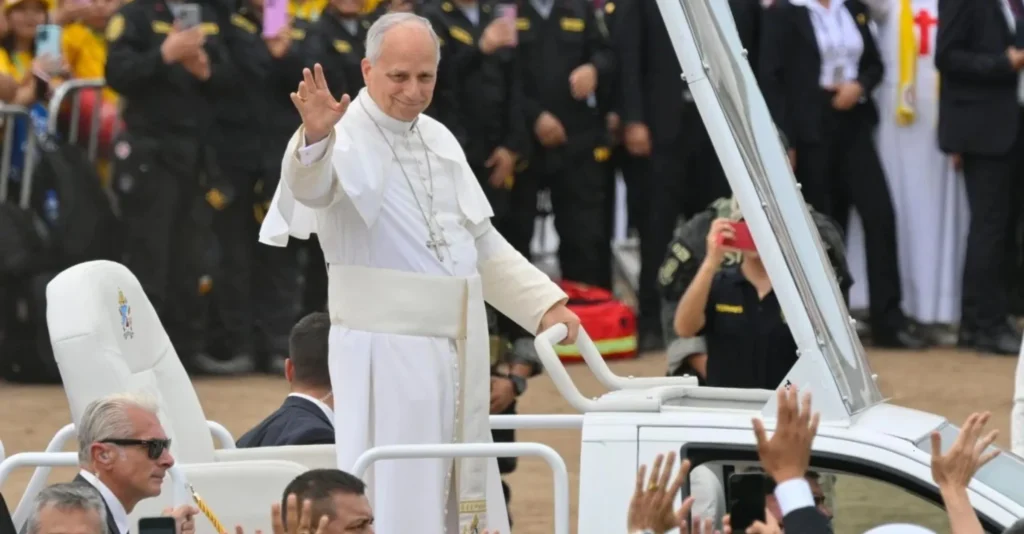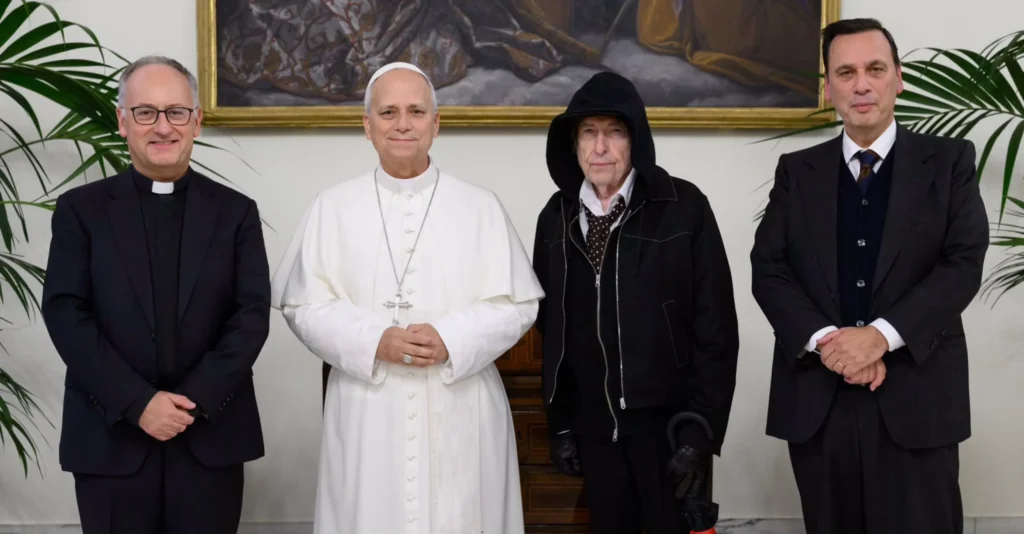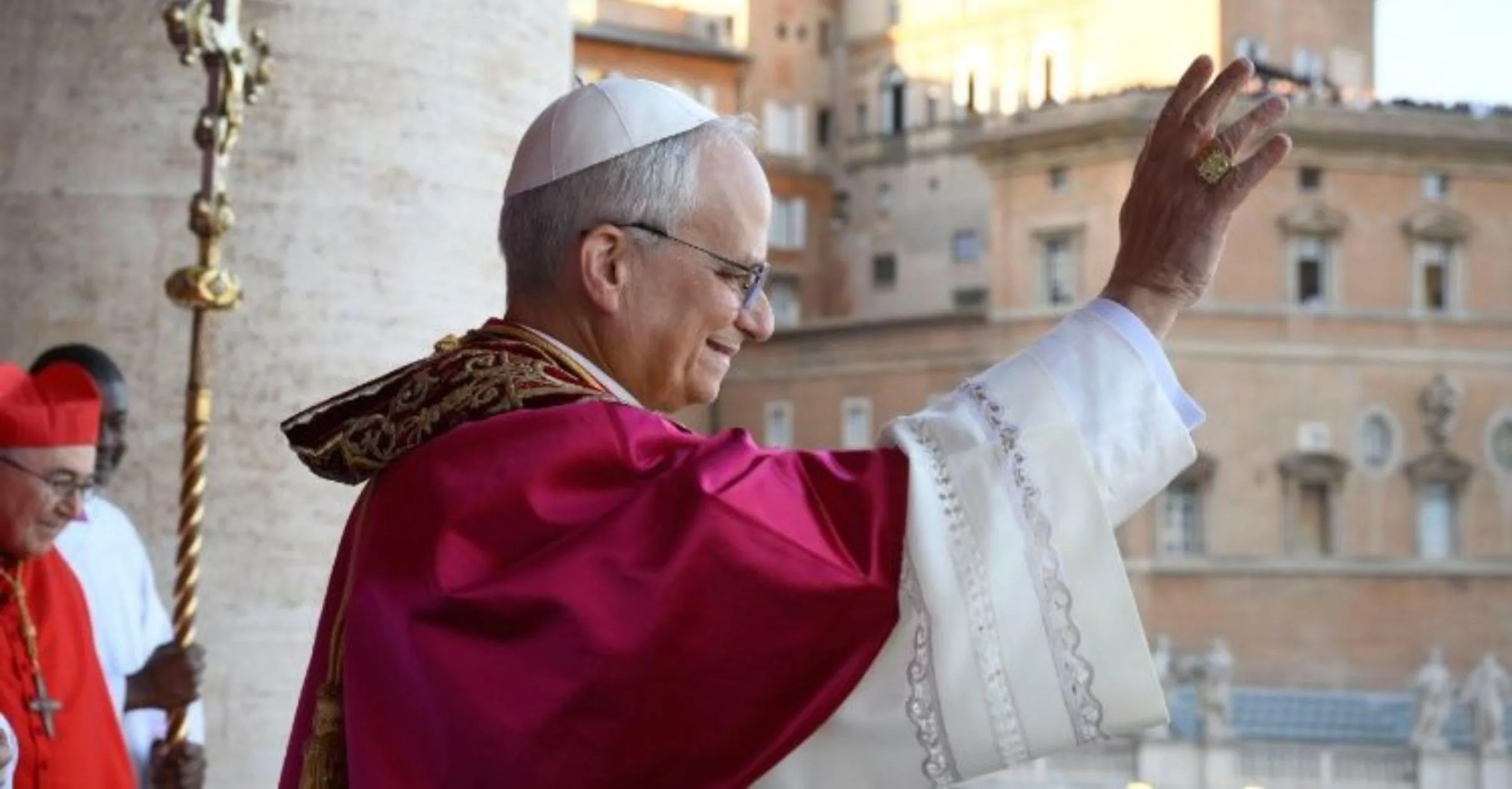

Santiago Roncagliolo, a Peruvian-born novelist and journalist, traces Pope Leo XIV’s life in his book “El pastor y los lobos”(The Shepherd and the Wolves), from his years as an American-born Augustinian missionary and bishop in Peru to his election as pope in 2025.
Robert Francis Prevost spent decades as an Augustinian missionary, seminary rector, and eventually a bishop in Peru before being elected pope, becoming the first American-born pope in history.
Roncagliolo, who also grew up in Peru, draws on his own background covering the country to examine Pope Leo’s handling of a major Catholic Church abuse scandal there — and the alleged campaign by conservative Catholic factions to keep him from being elected pope.


Roncagliolo’s book, published by Barcelona-based Seix Barral publishing house, became a bestseller at Peru’s 2026 international book fair.
This interview was conducted by Jesús Bastante for the Spanish outlet Religion Digital and published Sept. 12, 2026.
Your book is said to be to Prevost what Javier Cercas’s “El loco del fin del mundo” was to Bergoglio…
The interviewer’s shorthand reference is to Javier Cercas’s 2025 book “El loco de Dios en el fin del mundo” — “God’s Madman at the End of the World” — a bestselling, prize-winning account of Cercas’s trip to Mongolia with Pope Francis, written at the Vatican’s invitation. “Bergoglio” is Jorge Mario Bergoglio’s birth name.
I think Cercas opens up a very interesting avenue that really caught my attention, because I wasn’t used to a non-believer writing about religion out of curiosity — out of a desire to understand what it’s all about — rather than to label it as superstition, abuse, barbarism, or futility.
He was indeed an influence, just like Le Carré.
In Cercas’s case, there’s a funny aspect to it because, throughout the narration, he’s worried he’s starting to like the pope. In my case, while researching Prevost’s story, I realize I’m at a point where I don’t believe in almost anything: I turn on the TV and know what they’re going to say before they even start speaking. I believe in democracy, but I see how democratic presidents are promoting war, invasion, and the persecution of people who are different.
At some point in the book, as I discuss Prevost’s story, I decide that I want to believe in him. I want to believe that someone truly has a moral way of understanding the world. At the same time, I have to be rigorous, especially when it comes to accusations of a cover-up.
You also tell the story of Peru, where Prevost learns to be a man of the cloth, lives out his faith alongside a people suffering not only from poverty but also from violence, and develops a relationship with Liberation Theology…
(Liberation Theology is a Latin American Catholic school of thought, dating to the 1960s and ’70s, that emphasizes the Church’s obligation to the poor and social justice. Some Vatican officials viewed it with suspicion during the pontificates of John Paul II and Benedict XVI.)
At first, I didn’t know whether there was a story there, but I set out to investigate why a guy had made his way from Chiclayo to Pope in two years — because there really is a story there. (Prevost served as bishop of the Diocese of Chiclayo in northern Peru from 2015 to 2023).
A guy who arrives in Peru from Chicago because he’s a missionary. There’s a story there that I can tell, because that’s where I grew up. And I ended up finding something almost like a thriller.
Who is Leo XIV to you?
I’d say he’s a good man with a calling to serve. But let’s be clear: “good” isn’t like it is in superhero movies.
You can want to do good, choose from what’s available, do good, and still have victims.
He is a determined man, and as one of the contributors from Chiclayo notes in the book, he knows that the allies of light cannot be more naive than the forces of darkness. That is one of the great evils of the “progressive” Church.
And yet, despite all that, Francis was elected. You open the book with the episode of Bergoglio “converting” to the victims in Chile…
(In early 2018, Pope Francis visited Chile and initially defended a bishop accused of covering up clerical sex abuse, provoking widespread outrage; he later admitted he had made “grave errors” in judgment and summoned Chile’s entire bishops’ conference to Rome, where all offered to resign.)
Yes. Francis undergoes a transformation when he travels to Chile; he comes to understand the extent of the abuse, and in a way, breaks free from the “isolation” that exists within the Church.
For us — ordinary people — it’s very hard to understand what goes on there. Take, for example, the coverage of the conclave. Hours and hours of radio and television, yet no one knows what’s happening out there.
The Church has a very hard time communicating.
People demand transparency from the Church, but it’s an institution in which mystery and secrecy are key.
We’re also talking about an institution that deals with sins, and in confession there can be no transparency — you can’t talk about it. The Church is an institution about which very little is known, and it communicates very little.
In fact, Francis takes office with the divorced in mind — as a major progressive achievement — and is unaware that everyone is fed up with the abuses and that what is about to explode is the Church’s darkness. And in Chile, he undergoes a powerful shift and begins to understand the extent of the darkness within the Church.
It’s not just sexual abuse: it’s financial crimes, illicit funds, and criminal conspiracies. And there he learns about Prevost’s experience in a truly brutal country like Peru, where the state either doesn’t function or functions against its citizens.
And he needs Prevost to go to the Curia. He knows he needs someone different, but someone also forged in the Curia, so what happened to him doesn’t happen to Prevost.
Do you think Francis chose Prevost as his successor?
A pope cannot choose his successor, because (except for Ratzinger) he will be dead by the time the successor is chosen.
But he brings him into the Congregation for Bishops, where he will meet all the conclave voters.
He has him give a speech before the other cardinals so they can get to know him. Several sources in the book suggest that he wanted Prevost to be his successor. He is not a “Francis II” — their visions are radically different.
Prevost brings many enemies from Peru with him, who stir up a scandal before the conclave. And then there’s his role in the “Sodalicio case”…
(The Sodalicio de Vida Cristiana, also known as the Sodalitium Christianae Vitae, was a conservative Catholic lay society founded in Peru in 1971.
Following years of investigations into sexual, psychological, and financial abuse by its founder, Luis Fernando Figari, and other leaders, Pope Francis ordered the group’s dissolution, announced on Jan. 20, 2025, with a formal suppression decree signed that April.
Prevost, as the bishop of Chiclayo, played a significant role in investigating abuse allegations tied to the group.)
There was a campaign (by the Sodalicio) to prevent Prevost from being elected pope because he had become their declared enemy.
Prevost started out very diplomatic, and the Sodalicio members had plenty of opportunities. I think it’s similar to what he’s doing with Opus Dei.
(Opus Dei is a conservative Catholic institution, founded in Spain in 1928, whose members include laypeople and clergy dedicated to seeking holiness through everyday work and life.)
He’s sending messages; he’s open; he’s willing to engage in dialogue. Now, if he feels that the dialogue is going nowhere, he is completely relentless. And when he felt the dialogue with the Sodalicio, Ricardo Coronado, or Cardinal Cipriani was going nowhere, he eliminated them at full speed.
(Cardinal Juan Luis Cipriani, a member of Opus Dei and former archbishop of Lima, was sanctioned by the Vatican in 2019 following accusations, which he has denied, related to sexual abuse.)
In the book, you portray Coronado as a sort of “antagonist” to Prevost…
They share a common history: each led two Augustinian novitiates in Peru—one in Lima and the other in Trujillo.
Some — those from Coronado — are strict in their adherence to dogma.
The ones in Trujillo — Prevost’s group — were different. This pope in Trujillo is like Robin Williams in “Dead Poets Society”: a professor who wears sneakers, is very modern, and inspires many young people—friendly, open-minded, not very strict—while the ones in Lima would just hide under the pews to pray.
Why do you think Coronado so important in this process?
He is the head of formation for the Augustinians and is clearly opposed to Prevost.
When he is appointed general of the Augustinians, Coronado requests a dispensation, which Prevost himself signs. He then takes up the defense of the alleged victims of El Lute.
(Ricardo Coronado is a canon lawyer and former Augustinian who has represented alleged abuse victims in Peru; “El Lute” is the nickname of Father Eleuterio Vásquez González, a priest in the Diocese of Chiclayo accused by multiple women of sexually abusing them as children between roughly 2006 and 2010.
In November 2025, the Vatican, under Pope Leo XIV, granted Vásquez a dispensation from the clerical state — a laicization that effectively ended the internal canonical process against him without a full trial, a decision that has drawn criticism from victims’ advocates.)
And, according to Ana María Quispe, one of the victims, Coronado orchestrated the accusation against Prevost — something she did not want. She only wanted justice to be served.
But Coronado brought her on television and, in a way, “fabricated” the abuse allegation — originally directed against El Lute — and redirected it against Prevost.
It’s true that this allegation was not investigated as it should have been. That’s why I say that the concept of “good” is complicated in the Church — it’s not a matter of black and white.
It’s curious, because the lawyer (Coronado) is facing accusations within the Church, and the alleged abuser has requested a dispensation and has refused to speak.
To what extent might the “Lute case” influence the pontificate of Leo XIV?
I don’t think that case matters anymore. He’s already pope. That case was intended to prevent his papacy.
Now he’s Leo XIV, and now he has to resolve the existing problems, including those related to abuse.
When he came to Spain, the visit was dazzling. Everything went spectacularly well. He was able to speak about faith and address social issues such as immigration, poverty, and prisons, but many of the victims of abuse did not feel respected, welcomed, or heard.
And in Peru, too, there are victims of the “sodalités” who are beginning to complain that the Church is backtracking on the issue of compensation.
This case will no longer cause him any harm. What lies ahead for Prevost is even more difficult, and perhaps being good and intelligent won’t be enough to resolve it.
Has this book changed your opinion of Prevost?
No. I find him incredibly consistent. He is a man committed to the poor, to refugees, and to people facing social issues. Very much in the tradition of liberation pedagogy. On the other hand, not so much when it comes to the LGBT community.
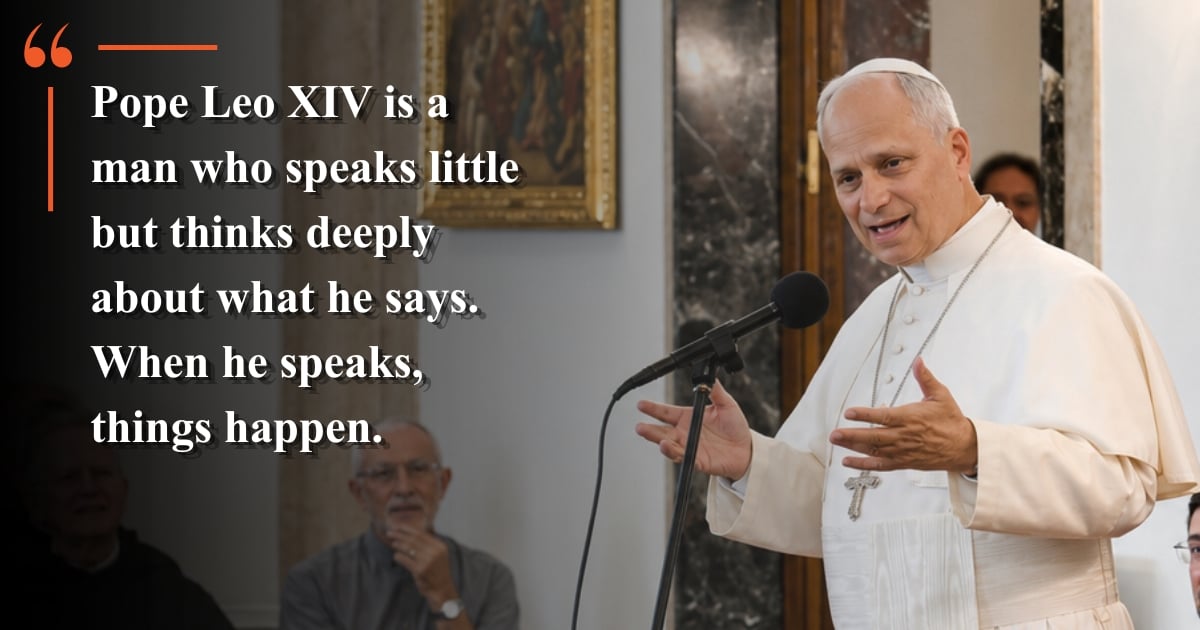
He’s a man who speaks little but thinks deeply about what he says. When he speaks, things happen.
He’s very politically astute when it comes to appointments, as was the case with the new president of the Dicastery for Communications — the first woman to hold the position, a layperson, and a conservative.
(In June 2026, Pope Leo XIV appointed Maria Montserrat Alvarado — until then president of EWTN News, a conservative U.S. Catholic media network — as prefect of the Vatican’s Dicastery for Communication, effective that November. At 39, she became the first laywoman to head a Vatican dicastery, or department.)
We’re dealing with a Florentine politician, very cerebral, with the same values. The only thing that surprises me is that his weak point — the issue of abuse — seemed to be his strongest point.
We’ll see. As always, hemay have a grand plan he’s putting into action, and we’ll see it unfold over time.
What does the church mean to you?
The church brings together millions of people who share a certain understanding of the transcendent.
I don’t go to Mass; I don’t believe in dogma — I’m too rational — but the things that religion provides — a shield against fear, relief from pain, a sense of purpose, and a community — are things everyone needs.
You can look for them elsewhere, but you can’t live without those things. And the church brings together many people who can provide all those things and offer a sense of community.
It’s also a place that brings together the best and worst of human beings.
I’ve seen people whose kindness has moved me to tears, and I haven’t seen anyone do that without faith.
I’ve also seen others capable of destroying the childhoods of innocent children because of desires they tell others not to have. It has struck me that both the sheep and the wolves exist within the institution.
This is a translated, edited and expanded version of the interview that first appeared on Religion Digital, and has been republished with permission by Global Catholic.