For the people of Beyenburg, a picturesque district of Wuppertal in Germany, the date July 14, 2021, reminds them of the flood and devastation across the Ahr Valley.
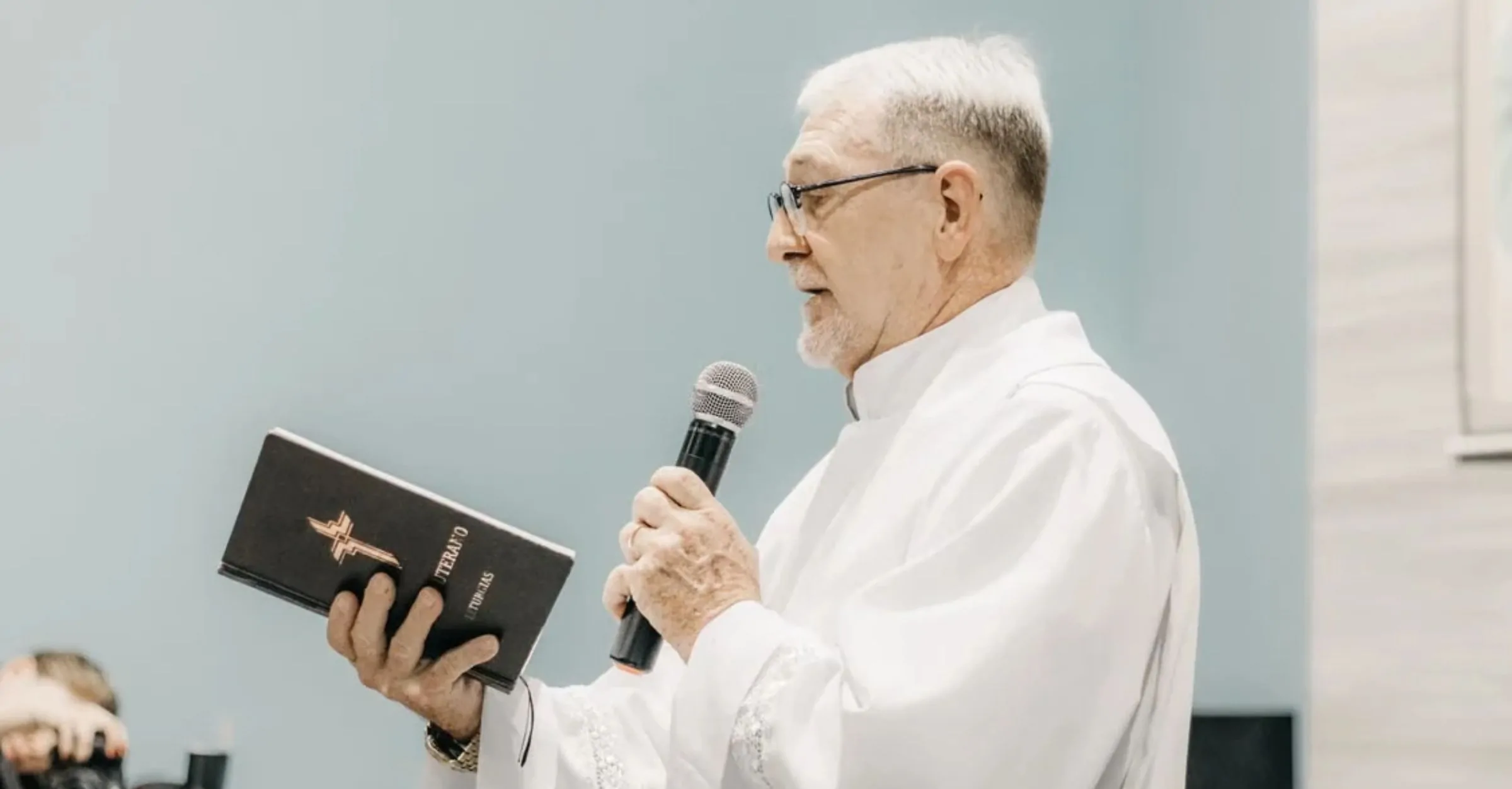
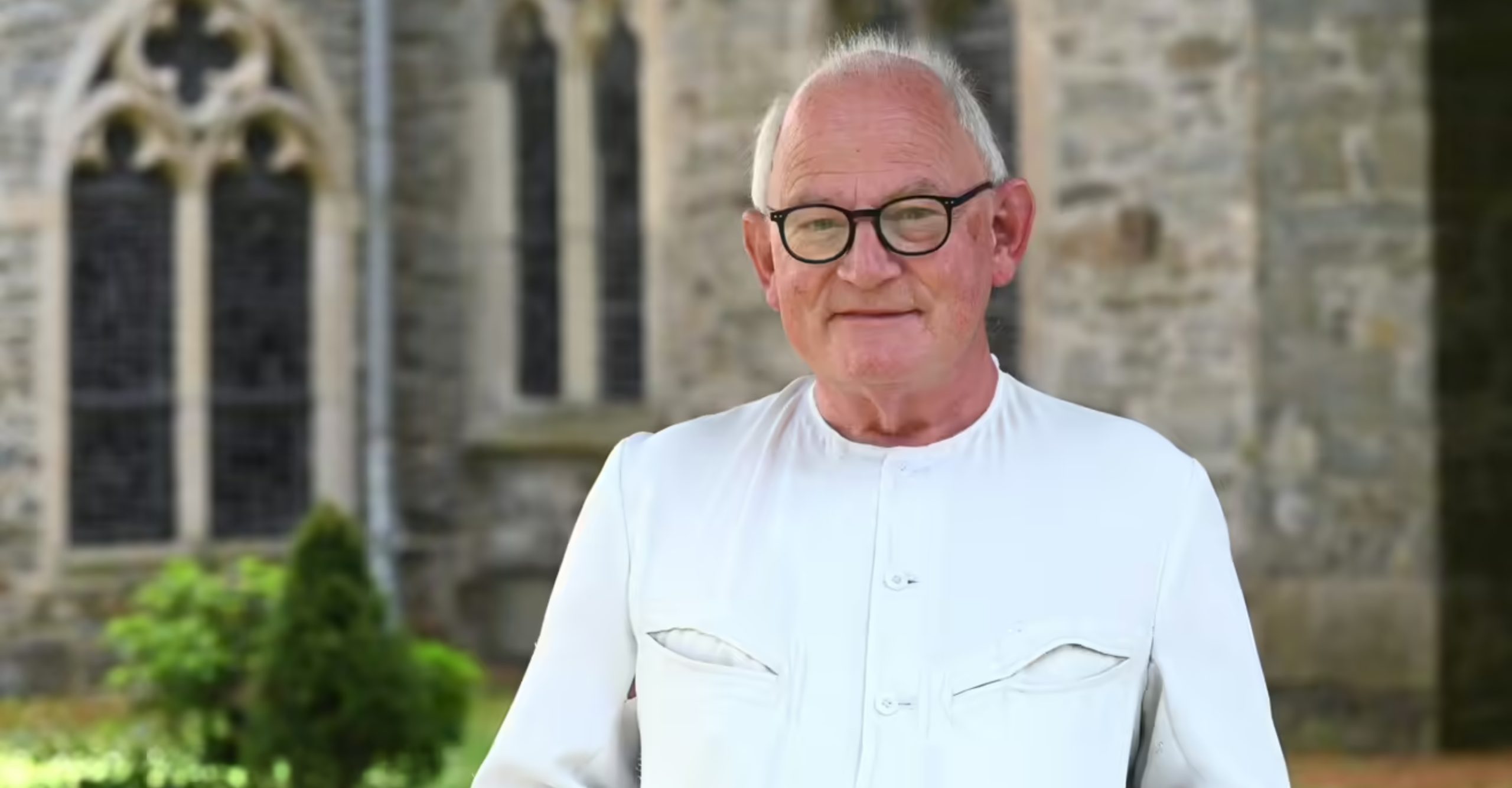
The date is also a reminder of the courageous actions by Brother Dirk Wasserfuhr, a member of the Order of the Holy Cross (Crosiers) who lives at the historic monastery church of St. Mary Magdalene.
Wasserfuhr, now 66, who has been credited with his quick action of alerting the village’s residents, recalls the day with moist eyes.


“It had already been raining all day heavily, and meteorologists had warned of severe weather. Late that afternoon I drove to the ford at the Schemmer Bridge to check the water level of the Wupper River,” says Wasserfuhr.
“At that point the river had risen almost to road level. That was the moment I realized: this isn’t going to end well,” adds Wasserfuhr.
The Ahr Valley and the neighboring areas, which included Beyenburg among others, were hit by relentless torrential rain on July 14, 2021.
The rain had caused rivers and streams across western Germany, including the Wupper River and its tributaries, to overflow. By the time it reached its highest levels, lower-lying areas of Beyenburg, Kohlfurth, and the Morsbach Valley were almost entirely underwater.
Wasserfuhr recalls that he had urged the people to pray that Beyenburgmay be spared from flooding during the 6:30 p.m Holy Mass later that day.
Despite warning the fire brigade, Wasserfuhr chose to go to the village’s low-lying areas to check for flood levels right after Holy Mass.
“It was 7:20 p.m., and the water was already flowing toward me,” he recalls.
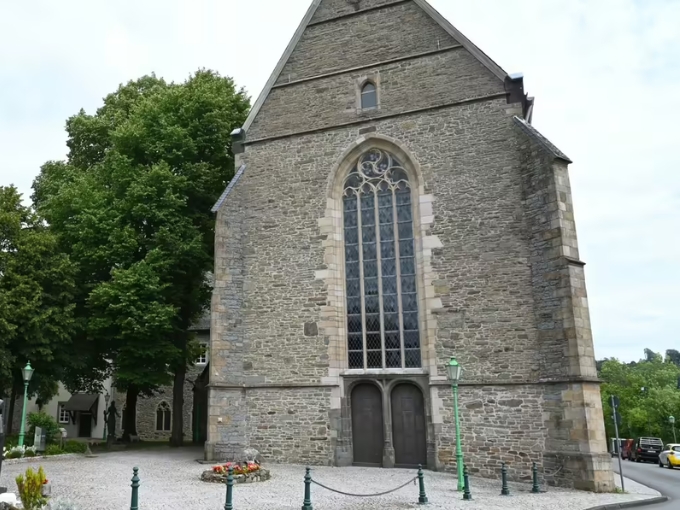
Wasserfuhr says he raced back to the monastery and rang the historic storm bell continuously for 30 minutes. He was doing exactly what his predecessors have done for centuries when disasters threatened the village.
“That was the telephone system of earlier centuries,” Wasserfuhr explains.
Whenever the church bell rings in Beyenburg, it signals that something significant has happened. Even today, every death in the village is announced by the church bells after the Angelus prayer at midday.
But when it rang in 2021, “people’s lives were in danger,” Wasserfuhr recalls.
The floods caused massive destruction in the town, resulting in 55 houses being flooded halfway up their ground floors; however, no lives were lost.
People mobilize to help their brethren
The relentless ringing of the bell resulted in exactly what Wasserfuhr had intended to happen – it jolted people awake and alerted them to the danger.
He removed his religious garb and changed into work clothes, rushed to the village playground, and helped volunteers fill sand into bags for use as a barricade.
The sand was sourced from the playgrounds of the two local daycare centers.
“Everyone pitched in immediately,” Wasserfuhr recalls.
Even residents from the safer and higher areas of the village rushed to to help those trapped in the lower areas. They organized transportation—including medical evacuations—while others worked tirelessly filling sandbags.
“But it wasn’t enough,” he recalls while adding that the water rose too quickly, washing away or toppling the makeshift sandbag defenses.
Despite that, every resident—including a bedridden woman whose rescue proved especially difficult—was eventually evacuated using rescue boats, makeshift walkways, and ladders from upper-story windows.
Emergency shelters were established, including within the monastery itself.
“It was complete chaos,” Wasserfuhrsays, “and over everything rang the heavy church bell.”
Abandoned to fend for themselves
Wasserfuhr still recalls a troubling memory – the sense of abandonment among the people of Beyenburg at the time. “There were no sirens. No police. No firefighters. No emergency services.”
The first responders arrived only after what felt like two endless hours, leaving residents to organize their own rescue efforts.
Wasserfuhr still feels surprised that there were no deaths despite delays and lapses.
He recalls discovering electrical transformer boxes still working amid the floods, with sparks and smoke coming out of them.
When electricity was finally cut, the entire village disappeared into darkness, and the volunteers continued working with the aid of flashlights.
Amid all this, there was also the warning that the Bever Dam was at risk of failure, and another wave of flood water was expected. Fortunately, the dam held.
According to Wasserfuhr and the other locals, the flood was the highest level ever recorded in Beyenburg—half a meter higher than the previous record from 1890, with water levels rising four meters above normal.
Daybreak revealed the full scale of nature’s fury that was unleashed on Beyenburg.
Piles of floating debris “several meters high and weighing tons” were jammed against bridges across the Wupper River, recalls Wasserfuhr.
Community ‘like the early church’
Wasserfuhr recalls that the support after the devastating flood was overwhelming.
Roughly 1,000 volunteers from Wuppertal and neighboring communities reached Beyenburg and cleared mud and removed damaged belongings.
“The willingness to help was overwhelming. It became so great that the media actually asked people to stop coming because the village could no longer cope with the number of volunteers,” says Wasserfuhr.
The cemetery chapel served as the central point for aid distribution. It served meals and drinks to flood victims, soldiers from the German Armed Forces, and countless aid workers.
Every evening, Wasserfuhr climbed onto the bucket of an excavator to deliver words of encouragement, strengthening morale and reminding everyone that they would rebuild together.
❝ We discovered that the Church is much more than Sunday Mass. For weeks, the real liturgy took place every day in the streets, alongside the people, during the cleanup. Sometimes there was a lot more labora than ora.
“The solidarity was incredible,” he recalls. “If it hadn’t all been so tragic, I would say it was the most beautiful time of my life.”
“It was like the early Church—Christianity lived in practice. Every door stood open. Everyone was welcome. Whatever people had, they shared,” Wasserfuhr adds.
Help poured in from across Germany, which included shovels, generators, heavy machinery, drying equipment, fuel, and countless other items.
For weeks, people worked side by side in mud surrounded by mountains of debris.
“There were no distinctions anymore—no religion, denomination, title, or social status,” Wasserfuhr emphasizes.
The parish opened its pilgrim rooms to those who had lost their homes and converted its parish hall into a warehouse for donated goods.
Military logistics were coordinated by Senior Master Sergeant Arne Aust, a Beyenburg resident. “Without our soldiers, we would have been completely overwhelmed,” Wasserfuhr says.
A spontaneous flood relief fund raised 1 million Euro (US$1.1 million), enabling immediate financial assistance to victims.
After five years
“The realization that an experience like this changes your priorities,” Wasserfuhr says as he recalls the flooding. “You learn what truly matters in life—and that not everything is under our control.”
He adds that the flooding taught him how essential relationships and community are in overcoming life’s darkest moments.
“We discovered that the Church is much more than Sunday Mass. For weeks, the real liturgy took place every day in the streets, alongside the people, during the cleanup. Sometimes there was a lotmore labora than ora,” he adds.
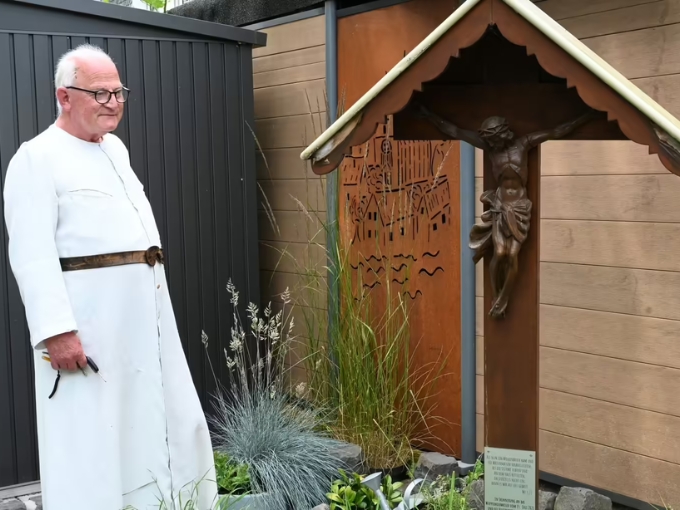
But the flood also exposed the people of Beyenburg to “extraordinary solidarity, generosity, and human closeness,” says Wasserfuhr.
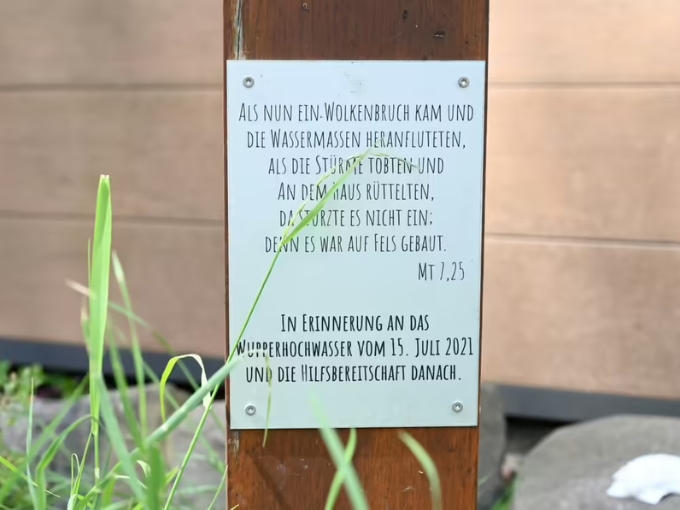
Apart from the support provided by local, state, and federal politicians, Cardinal Rainer Maria Woelki of Cologne visited twice, meeting residents in their damaged homes and blessing the newly erected flood memorial cross.
Craftsmen from Swabia, volunteers from Dresden, Danish soldiers, radio presenters from Lower Saxony, school classes, church communities from many denominations, and countless others arrived only to help.
All this happened amid the Covid-19 pandemic, and yet there was no outbreak in the region, he notes.
Five years on, Wasserfuhr hopes the spirit that emerged from the disaster will endure: neighbors looking out for one another, a renewed openness, a willingness to share, the joy of celebrating together again, and above all, gratitude that—thanks to the timely warning—no lives were lost in Beyenburg.
He has preserved those memories in a booklet, And Suddenly Everything Changed, which chronicles how the people of Beyenburg mounted one of the largest grassroots relief efforts in the town’s history and rebuilt their community together after tragedy.
This is a translated and edited version of the feature that first appeared on DOMRADIO.DE and has been republished with permission by Global Catholic.