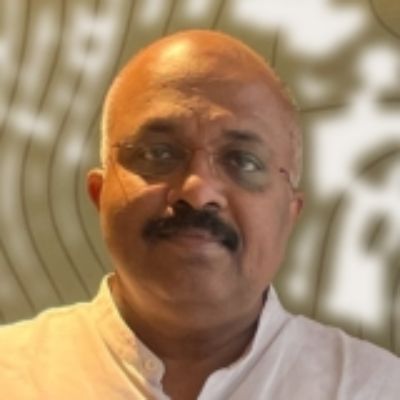
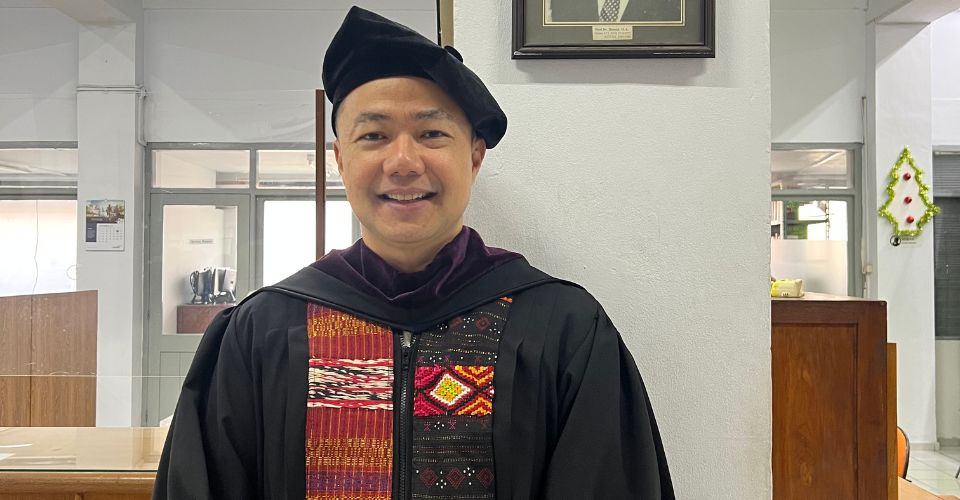
Florian Simatupang is a theologian, pastor, and academic whose work sits at the intersection of Pentecostal theology, sacramental thought, decolonial critique, and a Mennonite peace-and-justice orientation. His theological reflection is also shaped by Indonesian indigenous wisdom, which he reads as a resource for Christian thought rather than as a problem to be overcome.
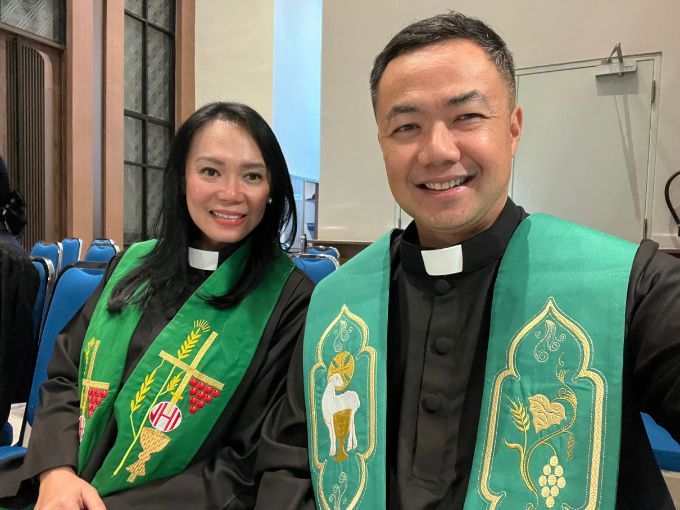
He serves as co-lead and teaching pastor at Christ the King Church (CTK) in Jakarta, alongside his wife, Pastor Arlene Simatupang, who is the Lead Pastor. He is also an assistant professor of theology at Sekolah Tinggi Filsafat Theologi Jakarta, Indonesia’s oldest ecumenical theological institute.
Simatupang’s scholarship centres on decolonial theology, the effort to read Christian faith from within Indonesian and Asian experience rather than only through inherited frameworks of Western missionary Christianity.


CTK is an English-speaking international congregation in Jakarta’s Mega Kuningan district, part of GKMI (Gereja Kristen Muria Indonesia or Indonesian Mennonite Christian Church), an Indonesian Anabaptist-Mennonite denomination.
In an email interview with Binu Alexander of Global Catholic, Simatupang speaks about decolonial theology, ecumenism, and the challenges of ministering to young people in a Muslim-majority society, as well as what the global church can learn from Asian Christians who live as a minority witness. The following is an edited version of the interview.
You are a proponent of decolonial theology. What is it and how is it relevant to modern Indonesia?
For me, decolonial theology is not about rejecting Western Christian ideas. Instead, it means recognizing that Western ways of thinking are not the only way to understand theology.
Many of the things we call “orthodox” Christianity came with European church structures and missionary ideas that treated local knowledge as a problem rather than something to learn from. Embracing decolonial thinking is a real change of heart, a metanoia, which can be hard for Christians who have absorbed Western ways of thinking so deeply that they see them as the faith itself.
My starting point is the Batak world, the ethnic group I belong to, which values harmony—between the living and ancestors, people and the land, and the visible and invisible. Decolonial theology asks what was lost when Christianity broke these ties, and whether the Spirit might still speak through what was left behind.
How does this view help your work with young people?
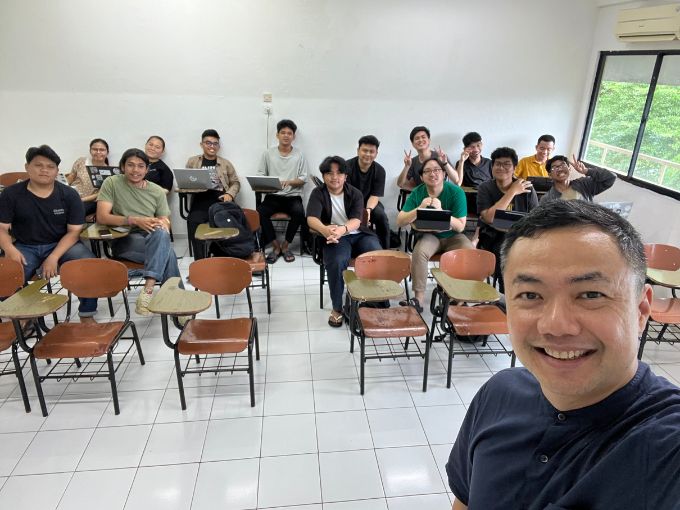
There is a real change happening among Gen Z Christians in Jakarta. Many are looking for more than just loud music and well-produced services. They are asking deeper questions than their parents did and are not satisfied with shallow worship.
This is a challenge for churches that still use seeker-friendly models focused on being trendy and emotional. That approach worked in the past, but it is not working as well now. Many young Christians are interested in older traditions with deeper liturgy and theology.
This change also shows a problem in how leaders are formed. Pentecostal churches cannot keep ordaining ministers just for their charisma or because they attend conferences. Churches need pastors who know Scripture, church history, and ethics, or else ministry turns into a performance.
Gen Z also sees the difference between the conservative politics often linked to these churches and the real message of Jesus, who stood with the poor and marginalized. Gen Z is not impressed by power. They are watching to see if the church practices what it teaches.
What challenges do you face in your mission in the Muslim-majority nation?
People come to CTK because they want to. They choose a church that is clear about its identity, beliefs, and involvement in the city. We know what we stand for, and so do our members.
Pastoring here is challenging, but most of these challenges are not unique to a Muslim-majority country. One big issue is the huge amount of unfiltered information people face every day, made worse by algorithms that stir up emotions instead of helping people understand. It is harder to help people think carefully and kindly in an environment built for outrage.
The second challenge is more about theology and politics. There is a narrative, mostly from the West, that says Christianity is under attack from Islam. I strongly disagree with this. It teaches Christians to see Muslims as threats instead of partners in building a better society. The real issue is not that Jakarta is diverse. That is exactly where we are called to show our faith.
Has social media become such a major problem?
The algorithmic environment young people in Jakarta inhabit is not neutral. It is designed to shorten attention, amplify outrage, and reward reaction over reflection. Pastoring in that environment means swimming against a strong current. We cannot compete with algorithms on their own terms; we must offer what they cannot: embodied, relational, and intellectually serious formation.
At CTK, our youth use a curriculum created by our own seminary-trained minister. We do not use a pre-made program. Instead, we take the time to shape our teaching to fit our context, even though it is harder and slower.
We choose to use physical Bibles on purpose. In a world full of screens, holding a book, turning its pages, and marking passages is a way to remind ourselves that faith is lived out in real life. The Word became flesh, and we want our young people to experience that with their whole selves.
We also encourage them to ask tough questions and be okay with not always having answers. When we do not know something, we admit it. Being honest in this way helps them learn that faith is not weakened by questions and that being truthful is an important Christian value.
How do you balance charismatic tradition with intellectual academic rigor?
The supposed conflict between charismatic worship and intellectual depth is not as big as it seems. We are both emotional and thinking people, and Mark 12:30 tells us to love God with all our heart, soul, mind, and strength. This is not about balancing two sides, but about a single, united calling.
Charismatic experience without deep thinking quickly becomes shallow. It can confuse loudness with depth and emotion with real spiritual experience, leaving people feeling empty.
On the other hand, focusing only on intellectual depth and leaving out charismatic experience means losing a sense of wonder. Theology that forgets how to kneel risks treating God as a problem to solve rather than a presence to encounter.
In my teaching and preaching, I aim for integration. I want to think carefully because the mystery deserves it, and stay open to the Spirit, who is bigger than any framework I use. When done well, each approach makes the other stronger.
How can the church in Indonesia move out of its “minority enclave” mindset?
When people talk about the Indonesian church as a minority, they often focus only on numbers and legal rights. These are important, and the unfair treatment of Christians by populist politics is real and should be named. But if we stop there, we miss something deeper.
Being a minority is not just about social or political status. It can also become a mindset. When a community accepts its own marginalization, it becomes defensive and focuses only on protecting itself instead of helping to build something better. The church can end up closing itself off from the world.
Indonesian Christians must resist this, not because the injustices are not real, but because a permanently defensive church cannot fulfill its vocation. The church is called to help build a just society for all Indonesians, not only for its own members.
Pancasila, Indonesia’s founding philosophy, imagines a society where justice and the common good matter for everyone. We can help make this real by seeing our Muslim, Hindu, Buddhist, and secular neighbors as partners, not threats, in building our country together.
How do Indonesian Christians navigate their relationship with the state?
Indonesia’s situation is different from other Asian countries, and that matters. We are not formally persecuted. Instead, we can become inconvenient for politicians who want to gain support by listening to loud fundamentalist groups.
The state may not move directly against Christians, but defending them can become a political cost no regime is willing to bear. That is its own form of pressure.
In this context, the GKMI tradition has much to offer. Its churches have long invested in relationships with neighbours, Muslim communities, and local civic institutions. This reflects a deliberate theological choice, rooted in the Anabaptist conviction that the church witnesses through presence and trust built over time.
It is hard for populist leaders to blame you if you are already known and trusted in your community. We last not by playing politics, but by being truly present with others.
Do you address social issues in your ministry, such as environmental issues, in a city like Jakarta?
Jakarta is one of the world’s most environmentally stressed cities, with problems like sinking land, constant flooding, and some of the worst air pollution in Southeast Asia. Ignoring these issues in preaching is not being neutral—it is a choice, and not a faithful one.
One thing that keeps us honest is lectionary preaching. CTK is one of the few churches that follows the lectionary, and this discipline is more important than many realise. When preachers do not pick the text, they cannot skip hard passages. We let the full range of Scripture shape us each week, even the parts we might ignore otherwise.
The lectionary often leads us to think about creation, caring for the earth, and the strong call for justice for both the land and the poor. It keeps the church from becoming so focused on heaven that it forgets faith is also about life on earth.
Environmental concern is not a political add-on to the gospel. It flows from sacramental ontology, from the conviction that this world is God’s and that its groaning demands our attention and action.
Can you explain sacramental ontology?
Sacramental ontology is, at its core, a way of seeing and being. It begins with the conviction that this is God’s world, all of it, and that nothing falls outside that reality. The material, the ordinary, the broken, the beautiful: none of it is beyond God’s concern or presence.
This does not mean pretending everything is fine. As Paul says in Romans 8, creation is groaning, but it is moving toward freedom, renewal, and redemption through the Spirit. Believing this changes how we live each day. The same street, workplace, or broken relationship looks different when we trust that God has not left it behind.
Every moment matters. Sharing a meal, welcoming a stranger, or seeking justice in a local meeting are not breaks from spiritual life—they are where it truly happens.
This is how sacramental ontology turns decolonial thinking into real change of heart. We are not just changing ideas, but learning to see indigenous, colonised, and marginalised people as part of God’s creative and saving plan. This new way of seeing changes everything.
How can Indonesian Christians contribute to the global “Anabaptist-Pentecostal” dialogue?
I cannot speak for Indonesian Christians as a whole. What I can offer is a perspective shaped by my own journey, from Pentecostal theology to an Anabaptist-Mennonite community.
The Mennonite World Conference resource “Wonder and Witness, Works and Word” expresses something I believe strongly: these two traditions need each other more than they realize. Indonesia, with its Mennocostal history, is in a good place to show what this partnership can look like.
In my view, much of Pentecostal church life is still influenced by American Christian fundamentalism, with Spirit experiences added, but often missing the gospel’s focus on peace and justice. Anabaptism, with its emphasis on discipleship, community, and peacemaking, helps Pentecostal churches live out their beliefs better. A healthy Pentecostal church should be Mennocostal.
The exchange, however, is genuinely mutual: Pentecostal spirituality can help Anabaptists rediscover wonder, joy, and spiritual vitality. Indonesia is a living experiment in what happens when these streams meet, and it is worth paying attention to.
As an Indonesian Christian leader, what do you bring to the global ecumenical table?
My involvement in ecumenism is not about strategy, but about theology. Believing that this is God’s world and that Christ holds everything together means I cannot accept a Christianity divided by group or institution.
If Christ is the one in whom all things cohere, then our divisions are not just organizational problems—they are contradictions to our faith.
Talking with people from different theological and faith backgrounds, both in Indonesia and internationally, has strengthened my own beliefs, not weakened them.
Real ecumenism does not mean losing what makes us unique. It takes humility to see that the Spirit works in other traditions too.
Indonesia has something important to offer. Bhinneka Tunggal Ika, or unity in diversity, is more than a slogan. It reflects the wisdom Indonesians have practiced, even if imperfectly, in a country with many religions and cultures.
The Indonesian church has learned to keep its identity while living openly with others.
Sectarianism is not just an ecclesial problem. It is a spiritual one in which differences become walls, and loyalty to institutions replaces the unity Christ wanted for us.