





As technology companies turn to religion for moral guidance, the world must ask whether machines can become ethical without humans becoming wiser.
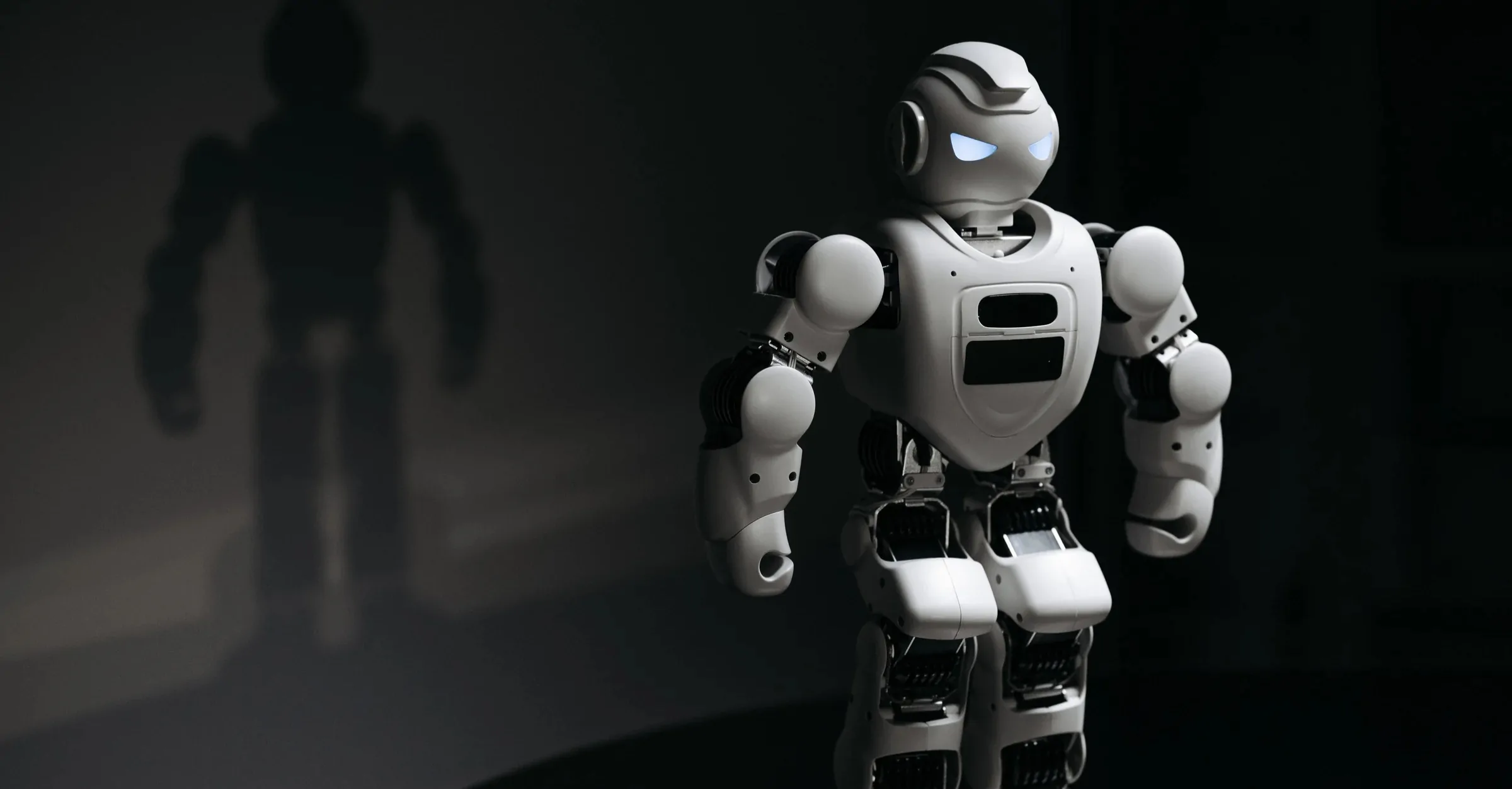
In a rather unexpected turn, some of the world’s leading technology companies are turning to religion for guidance. Having created machines capable of astonishing feats of intelligence, they now confront a question philosophers and religious thinkers have debated for centuries: What makes something right or wrong?
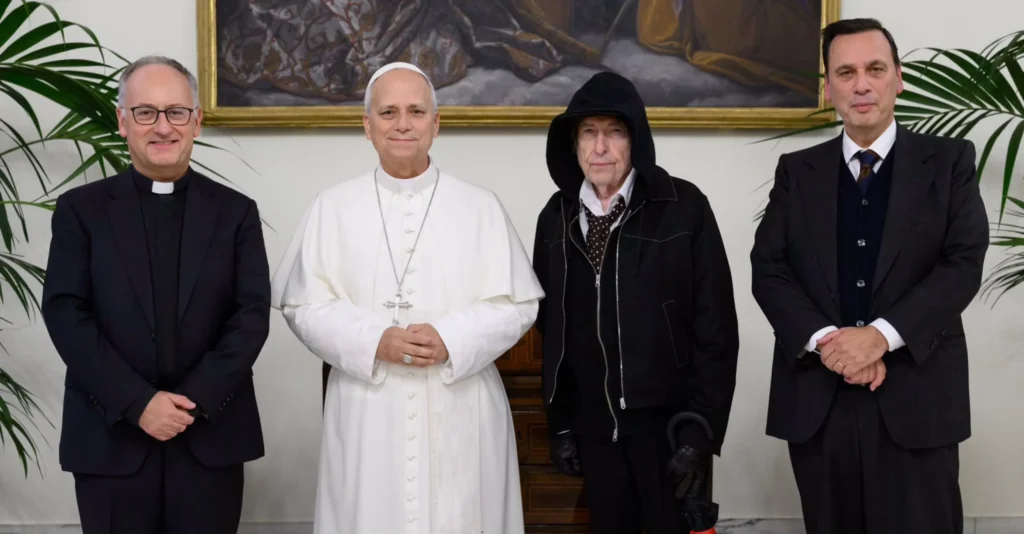
An Associated Press report on Oct. 25 describes how artificial intelligence developers are engaging with religious traditions to understand morality. Speaking at a Vatican event earlier this year, Anthropic co-founder Chris Olah acknowledged that some of the questions facing AI developers extend beyond what technological laboratories can resolve.


The development is both encouraging and ironic. We have created machines that can write poetry, diagnose diseases, analyze legal cases, and solve mathematical problems. Yet we are uncertain whether they can distinguish between what is technically possible and what is morally permissible.
We have taught machines how to think. Now we are struggling to teach them how to behave.
Intelligence is not conscience
A machine can identify patterns, interpret instructions, and produce responses that appear considerate, compassionate, or morally sophisticated. But does that mean it possesses a conscience?
A student may memorize every principle of medical ethics without becoming a compassionate doctor. A politician may deliver brilliant speeches about justice without treating opponents justly. A religious leader may know every commandment without living a morally responsible life.
Knowing what is right is not necessarily the same as doing what is right.
The philosophical distinction is crucial. Intelligence concerns the capacity to acquire and process information, to reason, and to solve problems. Conscience concerns moral judgment, responsibility, and the recognition that one’s actions affect others.
Current AI systems can simulate ethical reasoning. Whether an artificial system could ever possess moral consciousness remains a disputed philosophical and scientific question.
More importantly, even a machine that behaves ethically does not absolve human beings of responsibility for its consequences.
India and the moral challenge of AI
India offers a particularly revealing context.
With its rapidly expanding digital economy, a large technology workforce, and ambitions in artificial intelligence, the country has much to gain from these developments. AI can support rural healthcare, agricultural planning, education in regional languages, disaster management, and access to public services.
Imagine a tribal child receiving personalized educational assistance in her mother tongue, a farmer obtaining timely information about crop diseases, or a village health worker identifying medical risks with technological support.
These are genuinely humane possibilities.
But imagine also an algorithm unfairly rejecting a poor person’s application for financial assistance, an automated recruitment system disadvantaging women, or a deep fake destroying someone’s reputation.
The same technological power can liberate or exclude.
India’s social inequalities make this particularly important. An algorithm trained on unjust social realities may reproduce those injustices faster and with greater apparent objectivity.
A discriminatory human decision can be challenged as an act of prejudice. When discrimination emerges from a sophisticated technological system, it may acquire the undeserved authority of scientific neutrality.
We must therefore ask not only whether AI works efficiently but also whose interests it serves and whose dignity it protects.
Can religion teach machines morality?
Religious traditions have reflected on morality long before computers existed.
Christianity emphasizes the dignity of every person, especially the vulnerable. Hindu traditions emphasize dharma, ethical responsibility, and right conduct. Buddhism places compassion and the alleviation of suffering at the center of moral life. Jainism upholds the demanding principle of ahimsa, nonviolence toward living beings. Islam emphasizes justice and accountability.
These traditions cannot be reduced to a universal computer program. They differ in their understandings of human nature, moral authority, and ultimate reality.
Nevertheless, they provide something technological systems cannot generate merely through greater computational speed: centuries of reflection on suffering, responsibility, human weakness, and the common good.
The Catholic tradition offers an important distinction. In Gaudium et Spes, the Second Vatican Council describes conscience as the innermost place where the human person encounters moral obligation.
Conscience is not merely a database of rules. It involves the responsibility of a person who must answer for choices made in relation to others.
Machines may assist in moral deliberation. They must not become substitutes for human accountability.
The danger of outsourcing our conscience
However, there is a more immediate concern.
What happens when human beings themselves begin surrendering moral judgment to machines?
Teachers may allow algorithms to determine whether students are capable. Companies may delegate hiring and firing decisions. Governments may increasingly rely on automated systems to classify citizens and allocate resources.
Eventually, a dangerous statement may become commonplace: “The computer decided.”
But computers do not bear responsibility in the way that persons and institutions do.
A hospital cannot evade accountability by blaming its diagnostic software. A bank cannot excuse discrimination by invoking its algorithm. A government cannot justify injustice merely because an automated system made the decision.
Technology must remain accountable to humanity.
Pope Francis repeatedly warned against reducing human beings to technical or economic calculations. Pope Leo XIV has continued this concern, making human dignity central to the Church’s engagement with artificial intelligence.
The real danger is not merely that machines may become more intelligent than human beings. It is that human beings may become less willing to exercise their moral intelligence.
The need for wisdom, not merely intelligence
India’s philosophical traditions offer an important reminder: knowledge and wisdom are not identical.
A person may possess extraordinary knowledge yet lack self-control, humility, or compassion. Indeed, intelligence used to serve greed or hatred can become exceptionally destructive.
The same applies to AI.
If our societies are governed by prejudice, AI may automate it. If our economies reward exploitation, AI may make it more efficient. If governments seek excessive control, AI may provide unprecedented tools of surveillance.
But if we are committed to justice, inclusion, and human dignity, AI can become a powerful instrument for human flourishing.
The ethical task, therefore, is not simply to make machines better. It is to make the human institutions that design, deploy, and govern them more responsible.
Perhaps the question is wrongly framed.
Instead of asking whether artificial intelligence can develop a conscience, we should first ask whether humanity has sufficient conscience to govern artificial intelligence.
We do not need machines to become human. We need human beings to become more humane.












1 Comment
chhotebhai
November 15, 2026The conclusion is brilliant. Never mind machines, even animals are intelligent. Only humans are capable of wisdom, the gift to orient thoughts and deeds according to God’s plan.
Allegorically we could AI to the Garden of Eden to eat from the tree of good and evil, so that its eyes may open!
Ironically the AI giants could not identify the spy under their bedsheets. So much for gen son (Jensen), pun intended.