





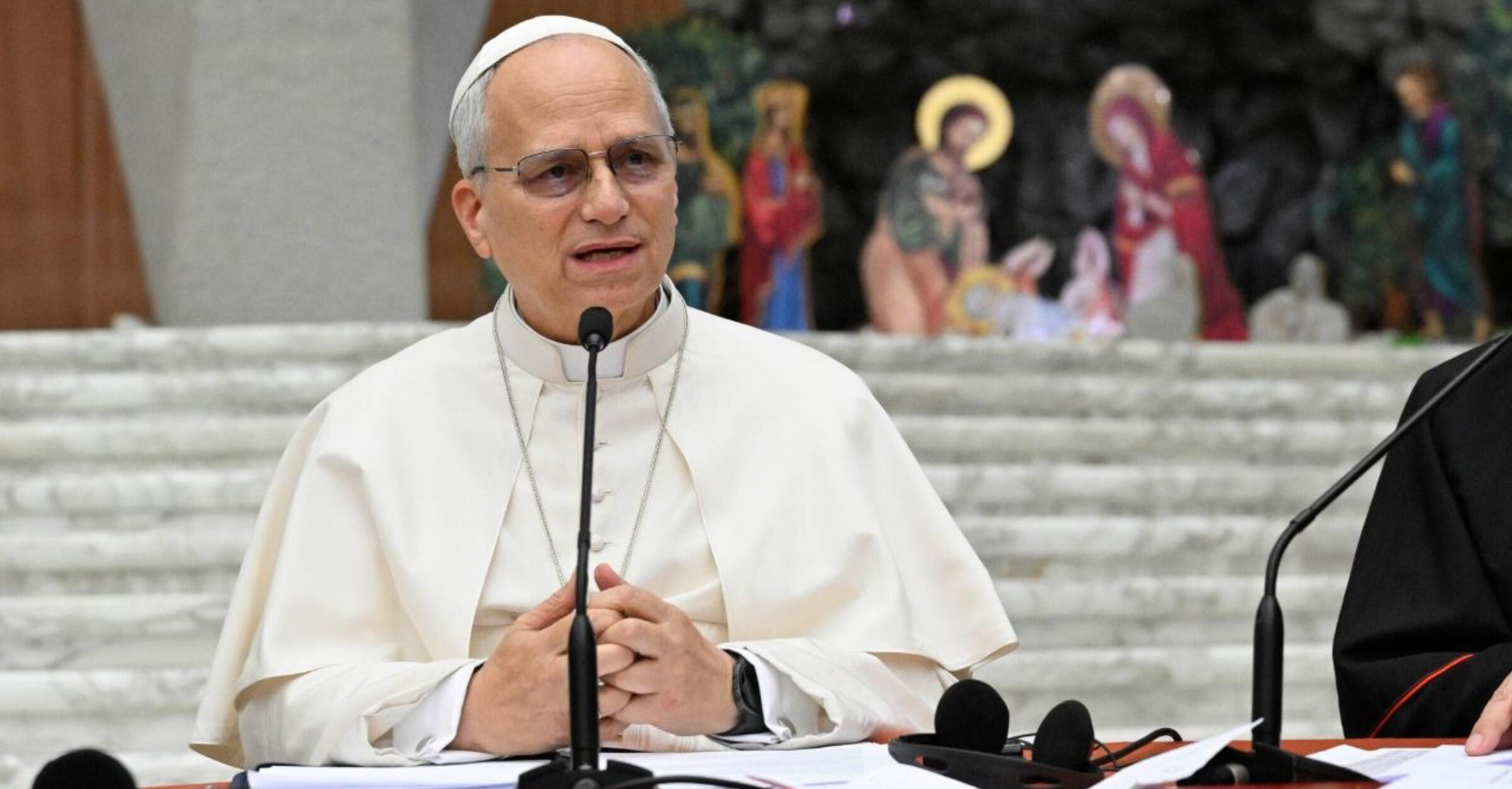
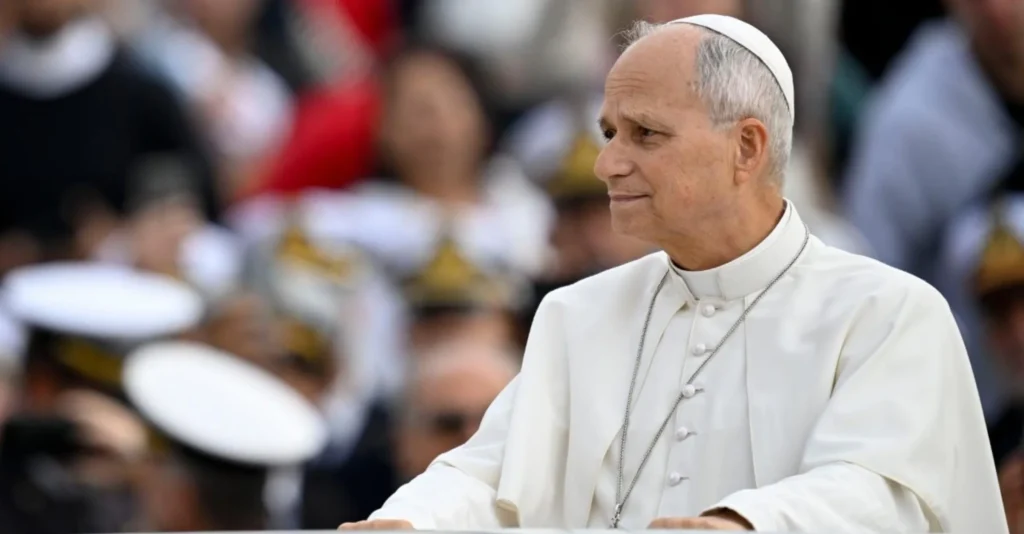
The three-day itinerary of Pope Leo XIV in France runs from the Élysée, the presidential palace, to the Paris headquarters of UNESCO; from Vespers at Notre-Dame, rebuilt after the 2019 fire, to a vigil with young people at the Stade de France, the national stadium on the city’s northern edge; then south to Lourdes, the Marian shrine at the foot of the Pyrenees, with its nightly candlelight procession; and finally, on Sept. 28, northeast to Metz, near the German border.
Before the pope has said a word, the trip has already been read, in some quarters, as an election campaign in reverse: a pope arriving to win back a share of French Catholics from the politicians who have learned to court them.
I distrust that reading.


A pope does not set out to contest an electorate with a party. And yet every apostolic journey is a word addressed to consciences, and this one arrives in a country where Catholics are divided on precisely the questions that word will touch on, including nation, migrants, identity, and fear.
Leo does not need to take aim at anyone.
The distinction worth holding onto is the one between an appeal to conscience and a political intervention.
What will Pope Leo tell the French?
Leo will not tell the French how to vote, and anyone waiting for the naming of a political in condemnation will be disappointed. He will say what the Church has always said and what Magnifica Humanitas, his encyclical, restated with some force: the dignity of the person carries no passport. It will then be up to each person’s conscience to reckon with that statement.
There is a way of speaking to Catholics drawn to nationalism that treats them as adversaries to be unmasked, and another that treats them as brothers and sisters carrying a legitimate question about identity and the fear of losing it, to which someone has offered a wrong answer.
One can contest the answer without mocking the question. I believe Leo will do that.
The knot, in France as elsewhere, is the conversion of Christianity into an identity marker: a Christianity without Christ, reduced to a heritage to be defended, a bell tower without a bell.
Francis put it in a quip: faith is not a surname. Leo says it in another register, but the substance holds. The word “catholic” means universal.
A nationalist Catholicism is a contradiction in terms, a square circle. I do not think the pope is coming to tell the French to be less French. Roots are good. The trouble begins when roots become walls.
Nationalism reads the world as a chessboard: territories to be held, pieces to be moved, borders as front lines. Faith reads it as a fabric, in which each thread holds the others and none can be pulled out without the whole fraying. In this second reading, the stranger is a thread to be woven in.
As for solidarity with migrants, it is written in the twenty-fifth chapter of Matthew, where the criterion of the Last Judgment is the welcome extended to the stranger.
Whoever believes he can hold together the Gospel and the closing of borders on identitarian grounds will have to settle accounts with the Gospel text before settling them with the pope. What is at stake is an idea of identity defined by what it can welcome rather than by what it can repel.
Eldest daughter, her siblings
Is France a particularly apt place to make this case? Yes, for at least two reasons, and for a third that concerns Leo himself.
The first is historical. France is the country where the relation between Church and nation has the longest and most tormented history, from the medieval title of “eldest daughter of the Church” to the 1905 law that separated Church and State and gave France its distinctive secularism, laïcité, which still governs its public life.
The title of fille aînée (eldest daughter) converts easily into a nationalist trophy, and it is forgotten that an eldest daughter has siblings.
In France today, a cultivated and living Catholicism coexists with advanced secularization (the most recent surveys indicate that more than half of adults have no religious affiliation) and a right that has learned to speak of Notre-Dame and of Christian roots. It is a laboratory.
The second reason lies in the map. The speech on Europe will not be delivered in Paris but in Metz, in Lorraine, a few miles from Germany, at a conference center named for Robert Schuman, where the pope will address a gathering titled “To the Roots of Europe for Peace and Unity.”
European Catholicism produced Robert Schuman
Americans may know the name only faintly; Europeans know it well. Schuman was the French foreign minister whose 1950 plan to pool French and German coal and steel became the seed of what is now the European Union.
Lorraine knows what borders cost: this part of it was annexed by the German Empire between 1871 and 1918, and the city has spent the decades since as a place of Franco-German reconciliation.
Schuman was born in Luxembourg, studied in Germany, and was a German citizen before becoming French. As Cardinal Jean-Claude Hollerich, the archbishop of Luxembourg, has written, he was a patriot whom life had made incapable of being a nationalist. His grave lies in the village of Scy-Chazelles, just outside the city. The papal schedule does not allow a stop there, but choosing Metz is already an answer.
European Catholicism produced a man of the borders who turned coal and steel, the materials of weapons, into the materials of peace. His cause for sainthood is open; in 2021 he was named a venerable, the stage preceding beatification.
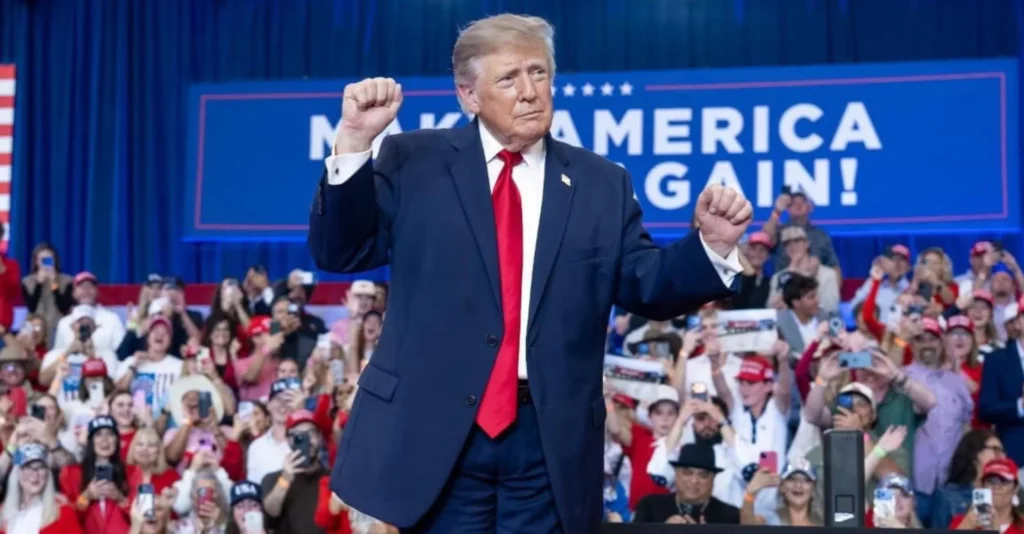
Then there is the third reason that concerns Leo. He is the first pope from the United States, and he comes from a country where Christian nationalism is an organized and influential force. When he speaks of it in Europe, he is also speaking at home.
Francis, prophetically, chose the peripheries of France: Strasbourg, where in 2014 he addressed the European Parliament and left the same day; Marseille, the Mediterranean port where migrants land; and Corsica, the island.
Leo, in a sapiential key, goes to Paris, to the Élysée, to UNESCO, to Notre-Dame risen from its fire. He goes to the center. Perhaps he senses that today it pays to speak from the center to a Europe that has stopped believing in itself, and to Catholics who have confused fidelity to a land with fidelity to Christ.
The last Mass of the trip will be said in the cathedral of Saint-Étienne in Metz, a Gothic nave of glass on a frontier that has moved several times in living memory.



1 Comment
Dr.Cajetan Coelho
October 4, 2026“Catholic means universal.” Catholic Churches, Catholic Universities, Catholic Institutes, Catholic Schools and Catholic Colleges attract people of goodwill to come, enjoy, and imbibe Universal Ethical Principles and Practices.