



Often, we need to bring a question before God to seek insight into God’s desires for a particular situation or decision. The purpose of discernment is never to construct an argument in support of a particular outcome, but rather to discover—with freedom and purity of heart—what the living God desires for God’s people and for creation.
In this way, discernment can be compromised at the outset if we do not frame the question properly.
Why the question matters


Researchers know that framing a question is consequential because it structures the investigation before it begins. Discernment is similar: the question we choose establishes the field of inquiry, shaping where and how we look for God’s action in history and what counts as evidence of that action.
But there is something deeper. Because God’s self-communication is incarnational, God pours forth something of God’s very self through the concrete realities of Scripture, tradition, conscience, human experience, and history, so that it may be known by humanity—to draw us into a relationship of kenotic love in service of God’s dream of goodness on earth.
Within this incarnational design of life, the discernment question provides the primary pathway through which God speaks in the present moment about the matter at hand.
In other words, the question doesn’t determine what God communicates, but it can narrow, distort, or even block our ability to receive what God desires to share—which, at best, leads to misunderstanding and, at worst, leads us down the wrong path altogether.
When we undertake discernment, it is imperative to begin by formulating a question as free from bias and assumptions as possible, so we open the clearest channel for God to communicate and for us to hear clearly.
The wrong question: Can the Church ordain women?
With this in mind, let us examine the Church’s approach to the ordination of women. The question that guides the Church’s present approach seems to be: “Can the Church ordain women?”
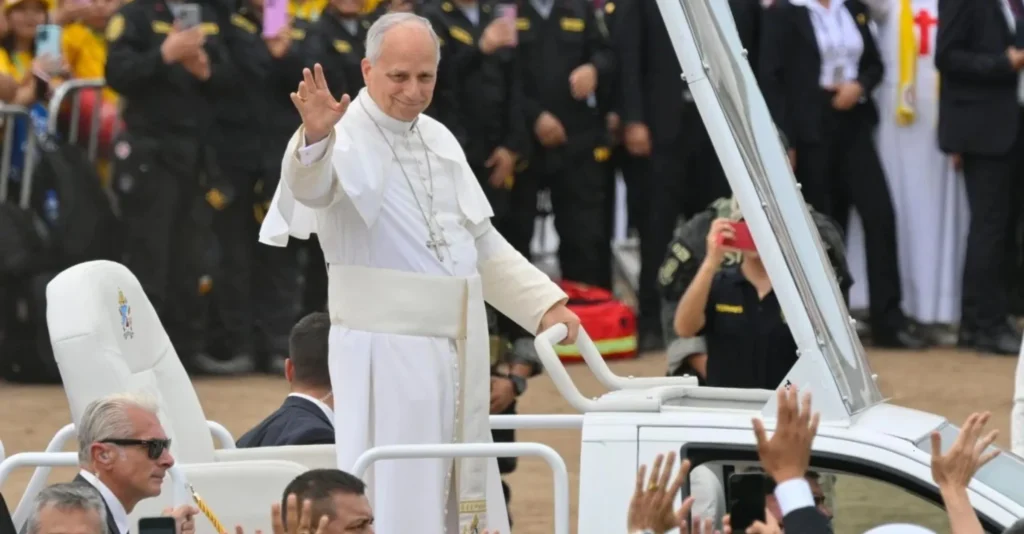
The framing of that question reflects the logic of Ordinatio Sacerdotalis, in which John Paul II states that “the Church has no authority whatsoever to confer priestly ordination on women.” In everyday discussion, the exchange goes like this: “Can the Church ordain women?” “No, it cannot.”
This question is deeply problematic because it places the Church—rather than God—at the center of discernment. As a result, it narrows the field of inquiry, limiting information-gathering primarily to the Church’s past practices, theological conclusions, and institutional judgments.
This question obstructs discernment by clogging the communication pathway with the unexamined assumption that the Church has always understood this issue correctly and has properly exercised its authority.
Indeed, the phrasing “Can the Church ordain women?” divides women’s vocations to ordained ministry into two compartmentalized issues—diaconate and priesthood—that ultimately get pitted against one another.
This question prompts academics and Church leaders to build separate cases grounded in competing arguments about legal precedent, historical evidence, and claims of continuity. This approach treats past practice—rather than God’s action and whether the Church has properly recognized it—as the controlling horizon for discernment.
Further, the question “Can the Church ordain women?” is so problematic that it even obstructs a free and open dialogue about the diaconate. Pope Francis suggested that a female diaconate could be imagined as distinct from the male diaconate because of an amorphous essential difference, which neatly sets up a situation in which women could serve as “deacons” while also being precluded from the sacrament of ordination.
It is an embarrassment to witness a Church rich in social teaching and a theology of kenotic love contort itself in the name of denying women—at any cost—the open ecclesial discernment of their vocational calls. It is shameful.
The bottom line is that vocations do not originate with the Church—they come from God and are entrusted to the Church. Therefore, it is the Church’s duty to recognize, test, form, and ultimately affirm authentic vocations. God initiates; the Church responds.
The right question: Is God calling women to ordained ministries?
What is the proper question for discernment, then? The better question is: “Is God calling women to ordained ministries?”
As soon as we reframe the question, God becomes the center of discernment and the Holy Spirit its protagonist. This framing clears the incarnational obstruction embedded in the original question, allowing God’s self-communication to flow more freely.
Further, “Is God calling women to ordained ministries?” broadens the field of discernment, placing the Church’s policies and past decisions within a much wider horizon of God’s action, rather than allowing them to determine in advance the limits of what is possible.
With this new question, the familiar, tiresome arguments lose their grip, and we can gaze upon the issue with fresh eyes.
For example, “Is God calling women to ordained ministries?” invites the Church to revisit Scripture and tradition with greater curiosity and freedom, broadening what counts as evidence of God’s action.
The Church can no longer elevate an overinterpretation of the maleness of the twelve or of passages in the epistles attributed to Paul that prohibit women from speaking or teaching in the assembly (1 Timothy 2:12; 1 Corinthians 14:34–35) to the status of controlling scriptural justifications for excluding women from holy orders.
Instead, the Church must gather a broader body of evidence to inform its prayer and reflection. The Church must both honestly reconsider women’s participation in the life of God and how God speaks through them, and fully confront the role of power and cultural conditioning in shaping not only the biblical world and its written witness but also the development of Church teaching and the ongoing interpretation of Scripture and tradition.
The currents of power themselves must become objects of investigation if the Church is to make a proper discernment on this issue.
In addition, the question “Is God calling women to ordained ministries?” does not allow the Church to pit the diaconate against the priesthood to insulate the institution from genuine transformation.
While these offices have distinct histories and theologies, this new question prevents their differences from determining in advance whether God is calling women to either office.
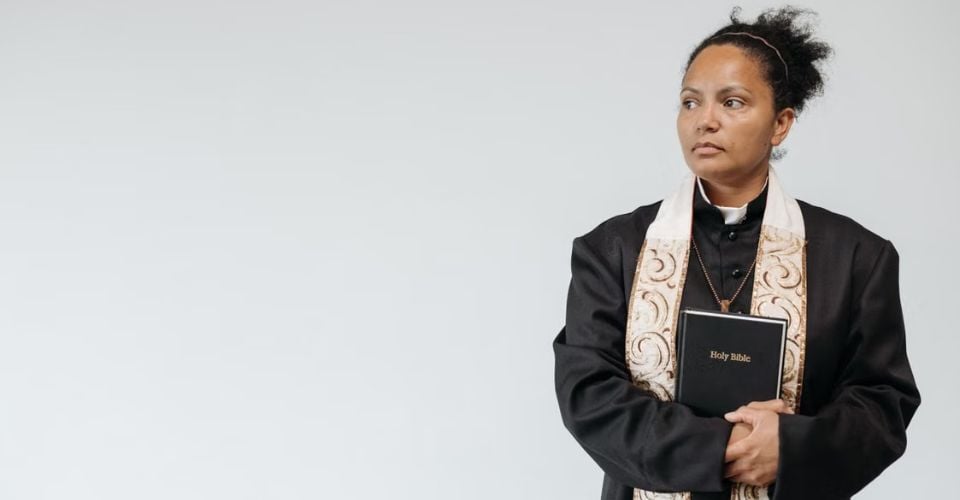
The Church must instead seek out and truly value the testimonies of women who feel called to ordained ministry as essential theological evidence, rather than dismiss them in advance as mere subjective claims devoid of theological authority.
Similarly, the experiences of the communities where these women minister—and the fruits of their ministry—become important sources of theological evidence for discerning God’s desires for the Church.
Lastly, “Is God calling women to ordained ministries?” forces the Church to honestly consider whether—given this broader body of evidence—its categorical exclusion of women from holy orders, without a full and free discernment, constitutes resistance to God’s Holy Spirit.
Such resistance would gravely violate the Church’s central mission to collaborate with God in bringing about God’s project of goodness on earth, betraying the very Spirit it claims to follow.
What’s in a question? As we can see, everything.
While discernment is surely complex, the Church’s fundamental obligation is quite simple—God calls whom God calls, and it is the duty of the Church to listen. When it comes to ordination justice, the Church must at long last relinquish its preconceived notions and spiritual attachments and simply ask the proper question.
Then, it must have the integrity and spiritual freedom to hear the answer.
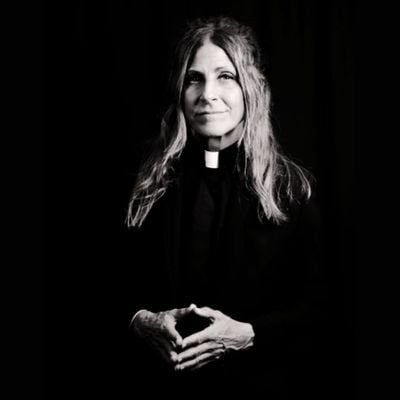
Father Anne, whose legal name is Anne Tropeano, was ordained in 2021 through the Association of Roman Catholic Women Priests, a Church reform movement. The Catholic Church does not recognize the ordination of women, and she incurred automatic excommunication under Church law. She is the Executive Director of the Ordination Justice Initiative, which works to advance the ordination of women as priests. She holds a Master of Divinity from the Jesuit School of Theology at Santa Clara University and is the author of The Shepherd Within.









9 Comments
Benedict Cox
September 28, 2026Our Lord laid the foundations. Jesus, God incarnate. In a world in which priestesses were to be found in Graeco-Roman culture – what did he lay down?
Gerry O'Hanlon, sj
September 28, 2026A fine article, and a helpful distinction about the framing of the question. And Benedict seems to recognise this, which is good. But he does not seem to know that back in the 70s the Pontifical Biblical Commission found that there was no conclusive biblical evidence one way or another to make a final determination on the ordination of women?
Benedict Cox
September 29, 2026Thank you for your post. When I received instruction many decades ago I was led to understand that one of the distinctions between the Protestant Church to which I had belonged and the Catholic church into which I was received was the importance of apostolic tradition.
Mario Elizondo
September 28, 2026To begin with, I should state that I am a convert of many years’ standing (dating back to the 1970s) and a chemical engineer by profession. Consequently, I view matters from the perspective of a layperson. Years ago, the debate centered on the ordination of married men for the Western Catholic Church—though the Eastern Catholic Churches (Maronite, Byzantine, etc.) already have them. That issue has subsided, but in recent years, the topic of women’s ordination has emerged. This involves a shift in perspective: God calls, and that fact is not to be doubted, yet every call is subject to the scrutiny of discernment—and even then, failures occur. There are priests who lose faith in the One who called them or switch to a different belief system; this has happened throughout history. Consider the Bishop of Córdoba (Spain) who converted to Islam, mounted his horse, and rode off to support the Berber invaders. Here, my engineer’s mindset and detached observational nature kick in: is there an instrument to measure that call? A burning bush? No, there is none. Yet, “by their fruits you shall know them.” And what of the traditional Protestant churches that have adopted this practice—are they in better health or worse? Leaving aside the fact that they are tearing apart the Body of Christ through division… No, the Anglicans are fading away. The Lutheran churches of Northern Europe are, too. Their populations are becoming indifferent. So, what is the point of all this? Is it merely to follow the trend of including women? Lutheran and Methodist deaconesses have all but vanished. There is no fruit. Please forgive my lack of theological expertise (my apologies to the author of the article), but the long-term test of “fruits” is a standard the Church has long applied to saints and their works. There is no doubt that changes are needed within the Catholic Church, but is *this* the change required? After all, the cultures surrounding Israel all had priestesses in their pagan religions. Why not go along with that? We don’t know.
K.S. Tate
September 28, 2026Should we argue, then, that the thousands of scandals involving the abuse of women and children by priests shows that the “fruits” of ordaining men are similarly bad? How can anyone reasonably blame women for the decline in their denominations, when that started long ago and is happening in the Catholic church, too, especially in Western societies? That is a spurious argument that is more about confirmation bias than anything else. Look for fault and then declare that you can prove that ordaining women is a bad idea. That is not discernment.
Ed Anderson
September 28, 2026No. Sorry. The question is not whether God is calling women to ordained ministries (the deaconate or to the priesthood). That question was already answered by Christ’s example ~2000 years ago. Christ had great love, broke many social barriers and norms of His time, and had many important roles for women. None of which included Bishops (the Apostles) or any precedent for any type of ordained minister. One of the many riches and beauties of the Catholic Church is her adherence to Christ’s model, teaching, and revelation, further guided and defined through the Holy Spirit. Public Revelation of the faith and the fullness of Christian truths ended with the death of the last Apostle (presumably St John the Evangelist). Christ made it clear that women are to be respected and assume many important roles in His Church, but those do not include ordained ministry. Through the guidance of the Holy Spirit and the Magisterium, the Church has gotten this right throughout all of history. Please accept this sacred Tradition and move to some other relevant topics.
Loralie Cole-Holmbo
September 28, 2026If we followed what Jesus “laid down,” then the Roman Catholic Church would only have twelve male Jewish priests. I think we can all agree that is not the case. Rather soon after the Last Supper, the twelve apostles let go of needing to be Jewish (Acts 15). Rather soon after the Last Supper, they let go of needing only 12. Why is it that the Church cannot let go of the need to be male?
Father Anne’s first recent article in Global Catholic briefly touches on this topic. Here is a link that goes even deeper in interpreting The Twelve. https://www.ordinationjustice.org/episode-3 I think it will help people (including the Magisterium) to take it into their prayer and open their hearts to the Spirit while exploring the new question, “Is God calling women to ordained ministry?”.
Virginia Saldanha
September 30, 2026Firstly I do not understand why the author of this very good article chooses to use the male title of ‘Father’. I found it jarring. She is speaking for women why use a male title?
Did Jesus really ordain priests at the last supper? When during his public life he never failed to condemn the way the priests of his time conducted themselves? The last supper was a Passover meal where both men and women had to be present. The most important act of Jesus was the washing of the feet, which he commanded his disciples to follow. But the Church has given that very little importance. Then he broke bread and gave it to his disciples (some use the term apostles) and shared the cup of wine symbolic of his coming sacrificial death. Women were definitely present. Jesus who spent his ministry breaking the oppressive patriarchy of his time that caused pain to and excluded women, is not going to exclude women at the last supper! It is the institutionalization of the Church that stripped early Christianity of its egalitarian ethos and introduced patriarchy & hierarchy into the institution that has continued to this day sadly. In the Acts of the Apostles we read that women were very much part of the early Church. The table fellowship in house churches was led by women. Women were edited out by Patriarchy. The institution of the Church seems to be the last glass ceiling that women have to break into.
Colm Holmes
September 30, 2026I agree with Gerry O’Hanlon that the Pontifical Biblical Commission found nothing either for or against the ordination of women in the gospels. Hence the Catholic patriarchy tried to suppress this report. And Pope Francis removed the topic of Women Priests from the Synod on Synodality. Patriarchy is fighting to keep their power & privileges which they adopted from the Roman empire, and certainly not from Jesus who treated women and men as equals.