Most customs associated with St. John the Baptist stem less from the person of the Baptist himself and more from the time of year when the solemnity of his birth is celebrated.
Historically, the feast of St. John the Baptist, which commemorates the saint’s birth, was set six months before Christmas to reflect his role as Christ’s forerunner.
However, celebrating a saint’s birth is unusual in the Catholic liturgy. Normally, the date of a saint’s death marks their heavenly birth and is therefore commemorated in the Church’s calendar.


The Church recognizes only three exceptions — the birth of Jesus Christ, celebrated as Christmas on Dec. 25; the birth of his mother, Mary, on Sept. 8; and the feast of Saint John the Baptist, observed on June 24.
Even in Mary’s case, her birth is celebrated only as a feast, not as a solemnity. Her Immaculate Conception, observed nine months earlier on December 8, plays the more significant role in the Church’s liturgy.
The link to the solstice
The birthday feasts of John and Jesus Christ mark a turning point in the Church and in the calendar. St. John’s birthday feast occurs soon after the summer solstice, when the days begin to grow shorter.
The feast of Jesus’ birth occurs after the winter solstice, when the days begin to lengthen and the Sun traces a slightly higher arc across the sky.
Biblical interpretations that portray John as the forerunner of Jesus — announcing that Jesus must increase while John must decrease (John 3:30), or that the people who walked in darkness have seen a great light (Isaiah 9:2) — are reinforced by this natural phenomenon.
The Gospels report extensively about John the Baptist.
Luke, in his account preceding the birth of Jesus, describes the birth of John the Baptist, which, like that of Jesus Christ, is announced by the Archangel Gabriel.
However, in this case, the recipient of the message is not the mother, Elizabeth, but the father, Zechariah. Like Mary, he initially responds with disbelief, asking how he can know that he and his wife, already advanced in age, will still be given a son.
Because of his skepticism, Zechariah is immediately rendered mute by the angel until, after the child’s birth, he confirms in writing his wife Elizabeth’s wish to name the boy John, meaning “God is gracious.”
John’s ‘unpleasant’ call for repentance
Ein Kerem, near Jerusalem, is traditionally regarded as John’s birthplace. It is also believed to be the place where Mary visited her relative Elizabeth, allowing the unborn Jesus and John to meet for the first time.
Today, among other sites, the Church of Saint John the Baptist is believed to stand on the site where he was born. Popularly known as the Grotto of the Benedictus, it is named after the song of thanksgiving that Zechariah sang when his son John was born.
The earliest Christians already venerated John as a prophet of the end times who announced the long-awaited coming of the promised Messiah and urged people to repentance and conversion.
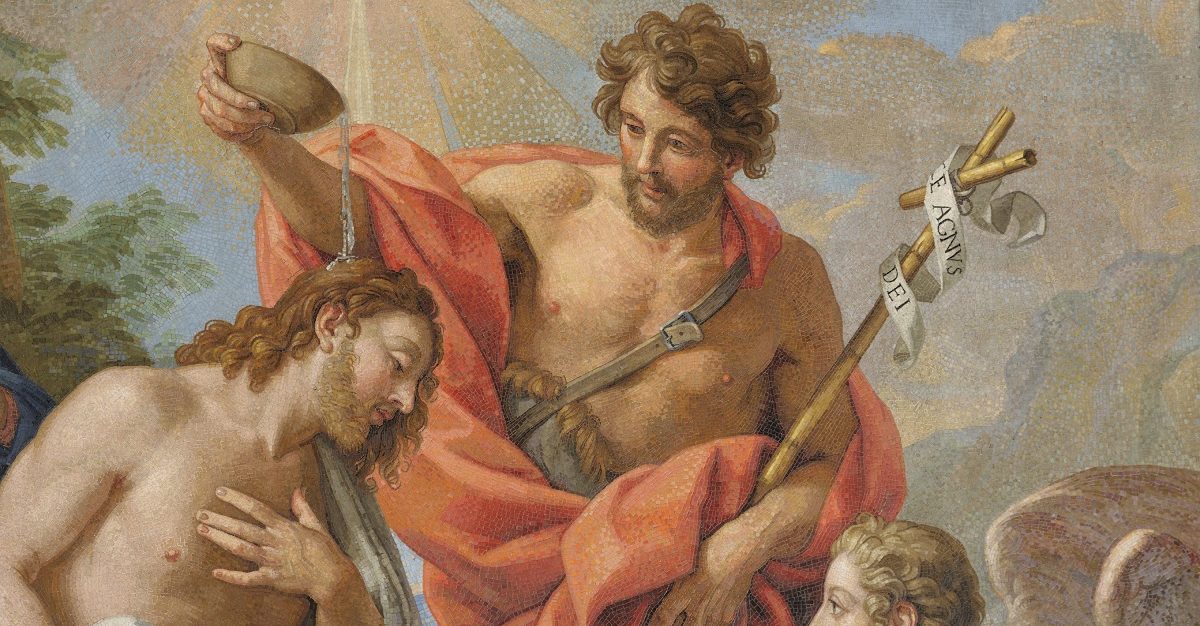
Crowds came to him in the wilderness, seeking the man who was “clothed in camel’s hair” and who lived on locusts. And he baptized them.
Jesus himself joined those seeking conversion and was baptized by John, an act John performed only reluctantly because he immediately recognized who Jesus was.
John’s call to repentance did not please everyone because he spoke openly, even publicly. He had criticized King Herod Antipas for his unlawful relationship with Herodias, his brother’s wife.
Herodias seized an opportunity during a lavish banquet, when the probably intoxicated Herod succumbed to the charms of his daughter Salome, to demand John’s head on a silver platter.
This event is commemorated each year on the Memorial of the Passion of Saint John the Baptist on August 29.
Third last prophet of Islam
According to biblical tradition, John’s disciples buried his body. His tomb is believed to be located in ancient Samaria, near Nablus in the Palestinian autonomous territories.
The Cathedral of St. John the Baptist, built by Crusaders in the 12th century, now stands as ruins.
The ruins were not completely destroyed after the Syrians conquered Samaria at the end of the 12th century because a mosque was built at John’s tomb.
Islam venerates John the Baptist as the third-to-last prophet before Jesus and Muhammad.
More relics than humanly possible
However, late antique sources already report that the Baptists’ bones were burned by unbelievers during the reign of the Roman Emperor Julian (360–363), who earned the nickname Apostata for abandoning the Christian faith.
Some relics were nonetheless saved and dispersed throughout the world. Today, there are more bones attributed to the Baptist than he could ever have possessed.
Several places claim to possess John’s head, including the shrine in the Umayyad Mosque in Damascus, the cathedral in Amiens, France, and the Church of San Silvestro in Capite in Rome.
One of the unique feasts
The birth feasts of the forerunner, St. John the Baptist, and of the Lord himself, as opposing poles of the Church year, also led to similar liturgical customs, including the celebration of a midnight Mass.
For this reason, the Baptists’ birth feast was known in the Middle Ages as “Summer Christmas,” which, like Advent before Christmas, was preceded by a period of preparation.
Even today, the Solemnity of the Birth of John the Baptist is one of the few solemnities whose liturgy begins the preceding evening with texts distinct from those used on the feast day itself.
Such a distinct vigil Mass now exists only on Christmas, the Solemnity of the Epiphany of the Lord, Easter, Ascension, Pentecost, the Feast of Saints Peter and Paul, and the Solemnity of the Assumption of Mary.
This is a translated and edited version of the feature that first appeared on DOMRADIO.DE and has been republished with permission by Global Catholic.