
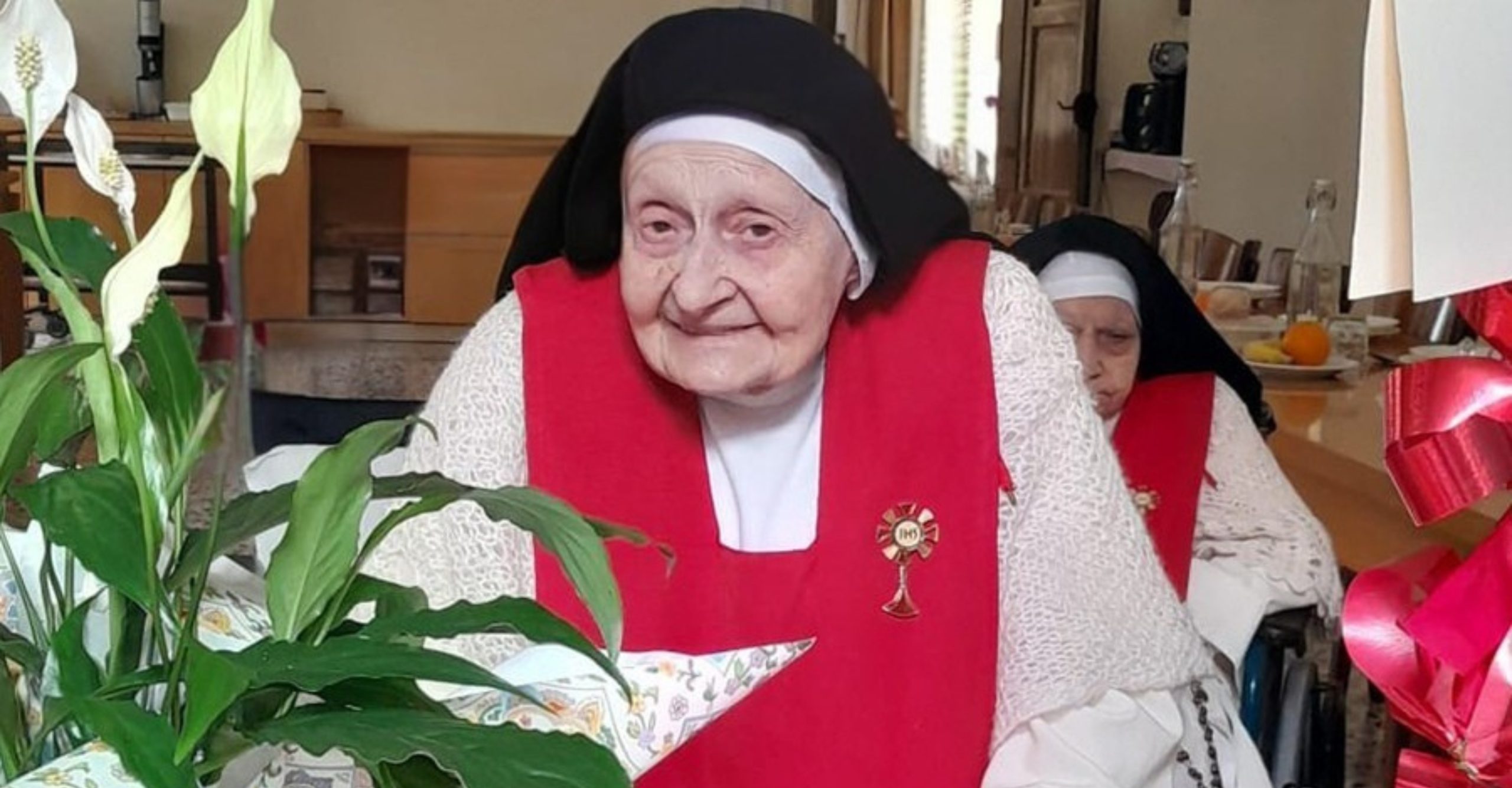
Sister Anna Maria of the Sacred Heart, the centenarian nun from the Monastery of the Perpetual Adorers of the Most Blessed Sacrament in Seregno, Italy, found her religious vocation later in life, at the age of 72.
Although she had always harbored the desire to consecrate herself to God as a contemplative, her aspiration was only realized after the death of her mother. Before that, her family responsibilities had prevented Anna Perfumo — her birth name — from pursuing her vocation, as she needed to support her family. At the time, she also worked as a teacher and as a caregiver for elderly priests.
During the COVID-19 pandemic, she learned to use digital media as a means of evangelization — she describes technology as “a neutral instrument,” meaning it can be used for both good and bad.


Sister Anna Maria told Global Sisters Report (GSR) that her monastery’s YouTube channel is proof that, when used for good, technology makes it possible to carry further the message of hope that the risen Christ brings to the world.
The video themes for Sister Anna Maria’s videos are suggested by the sisters in her community and recorded by another religious sister. She told GSR that she does not usually watch her videos or find out who sees them, but her messages are meant to reach far, like an open window of hope to the world.
She celebrated her 106th birthday on March 14 and still dedicates much time to the perpetual adoration of God and to caring for the other nuns in the infirmary.
What inspired you to begin using YouTube as a means of evangelization?
The idea of using this means of communication arose because, for me, it was easier, and we felt the need to communicate a message of hope to a world that needed consolation during the COVID period and continues to be immersed in wars; we wanted to convey God’s mercy.
What was the theme of your first video?
My first video, created with the help of a sister from the community, was short. During that period of isolation due to the pandemic, I wished to speak about the mercy of God, happy to offer a message of comfort to a humanity deeply marked by suffering.
When you speak to the camera, do you imagine someone specific on the other side? How do you prepare for recording?
No, I do not imagine anyone in particular. I do as I am asked: I answer questions or speak about a topic that is suggested to me.
As a cloistered nun, it is interesting to open yourself to the world through the “window” of the internet. Is there any particular group that you feel especially needs to hear your message?
I see that this means of evangelization allows the faith to be shared and humanity brought closer to God. I address everyone in general. At times, I speak to young people, perhaps because of my past as an educator — I have a special affection for them and believe that, in today’s times, they need it.
Do you believe that technology can bring people closer to God or distance them from him?
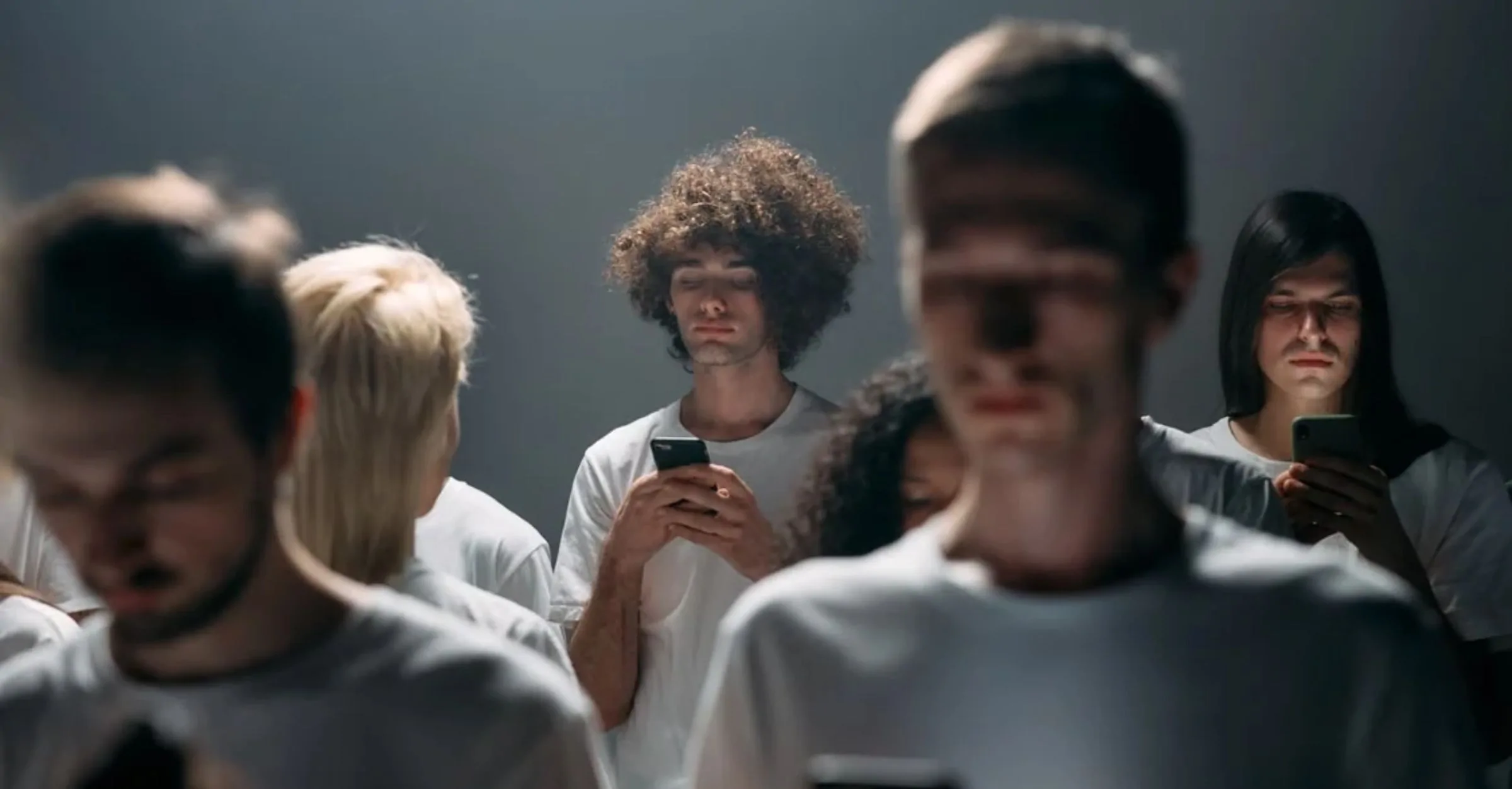
Yes, it seems to me that technology can bring people closer, offering incredible opportunities for deepening and sharing. But it can also distance them by creating constant noise that stifles the silence necessary to encounter God. I would say it is a neutral instrument, depending on how it is used.
What suggestions would you give to Catholic influencers?
I would like to encourage them to act with wisdom in transmitting messages that help people in their faith.
You are leaving a “digital archive” for the future. What message would you like to leave for those who will see it in 100 years?
I had never thought about it, but if this archive can also serve in the future, I would say that it is something good for those who will see it.
This interview first appeared on Global Sisters Report and has been republished with permission by Global Catholic.