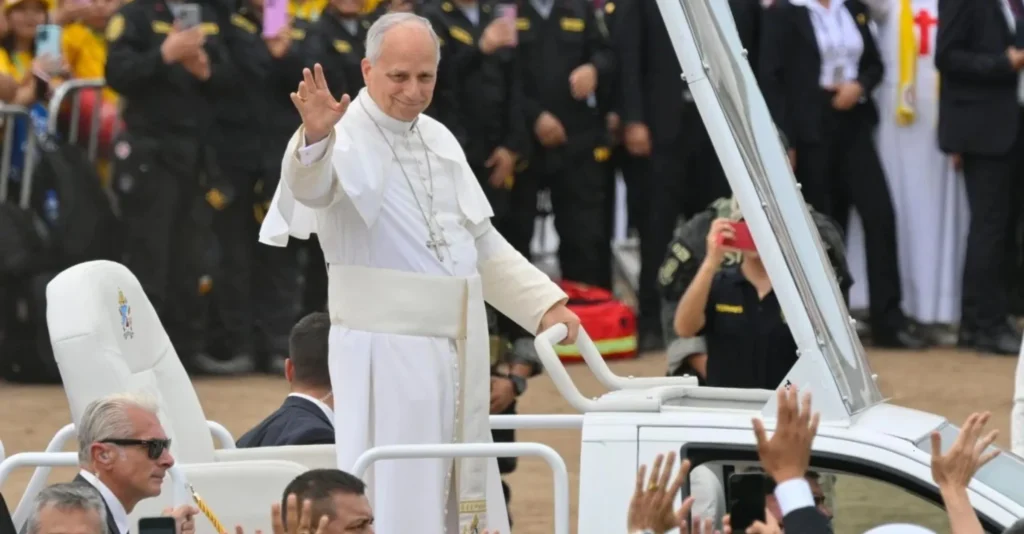

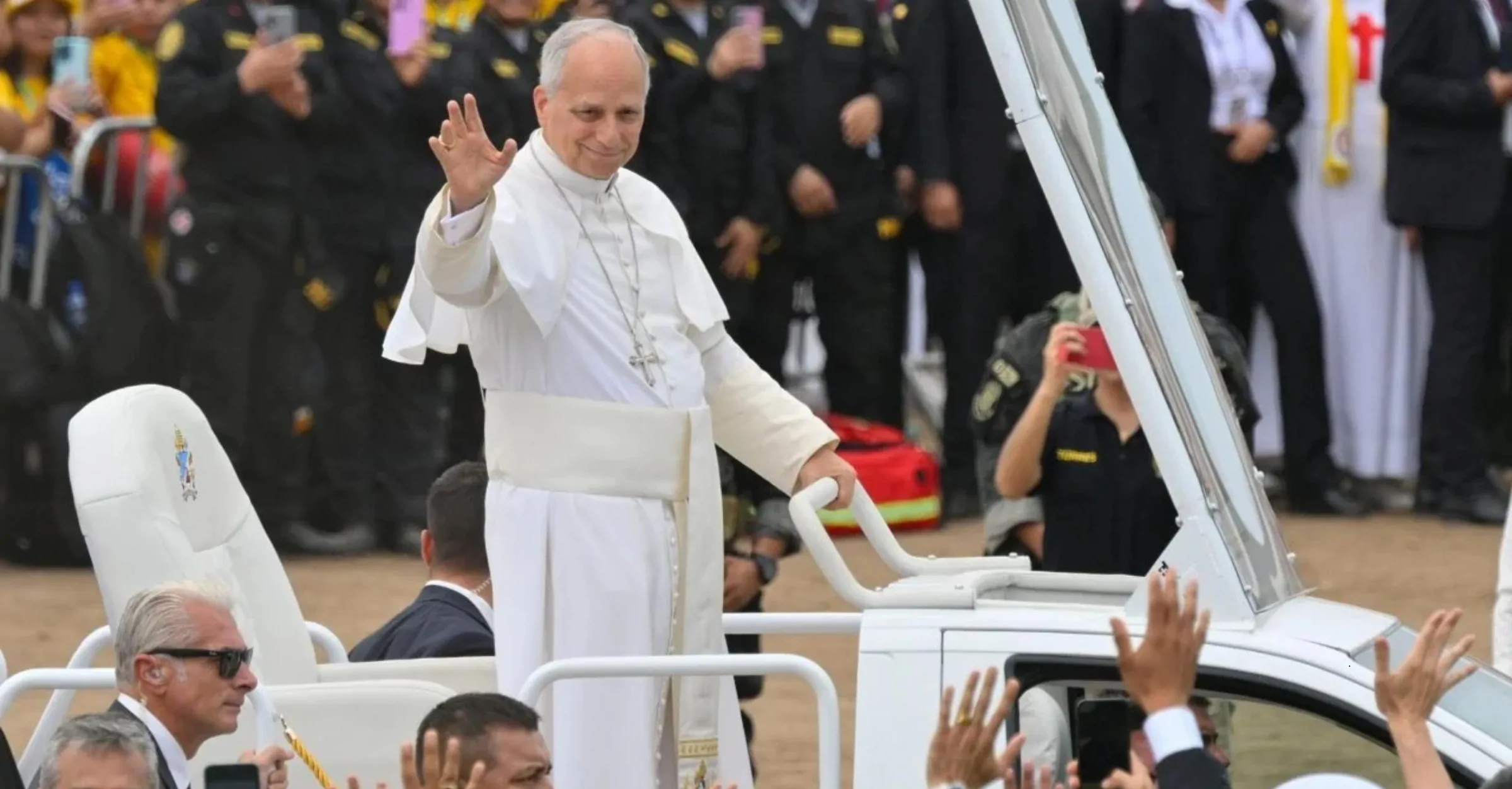
Pope Leo XIV traveled through Uruguay, Argentina, and Peru: twelve days, from Nov. 6 to Nov. 17, with about fifty engagements and more than twelve million people.
Anyone who followed the international coverage will have noticed that it arrived, more or less, at three verdicts.
The first is that a month after surgery for a lung tumor, the Pope completed an itinerary that many had thought prohibitive, and doubts about his convalescence evaporated along the way.


Commentators saw in this the start of a new phase: a missionary Pope who went back to Chiclayo, the Peruvian diocese he once led, before setting foot again in Chicago, his hometown, and, in doing so, pointed the whole Church toward the priority of the peripheries; a Pope who speaks and moves like a Latin American.
The journey carried three messages for three different places. In Uruguay, the continent’s most secularized country, it was the renewal of faith; in a polarized Argentina, national unity; in Peru, the most emotionally charged leg of the trip, solidarity with the marginalized.
The trip sits squarely within the tradition of the Latin American bishops and of popular piety, and many observers concluded that its real protagonist was the people—the humble and the anonymous—in an exchange in which confirmation in the faith passed from the Pope to the faithful and from the faithful back to the Pope.
The second concerns international politics. The continent has drifted to the right, with governments aligned with Trump, and both Argentina and Brazil are in crisis.
Standing beside Javier Milei, the pope recalled that South America has known how to negotiate its way through hard times and that Argentina is called to preserve its willingness to talk. Corruption, he noted, wears away trust in institutions.
He asked for coordinated action among states against organized crime, corruption, and trafficking.
The press saw in this a Church acting as a custodian of multilateralism at the very moment the United States is assailing it, and Leo as a defender of democracy, understood as something that grows stronger through the way people conduct themselves, day after day, in public life.
On the domestic front, the readings part ways. Some heard a stern rebuke of Milei; others heard a message that moves past the quarrel between right and left and sets the tone for the debate without taking sides.
What emerges is a Church that is no longer hegemonic and instead works as a builder of consensus, competing with a political neo-Pentecostalism that keeps gaining ground.
The third concerns the trip’s social content, which commentators tied to Leo’s encyclical Magnifica Humanitas.
At its center is decent work in a region where roughly half of all workers are in the informal economy and where artificial intelligence threatens millions of jobs.
His praise of enterprise as an engine of growth, paired with a warning against greed, was welcomed even by commentators who favor the market.
The Peruvian leg, in particular, was described as a microcosm of the world’s troubles.
In Pucallpa, in the Amazon, the Pope called for justice for Indigenous leaders killed while defending their land and said that the cry of the earth and the cry of the poor cannot be separated.
His meetings with victims of abuse and his call for full reparation were read as part of the same argument about the dignity of the person.
The conclusion everyone seems to share is that turning these words into concrete policy now belongs to those who govern.