





At times, separate events, in unexpected ways, communicate the situation in which a global religious community and the institution governing its faithful find themselves. This happened in just eleven days in Sept. 2026, between Rome and New York.
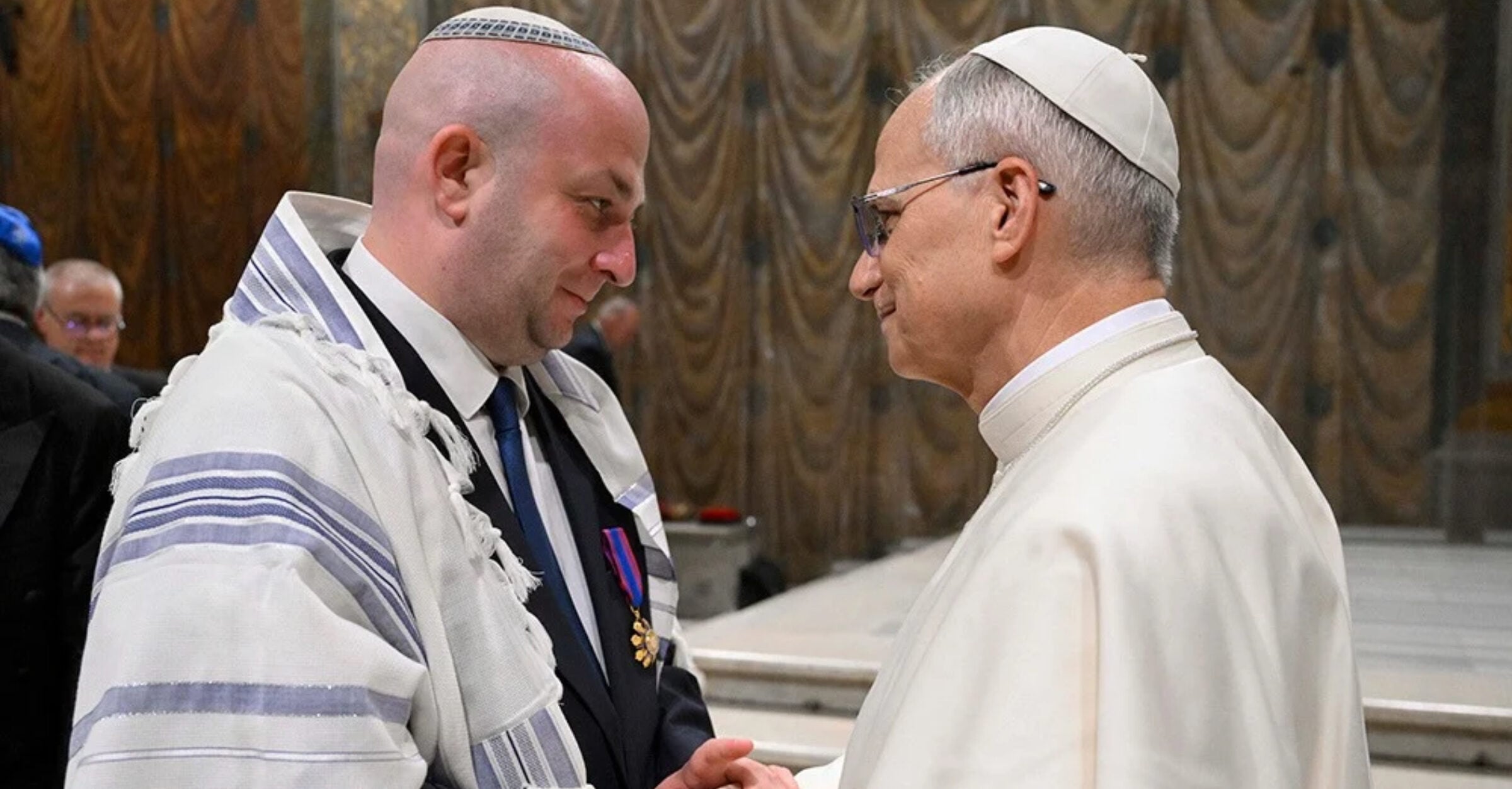
The first moment: On Sept. 16, three Vatican dicasteries—the Dicastery for the Doctrine of the Faith, the Dicastery for Promoting Christian Unity, and the Dicastery for Interreligious Dialogue—published the 8,600-word document titled Note. A Journey of Hope. Sixty Years of Interreligious Dialogue and Fraternity in the Light of the Conciliar Declaration “Nostra Aetate”.
This document is also relevant because Leo XIV, as a good American Catholic, has always been clear about the importance of Nostra Aetate, Vatican II’s 1965 declaration on the Church’s relationship with non-Christian religions, particularly for its foundational role in opening a new era in relations with the Jews.


This new Vatican document gestures toward recognizing the importance of rabbinic Judaism for Jewish-Christian dialogue, not just biblical Judaism as in Nostra Aetate paragraph 4. The document is also notable for what it does not say: it does not mention Zionism, the Land, or the State of Israel.
Quoting a 1985 document from the Secretariat for Promoting Christian Unity – Commission for Religious Relations with the Jews, A Journey of Hope states: “Jesus was and always remained a Jew […]. Jesus is fully a man of his time and of his environment: the Jewish Palestinian one of the first century, the anxieties and hopes of which he shared.”
This passage, along with the silence on the State of Israel, has sparked public disappointment among Rome’s Chief Rabbi, Riccardo Di Segni. Other reactions to this document are to be expected.
The second moment: On Sept. 22, around 100 priests (from eight countries and various Italian regions) of the network “Priests Against Genocide,” along with bishops, religious sisters, and citizens, marched in a procession through Rome.
Some 200 people gathered at the Church of Santo Spirito in Sassia, just a few steps from St. Peter’s Square. Among them were familiar faces, including Alex Zanotelli, Nandino Capovilla, Tonio Dell’Olio, and Alessandro Santoro.
❝
An acknowledgment of Zionism and the State of Israel in doctrinal terms – a Vatican-approved Catholic Zionism – would have immediate consequences at the interreligious, ecumenical, and ecclesial levels – not just in the Middle East but worldwide.
The procession also included priests from various orders and congregations—Franciscans, Jesuits, Combonians, and Xaverians—as well as parish priests and assistants from across Italy and from about ten other countries. They carried no flags, though some wore keffiyehs over their habits or clerical collars.
Three bishops led the procession: Archbishop Franco Moscone of Manfredonia, Italy; Bishop Christian Carlassare of Bentiu, South Sudan; and retired Italian archbishop Giovanni Ricchiuti, president of Pax ChristiItaly.
After a moment of prayer in the church, the procession started, interspersed with hymns, prayers, and biblical readings, as well as texts by Pope Leo XIV, Cardinal Pierbattista Pizzaballa, the Kairos Palestine ecumenical movement, and the Israeli historian Omer Bartov. This march took place one year after thisnetwork’s inception.
“Priests Against Genocide” now counts over 2,500 members from 67 countries across all continents, including three cardinals and around thirty bishops.
The third moment: On Sept 24, 2026, during the United Nations General Assembly in New York, the Vatican Secretary of State, Cardinal Pietro Parolin, attended the ministerial meeting of the “Global Alliance for the Implementation of the Two-State Solution.”
In his address, Cardinal Parolin reiterated the Holy See’s position: “The two-State solution, based on secure and internationally recognized borders, is the only viable and equitable path toward a just and lasting peace. The Holy See continues to support the Palestinian people’s inalienable rights, including the right to self-determination, as well as their legitimate aspiration to live in freedom, security, and dignity within an independent and sovereign State.”
Parolin’s words echoed what Pope Leo said exactly one year before, in an exchange with journalists outside Castel Gandolfo on Sept. 23, 2025: “The Holy See has supported the two-state solution for many years. […] The Holy See recognized the two-state solution some time ago. That is clear: we must seek a path that respects all peoples.” on the part of the other side; dialogue is broken.”
Two days later, in his Sept. 26 speech at the opening of the 81st session of the United Nations General Assembly, Parolin reiterated the Holy See’s position on the two-state solution: “The Holy See reiterates its call for an end to the ongoing violence against the Palestinian civilian population in the West Bank, particularly the escalation of hostilities, home demolitions and movement restrictions, which are driving the displacement of Palestinian communities. On the situation in Gaza, the Holy See remains concerned about the dire humanitarian crisis, the widespread destruction, mass displacement and the severe, persistent shortages. In this regard, the Holy See urges the international community to work toward advancing the two-state solution, with a view to bringing about a just and lasting peace.”
These three different moments show some of the open issues that the Church now acknowledges when we read today the 1965 conciliar declaration Nostra Aetate. It also shows a new paradigm shift in the relations between the Catholic Church and Judaism in the last few years, made even more evident by the Hamas attacks of Oct. 7, 2023, and Israel’s reaction.
At Vatican II in 1965, the Catholic Church officially repudiated antisemitism and the charge of deicide against the Jews. In the post-Vatican II period, papal teaching made clear that the Covenant between the people of Israel and the Lord is irrevocable. In 1993, the “Fundamental Agreement” established official diplomatic relations between the Vatican and Israel.
These steps brought the Church and Judaism closer together in a fundamental way. But in recent years, a new gap has opened up, centered on Zionism, the Land, and the State of Israel: it cannot be bridged by diplomacy alone, because it is doctrinal and theological.
An acknowledgment of Zionism and the State of Israel in doctrinal terms – a Vatican-approved Catholic Zionism – would have immediate consequences at the interreligious, ecumenical, and ecclesial levels – not just in the Middle East but worldwide.
The gap between Nostra Aetate and the post-Vatican II teaching on one side and the expectations of many Jews on the other side was already evident before Oct.7, 2023. But what has happened since then has made, and continues to make, that gap increasingly difficult to bridge.
Moreover, bridging that gap doctrinally would have serious consequences for other bridges that are still under construction. It is also an intra-Catholic debate, with increasingly different sensibilities between Catholics in different parts of the world. Those ten days in September 2026 made clear that this is one of the most sensitive and complex issues facing the Catholic Church today.








1 Comment
Benedict Cox
October 7, 2026I find more warmth and charity towards Israel and Jews when meeting people from the association ‘Muslims against anti-semitism.’