Three years after Pope Francis’s Synod on Synodality concluded, the Catholic Church is preparing for a follow-up gathering in 2028 meant to take stock of how synodality is actually playing out on the ground.
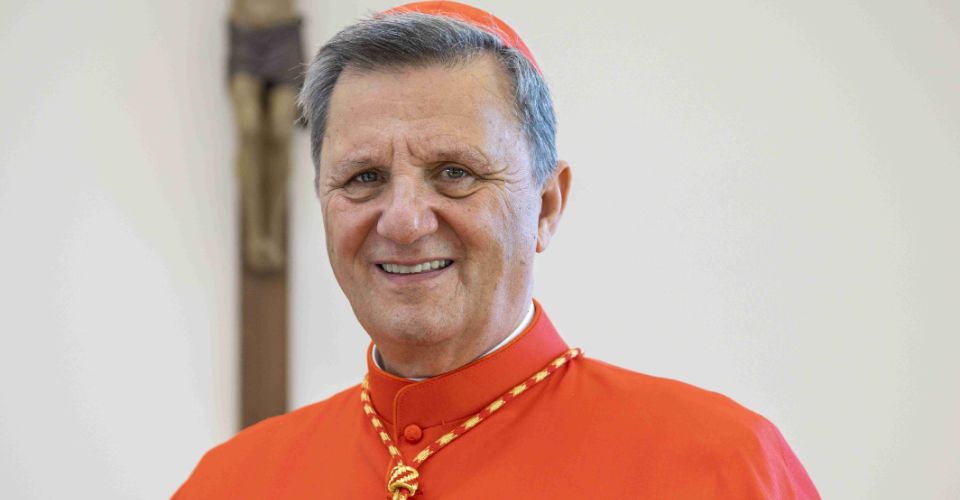
In this interview with Ina Rottscheidt, Cardinal Mario Grech, secretary general of the Vatican’s Synod of Bishops, explains what that 2028 Church Assembly will and won’t be.
Cardinal Grech also addresses Germany’s still-unanswered request for a “Synodal Conference,” the body meant to carry forward the country’s own Synodal Path.


In 2028, there is to be a universal Church Assembly. Several hundred bishops, priests and laypeople from all continents are expected to participate. What is the status of the planning?
We are in a three-year phase of implementing the results of the final document of the World Synod. During these three years, there are various phases in which our secretariat will accompany the local Churches, dioceses, bishops’ conferences and continental assemblies in preparing for the Church Assembly in 2028.
Will that then be the endpoint of the World Synod, or will these meetings be institutionalized?
The Synod has already concluded.
The meeting in 2028 is not a continuation of the Synod. It is another meeting, a moment for evaluating and exchanging the gifts among the Churches.
How this develops in the future is something the Holy Father will have to decide.
In Germany, those involved are still waiting for a response from Rome regarding the Synodal Conference,(the body proposed to continue Germany’s Synodal Path, the reform process launched by the German bishops and lay Catholics in 2019)which was originally supposed to take place this November. Is there still going to be something?
I know that this open request exists, but that does not fall within my area of responsibility. Therefore, I cannot answer this question.
If I am correctly informed, responsibility lies with the Dicastery for Bishops.
You know nothing about the current state of affairs?
No.
From your perspective, is a Synodal Conference in Germany a legitimate and meaningful expression of the worldwide synodal process?
I think one has to reflect on the status of such a conference.
It is normal for people to come together with their bishops. But how this meeting will develop needs to be carefully examined.
At the international symposium “Shaping Synodality in Europe – From Vision to Roadmap” at Puchberg Castle near Wels in Upper Austria, around 180 representatives from more than 30 European countries developed a spiritual and structural roadmap for synodality in Europe last week. Salzburg Archbishop Franz Lackner insists that synodality must above all really be experienced at the grassroots level. In two or three years, how will we be able to recognize whether this roadmap is actually having an impact?
I think we don’t have to wait two years, because there are already positive synodal experiences at the grassroots level.
What we can expect for 2028 is that we will come together and exchange these experiences. Hopefully, we will also be able to learn from one another.
Of course, there will also be open questions, why not? It is a subject that continues to develop, and we are open to what the Holy Spirit wants to say to the Church.
Can you give some examples of where we can already experience these effects of synodality?
We don’t need to reinvent anything: There are already structures in the Church, and here I am referring to the pastoral council or the parish council. The question is how these structures function.
It is not enough to have a structure.
You also need this synodal spirit, in which the People of God — laypeople, religious and priests — feel that they are part of the Church. In an atmosphere shaped by prayer, we try to move forward together while discerning what the Holy Spirit wants to say to the Church.
You were a guest at the Renovabis Congress in Freising, which dealt with the issue of polarization and reconciliation. There is a certain estrangement between Rome and the German reformers: How can Germans and their concerns be integrated into the universal Church Assembly?
Our Church is synodal by nature. That means there is room for everyone. No one should feel excluded.
But the Church is also hierarchical by nature. There is the bishop, there are the bishops’ conferences, which lead the Church and the People of God.
When the baptized come together, they do not come together just to discuss, do they? Rather, they come together to make common decisions.
But then we need someone to ensure that this decision is correct. At the diocesan level, that is the task of the bishop. For the universal Church, it is the Holy Father. This is how the Catholic Church functions.
When we speak of synodality, we have to bear in mind that we are speaking of Catholic synodality. Because there are other forms and experiences of synodality in other Churches.
The Renovabis Congress was held under the motto: “Beyond Polarization – Perspectives for Social Cohesion in East and West.” What was your message there?
That synodality can also be an answer: Listening to one another can reduce polarization.
Because we can gather around a table, we can listen to one another without constraint, and hopefully, with the help of God’s grace, we will find a common solution.
This is a translated and edited version of the interview that first appeared on DOMRADIO.DE and has been republished with permission by Global Catholic.