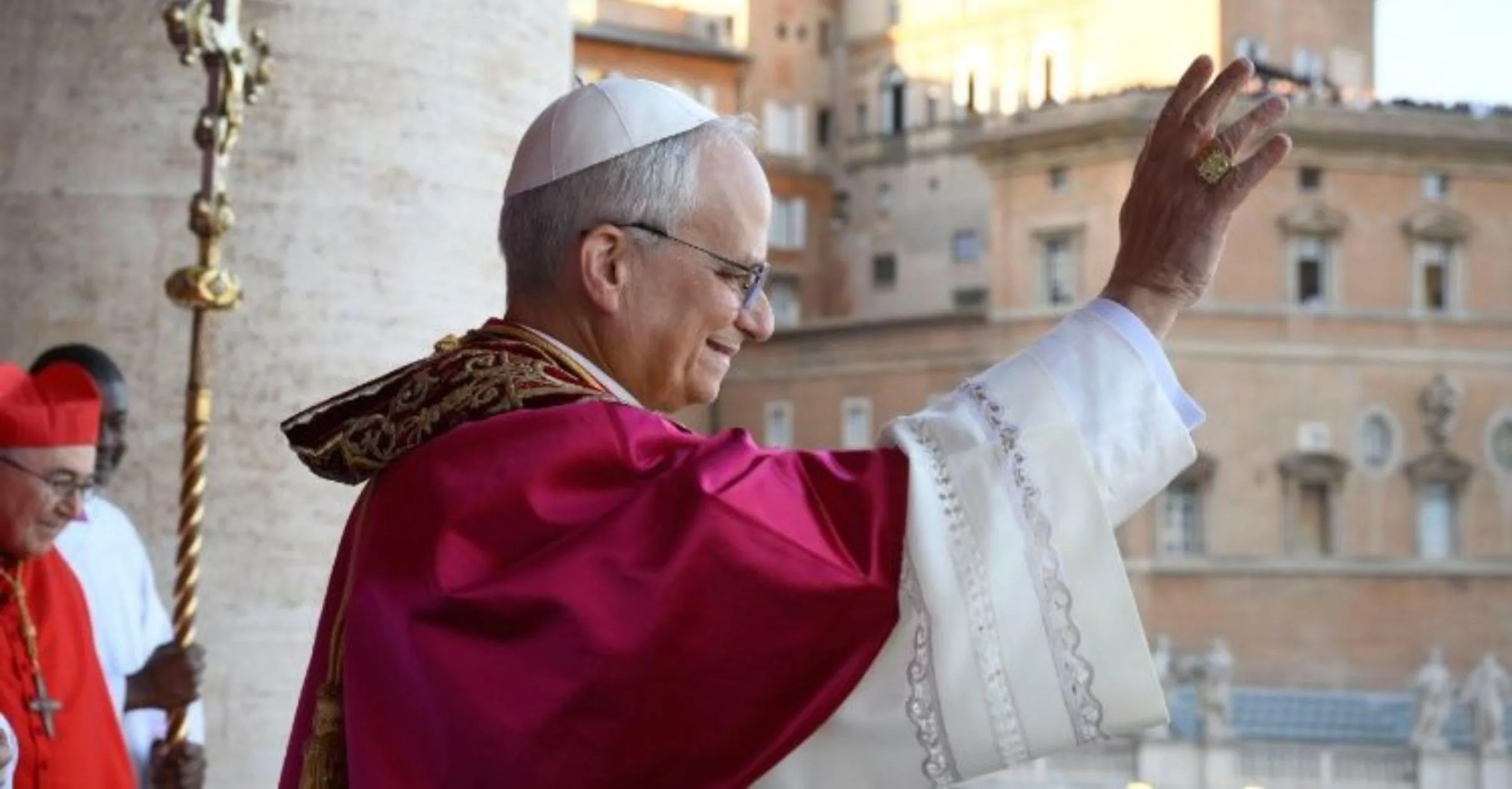

In majority Christian Spain, abortion and the practice of euthanasia and assisted suicide, legalized in 2021, are difficult for some Catholics to accept. The country’s liberal approach to reproductive medicine, however, draws considerably less criticism. Why is that?
For German national Eva-Maria Freisleben, a dream came true in June 2023, when she and her husband, Volker Liebl, welcomed their son, Leopold. Without turning to a Spanish clinic, she likely wouldn’t have become a mother after many unsuccessful fertility treatments in Germany.
A booming fertility industry


Today, drawing on her own experience, Freisleben helps others in similar situations.
Unfulfilled desires to have children are growing worldwide and have become a global economic factor, with financial investors increasingly getting involved — from Spain, but above all from the United States, where regulations governing reproductive medicine are considerably more liberal than in Germany, depending on the state.
Genetic screening of embryos, meanwhile, is permitted under Spanish law only to detect serious hereditary diseases; otherwise, the country has some of the most liberal reproductive-medicine laws in the European Union.
Freisleben and her husband run their service, Pariendi, to step in where German doctors have their hands tied for legal reasons: They connect women with Spanish clinics offering egg donation, which is banned in Germany under the country’s 1990 Embryo Protection Act, even though sperm donation remains legal there.
There are already several hundred reproductive specialists of this kind in Spain. At some clinics, almost every second patient now comes from abroad. Alongside Italy, France and Great Britain, Germany is one of the most important markets for Spanish clinics.
That success has even spawned a new branch of medical tourism, so it’s hardly surprising that Alicante, Barcelona and Mallorca have become important hubs for reproductive medicine in Spain.
Not only IVF (in vitro fertilization) treatments — fertilization in a test tube — but also egg freezing have increased significantly in Spain in recent years. According to the Instituto Bernabeu fertility clinic, this is driving social changes that aren’t being debated enough.
The average age of patients at Instituto Bernabeu, for example, is now 39.6 — often already too late to have children without an egg donation.
That figure climbs even higher, to roughly 42, among patients who ultimately require donor eggs.
Priests preach about the importance of families, but what should be done when an estimated 10 percent to 15 percent of the Spanish population has fertility problems, according to Spain’s Royal National Academy of Medicine (Real Academia Nacional de Medicina de España).
The academy has also noted the true rate may be underdiagnosed, since fertility testing isn’t universally accessible and social stigma still discourages many couples from seeking care.
100,000 forgotten embryos
The consequence of Spanish clinics’ success in helping people have children: The Spanish Fertility Society, or SEF (Sociedad Española de Fertilidad), estimates that roughly 100,000 embryos in the country have effectively been forgotten by their parents.
These are embryos whose owners or legal guardians can no longer be reached, or who haven’t decided on their further use.
Spain now holds more than 791,000 cryopreserved embryos overall, a figure the SEF says has grown nearly 45 percent over the past five years — meaning the “abandoned” embryos represent roughly 12 percent of that total, a share that keeps climbing.
Cryopreservation is the process of freezing embryos at extremely low temperatures, in liquid nitrogen, so they remain viable for future use.
Many IVF treatments produce several embryos, which, if not needed by the parents, are effectively left behind in clinics.
Increasingly, single people are also part of the picture — after treatment, some enter new relationships and don’t want a second child from embryos created earlier, preferring instead a child with their new partner’s genes.
❝
For the church, adoption would still be acceptable with the consent of the legal parents or the mother — but not the destruction of embryos, or their use for scientific research, both of which are permitted in Spain.
The churches are largely silent
That the churches hold an opinion on this sensitive issue but prefer, in many places, to stay quiet may — in Spain’s case — have something to do with the country’s plunging birth rate.
According to Spain’s National Statistics Institute (INE), just 320,656 children were born in 2023 — down 2.6 percent from the year before and 24.7 percent fewer than a decade earlier, marking the lowest birth total since national records began in 1941.
Without fertility clinics, industry experts believe the number would likely be considerably lower.
Another ethical problem: Spain has no general statutory maximum age for IVF; clinics set their own medical limits instead. There are, however, doctors such as the German-born Peter Hermann, who practices in Mallorca, who help women over 60 fulfill their desire to have children.
Hermann has led the Geniplet clinic group as medical director since 2010 and works, among other things, with clinics in Georgia:
“Most clinics in Spain do not want to serve this niche, even though they legally could,” says Hermann. His mostly German patients then carry their pregnancies to term at local clinics.
Better to remain silent than debate it to the end
This situation raises many ethical questions that, according to Dr. Vanessa Vergara of the leading Spanish fertility chain IVI RMA, need to be discussed. She believes the first step should be trying to create fewer embryos during IVF treatment and holding couples more accountable for their “offspring.”
Elena Postigo, director of the Institute of Bioethics at Spain’s Francisco de Vitoria University, takes a different view.
She believes that, for the Catholic Church, even freezing an embryo is fundamentally impermissible. From a Christian perspective, she says, there’s therefore “no good solution” for the abandoned embryos.
For the church, adoption would still be acceptable with the consent of the legal parents or the mother — but not the destruction of embryos, or their use for scientific research, both of which are permitted in Spain.
It’s a little-discussed dilemma about where the world is heading, one also highlighted in Germany by the debate over surrogacy involving CDU politician Jens Spahn.
Spahn, a longtime senior figure in Germany’s Christian Democratic Union and a former federal health minister, announced in 2026 that he and his husband had become fathers through a surrogate in the United States — a practice banned under German law and long opposed by his own party.
He resigned as head of the CDU/CSU’s parliamentary group that July amid the ensuing controversy over the apparent contradiction.
The surrogacy debate
The route some homosexual couples or older women take to start a family through surrogacy abroad — along with the genetic selection sometimes possible there, a practice criticized by some doctors at Instituto Bernabeu — has now been blocked in Spain, unlike in Germany.
Since May 1, 2025, foreign birth certificates or court rulings establishing parentage through surrogacy are no longer directly accepted in Spain as the basis for civil registration.
The change followed a December 2024 Spanish Supreme Court ruling that described surrogacy as an exploitation of women and a violation of children’s rights; parents must now prove a biological link to the child or pursue formal adoption instead.
For Hermann, who serves this niche of reproductive medicine and, in the view of many Christians, crosses certain lines, the boundary is very clear when it comes to surrogacy: “It is human trafficking, a crime.”
This is a translated, edited and expanded version of the article that first appeared on DOMRADIO.DE and has been republished with permission by Global Catholic.