



Demystifying ‘Synodality’
Synodality has deep biblical roots in the prophetic tradition that links Isaiah with John the Baptizer, who is the precursor of Jesus.
John fulfilled the prophecy of Isaiah to “prepare the Way of the Lord and make his paths straight” (Is 40:3); “I am the voice of one calling in the wilderness, ‘Make straight the way for the Lord.’” (John 1: 23).


The ‘Way’ is a key motif in the Gospels: Mark 8:22-26. 9:12, 10:46-52, 12:14; Matt 22:16; Luke 20:21). When Jesus walked along with his disciples, he taught, corrected, coaxed and encouraged them. In Jn 14: 5-7, Jesus himself is “the way and the truth and the life.”
Outsiders identified the earliest Christians as ‘those who belonged to the Way’ (hodos in Gk. Acts 9:12; 19:9, 23; 22:4; 24:14, 22).
Synodality was second nature to members of the early Church and to religious communities from primitive monasticism in the 3rd-4th century to the present. For the most part, however, it has been largely dormant in the Church until recent times.
Following Vatican II, some senior cardinals suggested to Pope Paul VI that the papacy had become a burden for one man and that it would be better served with a shared leadership. Paul declined, fearing that the integrity of the papal office might be compromised. Instead, he committed to establishing permanent Roman synods. There have been twenty-nine of them so far.
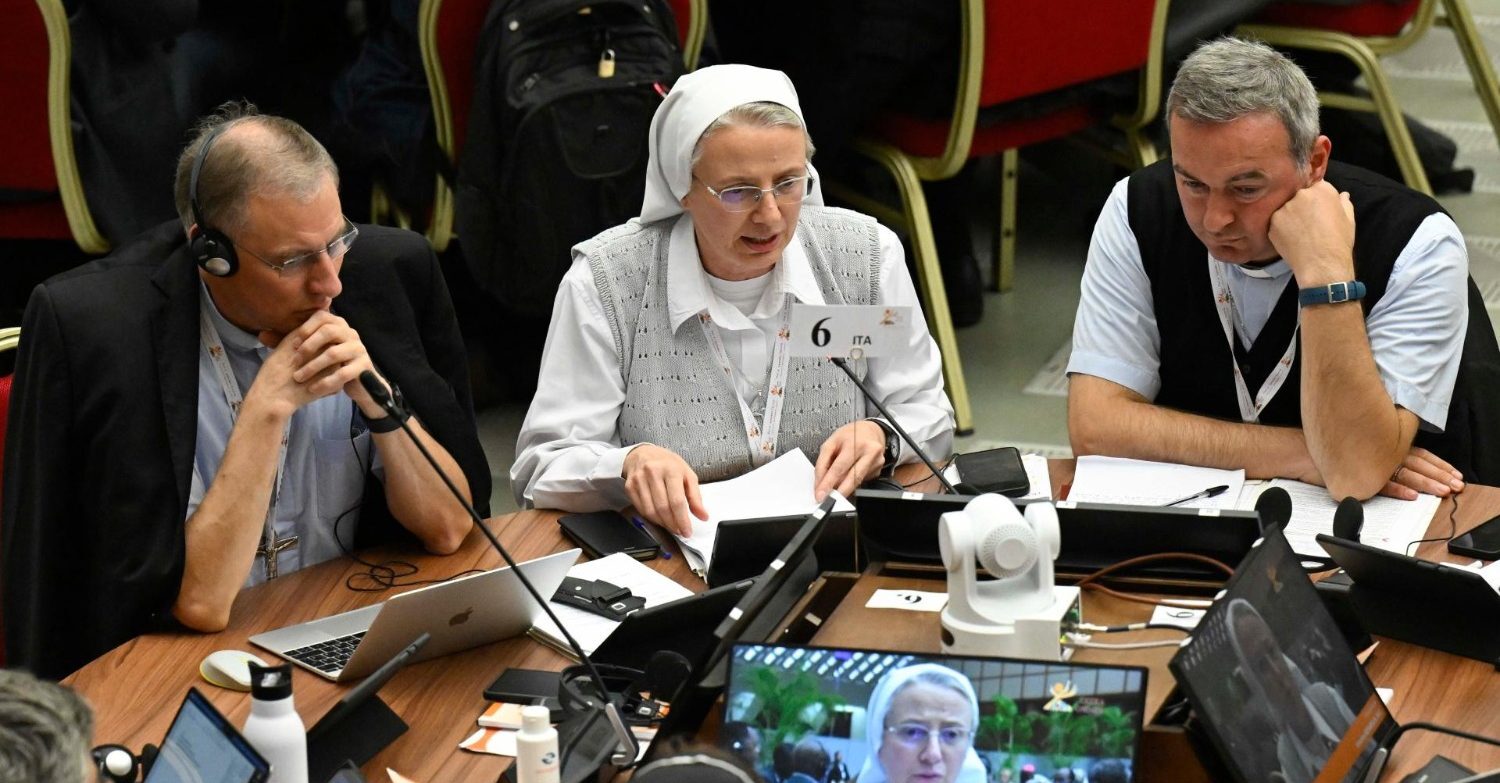
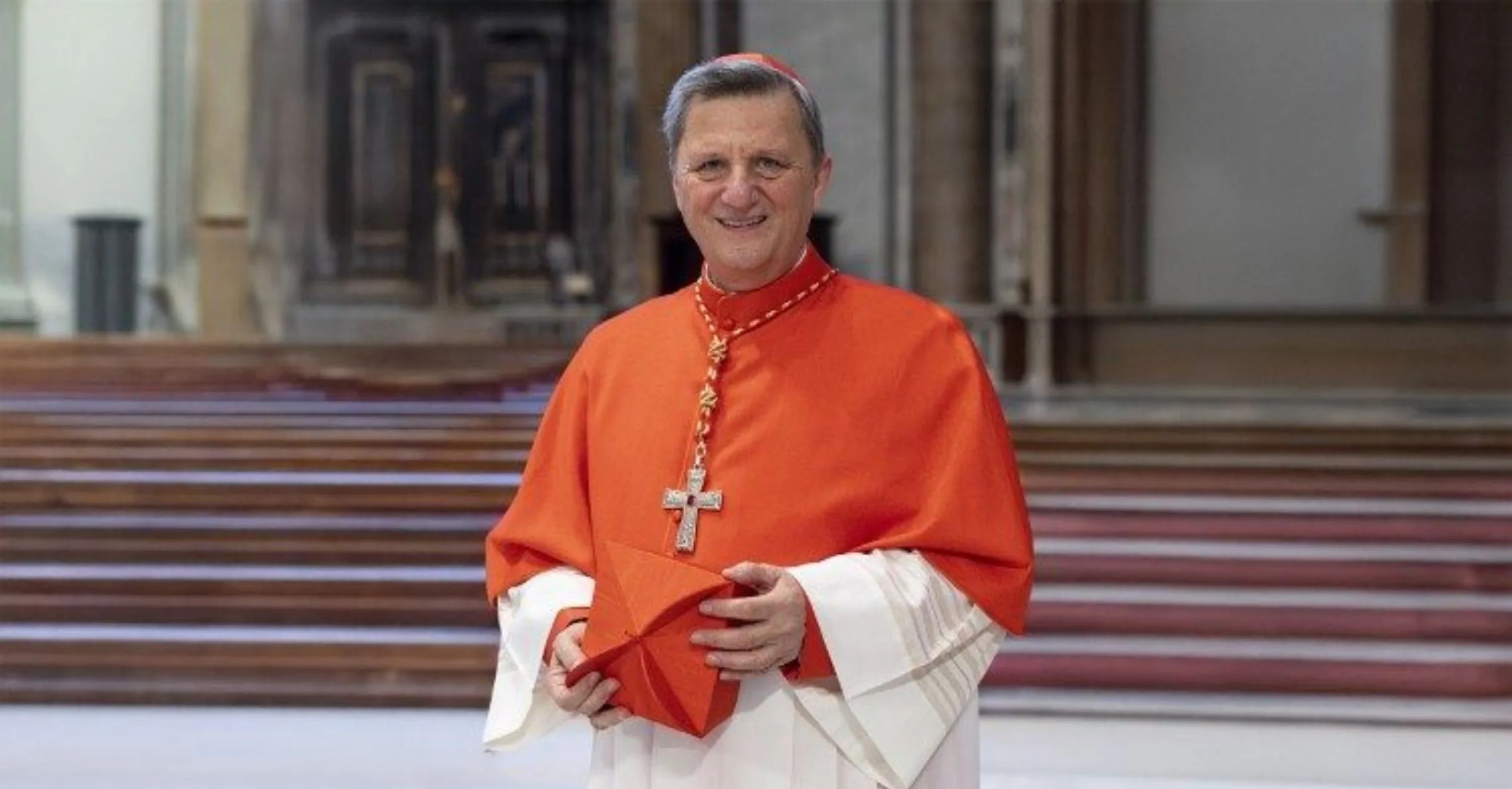
Cardinal Mario Grech, head of the Vatican’s office of the Synod of Bishops, explains that synodality requires the active involvement of all members in an ongoing process rather than a passive talk fest.
He explained, “The governing principle of this consultation of the people of God is contained in the ancient principle ‘that which touches upon all must be approved by all.'”
The International Theological Commission describes synodality as “a constitutive element of the Church.”
Pope Francis taught that synodality is “a permanent feature of the life of the whole church and not just an occasional feature of episcopal life.” Unlike his immediate predecessors, Francis directed membership of the new Roman synods would be inclusive of non-ordained women and men. Synodality, under the guidance of the Holy Spirit, means “not just some of the bishops some of the time, but all of the Church all of the time.”
❝
Most of what people call ‘Church doctrine’ is actually not about ‘core’ teachings or settled doctrines but about different opinions in tension with one another.
Resistance to synodality
One of the most outspoken critics of the Synod on Synodality 2023-24 was the now deceased Australian Cardinal George Pell.
During Lent 2022, under the pseudonym Demos, Pell denounced the Synod on Synodality in several ambit assertions. In January 2023, he repeated his attacks on the Synod, labelling it ‘a toxic nightmare’ and denigrating its agenda as ‘one of the most incoherent documents ever sent out from Rome,’… ‘couched in neo-Marxist jargon’….’ hostile to the Apostolic Tradition’ and ‘contrary to basic Christian tenets such as the four last things.’
Pell had an Oxford doctorate in Church history. It failed him badly. So too did his theology.
The late eminent historical theologian Richard McBrien wrote that in the Catholic tradition there are very few doctrines which have been formally revealed, and the rest is theological commentary or opinion.
Most of what people call ‘Church doctrine’ they are actually not talking about ‘core’ teachings or settled doctrines but different opinions in tension with one another.
McBrien makes it clear, “When we study history, we realize that there is very, very little about the church that cannot change.”
In a 2012 article, “Get the facts straight,” Father Bill Grimm puts it another way: Vatican II didn’t stop at the end of its final session but still continues in the ongoing work of interpretation and the process of reception.
Anselm, the 11th-12th c bishop of Canterbury, taught that the mind of the believer is constantly struggling to express faith at a deeper level of human understanding. (Fides quaerens intellectum). The process of understanding and application is of the very nature of the Church and the way it acts.
Synodality is at the heart of the Church
Pope Leo affirms that synodality “is to help the Church fulfill its primary role in the world, which is to be missionary, to announce the Gospel. … [he] recalled the value of listening, beginning with listening to the Word of God, listening to one another, listening to the wisdom we find in men and in women, in members of the Church, and those who are searching who might not yet be members of the Church.”
Diocesan synods were made mandatory by the Synod on Synodality, as were diocesan and parish pastoral councils, and all are required to issue regular publication of financial reports. These were major successes for synodality across the entire Church.
At the opening of the special Consistory of cardinals on June 27, Pope Leo insisted that Synodality is the way ahead for the entire Church:
“In the face of the wounds of the world, the building up of the common good, and the mission of the Church, synodality points to a way forward: listening, discerning, and taking responsibility together for the choices that the Lord entrusts to us. Synodality is not, first and foremost, a set of procedures; as I have said on several occasions, synodality is an attitude, an openness, a willingness to understand. At times it has been interpreted as a diminishment of authority. In reality, it helps us to understand more deeply the meaning of authority itself, which exists to safeguard communion, to foster the participation of all, and to guide the Church’s common journey.”












2 Comments
Francis Kelly
August 16, 2026Dear David,
This is a very simple, frank and great analysis on synodality. I particularly liked the objections raised by Cardinal Pell. I never knew about it. Please continue to write such wonderful articles. Are you from Sydney?
Greg Nyssa
August 18, 2026Here for some more “dialogue” with my “separated brethren”:
David’s foundational error is the claim that “synodality” is rooted in Scripture because early Christians were called followers of “the Way.” This is a hermeneutical distortion. The “Way” refers to Christ Himself and the path of salvation, not to ecclesial governance. No Father, Doctor, or Council ever interpreted “the Way” as a model for shared authority or deliberative structures. To treat it as such is precisely the Modernist method condemned in Pascendi: reading contemporary innovations back into Scripture to justify doctrinal novelty.
He then asserts that synodality was “second nature” to the early Church. This is historically false. The early Church was hierarchical and monarchically governed. Christ instituted a visible Church with a juridical structure, not a participatory process. Satis Cognitum teaches that Christ founded one Church with one government, one doctrine, and one authority. The early Church did not operate by communal discernment; it operated by apostolic command. To claim otherwise is to deny the divine constitution of the Church.
David’s next doctrinal error is the claim that “what touches all must be approved by all.” This principle is incompatible with Catholic ecclesiology. The Church is not governed by democratic consent. Mirari Vos condemns the notion that ecclesial authority derives from the people. Quanta Cura condemns political and ecclesial egalitarianism. Pastor Aeternus defines the Pope’s jurisdiction as supreme, full, immediate, and universal—not contingent on consultation or approval. To assert that ecclesial decisions must be approved by all is to revive conciliarism, which the Church has repeatedly condemned.
David then claims that most doctrine is “commentary or opinion,” citing Richard McBrien. This is a direct contradiction of Vatican I, which teaches that all revealed truths in Scripture and Tradition must be believed with divine and Catholic faith. Satis Cognitum teaches that rejecting even one doctrine severs one from the Church. Mortalium Animos condemns the idea that dogma is relative or negotiable. Pascendi condemns the Modernist claim that dogma evolves from human experience. To assert that most doctrine is opinion is to deny the objectivity and immutability of revealed truth.
He further claims that “very little about the Church cannot change.” This is doctrinally impossible. Vatican I teaches that dogma must be preserved “in the same doctrine, the same sense, and the same understanding.” Mystici Corporis teaches that the Church’s constitution is divine and must remain as Christ instituted it. Cum Ex Apostolatus teaches that the Church’s structure cannot be altered. To assert that almost everything can change is to deny the Church’s indefectibility.
David misuses Anselm’s “faith seeking understanding” as if it supports doctrinal evolution. Anselm taught that faith seeks deeper rational penetration of immutable truths, not that doctrine changes or that ecclesial structures evolve. His work presupposes the immutability of dogma. To use Anselm to justify synodality is a Modernist distortion condemned by Pascendi.
Finally, David claims that synodality is “the heart of the Church.” This is false. The heart of the Church is Christ the Head, and the Church’s constitution is hierarchical, not synodal. Mystici Corporis teaches that the Church is the Mystical Body of Christ, governed by Christ through the Pope and bishops. Satis Cognitum teaches that unity is preserved by submission to Peter, not by communal discernment. Pastor Aeternus teaches that the Pope’s authority is not shared or diffused. To claim that synodality is the heart of the Church is to replace Christ’s divine constitution with a modern process.
In sum, David’s article is built on propositions that contradict the solemn, irreformable teaching of the Church. His claims deny the divine constitution of the Church, the immutability of dogma, the hierarchical nature of ecclesial authority, and the objective content of revelation. They are not merely inaccurate—they are doctrinally impossible.
But in David’s synodal church [sic] anything is possible…EXCEPT…that most wicked and pernicious of belief systems… TRADITIONAL CATHOLICISM…ohhhhhhh save us!!!