Each August, the Catholic Church in Japan marks Heiwa Jyunkan, Ten Days for Peace. The period begins on Aug. 6, the anniversary of the atomic bombing of Hiroshima, passes through the Aug. 9 anniversary of the Nagasaki bombing, and ends on Aug. 15, the anniversary of Japan’s surrender at the end of World War 2.
It is a period during which Japan’s Catholics are called upon to recall that war and Japan’s role in it, to pray for peace, and to reflect upon what we must do today to be peacemakers.
The ten days, however, are not mainly a time to recall the events of eight decades ago. There are few people alive who remember those days, and the number shrinks daily. There is more than enough warfare today that we need not look back to the past.


Japan’s surrender ended the worst war in history, but as the late Pope Francis observed, “Even today, after the second failure of another world war, perhaps one can speak of a third war, one fought piecemeal, with crimes, massacres, destruction.”
Cardinal Isao Kikuchi, archbishop of Tokyo and president of the Catholic Bishops’ Conference of Japan, wrote a message for this year’s observance, 2026 Ten Days for Peace: Building a Peaceful World in Solidarity.
“Wars and conflicts are spreading around the world, including Ukraine, Sudan, Myanmar, and the Middle East, including Gaza. On these battlefields, each one who is wounded or violently loses life is a human being just like us, created in the image of God,” he wrote.
“Even more serious is that such violence is justified as ‘unavoidable,’ neglecting such universal principles as international humanitarian law and human dignity. The framework of multilateralism is being deeply shaken. Where has humanity’s vow ‘never again’ born as a cry from the horrors of past wars gone?”
Those who claim that combat is “unavoidable” are often those who make the choice to provoke violence by aggression against others in the first place. Vladimir Putin in Ukraine, Donald Trump in Iran and Benjamin Netanyahu in Gaza are obvious examples of aggressors who for reasons of ego or mania have sparked wars we live and die with today.
Cardinal Kikuchi cites the words of Pope Leo: “I continue to speak strongly against war, seeking to promote peace, dialogue, and multilateralism among states to find solutions to problems. Too many people are suffering today, too many innocent lives have been lost, and I believe someone must stand up and say there is a better way.”
Yet where is the outcry? Where are the “someones” who call for a better way? Indiscriminate death and injury, the destruction of people’s livelihoods and societies, infrastructure demolition, environmental degradation, the waste of economic resources, and the likelihood of expanding conflict have drawn limited attention.
❝
To be church is to be in solidarity. Why do we not stress that virtue in our catechesis, our preaching, in our prayer?
In the United States, it often seems that the only negative feelings people express are connected to rising prices at the gas station and the supermarket because of the situation in the Strait of Hormuz. Until this piecemeal third world war hurt them at the gas pump, few seemed concerned. They do not seem to realize that every bomb that explodes comes out of their pocket.
How can decent people be so oblivious to what is being done to their brothers and sisters, sometimes in their name?
A wise monk once told me that so long as I feel sorry for those who suffer, I am still not a full Christian. “When your brother or sister suffers, you don’t just feel bad, you act.”
Our problem is that we do not see others as fellow children of God to whom we pray “Our Father.”
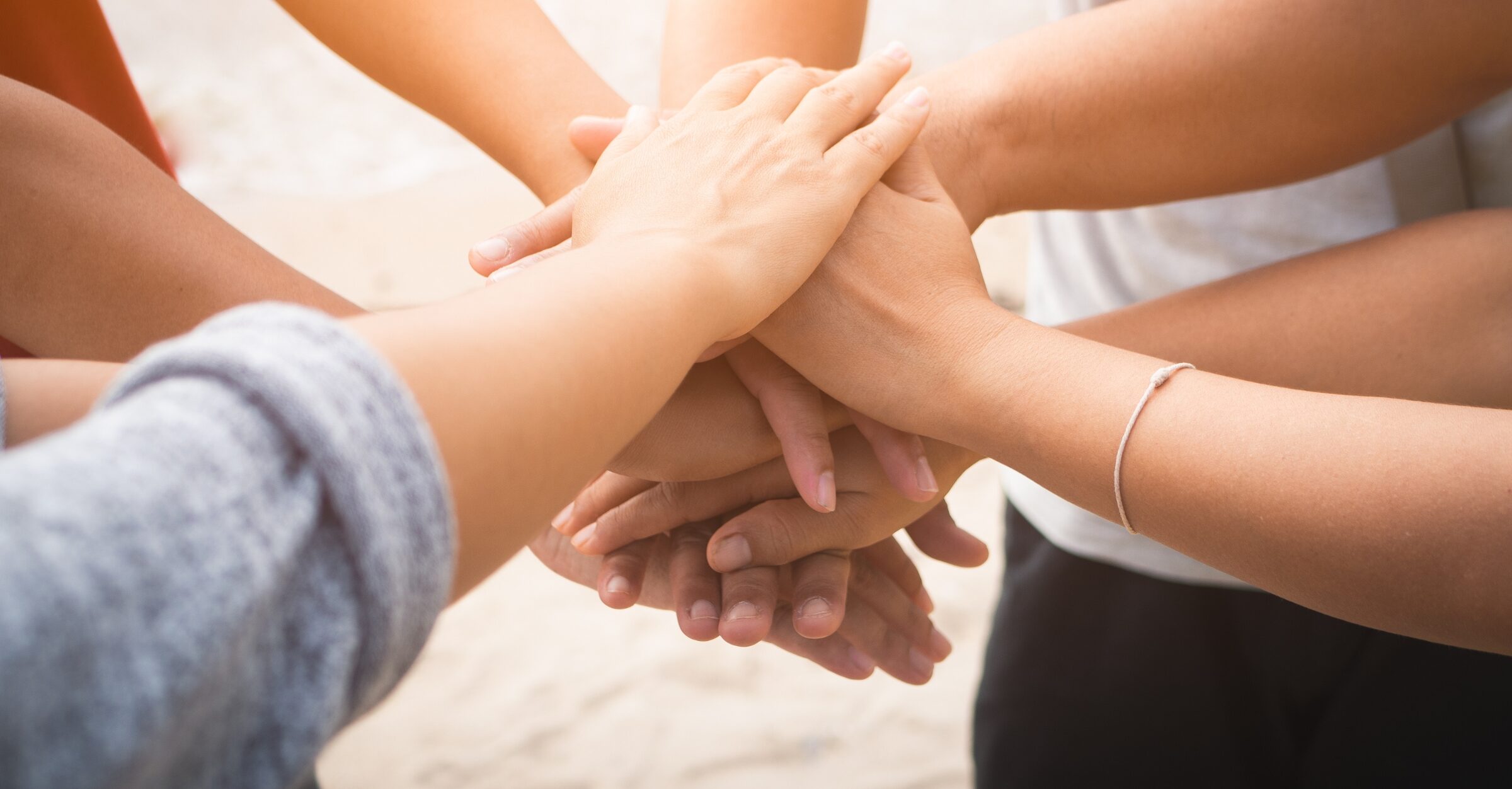
The solution that Cardinal Kikuchi offers is solidarity, the virtue of communion with others.
We are in a crisis of atomization, building walls that keep others away from us and us away from others. Instead of embracing others in friendship, we warily peer over our defenses.
In both the Old and New Testaments, Scripture speaks to communities of faith more than to individuals. In the New Testament, ekklesia, the word we translate as “church,” means an assembly. To be church is to be in solidarity. Why do we not stress that virtue in our catechesis, our preaching, in our prayer?
Instead, we put emphasis upon individual morality and individual salvation. They are important, but not so important as to allow us to forget that the basis of our faith is the conviction of God’s unlimited love.
Other people, no matter who they are in earthly terms, are, just as I, sons and daughters of God. Ultimately, we are not such because of a shared evolutionary history that really carries no implications, but because God has made us so.
My only possible relationship with God is as a member of the family of which God is the life-giver. And that family includes every single person.
Cardinal Kikuchi says, “All life is a precious gift from God. Regardless of nationality, ethnicity, or religion, everyone is given dignity by God. Protecting that dignity is the starting point of peace. Let us pray and act for peace. Let us pass down the memory of the preciousness of life. In our daily lives, let us choose words of love rather than words of power, and nurture a civilization of love. Let us spread among those close to us the gospel of life of our Lord Jesus Christ who said, ‘Peace be with you.’”