




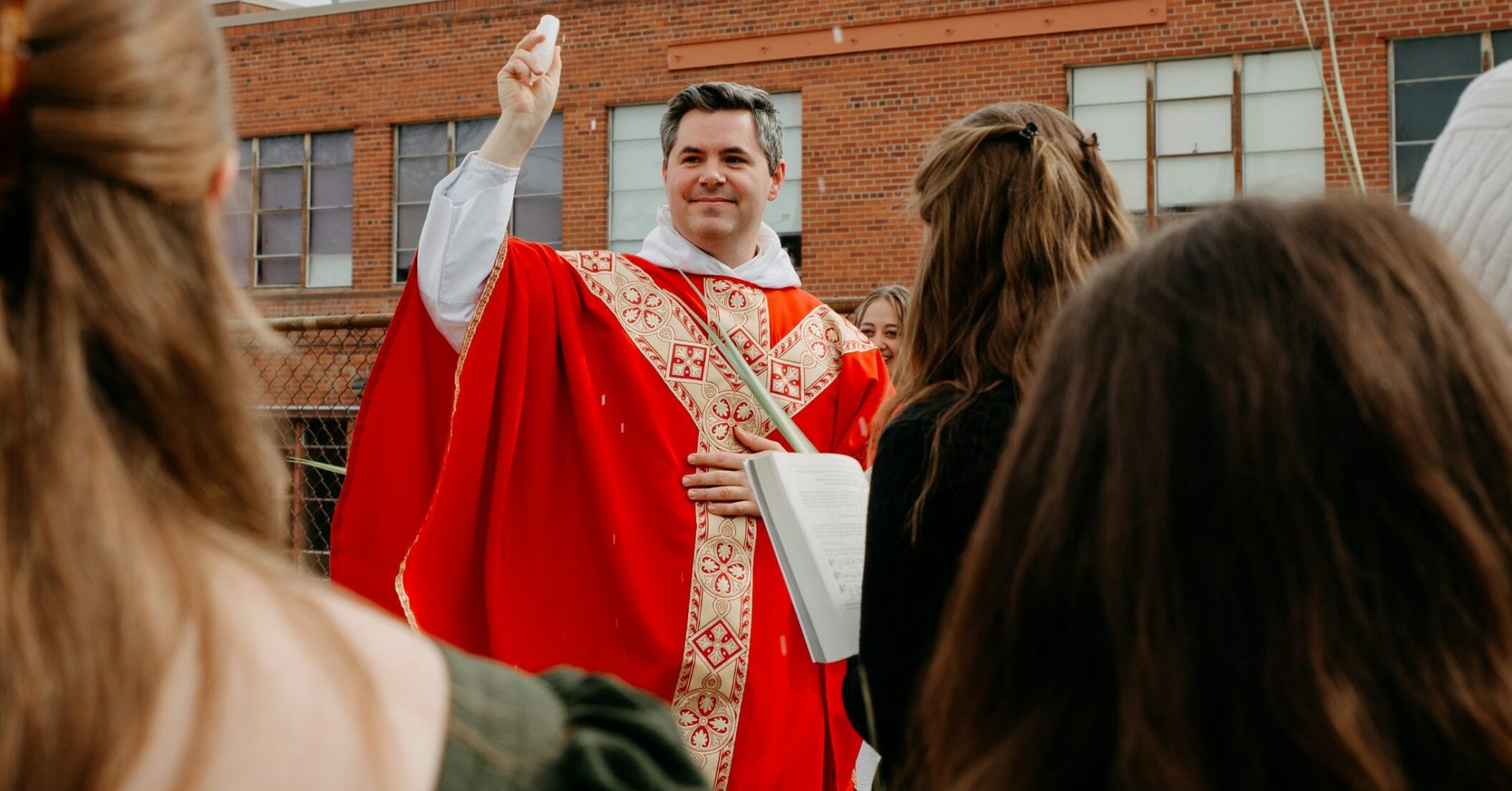
Few subjects create as much confusion about the Catholic Church as priestly celibacy.
Many people assume that the Catholic Church universally forbids married priests. As a result, discussions often present celibacy as an outdated rule that the Church must either defend or abandon.
However, the reality is more complex and far more interesting: while the Latin Church, which is the largest Catholic Church, ordinarily requires priests to follow celibacy, other Catholic rites have preserved the ancient tradition of married priests.


The issue, therefore, is not whether the Catholic Church allows married priests. It already does. The real question is why different Catholic traditions have different disciplines.
The Catholic Church is larger than the Latin Church
One of the main reasons for confusion is that the Catholic Church is often referred to simply as the “Roman Catholic Church.” While this term is commonly used, it can give the impression that the Latin or Roman tradition represents the entirety of Catholic Christianity.
The Universal Church is a communion of 24 autonomous (sui iuris) Churches that celebrate liturgies in six different liturgical rites. These Churches are fully Catholic, united in the same faith, in communion with one another, and all recognize the authority and primacy of the pope.
The largest of these is the Latin Church (often called the Roman Church), which is the only Western Church. The remaining 23 are Eastern Catholic Churches, each having its own liturgical traditions, spirituality, and legitimate disciplines.
This distinction matters because priestly celibacy is not practiced identically throughout all Catholic Churches.
Celibacy is a discipline, not a dogma
A common misconception is that priestly celibacy is an unchangeable teaching of the Catholic faith. It is not.
In the Latin Church, priestly celibacy is a discipline. The Catechism of the Catholic Church explains that the Latin clergy embraces celibacy for the sake of the Kingdom of Heaven, allowing them to dedicate themselves more completely to Christ and His Church (CCC 1579).
This distinction between doctrine and discipline is essential.
A doctrine refers to the truths of faith that the Church teaches as belonging to its constant belief. A discipline is an accepted practice that can differ between legitimate traditions.
Married priests have always existed in the Catholic Church
The existence of married Catholic priests is not a modern exception or a recent development.
The Eastern Catholic Churches have maintained the ancient Christian tradition of allowing married men to be ordained priests.
In these Churches, a man may marry before receiving Holy Orders. However, after ordination, a priest cannot marry, and bishops are chosen from among celibate clergy.
The Catholic Church therefore does not teach that marriage and priesthood are naturally incompatible.
The difference is one of discipline:
- In the Latin Church, priests ordinarily embrace celibacy before ordination.
- In the Eastern Catholic Churches, married men may be ordained priests, while bishops remain celibate.
Why does the Latin Church value priestly celibacy?
If celibacy is not essential to priesthood itself, why has the Latin Church maintained this discipline for so many centuries?
The answer begins with Christ Himself.
Jesus lived a celibate life completely dedicated to the will of the Father and the proclamation of the Kingdom of God. He also spoke of those who freely choose celibacy “for the sake of the Kingdom of Heaven” (Matthew 19:12).
❝
The discussion surrounding priestly celibacy is often shaped by a misunderstanding of the Catholic Church’s own diversity.
St. Paul likewise explains that the unmarried person can be more fully devoted to the things of the Lord, while the married person also has responsibilities toward their spouse (1 Corinthians 7:32–35).
The Church therefore does not teach that marriage is inferior. Marriage is a holy vocation. Celibacy is another vocation, chosen by some as a complete gift of themselves to God and His people.
But wasn’t St. Peter married?
One of the most common objections to priestly celibacy is the fact that St. Peter, the first of the apostles, was married. (Luke 4:38–39).
However, the existence of Peter’s marriage does not mean that celibacy is contrary to Christianity. The New Testament presents both marriage and celibacy as legitimate Christian vocations.
St. Paul acknowledges that the apostles had the right to marry: “Do we not have the right to be accompanied by a wife, as the other apostles and the brothers of the Lord and Cephas?” (1 Corinthians 9:5)
Yet Paul himself chose not to exercise this right because he wished to dedicate himself completely to preaching the Gospel.
Christ also recognized that some disciples would sacrifice even family relationships for the sake of God’s Kingdom: “There is no man who has left house or wife or brothers or parents or children, for the sake of the Kingdom of God…” (Luke 18:29)
St. Paul develops this further (1 Corinthians 7) and describes marriage as good, but he also explains that the unmarried person can be more completely devoted to the things of the Lord.
The Latin Church follows this Pauline tradition. It does not reject marriage; rather, it recognizes celibacy as a special gift for those called to it.
Was celibacy invented later?
Another common claim is that priestly celibacy was invented in the Middle Ages. The reality is more nuanced.
The early Church included married clergy, and the New Testament does not impose universal mandatory celibacy upon all priests. However, from the earliest centuries, many Christians also valued celibacy and continence as a way of giving oneself completely to God.
Over time, especially in the Western Church, this tradition developed through councils and canon law until celibacy became the ordinary discipline for Latin priests. This was not a rejection of earlier married clergy, but the gradual development of a distinct spiritual tradition within the Western Church.
The Eastern Catholic Churches followed a different historical path, preserving the ancient tradition of married priests while reserving bishops to celibate clergy.
Married priests within the Latin Church
Even within the Latin Church, there are limited exceptions to the ordinary discipline of celibacy.
When a group of Jacobite Christians in Kerala came to the Catholic fold under the leadership of Archbishop Mar Ivanios in 1930, the Syro-Malankara Church began, continuing its West Syriac liturgical tradition.
The married priests of the Jacobite Church, who joined and wish to join the Malankara Church, are allowed to continue as priests, despite having families. However, new priests ordained for this Catholic rite are to follow the rule of priestly celibacy.
In the same manner, in 2011, Pope Benedict XVI established Personal Ordinariates to allow groups of former Anglicans to enter into full communion with the Catholic Church while preserving elements of their Anglican heritage and tradition. As part of this pastoral provision, some married former Anglican clergy have been ordained as Catholic priests.
These cases do not represent a rejection of celibacy in the Latin Church. Rather, they demonstrate that celibacy is a discipline of the Latin tradition, not an essential requirement for priestly ordination itself.
The richness of Catholic tradition
The discussion surrounding priestly celibacy is often shaped by a misunderstanding of the Catholic Church’s own diversity. The question is not whether the Catholic Church allows married priests — it does — but why different Catholic traditions have different disciplines regarding the priesthood.
The Latin Church maintains celibacy as the ordinary discipline for priests, while the Eastern Catholic Churches have preserved the ancient tradition of married clergy. These are not competing traditions, but different expressions of the same Catholic faith.
Both are ancient, both are fully Catholic, and both belong to the rich patrimony of the Universal Catholic Church.
Understanding this distinction allows us to see priestly celibacy not as a contradiction within Catholicism, but as one expression of the Church’s rich and diverse heritage.











4 Comments
Hans Winter
July 27, 2026In meinen Augen haben wir eine sehr “dünne” Darstellung der Gründe für die Entstehung und Aufrechtrechterhaltung der Tradition des priesterlichen Zölibats. Vieles fehlt mir. Die Tatsache aber, das Jesus Christus, der Sohn Gottes, einen verheirateten Mann, Petrus, an die Spitze seiner Kirche gestellt hat, entkräftigt jede Notwendigkeit des Zölibats. Ich finde es grotesk, wenn man über diese Vorgaben Christi hinaus geht, weil man durch zum Ausdruck bringt, dass man manches besser versteht als er, sonst würde man ihm folgen.
chhotebhai
August 3, 2026References to I Corinthians 7 are out of context. Paul clearly states that it is his own personal opinion and not a directive from the Lord. He was also under the false impression that there was an imminent end to the world, which is why he advocated that even married persons live like brothers and sisters! He also advised to stop buying property. If the Latin Catholic Church is so impacted by this chapter then why is it going on buying property, making it the biggest sincle conglomerate in the world.
And why single out Peter and his mother in law. Tradition teaches us that the in all probability it was only the relatively younger John who was unmarried, which is why Jesus entrusted Mother Mary to his care.
Let’s not pick and choose scripture to suit our own ideas.
Sociologically and psychologically speaking, marriage is the natural form of discipleship. Lumen Gentium calls it the Domestic Church. Celibacy is to be appreciated as the exception, not the rule.
Nathan Nugent
August 4, 2026I think you’re jumping to conclusions without reading the article in its entirety. The author clearly states that, in the Latin Church, priestly celibacy is a discipline rather than a doctrine. As a discipline, it is a practice that can be changed, unlike a matter of faith or dogma.
The Latin Rite follows this discipline, but if someone feels strongly about married clergy, there are 23 Eastern Catholic Churches that are in full communion with Rome where married men can be ordained as priests. The article is simply pointing out the distinction and the diversity that already exists within the Catholic Church.
Michael Hickin
August 25, 2026This is a fine article that cuts through a lot of confusion. It is a good start for someone whose knowledge of celibacy is cultural and hearsay. As a next step, or somewhere along the staircase, it would be good to review the financial and sociological factors that played a part in creating the Latin discipline of celibacy. Are they still applicable? The fears (lay and clerical) around re-opening a re-evaluation of celibacy are likely of a much more secular than spiritual nature. Because of celibacy, Roman Catholicism has lost so many good vocations. Is it that Christ was/is NOT calling them or is it that the Church has become too bureaucratic to handle the Spirit’s creativity? Perhaps synodality will mature us to the point where we can calmly and thoughtfully enter into a discernment about the flexibility this discipline deserves.