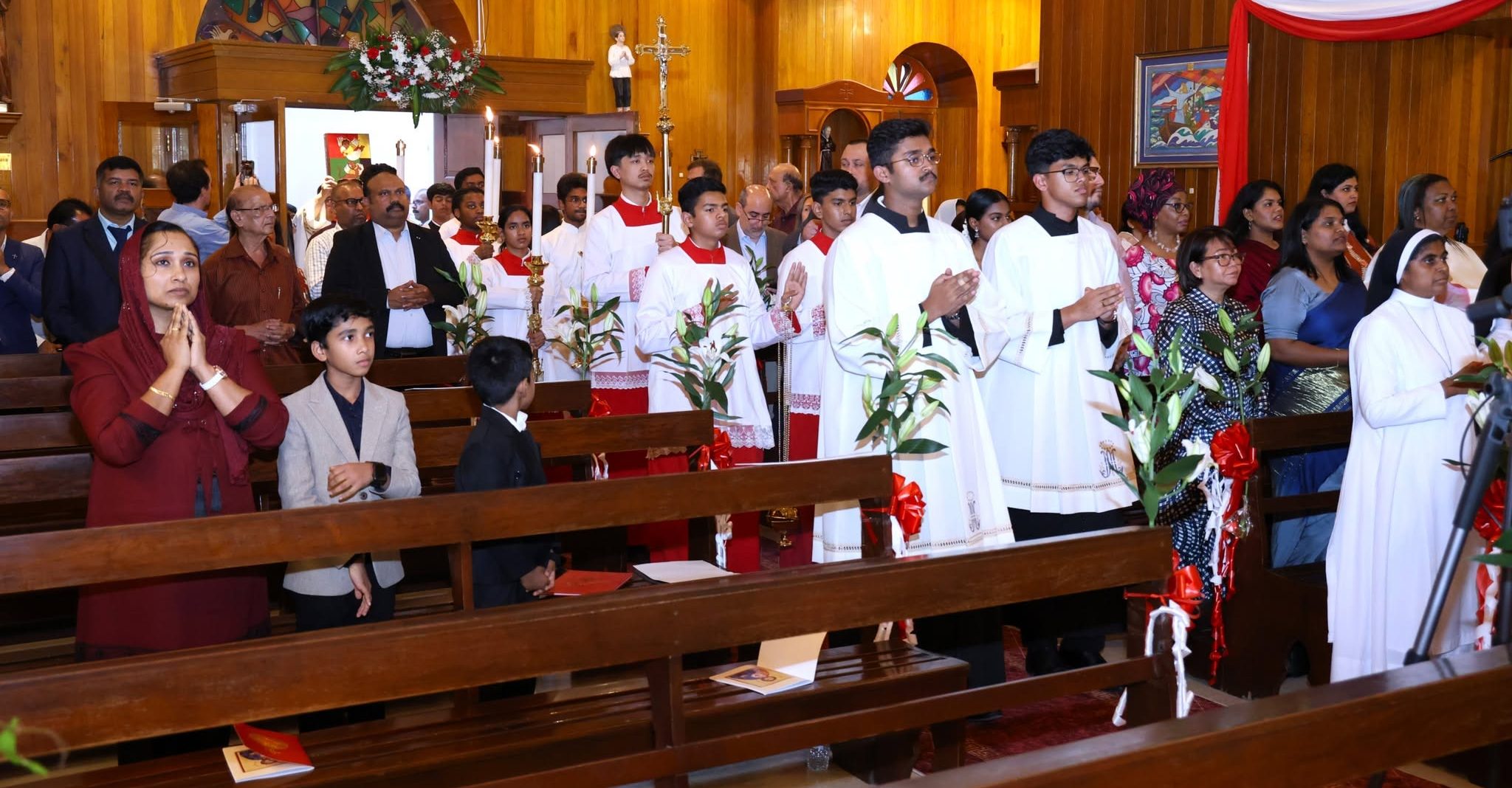
The pews are filling up again at Sacred Heart Church in Manama, the only Catholic parish in the Kingdom of Bahrain.
In recent months, many Catholics in Bahrain stayed home as missile and drone attacks linked to the Iran conflict rattled the Gulf kingdom and disrupted daily life.
Today, following a fragile ceasefire agreed to by the United States and Iran on June 15, parishioners are gradually returning to church, hopeful that the worst may be over.


“The atmosphere is very different now,” said Father John Britto, OFM Cap, assistant parish priest at Sacred Heart Church.
“People were deeply worried about the consequences of the war. Now that peace has returned, it is a good sign for the Catholic community in Bahrain.”
The ceasefire has brought a measure of relief to Bahrain’s largely expatriate Catholic population, many of whom endured uncertainty as businesses struggled, jobs disappeared and security concerns kept people indoors.
Among them is 59-year-old Kenyan chef Michael Mzeki, who has spent more than a decade in Bahrain. The downturn in the hospitality sector during the conflict left him searching for work.
“After the war started, it became very difficult to find a job,” Mzeki said. “The ceasefire will definitely help people like me.”
The Kingdom of Bahrain, home to the largest US naval facility in the Middle East, found itself on the front line of regional tensions during the conflict.
Missile and drone attacks repeatedly triggered security alerts, disrupting everyday life and affecting businesses across the country.
At times, warning sirens sounded during church services.
“There were occasions when our mobile phones went off with emergency alerts while we were attending Mass,” said Joshua Pandit, a parishioner from Manama.
“Now that peace has returned, people finally have peace of mind.”
The impact of the conflict was visible inside Bahrain’s two main churches— Sacred Heart Church in Manama and the Cathedral of Our Lady of Arabia in Awali.
The cathedral church also serves a local Catholic community, but Sacred Heart Church is the only parish in the kingdom, the priests said.
“For Bahrain’s Catholics, the return of fuller churches, quieter skies and renewed hopes for employment are welcome signs that life is slowly moving back toward normal.”
Sacred Heart Church, which serves about 100,000 Catholics, mostly expatriate workers from Asia, Africa and elsewhere, saw attendance fall as many residents limited their movements.
Although authorities did not impose significant restrictions on liturgical celebrations, fear and uncertainty kept many worshippers away.
In response, the Church made prayer for peace a central part of its ministry. Special intentions for peace were included in Masses, while Church leaders joined wider efforts to promote dialogue and solidarity.
A notable gesture came on March 8 when Crown Prince and Prime Minister Salman bin Hamad Al Khalifa visited the Cathedral of Our Lady of Arabia to express concern for the welfare of Christians and reaffirm Bahrain’s commitment to peaceful coexistence.
“The crown prince’s visit sent a strong message that the country’s leaders were standing with all communities during a difficult period,” said Anil Samuel, a member of Bahrain’s Protestant community.
Church leaders also intensified their calls for peace.
Bishop Aldo Berardi, Apostolic Vicar of Northern Arabia, led an interfaith prayer service at the Cathedral of Our Lady of Arabia, while later celebrations marking the Feast of the Sacred Heart emphasized reconciliation and stability in the region.
Now, as parishioners return and economic activity slowly resumes, many expatriates hope the ceasefire will bring renewed confidence to Bahrain and the wider Gulf.
Rejy Xavier, who has worked in Bahrain for 24 years and is involved in several parish ministries, said many expatriates lost jobs or faced financial hardship during the conflict.
“Peace is a good omen for expatriates who earn their living here,” he said. “People are beginning to look ahead again.”
The recovery remains fragile. Yet for Bahrain’s Catholics, the return of fuller churches, quieter skies and renewed hopes for employment are welcome signs that life is slowly moving back toward normal.
For parishioners like Mzeki, that hope is reason enough to keep coming to church.
“As long as peace continues,” he said, “people can start rebuilding their lives.”