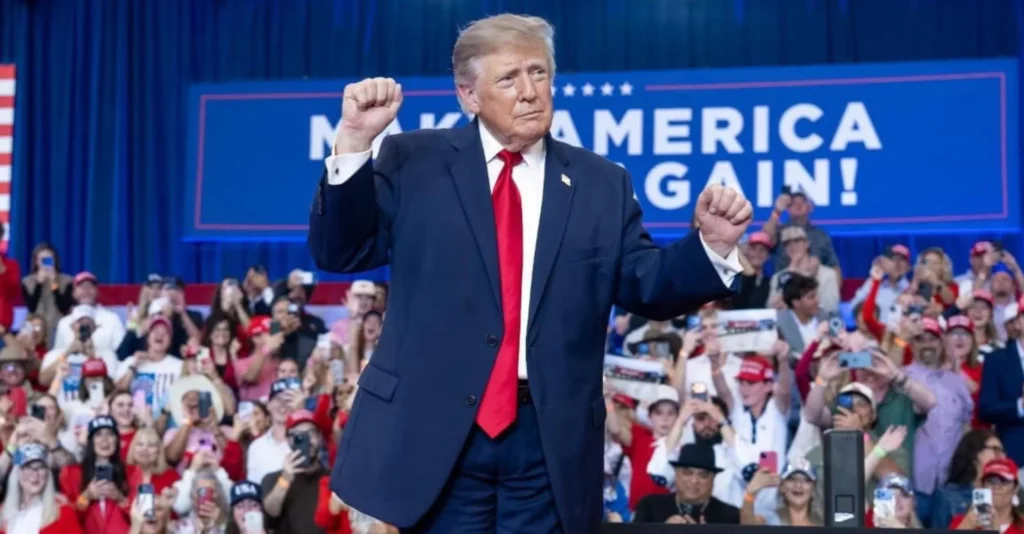

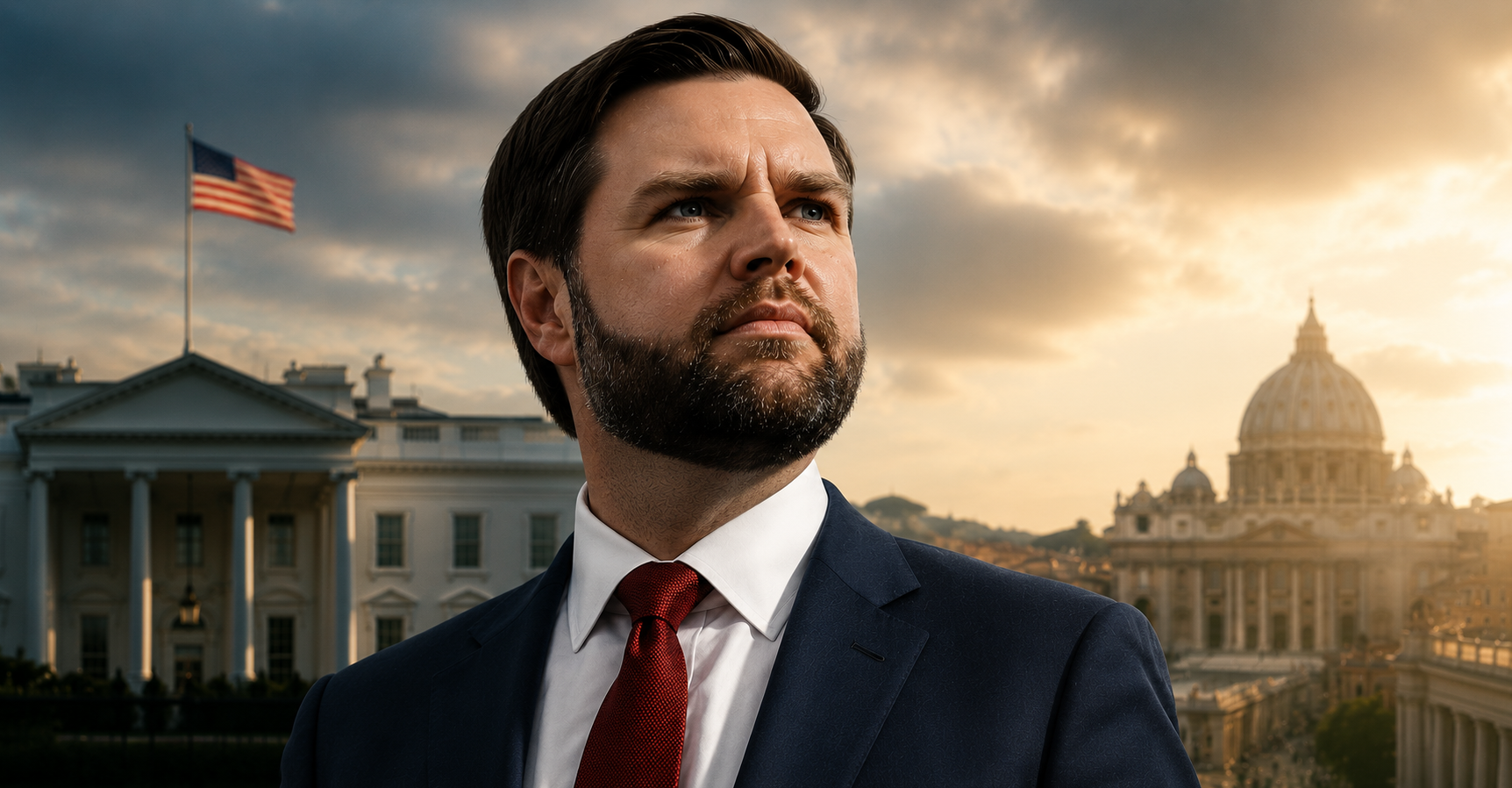
Some conversions to Catholicism are more consequential than others. Unlike fellow Catholic Marco Rubio, the US secretary of state, and especially President Donald Trump, whom he serves, Vice President JD Vance has chosen to make his religious belief an article of political faith.
Vance, born in 1984, became a Catholic in 2019 and wrote about it in a widely shared essay published in 2020, and even more so in the much-anticipated, soon-to-be-released book Communion.
The narrative of “coming home to Rome” — and, by extension, to a new political home for conservative Christians — was common in high-profile conversions to Catholicism over the past few decades. That narrative once appeared linear and politically uncomplicated, even welcome, especially to the Vatican and many US bishops.


From a spiritual point of view, each conversion is a story in itself, but those conversions were part of a realignment within American post-Vatican II Catholicism.
Many among the faithful moved away from the more secular and pro-choice party, the Democrats, and chose a more religious and pro-life Republican Party that embraced the “non-negotiable ethical principles.”
Cardinal Joseph Ratzinger, then prefect of the Congregation for the Doctrine of the Faith, saw those principles as the real foundation of democracy in a pivotal 2002 document published by that Vatican dicastery.
But something important has changed in the last few years. Political conversions to Catholicism must now contend with increasingly turbulent relations between the Vatican and the United States. The strained relationship in the first months of 2026 has affected Vance more than any other American Catholic politician or public intellectual.
That became clear in two moments.
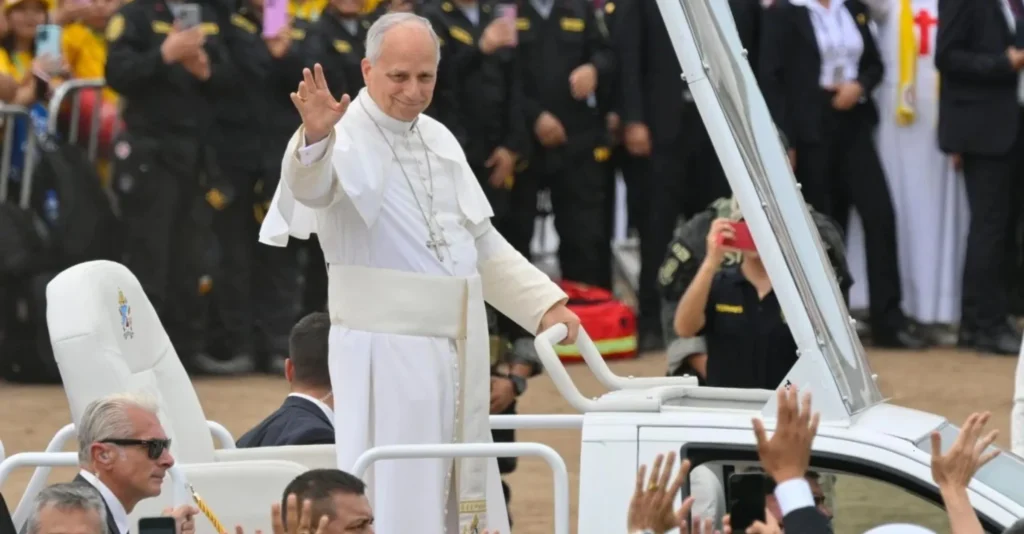
The first came in April, after Trump’s initial verbal attacks on Pope Leo XIV over the war in Iran. Speaking at an event hosted by Turning Point USA in Athens, Georgia, on April 14, Vance said that if the pope was “going to opine on matters of theology,” his comments needed to be “anchored in the truth.”
Vance added that “it’s very, very important for the pope to be careful when he talks about matters of theology.”
Lay Catholics and Catholic politicians can certainly disagree with the pope. It’s another thing to say that the pope should be careful when he talks about theology.
The second moment was on May 19 during a press briefing at the White House when Vance said he was “looking forward to reading” Pope Leo XIV’s upcoming first encyclical, Magnifica Humanitas, addressing artificial intelligence: “I think when the pope issues an encyclical on artificial intelligence, it’s going to have some influence.”
Vance added: “I, of course, don’t know how much influence. I don’t know exactly what it’s going to say, but I think when the leader of the world’s largest Christian denomination speaks on an issue like that, it’s certainly going to have some influence.”
Catholics are the world’s largest single church. But describing the Catholic Church as a “Christian denomination” suggested a striking lack of confidence in Vance’s language about his Church.
The issue here is not just the awkward language the vice president used when talking about the pope and Catholicism. The deeper issue is that evolving relations between the Church and politics in the United States — and between the Vatican and the White House — have created new tests for what constitutes a “Catholic politician.”
This higher bar was created during the pontificate of Pope Francis and it’s even more visible now.
In the past, high-profile converts to Catholicism faced largely invisible tests involving theology, doctrine and liturgical preferences. Ethical issues linked to what journalist David Gibson recently called “pelvic theology.”
Today, different questions have taken center stage.
The first concerns the depth of political and theological disagreement with a pope who happens to be American while the United States wages war. The second concerns the relationship between the Catholic vice president and the “Christian nationalist” language increasingly used by members of the Trump administration and the Republican Party when discussing the war in Iran.
Perhaps most importantly, Vance is the most prominent Catholic convert to emerge amid a visible transformation within the Republican Party’s religious culture under Trump. That transformation involves the convergence of the Christian right and its Catholic expression with another pillar of Trumpism: Silicon Valley’s right-wing techno-authoritarian elite, including Elon Musk, Peter Thiel and the like.
Vance embodies both traditions — the theology of the old Christian right in Catholic form and the worldview of the new masters of the “digicracy” seeking to remake society.
He also embodies the difficulty of reconciling those cultures and ambitions.
But Vance’s case also says something important about the Catholic Church itself. The increasing visibility of conversions is a global Catholic phenomenon and one of the signs of the times. It also marks a departure from the Church model articulated during Vatican II, which emphasized “cradle Catholicism plus missio ad gentes” — the proclamation of the Gospel to non-Christian peoples.
In the 1960s, the Church focused more on dialogue with those outside Catholicism — non-Catholics, non-Christians and nonbelievers — than on people considering conversion. In that respect, today’s Catholic Church is profoundly post-Vatican II.
It was once common to view conservative political leanings among converts with automatic suspicion and concern for their impact on the Church. Vance’s case makes us understand two different but not incompatible sides of the question.
First, the political and cultural commitments underlying his conversion narrative have produced a politician-theologian who often appears uncomfortable discussing the pope and the church.
Second, Vance’s relationship with both Francis and Leo XIV illustrates how pressure to politicize faith has become “stereophonic” — no longer coming solely from the political right.
Catholics today face intense political pressure from multiple directions, especially at a moment when the US president and the American-born pope are clashing over issues central to the world’s future, including artificial intelligence, immigration and war.
Trump has accelerated the ideologization of institutional leadership in constitutional democracies. Trumpism forces everyone interacting with the United States — including the Vatican — to respond.
Vance’s language about Catholicism reflects this dynamic more than that of earlier converts, whose Catholic identity was less intertwined with the political and religious transformation of American Christianity under Trump.
The politicization of the papacy and Catholicism in relation to the United States now extends beyond the familiar internal polarization among American Catholics. It is both a political and a religious issue.