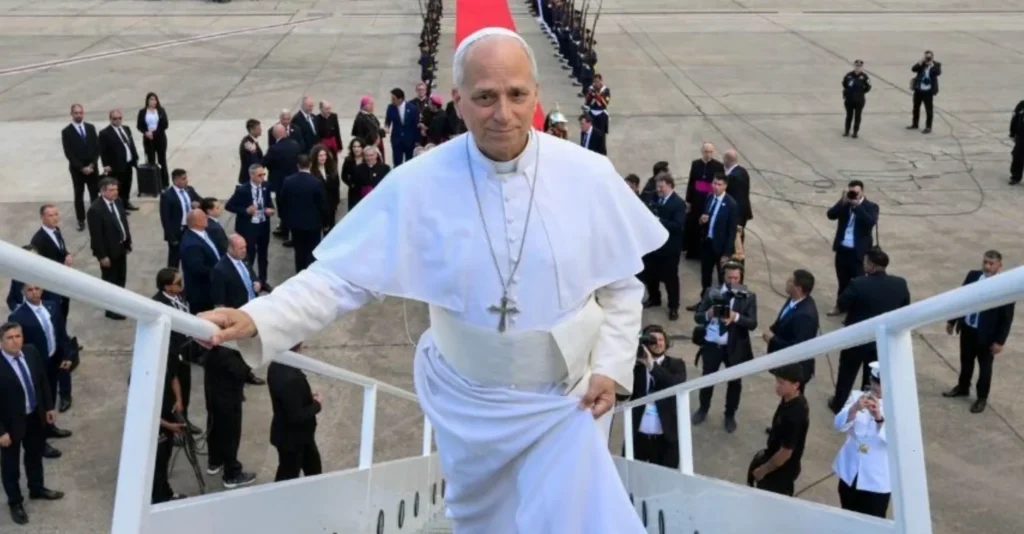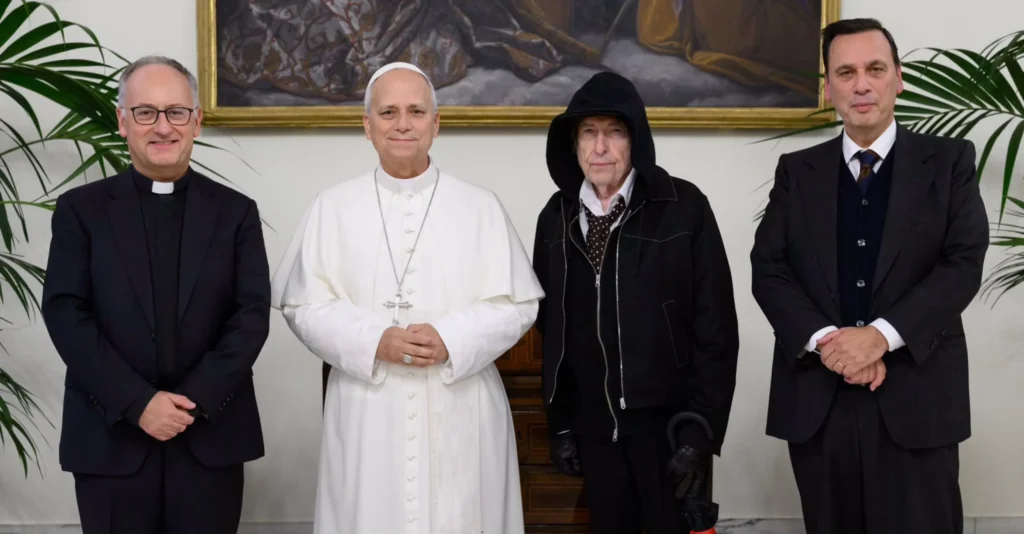

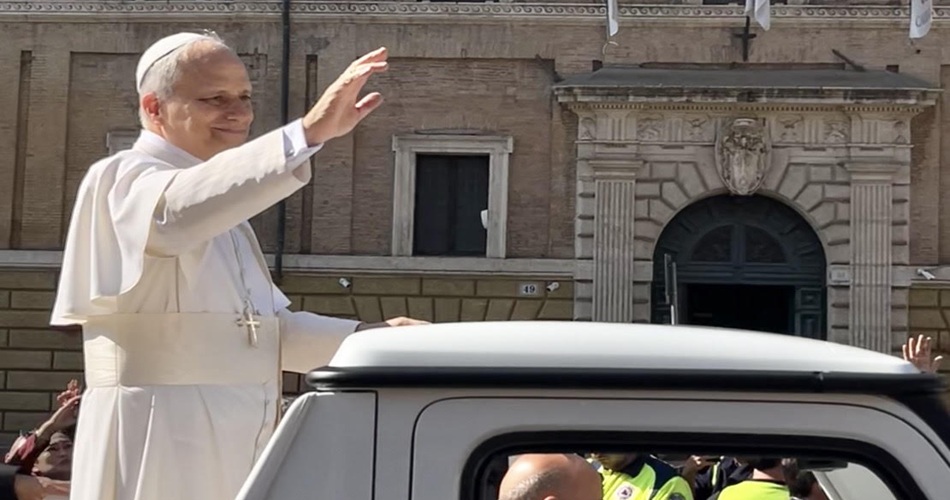
In May, the world watched as history unfolded with the election of Pope Leo XIV, the first American pope. While his nationality drew headlines, it is his life before the election — far from cathedrals and the corridors of power — that speaks most deeply to the heart of the Church today.
Long before he donned papal white, for 20 years, Robert Francis Prevost walked the dusty roads of Chulucanas, a remote, underserved region in northern Peru, ministering among tribal and Indigenous communities, listening more than speaking, and learning not from books alone but from the people themselves.
For Indian Catholics — especially those from the tribal belt of Chotanagpur, Jharkhand, Odisha, Chhattisgarh, and the Northeast — Pope Leo XIV is not merely a foreign pontiff. He is a brother, a fellow sojourner who has lived among the marginalized and gained wisdom from their lives. His election signifies a quiet revolution: a reminder that the Church of Christ must be led not only by scholars and theologians but also by those who have sat at the feet of the poor, learned their languages, and shared their meals.


A pilgrim among the poor
Before becoming a bishop or holding a position as a Vatican official, Pope Leo XIV spent nearly two decades in Peru as an Augustinian missionary. He chose to live in Chulucanas, a rugged diocese characterized by economic hardship, limited infrastructure, and a rich Indigenous culture.
There, he didn’t just serve; he became one of the people. He learned their language — not only Spanish, but also local tribal dialects. He adapted to their customs, listened to their aspirations, and celebrated sacraments in the rhythm of their lives.
Such immersion was not performative; it was pastoral and incarnational. It followed the logic of the Gospel: God becomes flesh not in temples, but in manger-straw. Pope Leo’s experience in Peru shaped his entire priesthood. He saw that theology must bend its knees before oral traditions, that catechesis must begin with shared suffering, and that leadership must emerge from proximity, not privilege.
Migrant roots, global heart
Pope Leo XIV also brings to the papacy the soul of a migrant. As a US-born citizen with Haitian-Creole roots, he stands at the crossroads of multiple identities. His maternal ancestors — descendants of freed slaves and Afro-Caribbean peoples — once lived in a segregated America that denied them equal status. His own family, at one point, had to pass as white to survive in a racially hostile nation.
This migrant and mixed identity gifted him with a rare sensitivity: he knows what it is to belong and yet not belong, to be accepted externally yet carry within oneself a story of displacement and struggle. In this way, he resonates with the thousands of tribal Catholics in India who are displaced by mining, migration, and economic pressures, yet continue to carry their faith and culture with grace and resilience.
He is not just the pope of Rome. He is the pope of the borderland believer — the migrant worker, the tribal mother, the dispossessed catechist. He speaks not from above, but from within the camp of those who walk.
Chotanagpur and the echo of Chulucanas
There is a spiritual kinship between Chulucanas and Chotanagpur. Both are regions marked by rich Indigenous traditions, deep Catholic roots, and systemic neglect.
In Chotanagpur, Catholicism took root deeply among tribal communities who saw in Christ a liberator from caste and exploitation. Missionaries like Constant Lievens and countless tribal catechists and leaders helped establish the region as a stronghold of tribal Catholic identity.
Yet even today, tribal Catholics in India face marginalization, displacement, and underrepresentation. Their wisdom is rarely consulted in theological discourse. Their liturgical expressions remain localized and unofficial. Their land rights are trampled upon, and their youth are often pushed to the margins of Church life.
Pope Leo XIV, after experiencing Chulucanas, understands. He knows that the Church does not belong solely to those who write encyclicals — it belongs to those who carry firewood to the altar, pray in dialects, and make the Eucharist real through hospitality and community.
Learning from the margins
Pope Leo XIV’s papacy is a call to the global Church — and to the Indian Church in particular — to learn again from the people. It is a call to stop speaking about the poor, and instead to speak with them, walk with them, and build the Church with them.
For India, this means:
- Affirming tribal theology as a valid and vibrant expression of the Catholic faith.
- Including tribal leaders in decision-making structures, such as parish councils, seminaries, and synodal bodies.
- Protecting tribal lands and cultures as sacred spaces where the Spirit moves.
- EncouragingIndigenous liturgies — dances, songs, prayers — that are deeply incarnational.
The future of the Indian Church will not be shaped solely in Delhi or Rome. It will be shaped in Khunti and Simdega, in Dantewada and Dumka, in homes where tribal grandmothers bless the day with whispered prayers and simple meals.
A papacy of proximity, not prestige
Pope Leo XIV has no illusions about power. He did not seek high office. His heart was shaped by those he served: by farmers, women, migrants, tribal elders. His papacy is not one of institutional might, but of moral closeness. He brings with him the scent of woodsmoke, the memory of dirt paths, the sound of prayer in tribal tongues.
This is the kind of leadership the Church needs — not only in Rome, but across India. Leadership that listens, that accompanies, that recognizes the divine image in those often dismissed.
A Church of the people, for the people
From the tribal lands of Peru to the tribal belts of India, a new chapter in Church history is unfolding — one that places the margins at the center. Pope Leo XIV signifies that shift. He demonstrates that the wisdom of the Church does not flow top-down, but in spirals — from the firesides of the poor to the desks of theologians, from the dialect of a tribal elder to the pulpit of a bishop.
If the Church is to survive — not as an institution, but as a living body — it must become again what it was in the beginning: a community of shared bread, shared burdens, and shared hope.
Pope Leo XIV reminds us of what we already knew: God speaks from the margins. We just need to listen.