In 2007, Madrid-based artist Juan Ansótegui fulfilled a lifelong dream: He began rescuing a church — and with it an entire region — that he had discovered purely by chance on his way to the northern Spanish spa town of Santander.
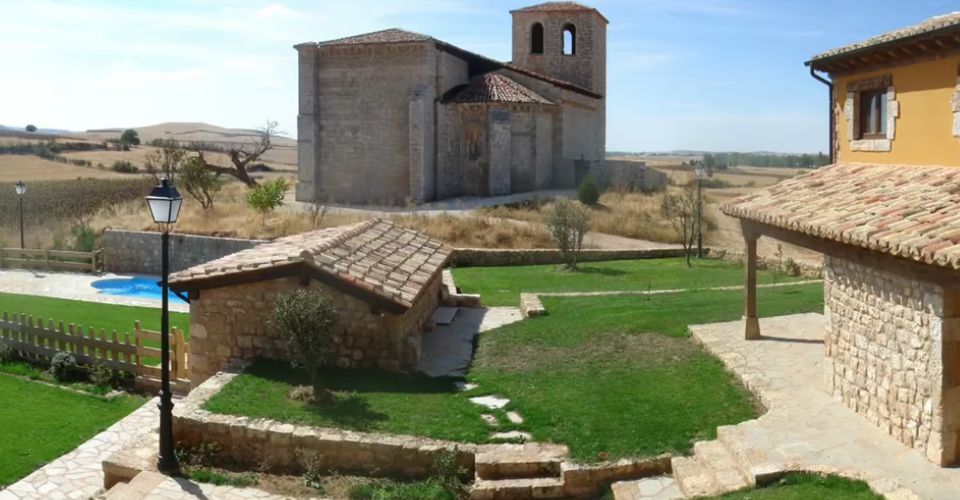
Together with his siblings, the skilled craftsman spent years transforming the village of Villalibado, part of the municipality of Villadiego in Burgos province, in the Castile and León region of northern Spain.
They changed it into the event village named“Las de Villadiego,”a playful nod to the Spanish idiom “tomar las de Villadiego,” meaning “to hightail it” or flee, here repurposed as the name of the revived village.


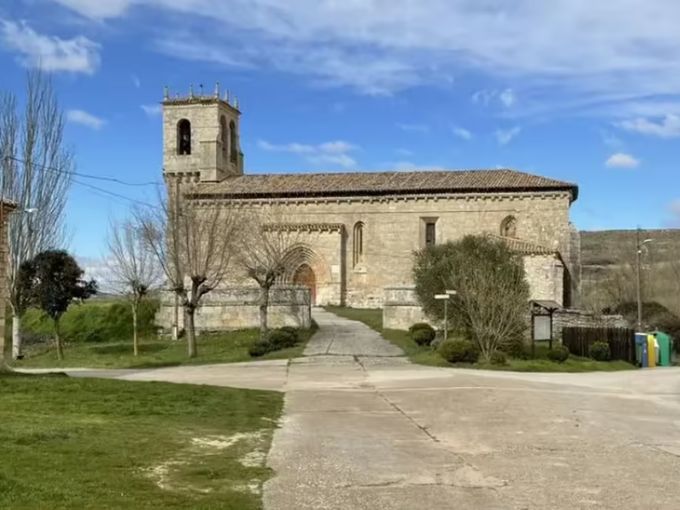
The 12th-century Church of San Salvador remains the main attraction of the site. Mass is no longer celebrated there, but weddings and other events are held.
The feast of the patron saint, San Salvador, on Aug. 6 is normally the most important celebration in the region, but this year a global event takes center stage: the total solar eclipse on Aug. 12. It has already completely transformed Villalibado.
A year ago, Ansótegui received an email from NASA. The US space agency wanted to visit the small village near Burgos to broadcast the cosmic event to the entire world from there.
“At first I thought it was a joke by someone. Why would NASA contact me? But they were serious,” says Ansótegui, who can hardly find a moment of rest these days and still can’t quite believe his luck.
NASA officials had already visited several sites in Spain in 2025 and determined this was the ideal location for the eclipse. Just a few days after the email, they stood before him in person in Villalibado to seal the “deal.”
What pleases many believers: The operations center for the broadcast will be the small Church of San Salvador itself.
“I think the Americans have never experienced something like our ancient house of worship in the context of such an event,” Ansótegui says. “It really is a very mythical global event for all of us.”
For Ansótegui, now 60, this is likely a highlight of his life. The efforts of past years are finally paying off — perhaps, he jokes, his patron saint had a hand in it. After this event, the village will likely be on everyone’s lips, and Ansóteguiwill have made his name.
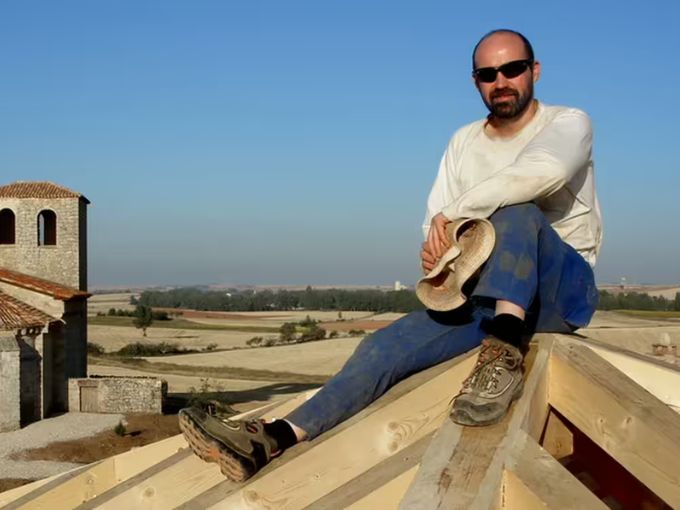
Yet it was in the middle of Spain’s 2008 financial crisis that he dared to undertake the renovation of the completely dilapidated village, abandoned since 1998.
Loans were difficult to obtain at the time, but the Spaniard showed enormous courage and perseverance over many years, which is now bearing fruit.
When he began 20 years ago, he had no idea that the province of Burgos would one day become one of the best places to observe a total solar eclipse. Now all of Spain is eagerly anticipating the evening of Aug. 12, which finally gives rural inland Castile the chance to present itself to the world.
An eclipse tourism boom
It’s not only the deal of a lifetime for Ansótegui — small guesthouses and private individuals in particular are benefiting from the event.
Cash registers are ringing not only around Burgos, where the eclipse can be seen especially well and for an extended time, but also on the mystical and already expensive island of Menorca, a Balearic island off Spain’s eastern coast, known for its prehistoric stone monuments called talaiots.
The sparsely populated island, with ancient monuments on nearly every corner, is also known for its star-filled night sky.
Northern Spain’s Galicia, an autonomous region on the country’s northwestern coast that lies within the eclipse’s path of totality, is also experiencing a record summer thanks to the eclipse.
Some guesthouses in remote areas that tourists would otherwise never find are currently hosting visitors from Europe, Japan, the United States and Canada. Rooms cost up to 6,000 Euros a night.
“This is an enormous opportunity for our country to show how beautiful it is away from the coast,” says Spanish marketing expert Martínez-Raposo Álvarez.
Anyone hoping to be present where roughly 30 NASA scientists will set up telescopes, security personnel and cameras on Aug. 12, however, should know that won’t be possible.
The Americans have taken over the entire village, and no one is permitted to disturb the broadcast from the Church of San Salvador.
The price NASA paid for the arrangement remains undisclosed, but some Spanish entrepreneurs are likely to follow the example of “Las de Villadiego” after the eclipse, turning their own villages into venues for the next major celestial event.
Spain’s rural depopulation crisis
For years, Spain’s government and entrepreneurs have been trying to tackle the growing problem of rural depopulation, which also plays a role in the country’s worsening forest fires and rapidly rising urban housing costs.
According to Spain’s National Statistics Institute, known by its Spanish acronym, INE, 3.8 million apartments and houses stood empty in 2021, 45 percent of them in villages like Villalibado.
Real estate and entire villages like Villalibado are now almost being given away, because they require enormous investment and often lack basic infrastructure such as healthcare, water and electricity.
The regions most affected by rural depopulation are Extremadura, Castile and León, Castile-La Mancha, Galicia, Asturias and Aragón, while cities such as Madrid, Valencia, Seville and Barcelona struggle with overtourism.
Around 3,000 villages in Spain are officially considered abandoned. Yet despite the country’s enormous appeal to international tourists, it remains difficult to build a sustainable project in a small rural location.
“EcosistemaMágico de España” (“Magical Ecosystems of Spain”) has been trying to do just that for 10 years. By its own count, the initiative has saved 40 villages, developing small industries, tourist attractions, hiking trails and similar projects.
Public funding for such anti-depopulation efforts is abundant, including money from the European Union.
Some foreigners have also tried their luck in abandoned areas, attempting to launch projects like “Las de Villadiego.” But those who don’t speak the language or know the country well have little chance of success.
Wildfires, politics and a fragile hope
In recent years, Spain’s far-right Vox party has gained significant support among populations affected by rural depopulation, as the country’s two traditional governing parties — the center-left Spanish Socialist Workers’ Party (PSOE) and the center-right People’s Party (PP) — addressed the issue too late.
Now, as forests burn every summer, drought worsens each year, and some arsonists seek to draw attention to rural hardship through their crimes, it’s becoming clear that small-scale agriculture is dying out as well.
Farming and livestock operations have consolidated into industrial-scale enterprises concentrated in Andalusia and Catalonia, bearing little resemblance to traditional agriculture.
Even shepherds and sheep are disappearing from the Spanish countryside. As a result, hillsides and pastures are no longer properly maintained, warns WWF Spain, the Spanish branch of the World Wildlife Fund, which says the neglect is contributing to the wildfires that have caused so much suffering in rural areas this summer.
Even so, “empty Spain,” or la España vaciada — the phrase now widely used in Spanish media and politics to describe the rural depopulation crisis — is full of hope that the solar eclipse might make things at least a little better.
This is a translated and edited version of the feature that first appeared on DOMRADIO.DE and has been republished with permission by Global Catholic.