




A saying from home
I’ve been in Spain for just over half a year, after more than 50 years in Peru, and I can’t help but think about “my Latin America,” the region I left behind to settle permanently in León (a city in northwestern Spain).
Over the August vacation, more than one person reminded me of a popular saying — coined, I believe, in southern Spain — “You are dumber than a right-wing worker.”


The saying assumes that a worker has to be left-wing; otherwise, it would be “throwing stones at your own roof.”And I’m going to keep using the classic left-right terminology, even though I know it carries nuances today and many prefer to avoid it.
Mapping the continent
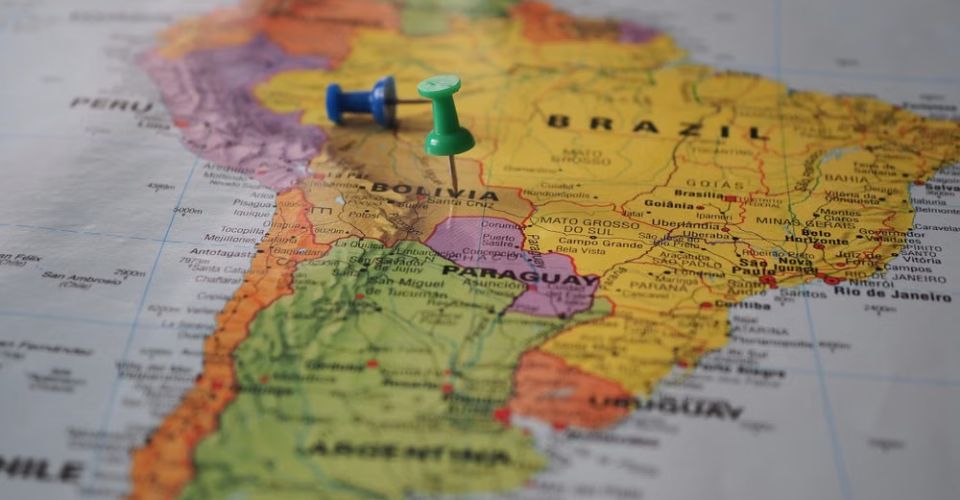
By that terminology, the governments of Brazil — a giant under Luiz Inácio Lula da Silva, widely known simply as Lula, who is seeking a fourth, non-consecutive term in October’s presidential election — and Uruguay would clearly count as “democratic left” governments.
Uruguay, the smaller of the two, would not have forgotten the message and example of the undisputed José “Pepe” Mujica.
Mujica, Uruguay’s former president and a global symbol of the austere, democratic left, died in May 2025; his own political movement, now led by President Yamandú Orsi, remains in power.
We’ll leave aside Cuba’s “eternal dictatorship” (a one-party Communist state since 1959) and the governments never accepted as genuinely left-wing in Latin America — except by those with an interest in holding them up as cautionary examples — Venezuela and Nicaragua.
The rest of the region’s countries, as of mid-2026, are governed by the center-right, the right or the far right. Simple enough, for clarity’s sake.
A hemisphere of extremes
We have, on the other hand, a continent where economic disparities and the deepest injustices prevail. And a paradigmatic country, the United States, that cannot — sincerely and honestly — be considered by anyone a model to follow.
It has a president, Donald Trump, considered by many “crazy,” with national and international blunders occurring all the time.
In other words, a far right that, in principle, shouldn’t invite imitation.
Why the red has faded
The obvious question is: what has happened on our continent to set aside that characteristic red of the left?
Logically, the answer begins with the left-wing governments that have actually held power in practice — and have not proved attractive to the majority.
I think of the Peruvian left, whose record has been dismal, with very few exceptions. I believe the experience generalizes: left-wing governments have, in most cases, been neither attractive nor genuine examples of democratic progress for the continent.
So — returning to the Spanish saying — it isn’t that workers and peasants are foolish; it’s that they haven’t been offered examples compelling enough to disprove it.
The pull of “order”
Nor do I think we should simply dismiss Trump’s appeal, his magnetism.
He may seem crazy, but he clearly signals that he “wants to put things in order,” and that matters to a lot of people: the majority doesn’t want everyone doing whatever they please.
I myself have criticized, in Peru, a model that combines brutal authoritarianism — justifying Alberto Fujimori’s dictatorship— with complete permissiveness in everyday life, where rules apparently don’t matter.
You cannot build a monument to informality and then follow it as a norm — some people will cleverly take advantage of that, and we have clear examples.
Fujimori ruled Peru from 1990 to 2000, governing with growing authoritarianism before being convicted of human rights abuses; he died in September 2024.
Two reasons, simply put
I believe these two elements together — the lack of left-wing models of genuine democracy and progress, and the “Trump phenomenon” offering order — explain the current political map of the continent, and why poor majorities have voted against their own interests.
That “foolishness,” real and objective in the Americas, isn’t so foolish once you look at the reasons behind it. In a simple way, I’ve tried to offer two.
I don’t forget, of course, that the right has the money and time to “buy and manipulate votes,” and controls the news media — today an essential source of real power — to propagandistically sway the electorate. I’m not that naive.
There are other causes, certainly, but I’ve limited myself to the ones I believe matter most: the ones that explain why the poor, the majority in every Latin American country, are effectively living by “throwing stones at their own roof.”
This is a translated and edited version of the column that first appeared on Religion Digital and has been republished with permission by Global Catholic.













1 Comment
Enri
September 19, 2026Im sad about the person behind this webpage that have choose specifically this article, cause obviously that person must be inmerse in left-wing prop@ganda.
First of all, left-wing governments in latinoamerica had had their opportunities to prove what they can do, but they horribly fail. Now you have a Argentina economy recovering of debts from its past progrɛsist gov. and a current leftist Mexican gov. invaded by n@rc0s.
And this “journalist” from this catholic website that talked about how much loves Peru, well… many of us have voted by right Fujimori simply because it was the most logical and secure option. The other left option Sanchez wanted to put ridiculious thing like dismantle the peruvian central bank, and enforce indigineous cult to sun/earth instead our traditional catholicism.
Im not rich nor poor, im latino and we are not f0ol. Im just glad that “journalist” have left Peru. That person must be happy now in Ss-pain, surrounded by mor0c@ns and musllms.