The road to Arkádi Monastery on the Greek island of Crete is narrow.
Cars squeeze through tiny villages with barely inches to spare between their side mirrors and centuries-old stone walls.
The winding route passes olive groves and grazing goats, making it hard to imagine that it leads to one of Crete’s most important historic landmarks.


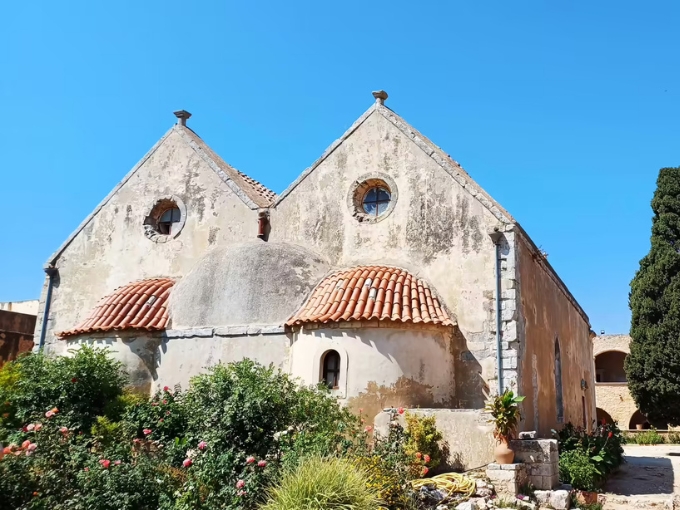
Perched atop a hill, the monastery is surrounded by pine trees and enclosed within sand-colored stone walls.
Early in the morning, before the tour buses arrive, the grounds are peaceful.
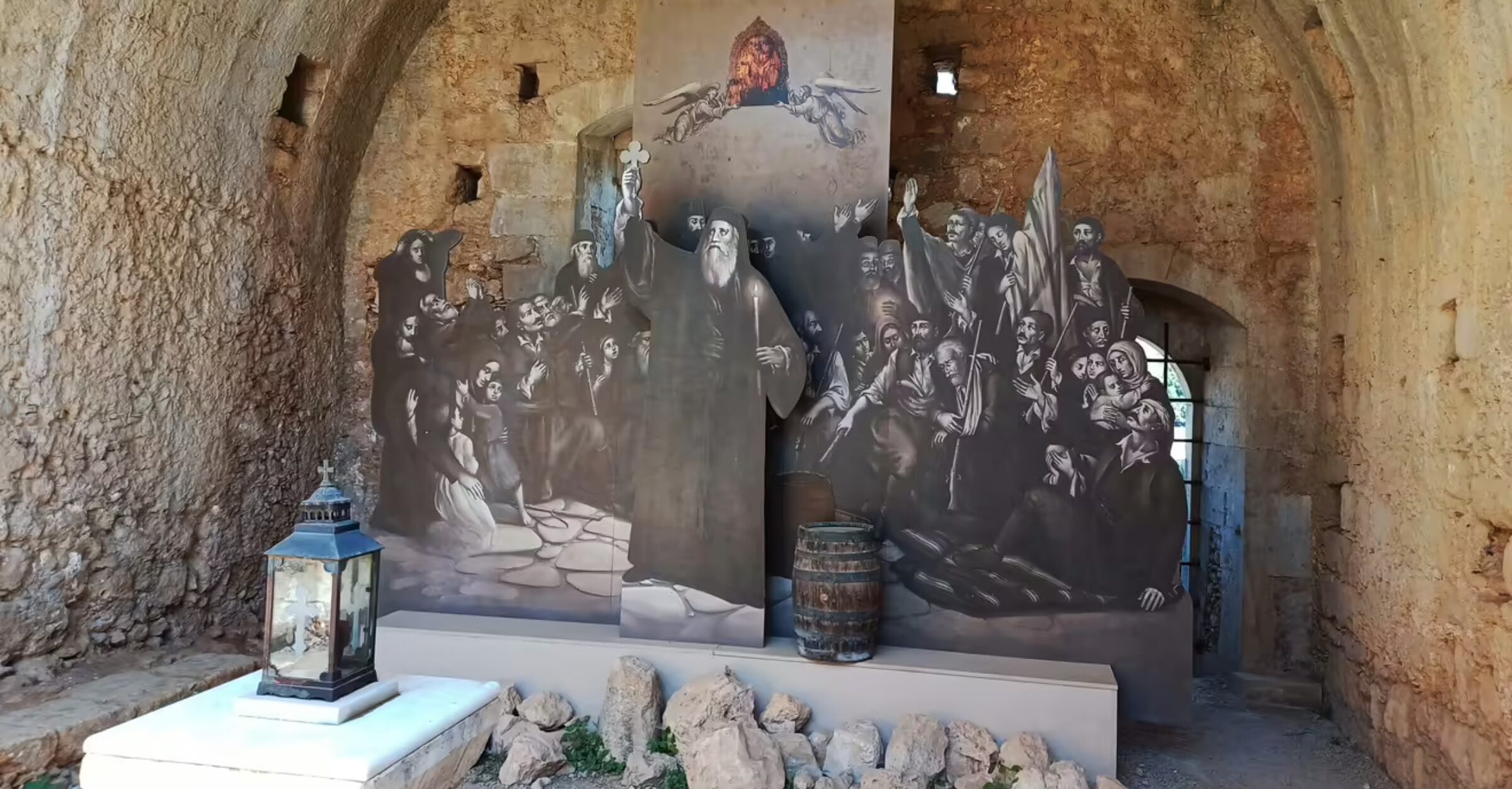
A cat darts across the parking lot, brushes against the legs of a visiting couple, and disappears into the shade of a roofless colonnade. At its center stands a small chapel with a wooden display case. Inside, neatly arranged in rows, are 64 human skulls.
They bear silent witness to the fate of more than 800 people who died here within a matter of hours—and whose deaths transformed Arkádi into a symbol of Cretan resistance.
Revolt against Ottoman rule
Crete was under the Ottoman rule in 1866. Trade flourished throughout the Mediterranean, and the island’s coastal cities remained firmly under Ottoman control.
In the mountainous interior, however, resistance was growing among the island’s Greek Orthodox population. Violent uprisings repeatedly broke out.
The revolutionaries hoped to draw the attention of Europe’s great powers, believing they might intervene on behalf of the Cretan cause.
They sought inspiration from the Greek War of Independence (1821–1832)some three decades earlier, when France, Great Britain, and Russia had supported the Greek rebels against the Ottoman Empire.
A revolutionary committee inside a monastery
Unlike mainland Greece, Crete had not achieved independence. The island continued to be governed by an Ottoman pasha.
An Ottoman Pasha was a high-ranking official, governor, or military commander appointed by the Ottoman Sultan. During the 19th-century conflicts in Crete and Greece, these figures held absolute administrative and military power.
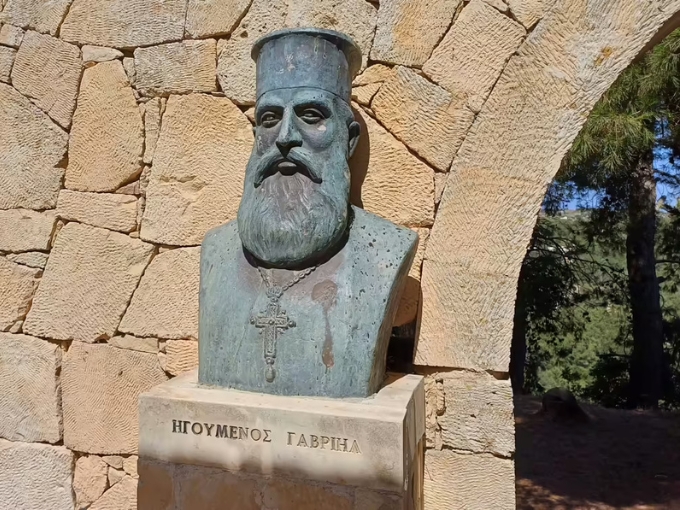
To organize resistance, Cretans established revolutionary committees across the island. One of those committees was headquartered at Arkádi Monastery. Its leader was none other than the monastery’s own abbot, Gabriel Marinakis.
Marinakis was only 30 years old when he was elected hegumen, becoming both the spiritual and administrative leader of the monastery.
A hegumen (Greek: hegoumenos) is the abbot or head of an Eastern Orthodox monastery. During the Greek War of Independence and the Cretan revolts, these religious leaders played vital dual roles as spiritual guides and military commanders.
He had served as abbot for ten years when, during the summer of 1866, the pasha in nearby Rethymno ordered him to dissolve the revolutionary committee and evacuate the monastery.
The monks had experienced forced exile before.
More than two centuries earlier, after the Ottoman conquest of Crete, they had been expelled from Arkádi, their property plundered, and church bells forbidden from ringing.
An abbot who refused to surrender
This time, Abbot Marinakis refused. He insisted that the monastery’s spiritual authority should not submit to the secular authority of the Ottoman rulers.
Although Ottoman officials generally tolerated a degree of religious autonomy, they would not accept an abbot who had become the leader of an armed revolt.
In October 1866, the Greek General Panos Koronaios visited Arkádi. Recognizing that the monastery was militarily indefensible, he strongly urged everyone to evacuate. Marinakis refused.
He remained, both out of principle and to protect the revolutionaries and their families who had sought refuge behind the monastery’s walls.
The assault on Arkádi
By early November 1866, more than 900 people had taken shelter inside the monastery.
On the morning of Nov. 8, an Ottoman force of approximately 15,000 soldiers supported by 30 cannons surrounded Arkádi.
A final demand for surrender went unanswered and the bombardment began. For two days, fierce fighting raged and on Nov. 9, the monastery’s western gate finally fell.
Ottoman troops stormed into the courtyard, killing many of those inside. The remaining defenders retreated to the monastery’s gunpowder magazine at the rear of the complex.
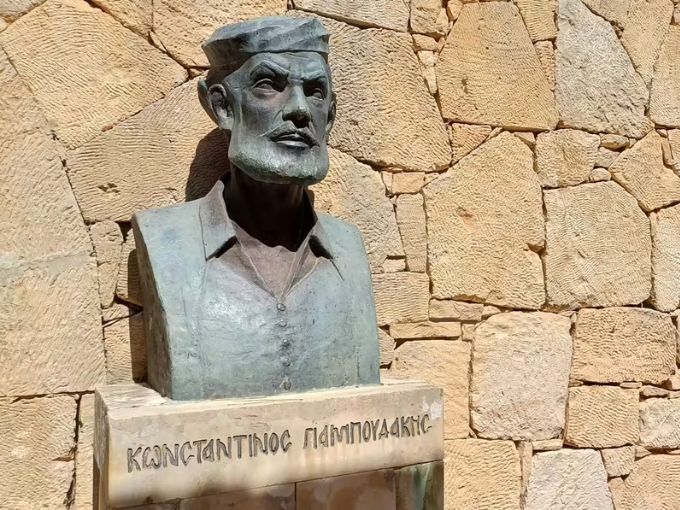
There was no escape. According to tradition, the resistance fighter Konstantinos Giaboudakis made the final decision.
Rather than surrender, he ignited the gunpowder stored inside the magazine.
The resulting explosion killed not only the remaining defenders but also many of the attacking Ottoman soldiers.
Praise from Victor Hugo and Garibaldi
The dramatic sacrifice captured the imagination of Europe.
The French writer Victor Hugo, a passionate supporter of the Cretan cause, wrote in a letter later published in Le Figaro: “The terrible act—the explosion—comes to the aid of the defeated; death becomes triumph, and this heroic monastery, which fought like a fortress, ends like a volcano.”
Across Europe, the events at Arkádi drew widespread attention. Italian General Giuseppe Garibaldi praised the courage of the Cretan people. French intellectuals organized fundraising campaigns.
In the United States, some even discussed recognizing an independent Crete.
Although it would take another 30 years before Crete finally gained its independence, Arkádi Monastery and Abbot Gabriel Marinakis became enduring symbols of that struggle.
The scars of history remain
Today, according to the monastery, seven monks live at Arkádi.
During the busy tourist season, hundreds of visitors arrive each day, photographing the cloisters surrounding the monastery church and the cats resting in the shade.
Little visible evidence of the destruction of November 1866 remains.
Visitors who walk past the left side of the church reach the old gunpowder magazine. Its roof was never rebuilt. The black soot left by the explosion still stains the stone walls.
Near the candles burning in memory of the victims hangs a simple inscription: “Here the flame was kindled and shone from one end of Crete to the other. It was the flame of God, in which the Cretans sacrificed themselves for freedom.”
This is a translated and edited version of the feature that first appeared on DOMRADIO.DE and has been republished with permission.