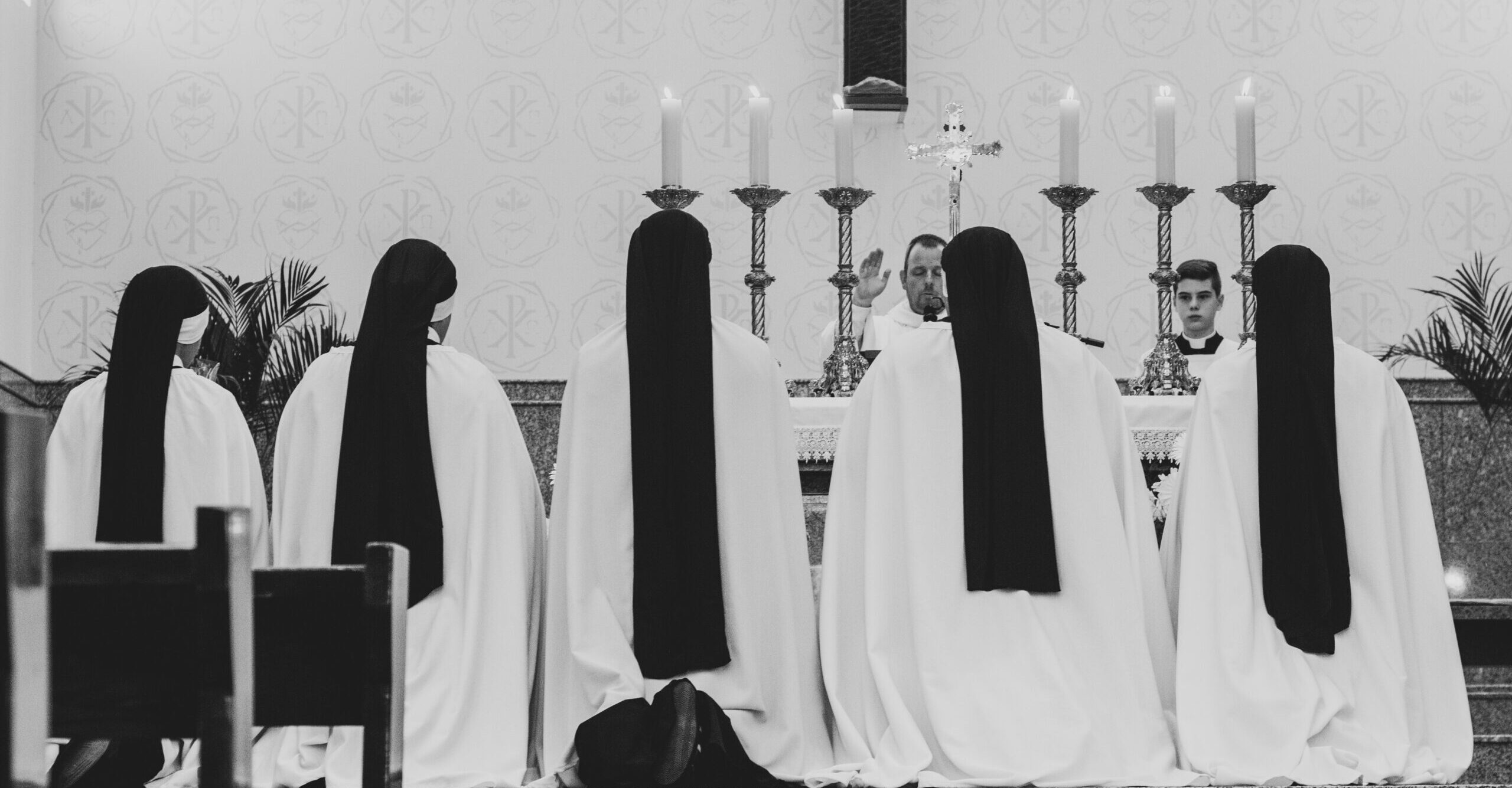
In her mid-50s, a mother of two, Steffi is becoming a religious sister.
On its face, the promise of marriage and the vow of celibate chastity that religious life requires would seem to rule each other out.
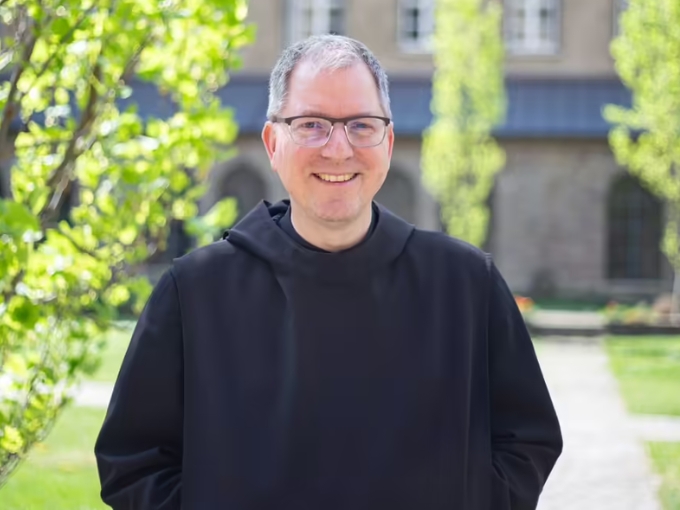
But canon lawyer and religious-law expert Father Noach Heckel explains why it’s nevertheless possible.


What is a vocation?
A vocation is God’s call to a particular task in life. It can overlap with a job or career, but it’s much more than that — the call provides an inner motivation and is part of finding meaning and fulfillment in life.
Changing one’s vocation is therefore far less common, and far more difficult, than changing careers.
Even so, people sometimes reorient themselves during the second half of their lives, says Heckel, a Benedictine monk, canon lawyer specializing in religious law and professor of theology at the Theological Faculty in Trier.
Heckel, who belongs to Münsterschwarzach Abbey in Germany, entered the monastery himself at 31 and “actually thought that was pretty old” at the time.
A marriage annulled
The novice Sister Theodora — whose secular name is Steffi, though she prefers to keep her surname private — is considerably older.
She decided to enter religious life after 17 years of marriage and raising two children. That’s possible, Heckel explains, because her marriage was declared null.
The reason: Her husband told her he was gay. The couple lived with that secret for seven years, Sister Theodora told the Catholic News Agency, before divorcing in April 2013.
Shortly afterward, they petitioned the church for a declaration of nullity.
In cases involving what Heckel calls an “exclusive inclination toward same-sex partners,” the church holds that the person is incapable of validly entering marriage, because they cannot undertake and fulfill its obligations.
For that reason — and because Sister Theodora’s husband acknowledged concealing his sexuality before the wedding — the marriage was declared invalid.
In the eyes of canon law, Heckel stresses, she was therefore never validly married in the first place:
A declaration of nullity means “that what looked like a marriage was not a marriage at all from the beginning.”
❝
Older adults and parents discovering a vocation later in life are a growing phenomenon.
The legal hurdles
The situation grows considerably more complicated for a married woman who wants to enter religious life without first having her marriage annulled — which, Heckel notes, happens far more often.
“Under certain circumstances, the Holy See can then grant what is known as a dispensation,” he explains.
The conditions: The marriage must have ended in divorce, the spouse must consent, and there must be no outstanding support obligations to the spouse or children.
Only then can the Vatican grant its approval for the person to enter religious life.
When children are still young
Having children who still depend on their parents can also stand in the way of joining a convent or monastery.
That requirement is no longer spelled out explicitly in the Code of Canon Law, revised in 1983, but in practice, Heckel says, no one would be admitted while they still have dependents or minor children.
“No reasonable religious superior would admit someone who has parental responsibilities toward children — that simply wouldn’t work; from a human perspective, it’s hardly conceivable,” he adds. The same holds true for men.
Sister Theodora waited until her children, now 22 and 26, were “out of the most difficult phase” before entering the convent.
That wasn’t just a legal necessity — it was, for her, emotionally unimaginable to do otherwise. As long as children still need active support, a parent can hardly devote themselves fully to religious life.
Family support matters
Family support also makes an enormous difference, Heckel says.
“If the family is in conflict with the decision, it’s incredibly difficult for the new sister or brother to grow into this new way of life,” he adds.
Adjusting to religious life is hard enough on its own, he further adds, “and the older you are, the harder it becomes to adapt to such a way of life.”
A growing trend
Older adults and parents discovering a vocation later in life are a growing phenomenon, Heckel says. “It could be that the question of the meaning of one’s own existence arises more strongly again in midlife.”
Religious communities have had to rethink their approach as a result. “Thirty years ago, people wouldn’t even have considered it — they would have said, ‘We don’t accept anyone over 50.'”
At Münsterschwarzach, the Benedictine community sets its age limit at 40, though exceptions remain possible within individual communities.
In the end, Heckel says, a vocation is always an individual matter — and it calls for individual solutions.
This is a translated and edited version of the feature that first appeared on DOMRADIO. DE and has been republished with permission by Global Catholic.