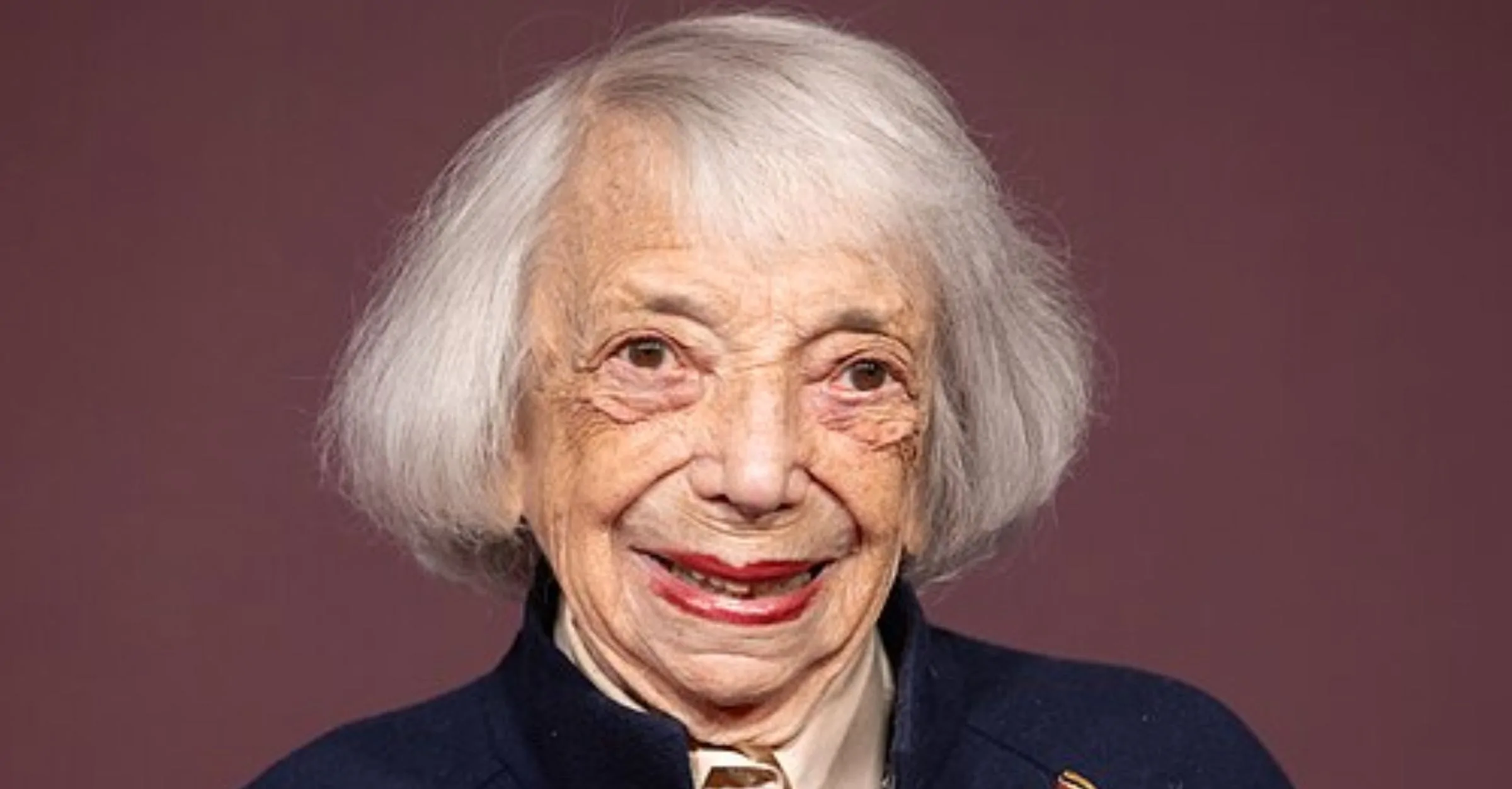
Margot Friedländer, the German Holocaust survivor who became one of the country’s most prominent voices of remembrance in her final years, would have turned 105 on Nov. 5.
Born Anni Margot Bendheim in Berlin on Nov. 5, 1921, she went into hiding in 1943 after her mother and brother were deported; she herself was arrested and deported to the Theresienstadt concentration camp in 1944.
Neither her mother nor her brother survived the Holocaust.


After the war, she emigrated to the United States in 1946, living there for 57 years before returning permanently to Berlin in 2010, where she spent the rest of her life speaking to schools and institutions about her experience.
Her memoir, published in German in 2008 as Versuche, dein Leben zumachen (“Try to Make Your Life”), became widely read in Germany.
She died in Berlin on May 9, 2025, at age 103 — the same day she had been scheduled to receive the Commander’s Cross of the Order of Merit of the Federal Republic of Germany, one of the country’s highest honors.
The foundation named after her continues to carry forward her message: “Be human.”
Prof. Karsten Dreinhöfer — a physician by profession and chairman of the Margot Friedländer Foundation, whose board also includes former Culture Minister Monika Grütters, media executive Mathias Döpfner and former German President Joachim Gauck — discusses the meaning behind that appeal with Jan Hendrik Stens.
When you think of Margot Friedländer today, which moment, encounter or statement of hers stands out most in your memory?
“Be human.” That is the phrase we all know. She tried to convey it very often. It is certainly the central message of her life as well. In just a few words, she tried to express what it meant to treat other people the way you would expect to be treated yourself.
I had the opportunity to experience her at various stages and in different situations in life, where she impressed people ranging from young schoolchildren to a chancellor or a U.S. president by approaching them with this humanity.
What was particularly important to her when speaking with young people, when the subject was actually the past, which nevertheless plays a central role in the present?
She tried to see young people as the key to our future, and she was certainly right about that. The young people, the students, understood this as well.
She made it clear to them that there had been a past that she had been forced to endure, but that today’s students and young people bore no personal guilt for it. However, they have a responsibility to ensure that something like that never happens again.
She made it very clear that they have an enormous responsibility in how they treat their classmates today, but also in the roles they hold in society. It was fascinating to see how this 100-year-old woman could convey to 12-, 13- and 14-year-olds the responsibility they have for the future.
Despite this terrible history, Friedländer always had a smile on her face, didn’t she?
Absolutely. After describing in her readings how terrible everything had been, she would always close the book and say: “You may wonder why I am sitting here again after everything that happened. I have come to you to extend my hand so that something like this never happens again. You have a responsibility for the future.”
Looking at the situation today, at issues such as antisemitism, hatred and social division — all the things that surround us every day — what do you think Margot Friedländer would want to say today through those words, “Be human”?
What she always wanted to say: “Look at what unites you.” She always said that there are many things on which you do not have to agree, whether opinions or worldviews. But you must tolerate other people, you must respect them, and then you can also discuss things with them.
But first and foremost, look at what unites you and try to find common ground on which you can move forward together. This mission is more important than ever, especially in a society that is becoming increasingly polarized by the day.
The Margot Friedländer Foundation also aims to preserve her life’s work and carry it forward. How do you preserve not only the memory of a person but also her attitude?
That is a major challenge, but it is precisely our mission. This is what she entrusted to us, and we are trying to advance it through a variety of initiatives so that we can carry forward this mission and this attitude.
Next week, we are launching what is known as the Margot Friedländer Academy, where we will provide further training to 20 young people in various approaches and areas of action that they can then seek to put into practice in their own communities.
They will learn about Margot’s life story, but especially about her attitude. They will be given knowledge and tools that they can take back to their school classes and universities.
That is one of our activities. In addition, we have the major Margot Friedländer Prize — first established by the Schwarzkopf Foundation in 2014, before the Margot Friedländer Foundation took on its stewardship — through which we recognize existing organizations and schools that are committed to democracy and tolerance, and give them a public platform that others can look to as an example.
Is there a celebration for Margot Friedländer today?
Of course. Margot loved celebrations and expected holidays to be marked accordingly. She would certainly expect us to continue doing that.
So this evening, we have invited friends and supporters and will present a small photo exhibition. Through many memories, but also with a great deal of courage, we will talk about Margot, remember her and then look ahead, saying: She gave us the task of carrying on, and that is exactly what we intend to do.
This is a translated and edited version of the interview that first appeared on Domradio.de and has been republished with permission.