An encyclical and a commission: what Leo XIV’s double move tells us about the Church and technology




Jesuit Father Antonio Spadaro is the undersecretary of the Dicastery for Culture and Education of the Holy See. He is a member of the board of directors of Georgetown University and a full member of the Pontifical Academy of Fine Arts and Letters of the Virtuosi al Pantheon.
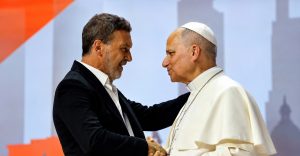
A close reading of Antonio Banderas's address to Pope Leo shows the importance of continuing to create, question, and seek not only beauty but also truth, because every profound question opens a path toward the spiritual.
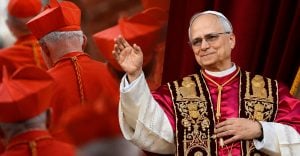
Cardinals are meeting in Rome to debate war, AI, and synodality, marking a critical test of Pope Leo XIV's collaborative vision for Church governance.
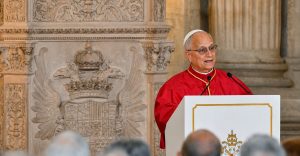
From Parliament to the Canary Islands, Pope Leo XIV used his Spanish journey to champion human dignity, dialogue, and solidarity in an age of division and fear.
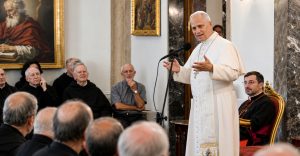
Pope Leo's journey to Spain sketches a vision of society held together not by power, but by relationships.
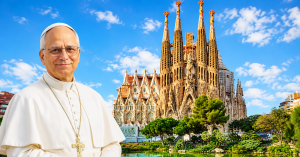
The meaning of a papal journey almost never resides in the official communiqués; it lives in a gesture, a threshold crossed, a glance. In Spain, the papal engagements will help the city to “lift up the eyes” and seewhat it usually does not see.

The question of AI is not a technical question with ethical consequences but a spiritual question with technical implications.
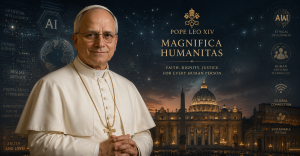
Pope Leo XIV’s “Magnifica Humanitas” places human dignity at the center of the AI age and calls the Church to guide technology with ethics and justice.

Pope Leo XIV reiterates that ecclesial movements are not self-sufficient islands but parts of a body that lives through relationships, putting on notice those who bypass diocesan bishops.
Join the remarkable Global Catholic journeyGlobal Catholic is proud to be independent—editorially, politically, ideologically and financially.
But independence comes at a cost. Without patron support, we depend entirely on readers and friends like you.
To sustain and grow Global Catholic, we need to raise US$250,000.