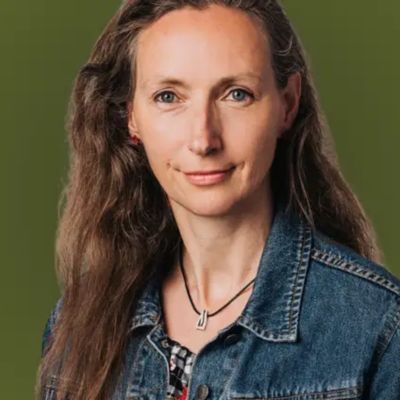
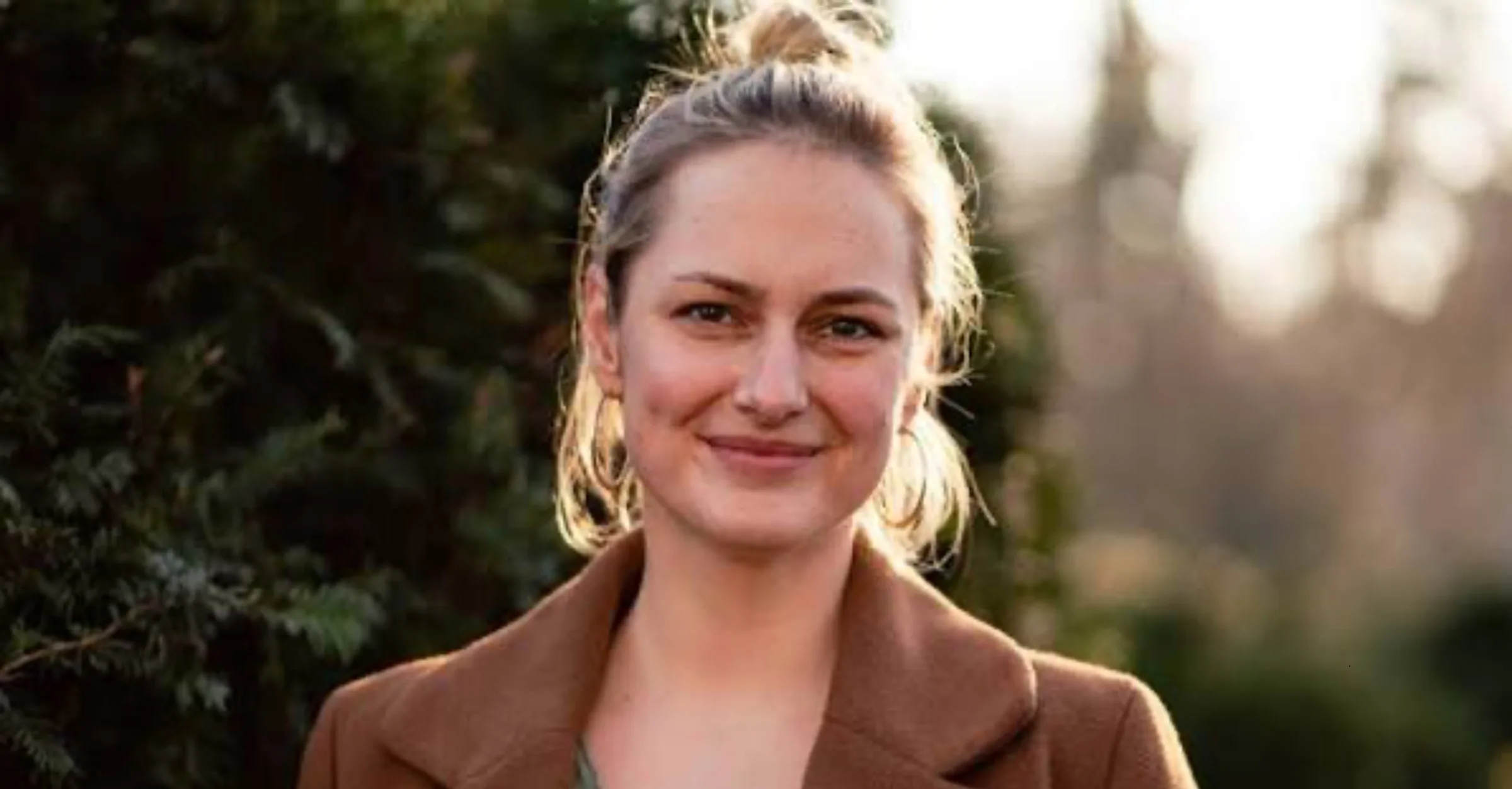
Josephine Teske is a Protestant pastor in Hamburg, Germany, known to tens of thousands of followers as the country’s “Instagram pastor” for her candid posts on faith, doubt, and single motherhood on the account seligkeitsdinge (loosely, “things of blessedness”).
She has previously published the devotional “An/Dich” and now a new book, “Starke im Sturm” (“Strength in the Storm,” Kosmos Verlag), which gathers the stories of people in her congregation who have lived through personal crises and turning points, alongside her own.
In this interview with Dagmar Peters, Teske discusses how an unshakeable faith can coexist with real doubt, why she chose to let others tell their own stories rather than center the book on herself, and how biblical figures like Eve still speak to modern crises such as the midlife reassessment.


As a pastor, one might assume you have rock-solid faith. At the same time, you often speak about your own life crises. How does that fit together?
I think it fits together wonderfully. For me personally, rock-solid faith doesn’t mean never doubting or never being shaken. Faith, to me, is a living relationship. And every relationship has highs and lows — sometimes you feel closer, sometimes a bit further apart.
But in faith, we have the great fortune that at least one side of the relationship — God — makes a promise: I am with you, I will not leave you alone, and I will carry you through it, even when you doubt me or are even angry with me.
As long as I can believe that God is at my side, I have a rock-solid faith — even when I doubt sometimes, or feel completely abandoned by God.
Your book isn’t only about your own crises. It gives voice to many different people who have lived through personal crises and upheavals. How does it feel that they entrusted their stories to you and to your readers?
It feels like an enormous gift — and also like a huge gesture of trust toward me as a pastor. These are people from my congregation whom I’ve gotten to know in all kinds of situations, and with whom I’ve talked about their faith.
When the idea for this book came up, I thought about who I could ask. Some said right away, “Oh yes, count me in!” Others thought it over or asked follow-up questions first. I just find it beautiful that these people opened up and shared something of themselves.
On your Instagram account “seligkeitsdinge,” you also share unfiltered, honest moments. You talk about doubting your faith and show that things aren’t always going well for you — which stands apart from much of what we usually see on Instagram, where everyone seems to be living a great life. Why was it important to you to bring these experiences together again in a book?
What’s special about this book is that it isn’t really about me first and foremost. Of course I share some of my own story too. But the real treasure of this book is the many people who talk about different stages of life and upheavals.
I gathered experiences in it that I haven’t even had myself, in some cases.
The stories span almost the whole arc of a life: from the birth of a child, to the moment children move out and the nest is suddenly empty, to the experience of realizing your own children turned out quite differently than you imagined.
Or starting completely over again in your mid-40s, or the end of a friendship, or the death of a partner. I could have made this book much thicker — there are so many upheavals in our lives that people could tell us about.
Your book also gives voice to biblical figures, whose stories you connect to our lives today. What does it do to us when, for example, Eve speaks about the temptation to eat the apple? [Genesis itself does not name the fruit as an apple — that detail comes from later tradition, though it remains the most common popular image of the story.]
The book is full of life stories. And for me, one of the great treasures of the Bible is that the people in it aren’t really so different from us. They don’t experience anything all that different from what we do, either.
I always feel it as a real strength when, in a particular life situation, a biblical figure comes to mind who went through something similar to what I’m experiencing. Then I remember how that person made it through their crisis, and how God accompanied them.
Take Eve, for example, who lived in paradise: everything was fine, really — she had everything. But it wasn’t enough for her. She had to take one more step and see what else there might be.
That’s not so distant from us at all. We experience crises too — a midlife crisis, for instance — or we wonder whether we want to start over again, even though everything is, in theory, already settled.
Alongside the life stories, your book also includes photos, prayers, and reflections. What’s the best way to use it? Is it mainly meant for people in the middle of a crisis right now, or can it also be read when life is actually going quite well?
You can also use the book once a crisis is already behind you, to think it over again and reflect. It’s a book you can browse through wonderfully.
You can look specifically for the crisis you might be in right now, or simply read about how other people have weathered the storms of their lives.
You can pray with it, too. I developed various rituals for this book that readers can adapt to fit their own circumstances and their own lives. There’s also a section on the big questions of life — questions built around that enormous little word, “Why.”
Do we even get an answer to that? Am I allowed to give up? Who am I when I can no longer perform or achieve? Am I allowed to feel envious? And how do I deal with shame? These aren’t questions that only come up during crises — they’re fundamentally existential questions.
For someone who is right now in the middle of a personal storm, what thought from your book would you want to leave them with?
I would want to tell that person: even if you feel abandoned by God right now, God has promised, “I will not leave you alone. I am with you.”
Going through a crisis with faith can help you find meaning, hold on to hope, and find stability — even amid whatever weakness you might feel in your own faith right now.
That’s why I want to encourage people to hold on to their faith even in crisis, to maybe seek out community, and to live out their faith. Because I believe that can strengthen us again and again.
This is a translated and edited version of the German-language interview that first appeared on Domradio.de and has been republished with permission.