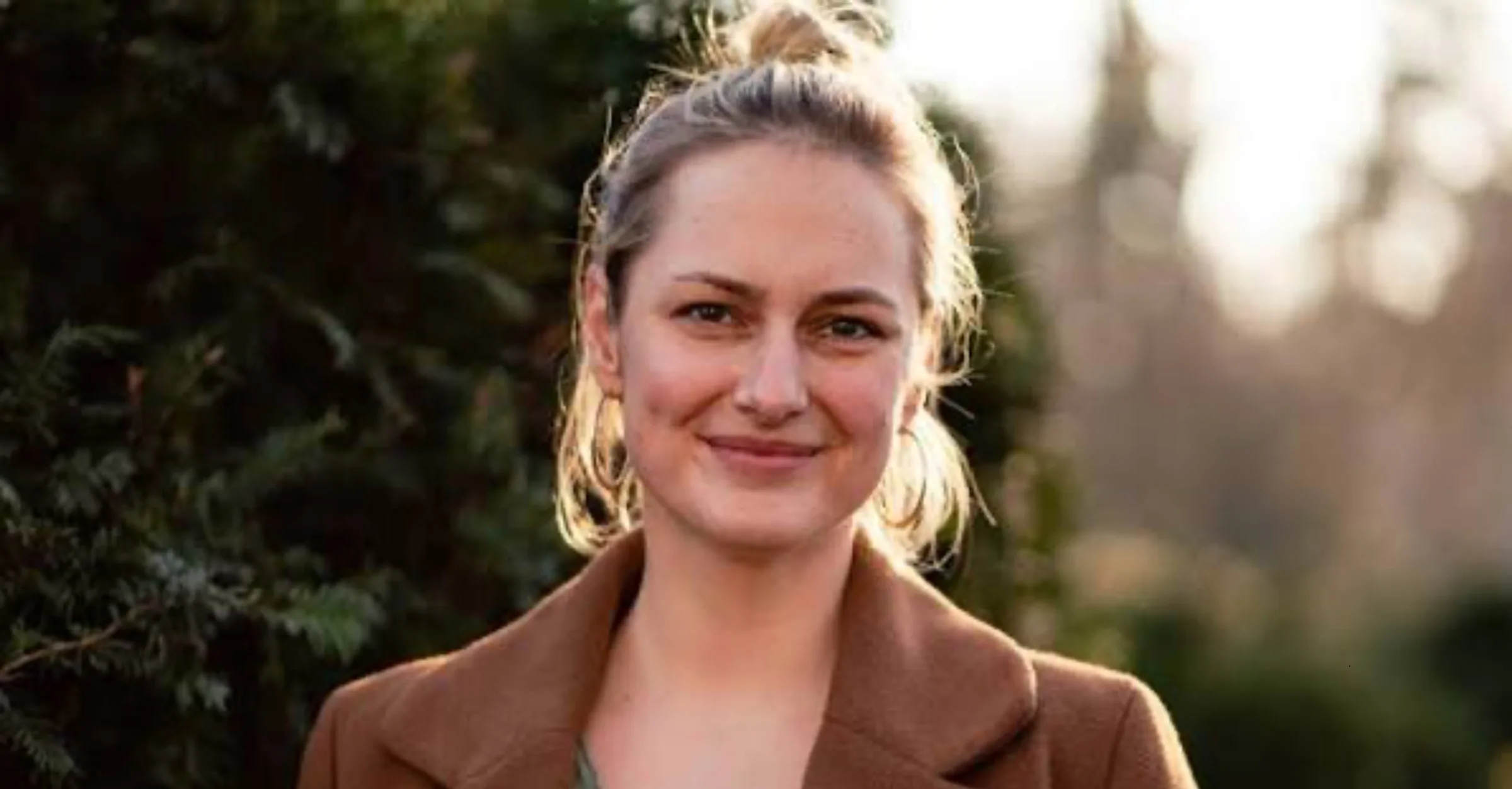
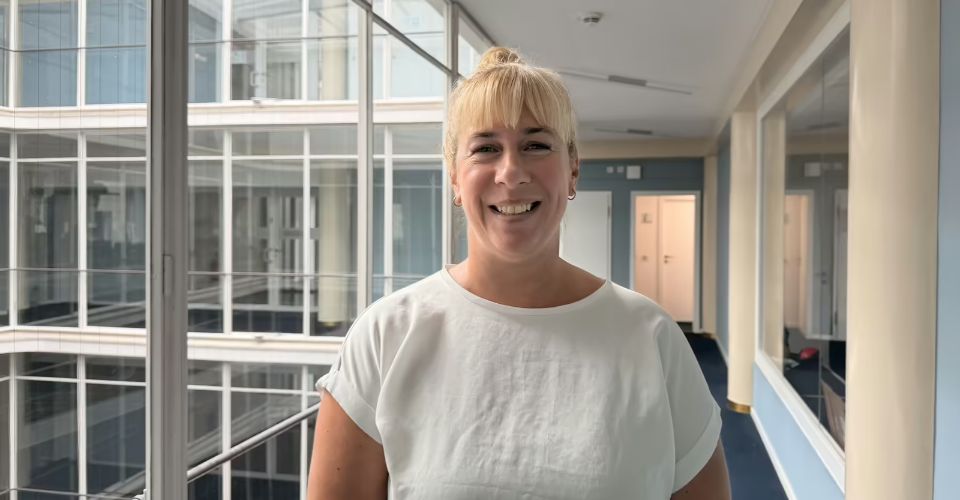
Because sociologist Sabine Diabaté(who has headed the Family research group at Germany’s Federal Institute for Population Research, or BiB, in Wiesbaden since 2012)often felt lonely herself as a mother, she investigated the issue scientifically and identified structural reasons.
On the weekly podcast “Himmelklar,”produced jointly by the Catholic outlets DOMRADIO.DE and katholisch.de since 2020, she explains what the churches could do about it.
Diabaté, a sociologist, mother, is the author of the book “Mutterseelenallein” meaning “all alone, soul and all” — a German idiom for profound loneliness.


When we hear the words “mother” and “motherhood,” we don’t initially think of “loneliness”…
No, in fact, loneliness is usually the very last thing that comes to mind for other people when they think about motherhood. It sounds paradoxical that a mother could be lonely, since she is constantly surrounded by her child or children. So at first glance, it doesn’t seem logical.
But if we look more closely, the transition to motherhood is an epochal upheaval in a woman’s life.
From the moment the child suddenly becomes part of her life, she can maintain the relationships she previously cultivated at work and in her private life only to a greatly reduced extent. This change is profound, and no childbirth preparation course prepares you for it.
Mothers are constantly surrounded by people, have to communicate and organize things all the time. And yet they repeatedly feel lonely — you have also demonstrated this scientifically — and in extreme cases, very lonely. How does that fit together?
We live in an era of highly compressed biographies.
We experience a great acceleration at work; there is digitalization, all the demands and the various roles that we as women fulfill and inhabit in everyday life. When the role of mother is added to that, it leads to an extreme lack of time for many women.
They are primarily responsible for their child and for all the organization that comes with it, the visible work as well as the invisible work — thinking ahead, planning and organizing.
This lack of time also leads to exhaustion and a lack of relationships. Meaningful friendships are difficult to nurture and maintain, especially when children are small.
The topic of “lonely mothers” is probably also a taboo because it does not fit our idea of mothers who are completely absorbed in love for their children and constantly immersed in tenderness and affection. To what extent does a romanticized image of motherhood also play a role?
That is an important point. Romanticization runs counter to this suffering and exhaustion among mothers. The exhausted mother or the lonely mother really does not fit our image of motherhood at all.
Our image of motherhood, at least here in Germany, but also in many Western industrialized countries, is shaped by presence, affection and happiness, and by being completely absorbed in this role.
In Germany, this sometimes goes so far culturally that even today a significant proportion of people consider a woman’s life fulfilled only when children are involved.
The connection between woman and child is, in the eyes of many, a veritable promise of salvation. This cultural ideal leads mothers to feel ashamed when they experience negative feelings such as loneliness and exhaustion. That is why it is so difficult to talk about it.
In your book, you bring together many social and individual approaches, for example, to achieving a better balance between family and work. But what specifically can the churches do to help mothers feel less lonely? After all, the churches have made their commitment to families, mothers and children a major priority. What do you find good and helpful about what the churches offer?
The churches have a central role to play. In Germany and beyond, we have a very good network of churches.
The churches have created their own internal social infrastructure; there are places of encounter run by the churches everywhere. These include, for example, parish halls or, under Catholic auspices, day care centers, schools and nursing homes.
When it comes to intergenerational dialogue, for example, such places can be used to combat the loneliness of mothers and elderly people together. This well-developed infrastructure makes many other offerings possible.
I am thinking, for example, of parent-child cafés and similar places of encounter that are open on certain days, where people can come together and simply meet for a coffee, tea or water, where they don’t have to pay anything. These are valuable activities in parishes.
Of course, worship services are also important, including as places where people can meet one another.
However, I would like to see more family-oriented offerings there; parents are rather reluctant to take a baby or toddler with a strong urge to move around to a high Mass. This is an area where churches could certainly become more child-friendly.
That brings us to suggestions for improvement. What is missing from what the churches offer? What could be done better?
I would actually like to see even more opportunities for participation in Sunday worship services; churches could be made even more child-friendly.
In some places, there are already drawing, reading or cuddling corners in the church where people can spend some time with their child in a more separate area while still being able to follow most of the service.
Such offerings are very important, and I would like to see them available everywhere, including in large churches so that churches become places people are happy to go to even with small children, without having to feel that they are disturbing others.
The model of parent-child cafés is really good; there are some great examples. It would be great if they became even more widespread.
In the parishes, we have family centers that are already well connected and that bring together services for life and family counseling in one place.
Here and there, I have the impression that all of this could be promoted even better, so that more mothers become aware of everything that is available.
So that loneliness is not only fought but tackled at its roots through prevention. Another thing that comes to mind are so-called drop-in programs, meaning low-threshold services.
In Hesse, for example, there are these drop-in programs offered by the Karl Kübel Foundation for Children and Families (a foundation based in Bensheim, Hesse, founded in 1972, whose “Drop In(klusive)” program runs free walk-in meeting points for parents of young children), where Catholic family centers are often also involved.
You can simply go there without registering, you don’t need any money, you just show up and meet other mothers. There are also professionals there with whom you can talk personally about problems. I believe that in things like this, the Church is still in the pole position.
You also advocate de-ideologizing motherhood. For centuries, the churches tended to promote conservative gender roles; we have only seen a cautious shift for about 50 years. Where do you see potential for development in this regard, particularly for the Catholic Church?
We always learn from role models, from what we see.
When we are in church, we look toward the front. Then we look at the altar servers: Are there girls and boys? We look at who is standing at the altar. Are there women there too? Do these women have a meaningful role or a speaking role?
These are all images that have a strong impact within the community and in our society. Here, the Church can play a leading role in advancing change and equality.
Women have always played a central role in Christian history and in the Bible as well. If that were reflected even more strongly today in the churches and at the altar, I would find that wonderful. I believe there is still room for improvement.
You are currently touring the media and talking about the loneliness of mothers because your book “Mutterseelenallein” has just been published. Do you see this as an opportunity to raise awareness of an issue that many people are not even aware of yet?
That is the intention of my book. I wanted to raise awareness; of course, I also wanted to combine my personal story and the diversity of experiences of motherhood that I have had with the findings from my research and use them to raise awareness. Ideally — and this is of course my great hope — I want to encourage conversation and help advance the debate about equality.
It is not “just” about the mothers affected. It is about society as a whole. Why?
Loneliness is the most undemocratic feeling one can have because it is associated with withdrawal, with a lack of connectedness and closeness, and ultimately also solidarity.
A society is based on a sense of community, togetherness and closeness; that is why loneliness is such a problematic feeling.
As a researcher, I also find mothers particularly interesting to observe because motherhood provides a good reflection of all the imbalances in our society. And it shows very clearly how difficult social participation is when one has caregiving responsibilities.
This is a translated and edited version of the interview that first appeared on DOMRADIO.DE and has been republished with permission by Global Catholic.