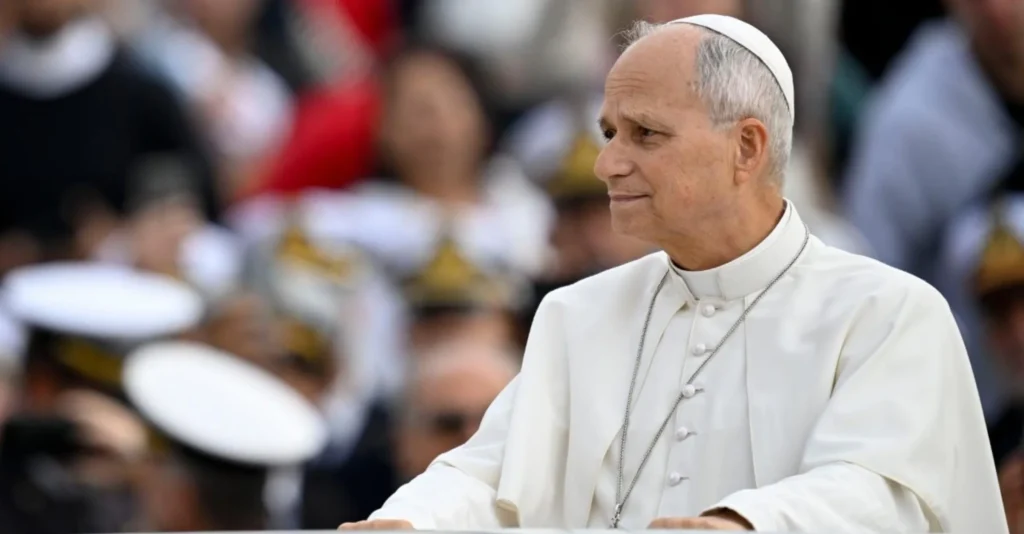

Andrew Ding Yang was ordained a bishop in the Cathedral of St. Joseph in Chongqing, southwestern China, on Sept. 8, the feast of the Nativity of the Blessed Virgin Mary.
Archbishop Joseph Li Shanof Beijing was the principal consecrator, assisted by six co-consecrators, before a congregation of about350.
Pope Leo XIV had appointed Ding on July 28, having approved his candidacy under the terms of the provisional agreement between the Holy See and the People’s Republic of China.


Ding turns 45 on Sept. 16, and he was born in a district of the city he now governs. Seminary in Beijing; a year of pastoral training; ordination to the priesthood in 2007; theology in Macau; two years as a formator at the National Seminaryin Beijing; a year of study in Rome; then four parishes in his own archdiocese.
The archdiocese has 120,000 Catholics and some 30 priests, an average of 4,000 Catholics per priest.
It is the ordinary career of a diocesan priest, reconstructible year by year, and it ends in an ordination in communion with Rome.
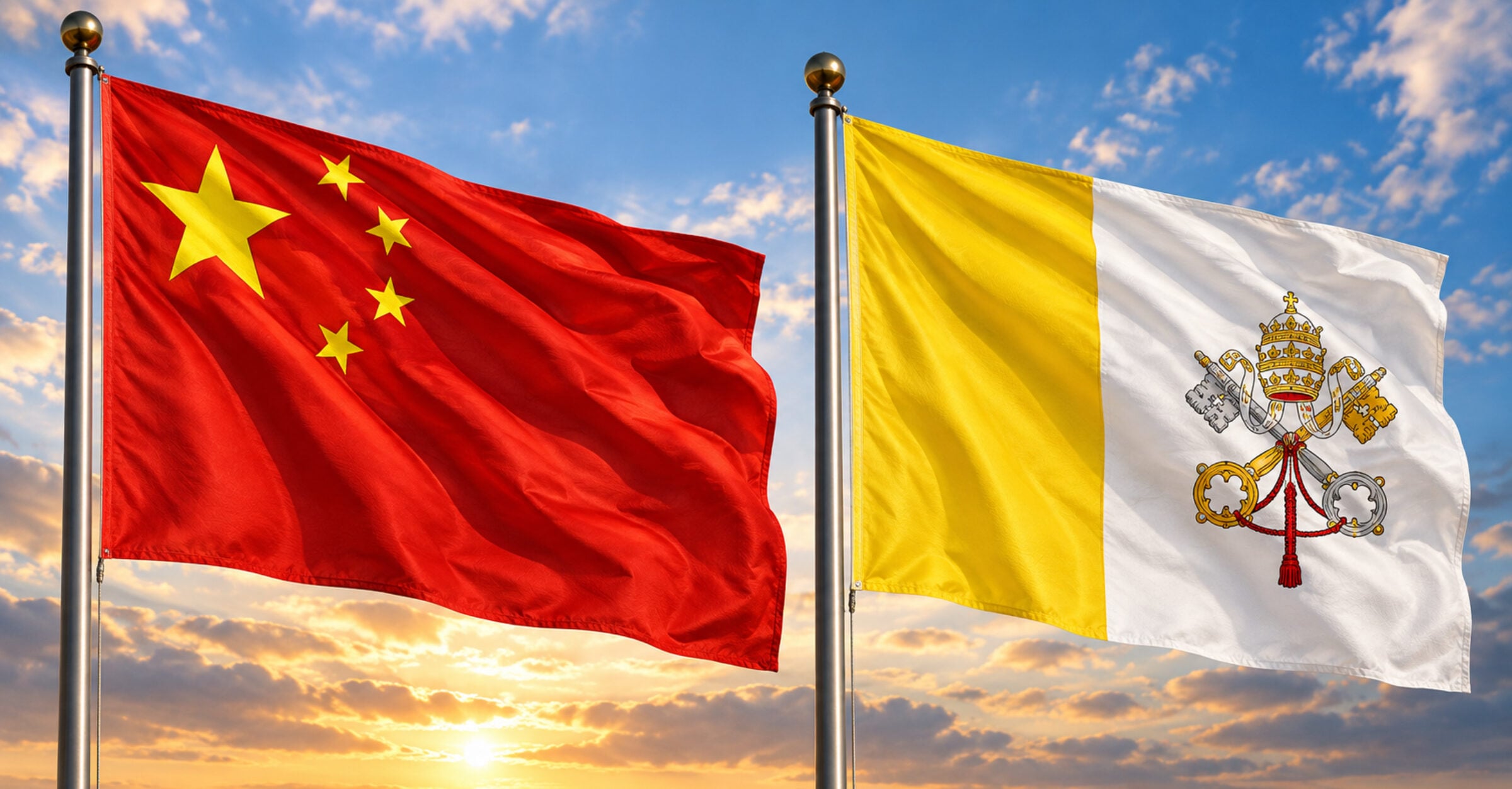
Eighteen Chinese bishops have now been ordained in full communion with the Bishop of Rome under the Sino-Vatican agreement.
Four of them this summer alone: Chifeng on July 22; Bameng on July 29; Datong on Aug. 31; and Chongqing on Sept. 8. Three of the four were born after 1980.
When the agreement was signed on Sept. 22, 2018, I wrote that it ought to be understood as the opening bars of a composition still to be written, one that would require instruments of verification.
Eight years on, verification is possible.
What is at stake touches the Church’s inner nature: the purpose of it all is to safeguard valid apostolic succession and the sacramental character of the Catholic Church in China. Measured that way, the agreement holds.
The agreement is provisional in name and in term, with a four-year extension in October 2024 and set to expire in 2028. Its strength lies in the biographies of young bishops and in the liveliness of the ecclesial communities.
At a moment when the rule is to isolate one’s adversary and shut down channels, religious diplomacy does the opposite: it keeps open the channels that politics has closed. It hands out neither victors nor villains, and it operates on a long horizon.
In 2018, I said that the agreement would also be a sign of hope and peace in a world that continues to build walls, particularly between the West and the East.
The walls have risen since.
When polarization becomes the ordinary way of handling the world, the work of building trust, of believing in dialogue, and of continuing to implement provisional agreements in the hope of making them better becomes a scarce resource, and whoever preserves it renders a service to humanity that exceeds his own interest.