





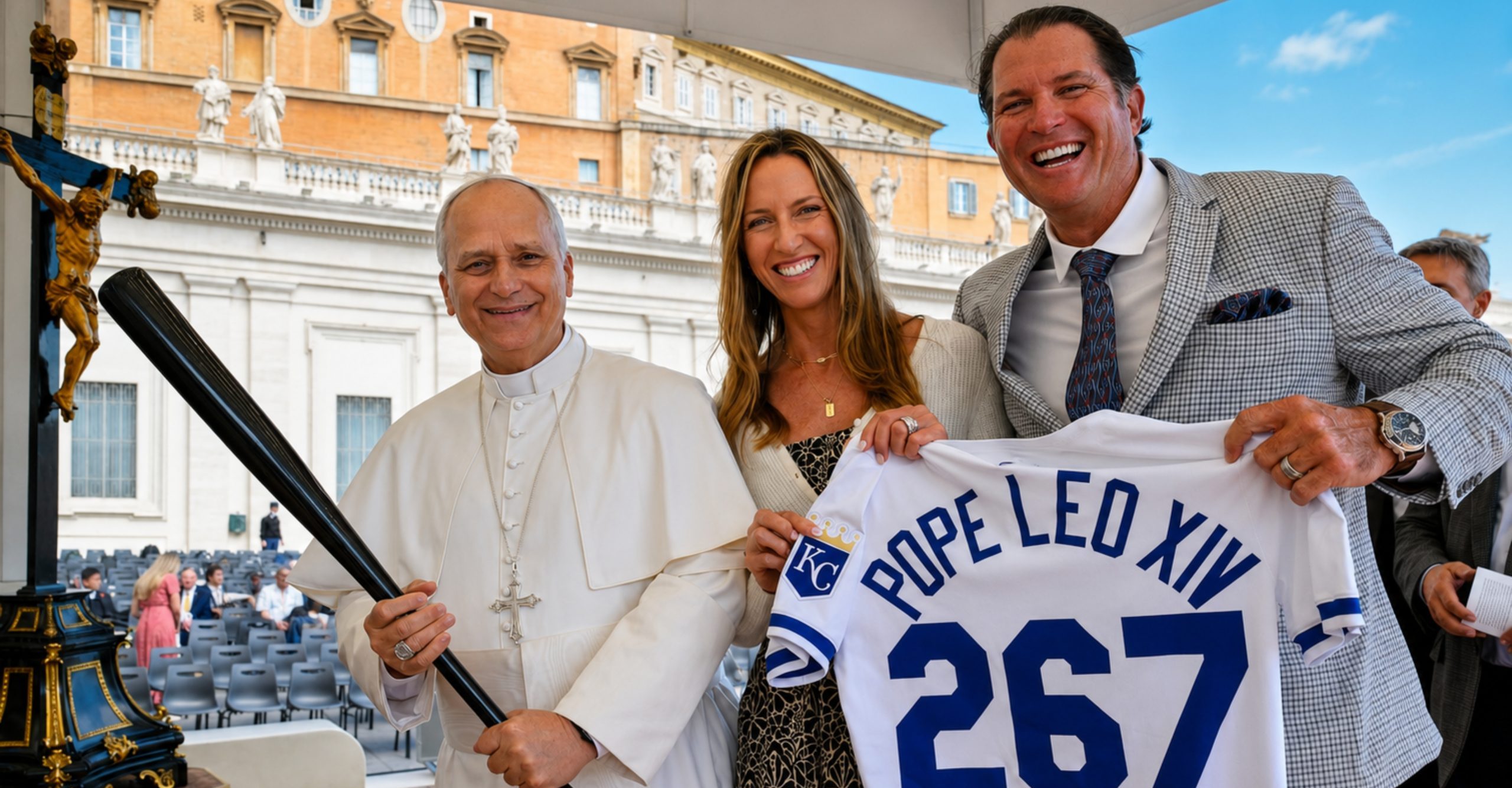
The relationship between the United States and Catholicism has often been framed in terms of an adjectival religious identity and culture: “American Catholicism.” Pope Leo’s pontificate is bringing to this relationship something new that we could call “Catholic Americanness.”
He is contributing to both the United States and the Catholic Church, at a time in which the American promise — a moral and political project — has entered a phase of renegotiation, at times violent (verbally and not only), and American Catholics are a very important part of this moment.
Leo XIV showed early the American overtones of his world map which retains some typical characteristics of classical US twentieth-century geopolitics. As he said to journalists on Dec. 9, 2025, there had been “a true alliance between Europe and the United States.”


But as his pontificate unfolds, it has become clear that for Leo’s understanding of Catholicism the relationship between Europe and America is more than a political alliance.
We saw more of his Catholic Americanness in the last few days: on July 3 when he received the Liberty Medal, bestowed by the National Constitution Center in Philadelphia and on July 4 when he visited the island of Lampedusa in the Mediterranean, the most important point of entry for African migrants attempting to reach Europe.
In his July 3 address for the acceptance of the Liberty Medal, Leo reminded both Americans and Catholics of the contribution of the United States to religious liberty as enshrined in the First Amendment (1791) of the United States Constitution (1787):
“It is this freedom that holds sacred the inner sphere of the person where convictions are formed and where conscience can guide the decisions made in the intimacy of the human heart. This same freedom also ensures the right of every person to worship according to one’s own belief, and of individuals, communities and associations to give public expression to their faith. In fact, religious freedom gave rise to the American tradition of allowing for interfaith dialogue and interreligious cooperation in promoting the public good and enriching the debates on the great moral and ethical issues that have faced the nation and shaped the course of its history. It is my hope that this tradition will continue to bear fruit in a public discourse marked by moderation, respect for the views of others and an ongoing effort to find common ground in promoting the cause of peace and reconciliation, at home and abroad.”
Why Leo chose to travel to the island of Lampedusa
On July 4, Leo XIV sent a letter (dated June 25) to all Americans to celebrate the United States’ 250th anniversary: “May this milestone renew the shared commitment to the promise of freedom, justice, opportunity and democracy.”
Leo chose to spend that July 4 on the island of Lampedusa. The choice of time and place was a clear message that the first US-born pope sent to the United States celebrating its 250th anniversary on that day.
But the words Leo chose for his homily during the Mass in Lampedusa were also a message from an American to Europe:
“From this far-flung corner of Europe on the Mediterranean Sea, one can more clearly perceive the momentous challenge that the phenomenon of migration poses to European societies. In this regard, just as with the ecological transition and the promotion of peace, Europe possesses a unique potential, stemming from its history and culture, and therefore bears a corresponding responsibility. Thanks to its geographical location and institutional framework, Europe is capable of addressing the crisis — in this region — in a comprehensive manner, integrating immediate relief efforts into a long-term strategic plan capable of receiving, protecting, supporting and integrating migrants, while at the same time assisting developing countries so that no one is forced to emigrate.”
Leo’s election has been interpreted as a message to Trump’s America, and this element is undeniable.
The pontificate of an American pope coincides not with the emergence of a post-American world, but with a situation in which the United States is still central but has become the primary source of instability, even for Europe and the West. It is a consequence of Trumpism but also of a more general crisis of faith in the possibility of living together.
But this is a European problem too. It is not just a consequence of immigration, but of a deeper sense of disillusionment in the promises of secular modernity. Pope Leo acts as an honest broker in this phase of renegotiation of political and religious identities — in Europe and in the United States, and between Europe and the United States.
On both continents, Catholicism is subject now to processes of “culturalization” (see self-identified “cultural Christians” like Elon Musk) and instrumentalization that are contrary to the catholicity of the Church’s message and testimony.
On both continents, politically militant Catholics often harbor a sense of moral superiority over brothers and sisters in faith on the other side of the ocean: this growing gap in transatlantic Catholicism is one of the para-schismatic situations that is subtler and more insidious than the SSPX’s formal schism.
As historian David Armitage brilliantly argued in his book The Declaration of Independence. A Global History, the Declaration of Independence on July 4, 1776, was also — if not primarily — a dual “declaration of interdependence” between the United States of America and “the powers of the earth.”
In this interdependent relationship, Catholics sat always somehow uncomfortably also because of their awareness of the intimate and at the same time competitive relationship between the ecclesiology of “one, holy, Catholic, and apostolic Church” and the unstated but very visible ecclesiology of the United States as an act of faith — not necessarily religious faith, but certainly an expression of moral beliefs.
Now that interdependence is at risk, repudiated at home and resented abroad. It’s something that became very visible with Donald Trump, but actually was already contentious before that, especially after Sept. 11, 2001.
A quarter of a century after that caesura, the first pope from the United States can recover that sense of interdependence between America and the rest of the world.
Pope Leo is reclaiming a catholic idea of America
“American Catholicism” implied the process requiring or pressuring Catholics to “Americanize” while at the same time they were contributing to the evolution of the idea of America.
Pope Leo’s pontificate is bringing to this relationship something new. The “Catholic Americanness” of Pope Leo is certainly a product of American Catholicism.
But now the pontificate of the first pope from the United States is a reminder to both Americans and to Catholics around the world — and Europeans in particular — that in the foundations of the American project there is an element of catholicity in the sense of universality.
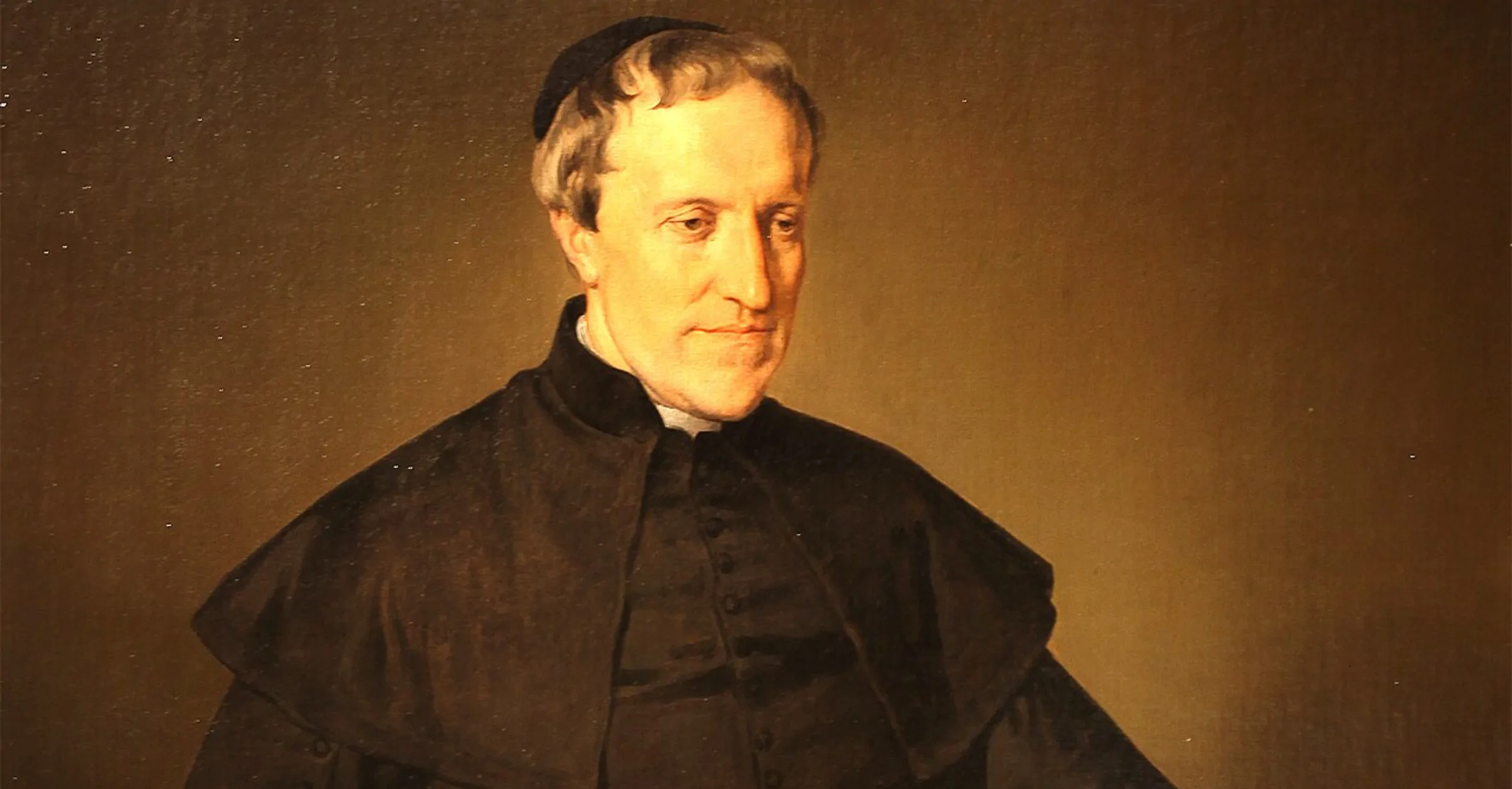
Robert Prevost, now Leo XIV, is not the first Catholic theologian to do this. John Courtney Murray did so in his 1960 book We Hold These Truths, and popes since the Second Vatican Council, including Pope Francis in his Sept. 24, 2015, address to Congress, have advanced similar themes. It is more difficult for Leo as he must deal with the MAGA movement, but he can do it as the first pope from the United States.
Leo does not use the language of “exceptionalism,” but he made clear that America’s anniversary is worth celebrating — not because it is richer, stronger, or more powerful than everyone else, but because of the political ideals upon which it was founded.
As Leo wrote in his July 4 letter to the American people: “Freedom of religion has long been central to the American promise, protecting both individual dignity and the peaceful coexistence of a diverse people. This same freedom has permitted the Catholic Church to take root and flourish within the United States, to the advantage not only of her own members, but of the entire nation”.
By going to Lampedusa, Leo XIV challenged Trump with his own counterprogramming of the July 4 celebrations.
But a careful reading of the last week’s events shows also that Pope Leo is reclaiming, through his Americanness, a catholic idea of America. It is a reminder of what America promised, to Americans and to everyone.











1 Comment
Paula Ruddy
July 10, 2026Thank you, Massimo. Your insights are priceless.