Votes are still being counted in many parts of the United States. Consequently, the official final results have not yet been determined.
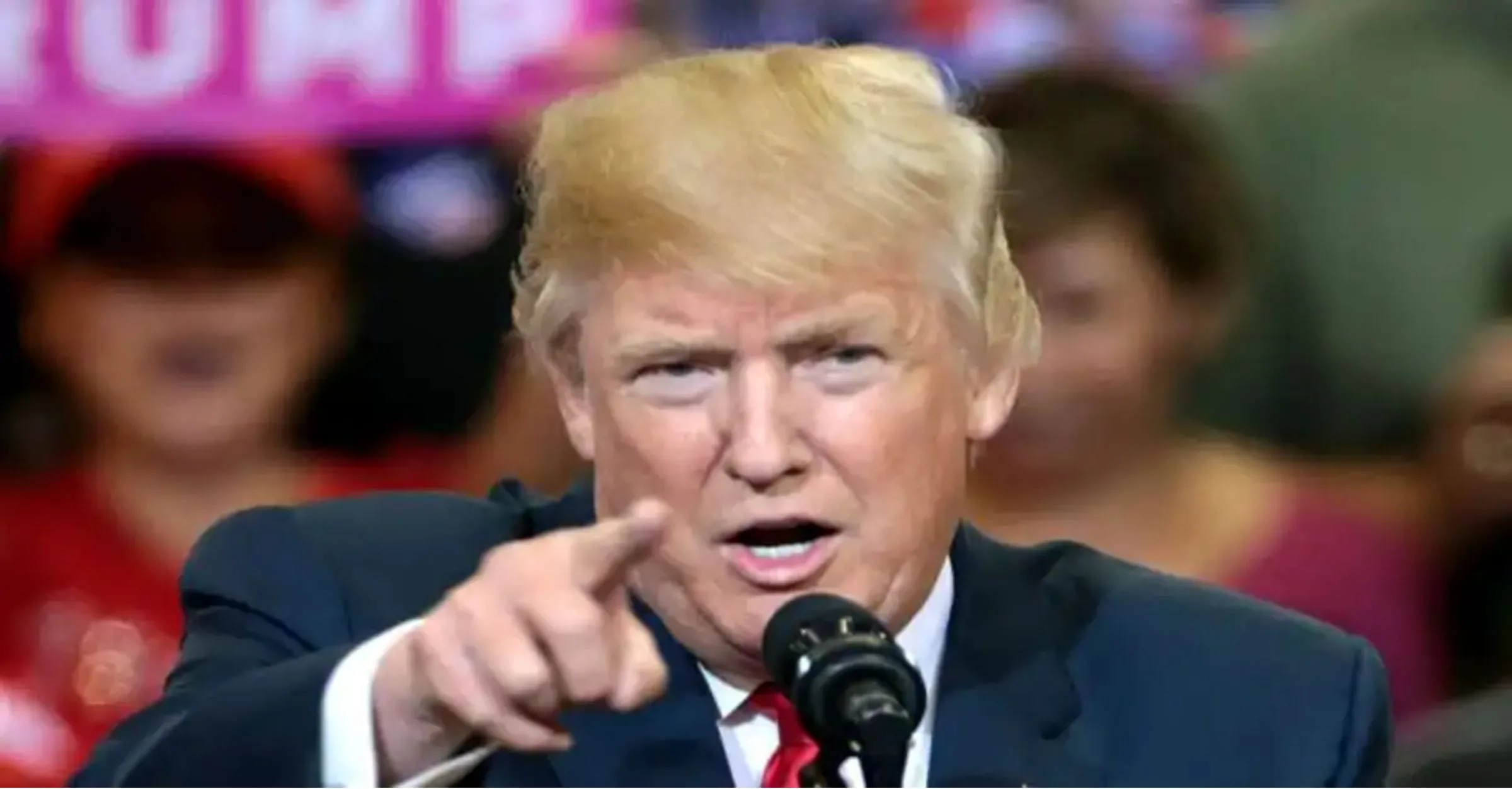
But it is already clear that Donald Trump lost yesterday’s midterm elections.
In both chambers of Congress, the House of Representatives and the Senate, the opposition Democratic Party appears to have made significant gains — confirmed by multiple U.S. outlets, including the Associated Press, which called both the House and Senate for Democrats, giving the party full control of Congress.


The result has even been described as a so-called “blue wave.” By contrast, the Republican Party suffered a substantial loss of support nationwide.
This is hardly surprising. After all, Trump had urged voters to act as though his name were on the ballots. In doing so, he turned the midterm elections into a referendum on himself and his policies.
Given his historically low approval ratings, this was a serious mistake.
The president had two years to bring down the high cost of living, which had been a problem for a long time, and develop a convincing economic policy. Neither happened.
Instead, he imposed arbitrary tariffs and alienated even close allies. He also launched a war with Iran without any discernible strategic objective.
(he conflict and its criticism from senior U.S. Catholic leaders — including Cardinals Blase Cupich, Robert McElroy and Joseph Tobin, who argued the war did not meet the Church’s just-war criteria — were extensively reported in spring 2026, as reported by CBS News and Catholic World Report.
The cost of living rose even further as a result of the war. In addition, many Americans, particularly the millions of Latinos, were appalled by the brutality with which the Immigration and Customs Enforcement agency (ICE) — the federal agency responsible for immigration enforcement within the U.S. — sometimes operated.
The U.S. Conference of Catholic Bishops has also repeatedly voiced criticism on this issue.In November 2025, the conference issued a rare, unified rebuke of what it called the “indiscriminate mass deportation” of migrants, as reported by OSV News.
‘Trump Has Hurt Himself’
Through all this, Trump has hurt himself. He will now have to deal with new majorities in the Senate and the House of Representatives. This will make it very difficult for him to get his agenda through Congress.
The Democratic Party can exert pressure on him and advance its own priorities, particularly through its authority over the budget, which rests with Congress. With the presidential election scheduled for late 2028 in mind, it will certainly do so.
After all, the party needs to build a stronger political profile by then. Finding compromises will therefore be a challenge.
But Trump’s policies over the past two years have not only harmed him personally, earning him a political rebuke at the polls. They have also dealt a major blow to his party, as Republican candidates lost even in conservative states.
For the first time since 1932, a Democrat — Adam Hamilton — won a Senate seat in rural Kansas, defeating Republican incumbent Roger Marshall, as reported by NPR and The Washington Post.
In Texas, too, a Democrat prevailed — state legislator James Talarico, who defeated Republican Attorney General Ken Paxton, for the first time since 1988, as reported by The National.
A debate is likely to erupt within the Republican Party soon over the direction it should take.
Clearly, Trump’s approach has failed. His MAGA movement — short for “Make America Great Again,” the political movement built around Trump’s personal brand of populist conservatism — which was already held together only loosely, will therefore face turmoil.
What Does the Democratic Party Stand For?
At the same time, the Democratic Party will have to clarify what it actually stands for.
Until now, pointing to the administration’s mistakes was almost enough. Now it must put forward concrete positions on immigration and economic policy and present fully developed legislative proposals.
It also remains to be clarified what kind of social policy the party wants to pursue. Should abortion rights, for example, be liberalized again nationwide? Many in the party are calling for this, citing women’s right to self-determination.
However, this would reignite the so-called “culture wars,” which have recently subsided.
New conflicts with the Catholic Church, which regards the protection of human life as a central concern, would be the consequence. Yet it is so important to reduce existing polarization rather than intensify it.
Regardless of who will soon occupy seats in the Senate and House of Representatives, there is one major winner of yesterday’s elections: American democracy.
Contrary to some fears, the midterm elections proceeded both peacefully and in accordance with the law. President Trump has already announced that he will accept the results. While this should go without saying in a democracy, it illustrates just how tense the current situation is.
Nevertheless, despite some challenges, the U.S. political system remains stable. The system of mutual checks and balances among the branches of government is working.
There can be no talk of an authoritarian transformation of the state. In any case, there is hope that the next two years will see constructive cooperation between Congress and the president in Washington — in the interest of the common good.
This is a translated and edited version of the column that first appeared on DOMRADIO.DE and has been republished with permission by Global Catholic.