Imposing and somewhat surreal — that’s how the facade of the main church of the former Bridgettine Monastery in Tallinn rises above the surrounding trees.
Just a few meters away, the bell tower of today’s monastery points skyward like a finger.
The original double monastery for women and men, built in the 15th century, was already destroyed in 1577, when troops of Russian Tsar Ivan the Terrible sacked and burned it during the Livonian War.


The current Bridgettine Monastery has existed on the site since 2001 and is celebrating its 25th anniversary this autumn.
A small community, an international one
“For centuries there were no Bridgettines here anymore. All the nicer that we can now mark an anniversary at this historic site of ours,” says Sister Gennarina Puttampura.
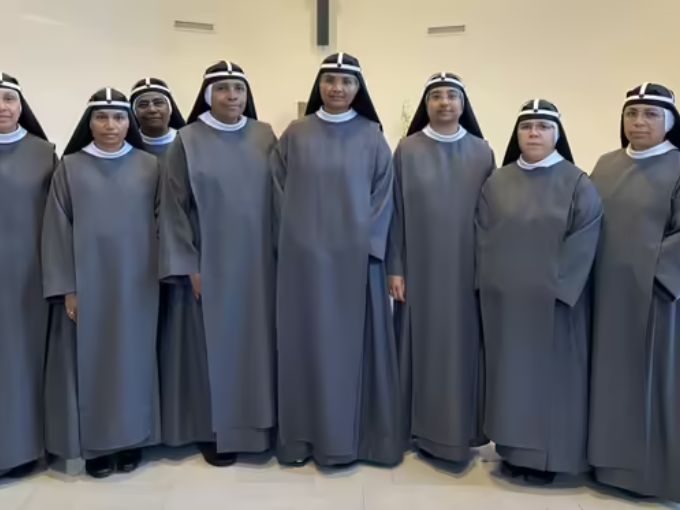
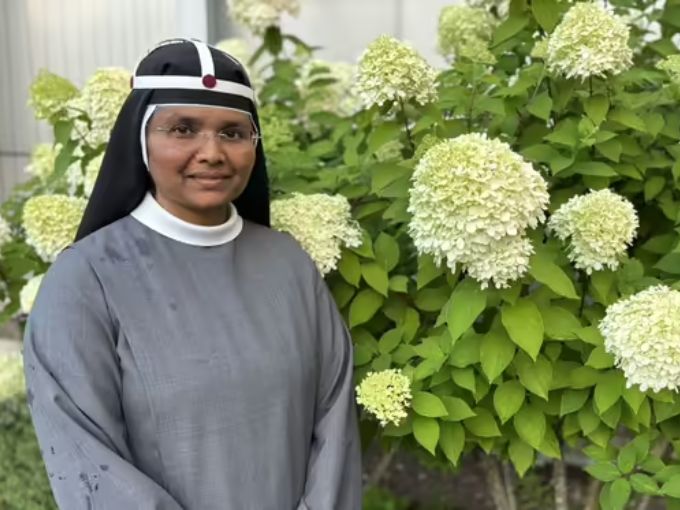
The 43-year-old has been superior since March 2026 of the eight-member community, which belongs to the Order of the Most Holy Savior — as the order officially founded by St. Bridget of Sweden is known.
St. Bridget, a 14th-century Swedish noblewoman and mystic, founded the order that bears her name; it is commonly known today as the Bridgettines.
Five of her fellow nuns, like herself, are from India; two are from Mexico.
Among themselves they speak Italian, because they all spent time at the order’s mother house in Rome and that is the language they can most easily communicate in — even the Indian sisters do not all share the same mother tongue.
A house of prayer that is also a guesthouse
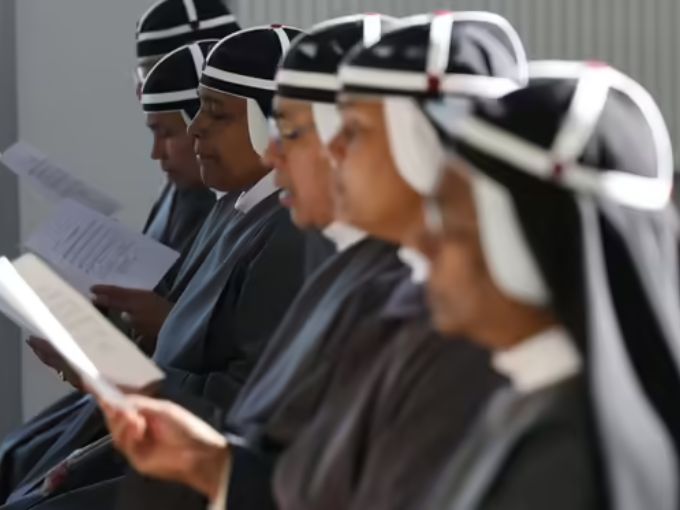
Sister Gennarina says their monastery is, of course, a house of prayer, with morning worship, the usual hours of prayer, and regular church services.
But the monastery, in Tallinn’s northeastern Pirita district — a name that itself derives from “Brigitta” and recalls the monastery ruins — is also a well-frequented guesthouse.
“That fits perfectly with our charism of hospitality,” she says. The sisters offer 20 rooms, usable as singles, doubles or triples.
“Everyone is welcome here, quite genuinely, regardless of religion or denomination,” Gennarina explains — reflecting, she notes, the Bridgettine sisters’ particular concern for ecumenism.
Because the sisters finance themselves largely from the guesthouse’s earnings, they are glad their rooms are booked full above all in spring and summer; more retreat groups and individual visitors in search of “time out” come in autumn and winter, the nun says.
“In the second half of the year, we have more time left for contemplation” — because when many guests are visiting, the sisters have their hands full.
Just eight of them do all the work in the kitchen, house and garden; only the couple who run the convent’s small Caritas office help out, weeding, mowing the lawn or harvesting vegetables.
Caritas is the Catholic Church’s international network of charitable and social-aid agencies.
A green oasis on the edge of the Estonian capital
Visitors treasure the guesthouse as a green oasis on the edge of Estonia’s capital, the mother superior says.
Even though a four-lane road rushes by just a few meters in front of the house, wide-crowned trees surround the monastery, and the garden invites strolling between fruit and vegetable beds, along the fence toward the monastery ruins, where even wild grapevine grows.
Pirita’s sandy beach — Tallinn’s largest — is only a short walk away. “And since the Baltic Sea lies to our west, we often get beautiful sunsets,” the sister says admiringly.
Gennarina, together with the other Bridgettines, also likes to hike along the sea and through the pine forest that borders the coast.
The sisters, in their distinctive religious habit — most notably a crown of white linen strips with red dots worn over a black veil — stand out immediately when they are out and about, and are simply part of the neighborhood. “People seek our closeness; they like to come visit us.”
A tiny minority in one of Europe’s most secular countries
That is worth noting for a particular reason: Estonia today ranks among Europe’s most secularized countries; the Catholic Church counts an estimated 10,000 members among 1.3 million inhabitants, making it a truly small minority.
“In the beginning, it wasn’t easy for our sisters to get a foothold here again,” Gennarina says.
The Bridgettine nuns only returned to Estonia in 1994 — three years after the northernmost Baltic state’s independence, and after decades of suffering as a forced part of the Soviet Union.
Before the current monastery was built with help from Bonifatiuswerk, a German Catholic charitable organization that supports the Church in religious minority regions, the sisters lived and worked in Tallinn’s old town.
The return in 2001 to their roots and breathing new life into monastic life directly beside the ruins of the former monastery was, of course, of the highest symbolic significance, Sister Gennarina says.
She recalls that they see the impressive remains of the former monastery day after day. Long since, she says, the people here — not only Catholics — have grown accustomed to them.
“In our choir, Baptists, Lutherans, Orthodox and Catholics sing together,” the nun says with delight. That shows a great deal, she adds, even though not everyone who joins their gatherings attends their own Catholic congregation.
“They find the way we live our faith attractive. That’s what they always tell us,” Gennarina says.
She is still moved every time she sees a Lutheran kneel before the Blessed Sacrament or pray the rosary. “What connects us is so much more than what separates us!”
Hospitality toward the poorest and most vulnerable
The sisters live out their hospitality also by helping the poorest of the poor.
They regularly let homeless people stay overnight at the monastery, provide food to those in need, and have repeatedly offered shelter to Ukrainian refugee families.
Their doors are also wide open to people struggling with mental health problems.
“Especially people with depression feel at ease with us — they’re simply looking for a smile, a little human closeness,” Sister Gennarina says.
Fundamentally, she explains, they want to be there for anyone who feels worn down by everyday life, whether at work or at home.
A small but growing church
The Bridgettine sisters say they experience immense joy when they witness a well-attended church service. Easter and Christmas services organized by them are hopelessly overcrowded.
“Our Catholic Church here is tiny, but it’s growing. It has been for years,” the mother superior says. “Our Bishop Jourdan always says that we sisters are the driving force of this church.”
Philippe Jourdan, a French-born prelate who has lived in Estonia since 1996, led the Catholic Church there as apostolic administrator from 2005 and became the first bishop of the newly created Diocese of Tallinn in 2024.
Pope Francis liked hearing that, too, when he visited Estonia in 2018.
His official itinerary for that Sept. 25, 2018, visit included lunch with his traveling delegation at the Bridgettine sisters’ convent in Pirita — during which, the sisters recall, he had himself photographed among them.
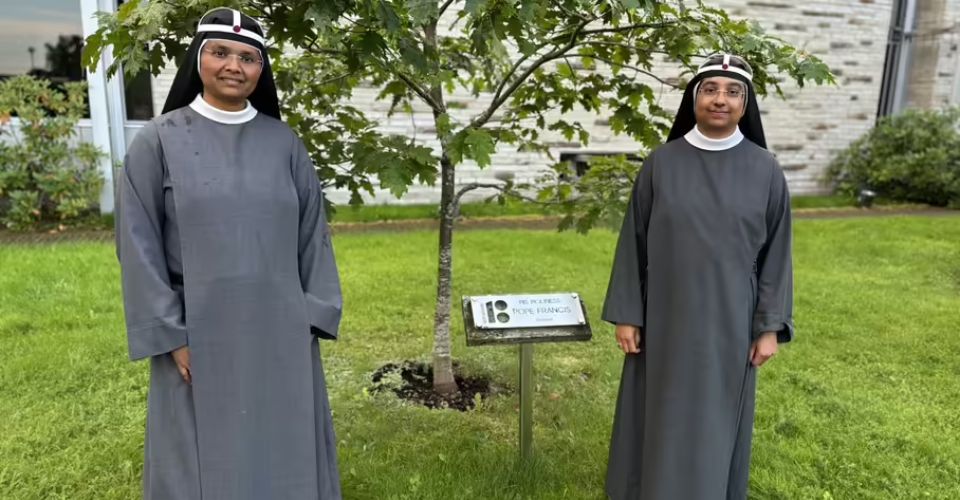
The American oak that Francis planted that day in front of the monastery gate has since, the sisters say, grown considerably.
This is a translated, edited, and expanded version of the feature that first appeared on DOMRADIO.DE and has been republished with permission by Global Catholic.