




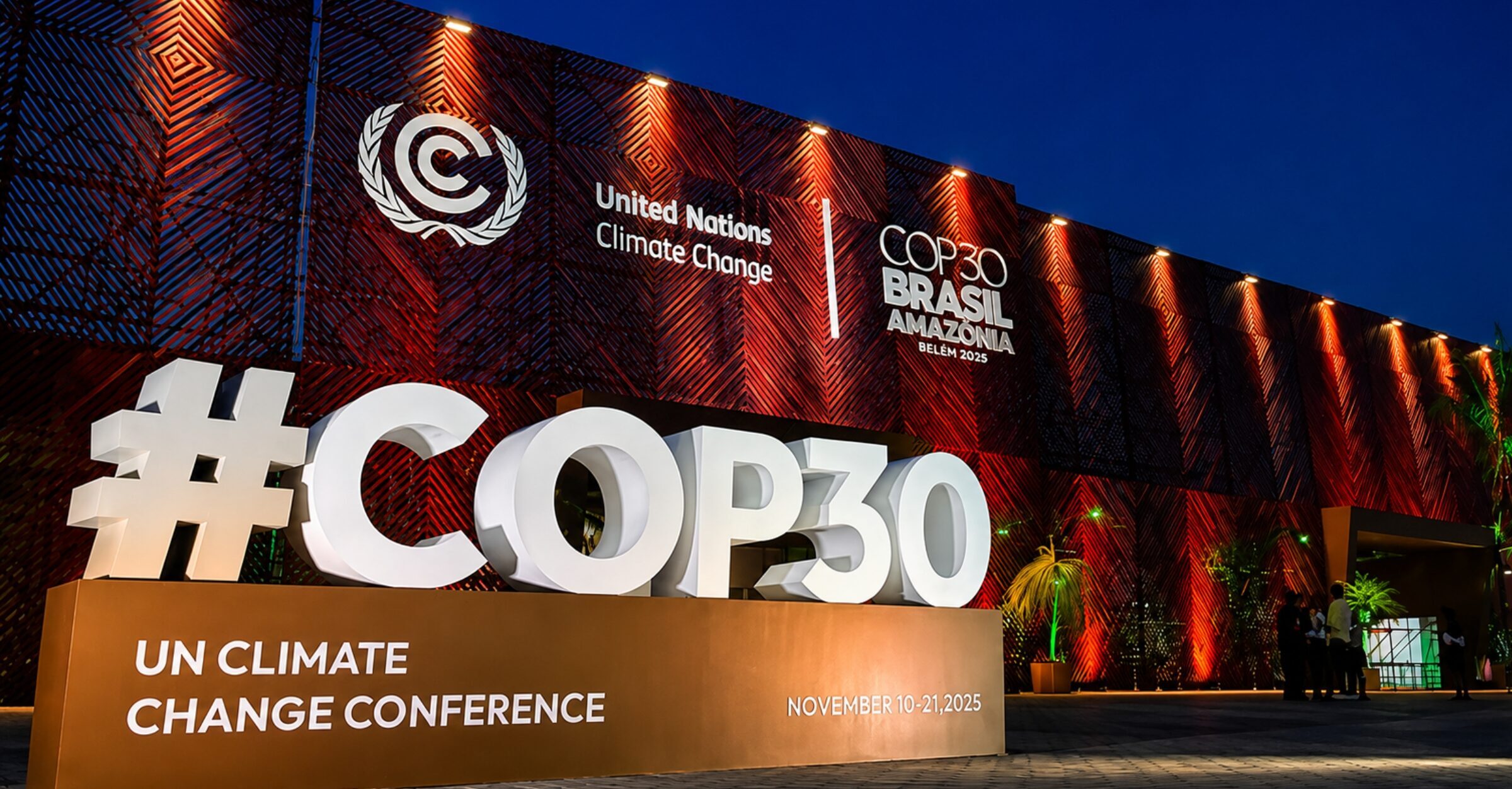
At variance with Catholic social teachings and Pope Francis’s specific magisterial vocabulary on “Care for Our Common Home,” and mercy and compassion in all relationships, the Holy See (and a few recalcitrant governments) opposed the adoption of the Belém Gender Action Plan (BGAP) at the 30th Global Conference of Parties (COP 30) on Climate Change in Brazil in November 2025.
Central to this resistance were the Holy See’s two foundational anxieties. It opposed the term “gender,” viewing it as masking “gender ideology” that legitimizes sexual orientations and gender identities beyond the traditional male-female binary, thus contesting the Church’s heteronormative, procreative framework.
The Holy See also resisted provisions on “sexual and reproductive health and rights” (SRHR), which are seen as promoting abortion and artificial contraception, thus directly undermining the Church’s pro-life stance.


First, those advocating the BGAP effectively negotiated that the Holy See became a State Party in 2022 to the United Nations Framework Convention on Climate Change (UNFCCC) of 1992 and the Paris Agreement of 2015, both of which embodied the term gender. With its allies, it could not reopen the agreed treaty language at this stage.
Theologically, the Vatican’s 2024 declaration Dignitas Infinita reaffirmed the Church’s opposition to gender theory and its commitment to the male-female binary, but it also included a crucial caveat.
The caveat explicitly stated that every person, regardless of sexual orientation, must be respected, treated with dignity, and protected from “unjust discrimination,” particularly violence and aggression.
While maintaining its traditional doctrine, Dignitas Infinita officially codified a mandate for the Church to protect queer individuals from discrimination and harm.
However, by withholding consensus on the term gender in the BGAP, the Holy See effectively allowed abstract doctrinal purity to supersede the immediate, physical protection of people with different sexual orientations and gender identities, as well as of women and girls.
The Holy See’s opposition to the BGAP also contradicts its defining ecological encyclical, Laudato Si’. The encyclical establishes that the “cry of the earth” and the “cry of the poor” form one unified social and environmental crisis, driven by structural inequality, unsustainable development and moral impoverishment, that disrupts the intrinsic creator-nature-human relationship.
The encyclical also asserts that responding to the “cry of the earth” and the “cry of the poor” is a core Christian duty, while explicitly critiquing technocratic frameworks (that leave structural drivers untouched) and abstract ideological debates that paralyze action while the vulnerable suffer.
By prioritizing theological opposition over addressing systemic harm, the Holy See fails to apply Laudato Si’’s integral ecology to climate-affected queer communities.
Climate crises amplify existing socio-economic discrimination against queer people across every phase. Climate policy, planning, programming, and budgeting systematically fail to recognize queer priorities.
When emergencies strike, evacuation centers constructed around rigid binary male-female models generate hostile environments where queer individuals are often denied gender-affirming facilities such as toilets and bathing facilities and forced into such spaces according to birth-assigned sex.
❝
By prioritizing theological opposition over addressing systemic harm, the Holy See fails to apply Laudato Si’’s integral ecology to climate-affected queer communities.
In extreme cases, trans women have been turned away from shelters or detained. Furthermore, overcrowded and poorly monitored relief centers significantly heighten exposure to violence, leaving transgender women especially vulnerable to sexual assault and severe abuse.
Documents lost during disasters severely affect queer individuals. Misalignments between official identification and a person’s current name, appearance, or gender identity often result in denial of relief and recovery assistance.
Traditional, heteronormative definitions of household in disaster relief exclude same-sex couples and families by choice. Often lacking legal recognition, these non-traditional families are barred from claiming joint disaster aid, registering for emergency housing, and receiving family-level relief packages.
Healthcare breakdowns during emergencies severely affect queer individuals. Specialized care, such as hormone replacement therapy and surgical follow-ups, is rarely prioritized as essential.
Additionally, homophobia and transphobia among emergency medical staff cause critical delays in providing antiretroviral therapy for those living with HIV, as well as medical treatment for general and disaster-triggered ailments.
Globally, conservative religious and political leaders have scapegoated queer communities for “provoking divine retribution” through disasters such as the North American hurricanes, Southeast Asian cyclones, and Haiti’s 2010 earthquake. This hate speech directly fuels physical attacks, mob violence, and arbitrary arrests of queer individuals amid recovery chaos.
Disasters destroy community circuits, safe spaces, and chosen-family networks vital to queer security. When these networks collapse, queer individuals—especially youth who already face economic and housing insecurity—are forced into precarious survival sex or dangerous informal housing to meet basic needs after a crisis.
Queer individuals face discrimination when seeking new documentation for climate-related migration and displacement, both domestically and abroad.
Furthermore, formal family reunification policies in many jurisdictions narrowly define “relatives” by blood ties or legal marriage alone. This definition excludes chosen families, effectively blocking safe, legal migration pathways for queer individuals seeking to flee climate-impacted areas alongside their essential support networks.
Catholic doctrine and Popes Francis and Leo distinguish the “danger” posed by gender theory, which erases the male-female biological binary, from the pastoral necessity of accompanying and caring for people of diverse sexual orientations, gender identities, expressions, and sex characteristics (SOGISC).
International policies like the BGAP do not seek to alter Catholic theology; they are operational frameworks ensuring that queer communities survive and build resilience to climate crises.
By labeling humanitarian safeguards as dangerous “ideological colonization” and blocking them, the Holy See effectively enables the “unjust discrimination” and “aggression” that its own doctrine forbids.
Supporting the BGAP is the direct operationalization of Dignitas Infinita’s core command to protect human beings from structural violence.
In the best-case scenario, the Vatican can recast Catholic theology regarding diverse SOGISC. If not, it can maintain its theological stance on binary male-female biological sex while pragmatically recognizing that “gender-responsive action” simply means protecting specific categories of human beings most at risk.
*Dr. Jean D’Cunha is a gender expert with a continuing body of work on women’s labor migration and the links among gender, climate change, conflict, and migration. She worked with UN Women in senior management and technical roles worldwide and retired as Senior Global Advisor on International Migration and Decent Work. She currently advises the Catholic Bishops’ Conference of India (CBCI) Office for Environment and Climate Change and the Federation of Asian Bishops’ Conferences on implementing localized COP 30 outcomes (Global Conference of the Parties 30 on Climate Change).














2 Comments
Margaret Gonsalves
July 27, 2026I highly appreciate Dr. Jean D’Cunha’s intellectual ways of writing. Her Expertise on gender issues are an eye opener. Thank you Dr. Jean, love you.
Benedict Cox
July 28, 2026An acquaintance urged me to join the communist party. He explained the nature of the struggle to help the poor and marginalised. I declined to join the party, stating that I supported other movements with such objectives. I was accused of failing the poor.
Mutatis mutandis. Pax omnibus.