
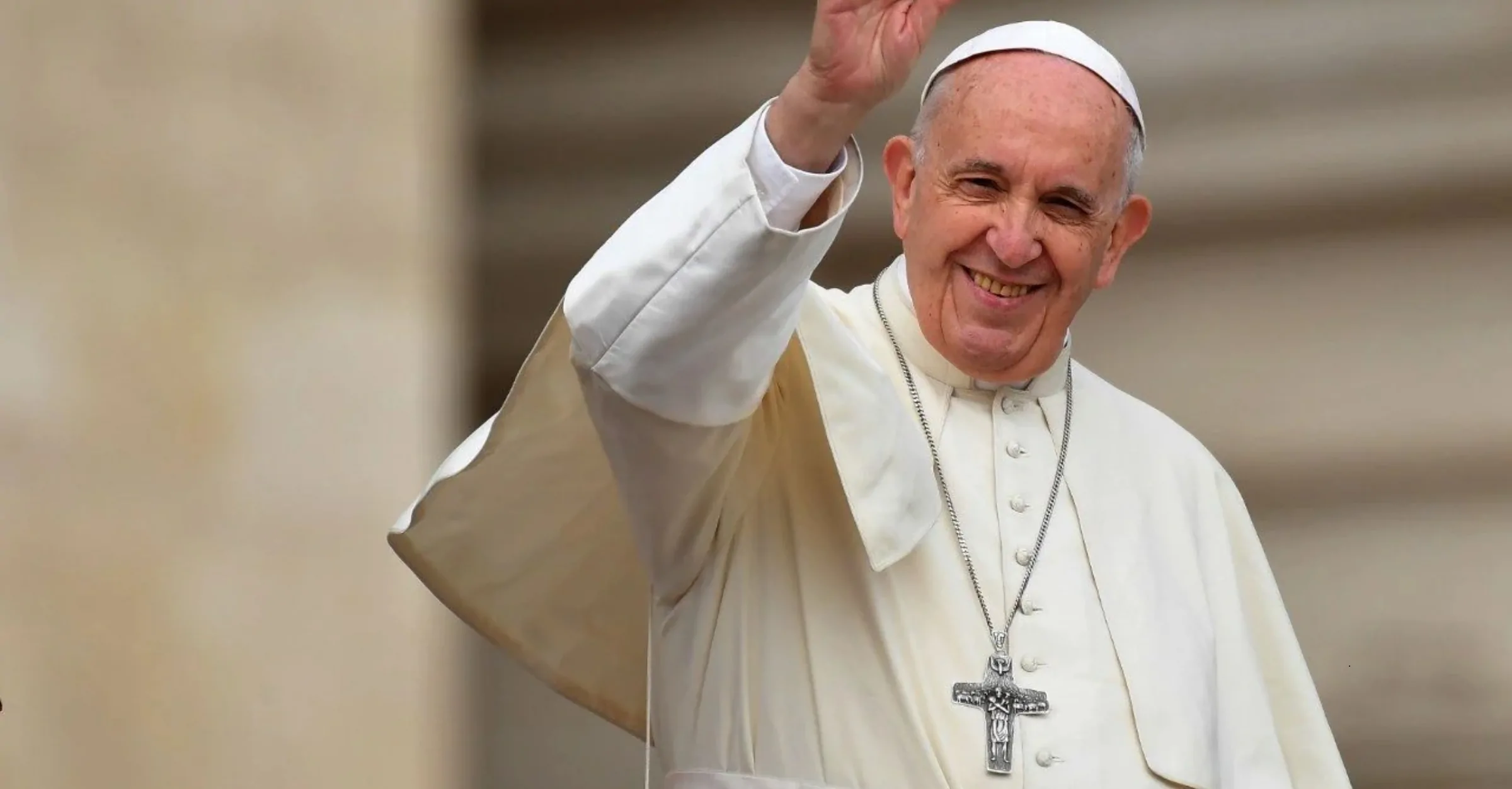
The Private Diary of Pope Francis has just appeared in five languages.
It gathers a selection of notes that Jorge Mario Bergoglio jotted down, on and off, in an old black-covered date book, from Dec. 20, 1992, when he was an auxiliary bishop of Buenos Aires, to Aug. 18, 2024.
Cardinal Víctor Manuel Fernández, who received the papers from Pope Leo XIV, chose the passages, arranged them by theme, and supplied a commentary.


The most private sections, written in Bergoglio’s own code, remain undeciphered.
The genre is as old as the Jesuits themselves. Ignatius of Loyola kept a spiritual diary; Peter Faber, one of his first companions, wrote a Memoriale. Recording the heart’s movements helps discern what comes from God.
Francis made his decisions in prayer, and more than once he explained to me, with examples, that choices others found baffling had grown out of deep spiritual experiences. The voice is the same whether he is writing as a bishop or as pope: his election appears in a single line, months after the event.
The diary shows a man who accuses himself before God. This is not low self-esteem. It is the Lord, he writes, who makes him see his own baseness, and the shame throws him into the arms of mercy, which he calls his true story.
That severity toward himself kept him from passing judgment on others. His favorite biblical passage was Ezekiel16, in which God spreads his cloak over an abandoned child.
His was the faith of ordinary believers: petitions written on slips of paper and tucked under a statuette of Saint Joseph asleep; white roses requested from Thérèse of Lisieux as a sign that a problem had passed into good hands.
There are also visions of hell and the devil. They should be read without sensationalism, in line with the Ignatian tradition, which teaches one to distinguish God from the enemy through vivid perceptions that engage the imagination.
In the diary, though, evil is always the shadow of another presence—warm and luminous. Francis writes that he felt the Lord at his side, which gave him the strength to fight.
The most insidious temptation was the one he called “reductive curiosity”: the urge to find out what it means to be like God, to the point of using other people.
No one is more exposed to it than a pope, who risks feeling he stands above the world. That is why he refused every trap of papal glory and left even those working against him in place. He did not want to become a puppet master.
The years 2021 and 2022 brought a spiritual crisis. At the end of 2022, he reproaches himself for arrogance and cynicism. Yet he senses that the Lord is showing him his own wretchedness, and he sets out again with renewed strength.
From that passage came C’est la confiance and Dilexit nos, two documents about trust in God’s love. The slips of paper under Saint Joseph, multiplied until the statuette began to wobble.
These pages reveal the mystical temperament of a pope we knew as a prophet, a man who governed the Church without yielding to the logic of ecclesiastical politics.