





At least since Vatican II, the Catholic Church has allowed women to baptize babies in emergencies.
This has implications for the debate over women deacons and priests. It also exposes a flaw in how Pope St John Paul II defended the all-male priesthood.
Sacrosanctum Concilium (1963) says ‘when a man baptizes it is really Christ Himself who baptizes.’ That implies the baptizer is a solitary stand-in for Christ.


But the same document allows ‘the faithful in general’ to baptize when no priest or deacon is available. The Catechism confirms this: ‘anyone… can baptize.’
Women are not excluded. The provision is meant for situations where a newborn may not survive and no male person is present—say, when the baby is delivered by a woman midwife.
The CDF’s 2020 ruling
In 2020, the Congregation for the Doctrine of the Faith ruled that the formula ‘We baptize you’ is invalid. Only ‘I baptize you’ will do, since the baptizer represents Christ alone, not the congregation.
This raises two questions. If a woman can validly represent Christ in baptism, why not in ordinary circumstances? And why not in the Eucharist?
Paul’s headship metaphor
St Paul held that ‘the head of woman is man,’ part of a chain running from God to Christ to man to woman.
John Paul II, in Mulieris Dignitatem (1988), read Paul’s image of Christ as bridegroom and the Church as bride. He concluded that the priest, representing the bridegroom, must be male.
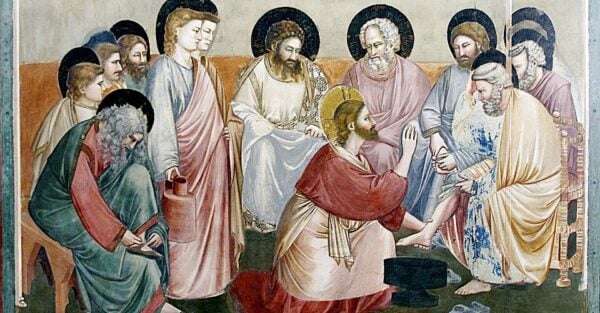
For a congregation of nuns, this ‘spousal’ notion works fine. But what about a mixed or all-male congregation—like the very first Eucharist, celebrated by Jesus among the twelve male apostles?
Facing this problem, John Paul argued that men, too, count as ‘Bride.’
But imagine a world where women are already ordained. A pope there could just as easily assert that women, too, count as ‘Bridegroom.’
Neither claim is more persuasive. The metaphor settles nothing.
Christ’s two natures
The Catechism holds that God is ‘neither man nor woman.’ Christ has two natures: human (male) and divine (neither).
Which nature matters for representing Christ sacramentally? The CDF’s ruling on baptism suggests an answer.
Since only an individual, not a group, can baptize, the baptizer stands for Christ’s singular divine nature—which is genderless. That is why women can validly baptize.
Even John Paul II, in Ordinatio Sacerdotalis (1994), rested his case only on Peter’s charge to ‘strengthen’ the apostles. But that cannot mean ‘correct.’
It was Paul, not Peter, who prevailed in the early Church’s disputes over Jewish law (Galatians 2).
Lessons from history
Such change would not be unprecedented.
Paul accepted slavery without objection. More than one pope later authorized the transport of enslaved Africans to the Americas.
Clearly these popes did not ask God open-mindedly for guidance before issuing their statements.
Pope Leo has noted it took the Church eighteen centuries to recognize slavery’s incompatibility with human dignity.
St John Paul II was a great pope. But he was not immune to the overconfidence of Paul and later pontiffs.
The exclusion of women from the priesthood looks like first-century prejudice, overdue for abandonment two thousand years on.
This column first appeared on Flashes of Insight and has been republished with permission by Global Catholic.







1 Comment
Mario Elizondo
September 16, 2026If the priesthood is a trade like carpentry, women could be priestesses. If the priesthood is a profession like medicine or engineering, women can be priestesses.