Summer is vacation season in most countries, and tourists visiting historic towns often make a point of exploring their local churches.
As soon as they enter the church, their attention is naturally drawn to the altar. Many churches have more than one—but why is the altar so important?
The answer becomes clear during the Rite of Altar Dedication, one of the Catholic Church’s most solemn liturgical ceremonies.


A newly constructed altar is anointed with sacred chrism, incense is burned on five places upon it, and it is sprinkled with holy water and blessed through several other rituals before it is used for the first time.
The ceremony reflects the Church’s conviction that an altar is far more than a table made of wood, stone, or metal.
As the Archdiocese of Cologne explains, the altar symbolizes Christ himself, the living foundation and cornerstone of the Church.
For that reason, the dedication of a new altar follows carefully prescribed rites that emphasize its profound theological significance.
From ancient sacrifices to Christian worship
The German word Altäre derives from the Latin altare, itself related to alta ara, meaning “high altar.”
The term originally referred to elevated places where sacrifices—often animal offerings—were presented to the gods in the ancient world.
The Jewish Temple in Jerusalem likewise contained two altars: the altar of burnt offerings, and the altar of incense.
Christianity, however, abandoned animal sacrifice. Why, then, does every Catholic church still have an altar?
Christ’s Sacrifice
The answer lies in the Eucharist. Christian worship no longer includes sacrifices because Catholics believe that Jesus Christ’s death on the Cross was the one perfect and final sacrifice for humanity.
The Mass does not repeat that sacrifice but makes it sacramentally present. In this sense, the altar recalls Christ’s sacrificial death.
One traditional symbol of that sacrifice is the Lamb of God, who, as the liturgy proclaims, “takes away the sins of the world.”
By freely offering himself for humanity’s salvation, Christ rendered all further sacrificial offerings unnecessary.
The place where Christ is present
The altar has a second, equally important meaning.
“The altar is the most important, the central place in every church,” explains Bishop Dominikus Schwaderlapp, auxiliary bishop of Cologne. “It is the place where the Eucharist is celebrated. The altar represents Christ.”
The Eucharist certainly recalls Jesus’ Last Supper with his disciples before his arrest and crucifixion. Yet in Catholic belief it is much more than a memorial meal.
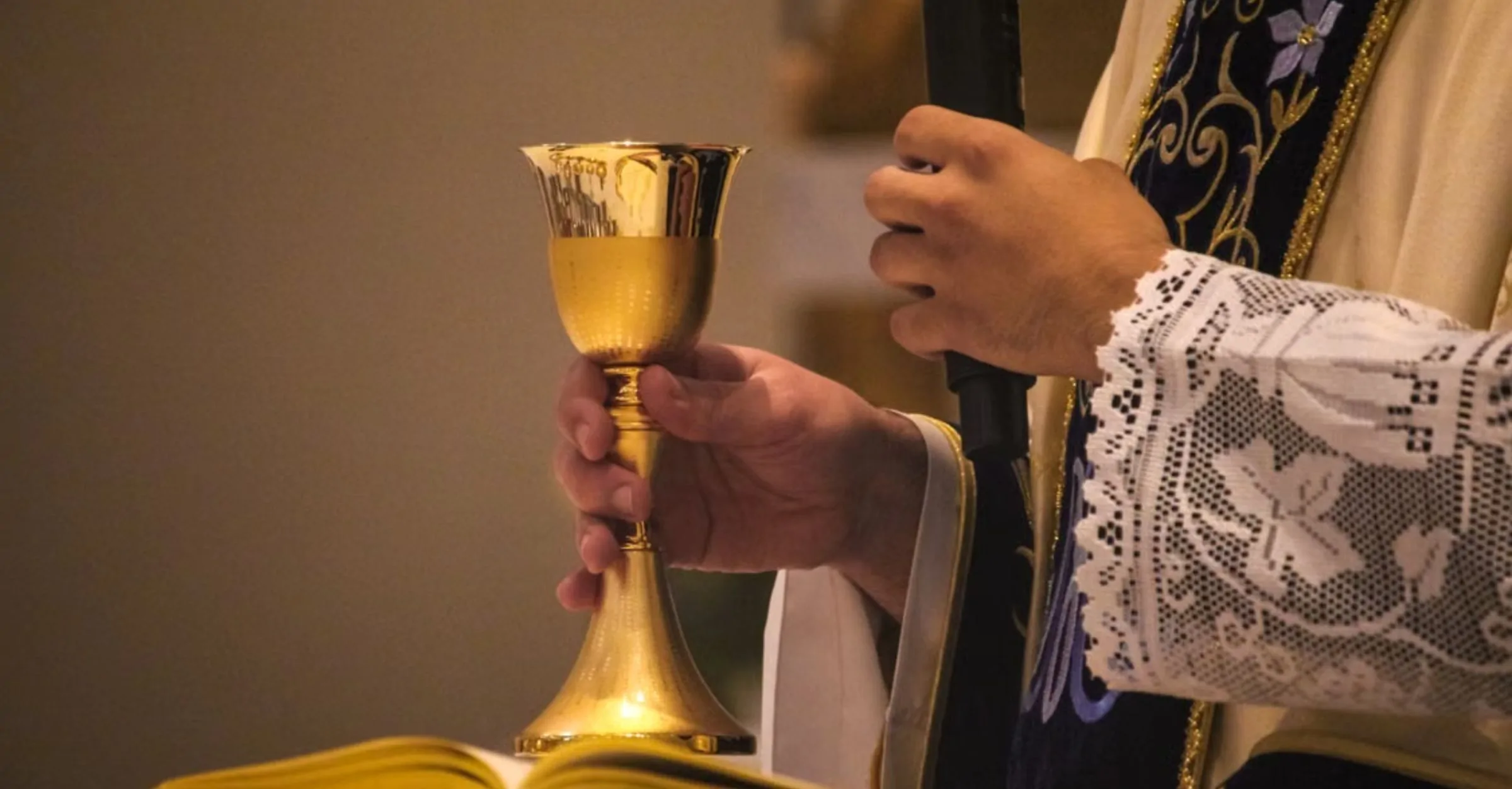
During every Mass, bread and wine become the Body and Blood of Christ, while retaining the outward appearance of bread and wine.
For that reason, the Second Vatican Council described the Eucharist as “the source and summit of the whole Christian life.”
From house Churches to stone altars
The history of the altar closely follows the development of the early Church.
The first Christians gathered in private homes, where they broke bread in remembrance of the Last Supper.
Simple wooden tables likely served as their altars, particularly since Christians endured widespread persecution during the first centuries.
Only after Christianity gained legal recognition in the Roman Empire during the fourth century—following Emperor Constantine’s conversion—did churches begin to be constructed on a large scale.
Altars increasingly came to be made of stone. Stone symbolized Christ as the Church’s cornerstone.
It also recalled the tombs of the martyrs, many of whom had been buried beneath the earliest churches.
Why altars often contain relics
This connection explains why Catholic altars have traditionally contained relics of saints.
Already in the fourth century, St. Ambrose of Milan described the symbolism: “He who suffered for all lies upon the altar; they, redeemed by his suffering, rest beneath the altar.”
Although the Second Vatican Council no longer requires relics to be placed inside every altar, the practice continues to be encouraged.
Changing styles across the centuries
The appearance of Catholic altars has evolved alongside architecture and artistic styles throughout history.
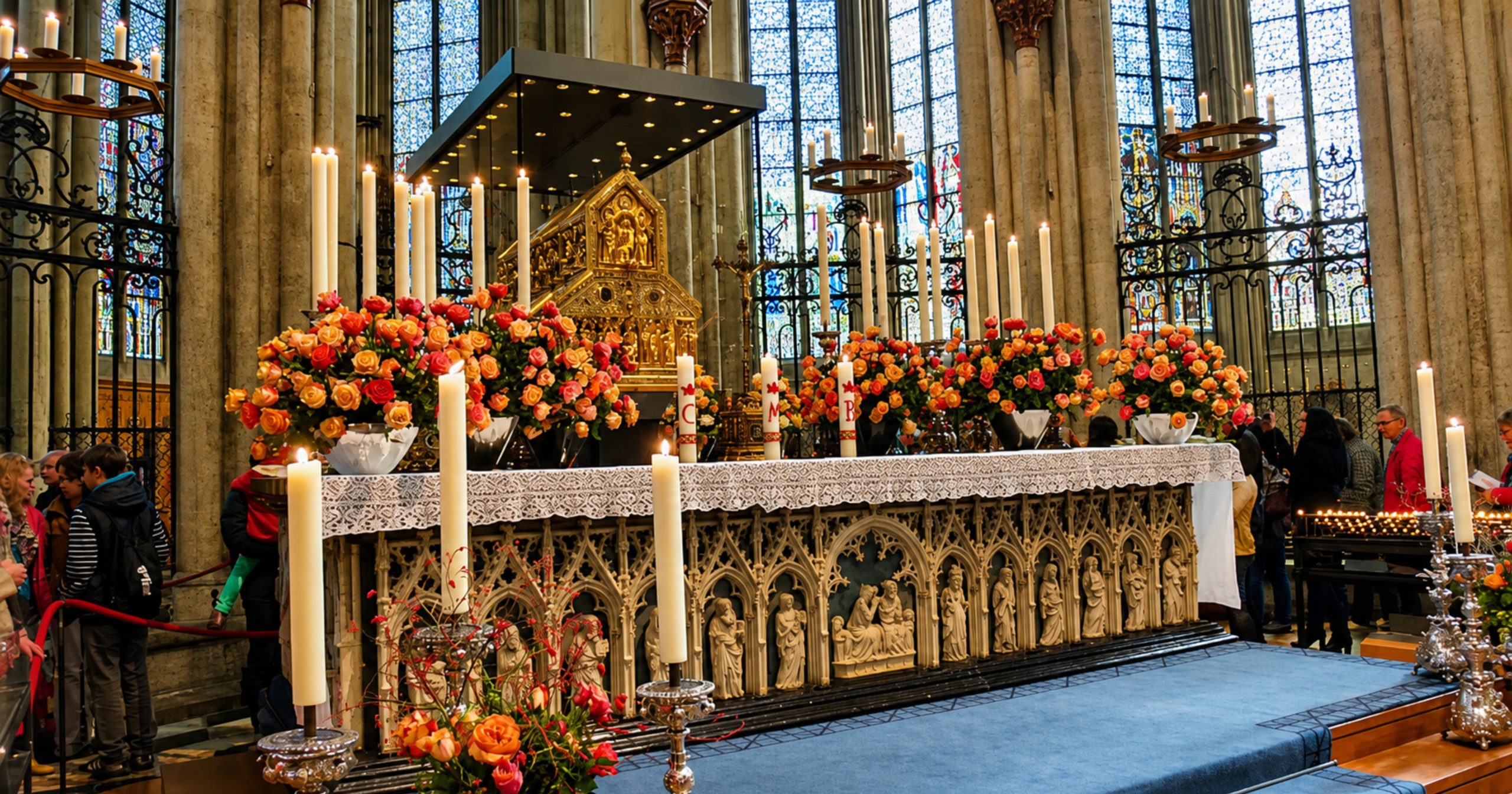
Cologne Cathedral offers examples from many different periods.
Immediately before the Shrine of the Three Kings in the cathedral stands the magnificent Gothic High Altar, richly decorated with sculptures along its front and sides.
Other notable altars include: the Altarpiece of the City Patrons, painted by Stefan Lochner in the fifteenth century and the Agilolphus Altar, a sixteenth-century masterpiece of carved sculpture.
During the Baroque period, high altars became increasingly monumental, filled with towering paintings, elaborate statues, gilded ornamentation, and dramatic architectural designs.
By contrast, nineteenth-century altars returned to a more restrained style inspired by medieval models.
Vatican II and the People’s Altar
The Second Vatican Council brought another major change to Catholic church design.
Since the liturgical reforms of the 1960s, the altar is usually positioned free-standing so the priest may celebrate Mass facing the congregation (ad populum).
In many churches, historic high altars were removed or left in place as artistic and devotional monuments, while a simpler people’s altar (Volksaltar in German) was installed in front of them for the celebration of the liturgy.
The altar remains the Church’s center
Whether a medieval winged altar or an elaborate Baroque masterpiece, the altar has never lost its central place in Catholic worship.
As Cardinal Rainer Maria Woelki, Archbishop of Cologne, said during the dedication of the altar at St. Laurentius Church in Bergisch Gladbach in 2024: “The altar is the symbol of Christ in our midst. It gathers us together into the communion of faith.”
This is a translated and edited version of the column that first appeared on DOMRADIO.DE and has been republished with permission by Global Catholic.